A health AI should keep each child’s information in a separately identified and permission-checked context—but separate storage is only one safeguard. It can help prevent one child’s records from appearing in another child’s answers; it cannot, by itself, establish which parent, guardian, child, provider, or school may access or share those records. A safer design connects identity isolation to care context, legal authority, recorded and revocable permissions, and clear access and deletion processes.
What “one memory bank per child” should mean
The phrase describes an engineering approach, not a legal rule. A “memory bank” might be a database, a set of records, or the information a system retrieves to answer a question. Whatever the implementation, the important property is that the AI can reliably identify which child a record concerns and use it only in the authorized context.



As an Amazon Associate I earn from qualifying purchases.
A separate folder or database partition is not enough if the system can still retrieve the wrong child’s notes, include them in a response, or expose them through a shared account. Isolation needs to apply to retrieval and output as well as storage. The system should check identity before retrieving information and check the resulting response for cross-child disclosure.
The Tool Desk
Outbyte PC Repair FREEClear out junk files and repair common Windows errorsFree Scan →Outbyte Driver Updater FREEScan for outdated or missing drivers - takes under a minuteDriver Scan →That separation reduces one class of accidental mix-up. It does not decide who is entitled to see a child’s information, whether it may be shared with a school or another service, or what to do when a child’s care is confidential. Those questions need permission controls and a determination of who has authority over the particular record and care context.
#1 Best Overall
Three layers a child-health AI needs
1. Identity isolation
Give each child a distinct data and retrieval context, even when siblings use the same household account. Associate records with a verified child identity and the source or care context in which they were created. If identity is uncertain, the safer behavior is to ask for clarification or decline to retrieve sensitive information—not guess based on a name, account owner, or recent conversation.
- Keep each child’s records and conversation context distinct.
- Apply child-specific access checks before retrieval, not only when saving information.
- Check that generated answers do not reveal another child’s information.
- Keep an auditable record of access and sharing events appropriate to the service’s role and obligations.
These are design recommendations for reducing mix-ups, not a claim that a particular storage pattern is mandated by law or that it eliminates privacy risk.
2. Permission enforcement
A permission screen should connect to actual controls. The system needs to record who authorized a disclosure, what information may be shared, with whom, for what purpose, and for how long or under what conditions. It should also reflect when authorization changes or is revoked. If the use case calls for sharing only selected information, access should be restricted to those portions rather than exposing an entire record.
Do these 3 things before closing this tab:
1Fix the driver behind crashes, sound loss and screen glitches2Clear out junk files and repair common Windows errors3Scan for outdated or missing drivers - takes under a minuteThe U.S. Office of the National Coordinator for Health Information Technology (ONC) describes meaningful consent as transparent and informed, appropriate to the circumstances, consistent with people’s expectations, and revocable. It also describes data segmentation: electronically labeling or tagging parts of a health record so selected portions, rather than the whole record, can be shared. ONC puts it plainly: “Data segmentation plays a crucial role in enabling privacy of patient records.”
3. Legal authority
Before granting access, determine who has authority over the specific care and record. That may depend on the child’s age, the type of care, state or other law, the record custodian, and the roles of the AI operator and other organizations. A parent’s access to one record should not automatically be treated as authority to access every record about the child or to authorize every possible use.
Why a parent’s access is not automatic in every case
Under the HIPAA Privacy Rule, a parent is generally a minor child’s personal representative when the parent may make treatment decisions for the child. But the general rule has exceptions, and state or other applicable law matters. HHS explains that the Privacy Rule does not itself establish whether a child may receive treatment without parental consent; that question is determined by the underlying law.
Rank #3
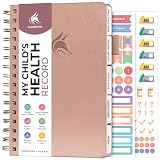
- ALL-IN-ONE CHILD & BABY RECORD BOOK – This medical journal helps keep track of essential health details, including birth notes, family health history, immunizations, growth charts, dental visits, ailments, office visits, medications, and more.
- STRUCTURED PAGES FOR EASY TRACKING – Each section of the medical records organizer provides space for vital information such as healthcare specialists, insurance and pharmacy details, and well-child visits, making it simple to reference at any time.
- PRACTICAL TOOL FOR PARENTS & CAREGIVERS – Designed to support busy families, this medical notebook helps you stay prepared for doctor’s appointments, emergencies, and school or travel paperwork, ensuring nothing important is ever forgotten.
- DURABLE COVER, NO-BLEED PAPER & EXTRAS – This 6.5 x 8.4" child & newborn book features a sturdy hardcover, double-wire binding, section tabs, elastic band, pen loop, thick no-bleed paper, 3 bookmarks, and a back pocket for prescriptions or notes.
- 60-DAY MONEY-BACK GUARANTEE – We will exchange or refund your log record book baby if you aren’t satisfied with your newborn baby journal organizer. Reach out to us via message to refund your baby log book for newborns.
HHS identifies circumstances that can affect parental representative status or access, including care for which the minor may consent under applicable law; a confidential relationship agreed to by the parent and provider; a court order or other legal arrangement assigning decision-making elsewhere; and a provider’s reasonable belief that treating the parent as representative could endanger the child. State law may also address or limit parental access.
Recommended Free Tools
For a health AI, the practical consequence is that a single “parent consent” flag is too blunt. The service must account for the relevant care and record, know who maintains the information, and avoid assuming that the adult who controls a family account is entitled to every child-specific record. The applicable rules need to be assessed for the actual deployment; the facts here do not establish a single answer for every state, age, or kind of care.
HIPAA, COPPA, and school records answer different questions
| Framework or context | What it addresses | What a product team should not assume |
|---|---|---|
| HIPAA and minor records | Who may act as a minor’s personal representative for health information, subject to exceptions and underlying law. | That every parent can access every record, or that HIPAA itself decides whether a minor may consent to treatment. |
| COPPA | Covered online services’ collection, use, or disclosure of personal information from children under 13, with notice and verifiable parental consent generally required before collection, subject to exceptions. The FTC guidance also addresses parental review and deletion, stopping further collection or use, security, and retention. | That COPPA is a blanket health-record law or applies identically to every service. Coverage depends on the operator, audience, and data practices. |
| School-held student health records | The interaction of FERPA and HIPAA depends on who maintains the records and in what context. Joint HHS and Department of Education guidance describes circumstances in which information may be shared without written consent or HIPAA authorization. | That every school record is an ordinary provider-held HIPAA record, or that the same sharing rule applies to every school and record. |
HIPAA coverage also depends on the organization and its role. ONC notes that HIPAA protections apply to covered entities, such as providers and insurers, and do not necessarily apply when someone shares health information with an organization that is not HIPAA-covered. A consumer health app or AI service should not be called “HIPAA-covered” or “HIPAA-compliant” merely because it handles health information. First map who collects, holds, receives, and shares each data type, and determine the parties’ legal and contractual roles.
Rank #4

- Proven Way to Connect with Your Pre-Teen & Teen Struggling to get more than a one-word answer? This back-and-forth journal creates a safe, pressure-free space for meaningful conversations. You write a prompt, your child responds—or vice versa. It’s the gentle bridge that helps you understand their hidden world, rebuild trust, and stay connected through the challenging tween and teen years when kids naturally pull away
- The Gift That Keeps Giving: A Family Heirloom in the Making Give a gift that won’t be forgotten in a week. Unlike toys or gadgets, this journal becomes a time capsule of your relationship. As you and your child fill its pages, you’re creating a tangible keepsake filled with their childhood voice, your wisdom, and shared inside jokes. It’s the perfect meaningful gift for birthdays, Christmas, or Mother’s Day—one that grandparents will cherish seeing passed down
- Designed for Busy Parents & Reluctant Writers Alike No prep, no pressure, no long time commitment. Each guided prompt takes just 5–10 minutes to complete. The alternating format means you can both participate on your own schedule—pass it back and forth whenever you have a quiet moment. It’s the ideal solution for busy families who want to build a lasting connection without adding another “must-do” to the to-do list
- Capture Their Voice Before It Changes Forever Kids grow up fast. Their thoughts, humor, and perspectives evolve quickly. This journal helps you pause time and preserve their authentic childhood voice—from their favorite things at age 8 to their dreams at age 12. Years from now, you’ll both treasure looking back on these pages, laughing at the memories and marveling at how far they’ve come
- Beautifully Crafted to Inspire Consistency Designed to be used, not hidden on a shelf. The durable hardcover withstands eager hands, while the high-quality, bleed-proof paper welcomes any pen. The clean, inviting layout encourages honest, creative responses from both adults and kids. It’s a ritual you’ll both look forward to—not another chore—making it easier than ever to build this meaningful tradition
How to connect consent to the system’s data flows
Consent should be usable at the point where an organization or person gains access—not just collected once during setup. The controls should follow the information as it moves between the family, AI service, provider, school, and any other recipient. A practical design sequence is:
- Identify the child and record context. Associate the information with the correct child and identify whether it came from a provider, a school, the child, or another source. Do not merge records simply because they share a household account.
- Determine authority for this use. Establish who may authorize access or sharing for the particular care and record, taking account of applicable law and the organization maintaining it. If authority is uncertain, do not treat a generic account-holder setting as a substitute.
- Describe the proposed use clearly. Explain what information is involved, who will receive it, and why. Give people information they can understand and a meaningful opportunity to make a choice.
- Apply the choice to the data. Enforce the recorded scope in retrieval, sharing, and AI responses. Where appropriate, use segmentation so the recipient sees only selected portions of a record.
- Handle changes and lifecycle requests. Make it possible to review relevant access and permission information, update or revoke permission where applicable, and route requests about access, correction, retention, or deletion to the organization responsible for the record. Do not promise deletion or a particular review right unless the service’s obligations and technical design support it.
This sequence is a design framework, not a universal legal checklist. The specific rights, required notices, and retention or deletion duties depend on the service, parties, data, and applicable law.
Additional safeguards for children using AI
Consent is not the whole of responsible design. The World Health Organization’s 2021 guidance on AI for health identifies ethical challenges and risks, sets out six consensus principles, and recommends governance that keeps stakeholders accountable to health workers, communities, and affected individuals. For a child-facing health AI, that supports clear responsibility for access decisions, oversight of how the system is used, and attention to the effects on children and families. WHO’s guidance does not mandate a particular database or “one memory bank per child” architecture.
Best Value
For services subject to European Union data-protection law, the European Data Protection Board (EDPB) emphasizes that children receive specific protection because they are especially vulnerable in personal-data processing. It calls for clear, understandable, age-appropriate information and care around age assurance. This is an EU framing; it should not be presented as a U.S. legal requirement. In practice, a service should explain choices in language suited to the person who needs to understand them, rather than relying on a dense notice that neither a parent nor a child can use.
What to check before deploying a child-health AI
- Identity: Can the system keep siblings’ information separate through storage, retrieval, and generated responses?
- Authority: Does the service determine who may act for the child in this care and record context, including cases where a minor may consent or a record is maintained by a school?
- Scope: Can authorization distinguish among information, recipients, and purposes instead of granting undifferentiated access?
- Consent quality: Is the choice understandable, proportionate to the circumstances, and revocable where applicable—and do the technical controls honor it?
- Data roles: Is it clear which organization holds each record and whether HIPAA, COPPA, FERPA, or other law applies to that party and use?
- Lifecycle: Are access, review, correction, retention, and deletion requests handled by the responsible organization with a clear process?
- Accountability: Is someone responsible for monitoring access decisions, investigating mistakes, and addressing harms to children and families?
The right architecture begins with separate child contexts, but its safety depends on more than partitions. A deployment needs identity checks, context-specific authority, permissions that constrain real data flows, and accountable processes for access and information lifecycle. The legal classification and state-specific rules must be worked out for the actual product and its data flows; no single consent screen can resolve them for every child or record.
Quick Recap
Product prices and availability are accurate as of the date/time indicated and are subject to change. Any price and availability information displayed on Amazon at the time of purchase will apply.
Free tools Windows power users keep installed
One-click scans. No signup required.

