What’s actually slowing this PC down?
Pick the symptom - the matching free tool is one click away.
For knee osteoarthritis, the main non-surgical options are therapeutic exercise and physical therapy, carefully selected braces or walking aids, and injections for limited situations. Exercise is the foundation: it supports movement and function over time, while a therapist can adapt the program to your abilities. A brace may help when instability or abnormal loading is present, but guidelines do not recommend routine bracing for everyone. Corticosteroid injections can provide short-term relief, generally 2 to 10 weeks according to NICE, sometimes making exercise easier. Hyaluronic acid and platelet-rich plasma (PRP) remain disputed, with major guidelines reaching different conclusions.
These recommendations address knee osteoarthritis (OA). A different diagnosis, such as inflammatory arthritis, may require another treatment plan. None of the options below should be understood as restoring damaged cartilage or curing OA; they are intended to reduce symptoms and preserve daily function.
As an Amazon Associate I earn from qualifying purchases.
What non-surgical treatment can and cannot do
Knee OA is managed rather than reversed by the options covered here. The practical goals are to reduce pain, maintain or improve movement, strengthen the muscles used for everyday tasks, and help you keep participating in activities that matter to you. The best choice depends on the type of knee OA, the pattern of symptoms, instability, your response to exercise, and whether a device or procedure is likely to improve function.
Quick wins for a faster PC:
Scan for outdated or missing drivers - takes under a minuteDriver Scan →Repair Windows errors before they cause bigger problemsFix Now →Guidelines do not identify one universal protocol. The 2026 VA/DoD guideline found insufficient evidence to prefer one structured physical-therapy type or delivery method over another. NICE (2022), the German S3 guideline (2025), and the 2019 ACR/Arthritis Foundation guideline differ on some devices and injections. Those differences reflect different evidence reviews and recommendations, not a guarantee that one option will work for every person.
#1 Best Overall

- No Pill & Injection Relief: Avert pain, inflammation, and sports injury with our knee braces for knee pain. It offers optimum support for people with meniscus tear, ACL, arthritis, and post-surgery swelling
- Premium Material: Made from a blend of nylon and latex, our knee braces for knee pain for men and women are lightweight and durable. It can be washed well without shrinking or losing compression
- Breathable & Moisture-Wicking: Made suitable even for your active lifestyle, our knee braces for knee pain women & men won't trap sweat underneath! It will keep odors away and stay cool for all-day use
- 6 Sizes Available: From petite knee brace sleeve up to plus size compression sleeve, we got you covered. We made a wide variation of sizes from S to 3XL to give knee relief and protection for all sizes
- Great Gift Idea: Our knee braces for knee pain meniscus tear is the one you're looking for when it comes to knee pain relief or a handy workout support. Get yours by clicking 'Add to Cart' now!
Exercise and physical therapy
Why therapeutic movement is foundational
NICE recommends therapeutic exercise tailored to the individual and says to consider supervised sessions. It also advises explaining that regular, consistent exercise is beneficial and that pain can increase when someone first starts. Exercise is therefore an ongoing self-management intervention, not a one-time treatment course. The aim is to make useful movement more tolerable and sustainable, rather than to force a painful joint through a fixed routine.
A physical therapist can help translate that principle into a workable plan. The therapist may adjust the amount, speed, range of movement and resistance so that the program fits current symptoms and daily demands. The plan can then be progressed or simplified as function changes. A supervised appointment is particularly useful when you are unsure how to begin, have stopped exercising because of pain, or need help adapting movements to work, walking, stairs or other activities.
What the evidence says about therapy formats
The VA/DoD guideline does not find enough evidence to select one structured physical-therapy format or one delivery method as the best. In practical terms, that means an in-person program is not automatically superior to every other structured approach, and no single named exercise protocol is required for all patients. The important decision is whether the program is appropriately tailored, consistently followed and adjusted when it is not helping function.
Crashes, No Sound, or Screen Glitches?
Random freezes, missing sound and display glitches usually trace back to one bad driver. Find and replace yours safely.Free scan · under a minutePC Slower Than It Used to Be?
A free scan shows the junk files, broken settings and background clutter dragging Windows down - then fixes them in one click.Free scan · Windows 10 & 11Supervision can still be valuable for learning technique, setting a starting level and troubleshooting barriers. Once you understand the movements, some people can continue independently, while others benefit from periodic review. The guideline position leaves room for that shared decision rather than prescribing a single schedule.
Rank #2

- Customisable Open-Patella Design - Popular orthopaedic brace relieves pressure and stress on the knee-joint during exercise; fully adjustable straps can be attached to almost any exterior point helping to prevent slippage and accommodate a broad range of users.
- Reinforced Stabilizer Ring - Ensures the knee cap remains in proper position during flexion and extension, helping to evenly distribute stress across the ACL, PCL, LCL & MCL ligaments; Increased stability leads to improved leg alignment for optimal loading and recovery.
- Effective Relief & Support - Eases chronic and acute knee pain associated with arthritis, strains, sprains and fatigue; ideal for post-surgery rehabilitation or use in sports such as walking, hiking, golf, cycling and many more.
- Breathable & Skin-Friendly - Premium-grade neoprene increases circulation resulting in faster healing time: tiny perforations in the fabric help reduce unwanted moisture, itchiness and odours.
- Universal Fit - Single support, wearable on either the left or right knee - adjustable high-grip strapping fits knees from 12.5" to 18" (32 to 46cm) in circumference.
Starting and adjusting a program
- Describe your functional priorities. Tell the clinician which tasks are limited, such as walking, rising from a chair, stairs or work activities. This gives the program a measurable purpose.
- Begin at a tolerable level. NICE specifically notes that pain may initially increase when exercise starts. A planned, manageable starting dose is more useful than avoiding all movement or repeatedly overdoing it.
- Practice consistently. Regular participation matters more than an occasional demanding session. Keep track of which movements and activities are becoming easier or remain difficult.
- Review the response. If pain or function does not improve enough to make the program worthwhile, ask the therapist to modify the movements, amount or progression rather than abandoning therapeutic exercise altogether.
- Use supervision strategically. Follow-up can address technique, confidence, changing symptoms or a new functional goal. There is no evidence-based requirement to use one fixed delivery model.
Exercise should be presented as support for movement and function, not as proof that pain is imaginary or that a person has failed if symptoms persist. A program can be clinically appropriate even when it does not eliminate pain.
Braces, supports and walking aids
Who may be a candidate
Braces are most defensible when there is a specific mechanical reason to expect a functional benefit. NICE advises against routinely offering braces, insoles, tape, splints or supports. It says a device may be considered when there is joint instability or abnormal biomechanical loading, exercise is ineffective or unsuitable without the device, and the device is likely to improve movement and function. VA/DoD suggests bracing for selected patients rather than for everyone.
The ACR/Arthritis Foundation guideline is more specific: it strongly recommends tibiofemoral bracing for tibiofemoral knee OA and conditionally recommends patellofemoral bracing for patellofemoral OA. These recommendations refer to the compartment involved, so identifying the relevant pattern of OA matters before choosing a brace.
Do these 3 things before closing this tab:
1Scan for outdated or missing drivers - takes under a minute2Repair Windows errors before they cause bigger problems3Fix the driver behind crashes, sound loss and screen glitchesHow major guidelines differ
| Guideline | Position on knee bracing | What that means in practice |
|---|---|---|
| VA/DoD (2026) | Suggests bracing for select patients. | Selection should be based on the person’s symptoms, loading pattern, stability and expected functional improvement. |
| NICE (2022) | Do not routinely offer braces or other supports. | Consider one only for instability or abnormal loading, when exercise alone is ineffective or unsuitable, and when movement and function are likely to improve. |
| ACR/Arthritis Foundation (2019) | Strongly recommends tibiofemoral bracing for tibiofemoral OA; conditionally recommends patellofemoral bracing. | The brace type should match the knee compartment involved; the recommendation is not a blanket endorsement of every device. |
Fitting and using a brace
A clinician can help identify whether the problem is instability, abnormal loading, or something a brace is unlikely to change. Fit and comfort matter because a device that slips, causes pressure or limits movement may reduce activity rather than improve it. Ask how the brace should be worn during the activities it is intended to support and how its effect on walking or other tasks will be judged.
Rank #3

- 🎁 Best Gifts Idea For Your Friends And Family! 🎁 — Professional Patented Knee Support with Patella Gel Pad & Side Stabilizers, Medical Compression Knee Sleeve with FSA or HSA Eligible, ELITE Knee Brace for Women & Men. BEST CHOICE for Knee Pain Relief and Sports Protection - Day & Night Comfort Wear. Class 2 Medical Device for Pre-operative Preparation and Post-operative Recovery — Doctor Recommended!
- EXCLUSIVE PATENT— Spring knee support technology: An anatomically contoured patella gel pad surrounds your kneecap, dual spring stabilizers fit tightly with your knee joint. These special functional element strengthen side support and maintain joint stability, It effectively disperses knee pressure, keeping your knee warm, which will prevent potential sports injuries without limit your performance! BEST CHOICE for sports protection and knee pain relief.
- INSTANT PAIN RELIEF— Innovative functional fabric has the effect of keep knee warm and reduce stiffness, inflammation and swelling, speed oxygen flow. This knee brace disperse the pressure and improves circulation around knee area, wrap around patella to enhance the stability of kneecap and relax tendons, prevent muscle strain. Relieve ACL, MCL, PCL pain, prevent ligament injury, meniscus tear, swelling, inflammation and so on. Class 2 Medical Device—Doctor Recommand!
- UPGRADED DESIGN— Adopt the Anti-Inflammatory Therapy, overcome the defects of similar products, medical knee sleeve with no allergies and itchiness. With high-elastic tight breathable compression fabric to fit perfectly with your knee curve, 3D structure of woven, high-precision knitting cutting technology. Side spring stabilizers on both sides and patella gel pad won't fall off even for long-time using, Anti-slip gel strips avoid slip or roll during exercise, It will stay in place all day!
- INNOVATIVE TECHNOLOGY— It works by applying targeted even compression to your knee, which help joint and muscle pain relief and faster recovery after intense workouts or injuries, scientifically proven to help improve poor blood circulation & increase oxygen flow to optimize the natural healing process, and reduce inflammation for knee pain relief from acute or chronic joint injuries. It is Perfect for Pain Recovery or Workout!
A brace is an adjunct, not a substitute for exercise-based care or assessment. Do not infer from a product description that a brace will repair cartilage, prevent progression or eliminate the need for strengthening. If it does not improve a defined function after a reasonable trial, reassessment is more useful than simply tightening or replacing it without a clinical reason.
Walking sticks and other aids
NICE separately says to consider walking aids such as a walking stick for lower-limb osteoarthritis. A walking aid may be more appropriate than a knee brace when the principal need is balance or unloading during walking. Selection and instruction should account for how you walk and which hand or side allows the aid to help rather than interfere with movement.
Injections for knee OA
Injections are clinician-delivered procedures used for symptom management. They do not replace therapeutic movement, and suitability depends on the diagnosis, prior treatments, persistent pain and the purpose of the injection. Discuss expected benefit, limitations and procedure-specific risks with the treating clinician; an injection should never be assumed to be risk-free.
The Tool Desk
Outbyte Driver Updater FREEFix the driver behind crashes, sound loss and screen glitchesFind Drivers →Outbyte PC Repair FREEClear out junk files and repair common Windows errorsFree Scan →Corticosteroid injections
NICE says to consider an intra-articular corticosteroid injection when other pharmacological treatments are ineffective or unsuitable, or when an injection would help someone participate in therapeutic exercise. The VA/DoD guideline suggests corticosteroid injection for persistent knee OA pain that has not been adequately relieved by other interventions.
Rank #4

- 🎁Best Gifts Idea For Your Friends And Family! ---Please Check Size Chart!🎁
- TARGETED KNEE STABILIZATION, RELIEF & MAXIMUM SUPPORT : Comprised of upgraded patella gel pads, double side stabilizers that fit snugly around your knee joint, non-slip silicone strips, and high elastic fabric to avoid sliding and tumbling during daily use and exercise.
- PHENOMENAL RELIEF: Our brace provides pain relief from a range of ailments including medial and lateral stability, support for patella discomfort, meniscus challenges, minor ligament sprains, arthritis, and more.
- COMFORT ALL DAY LONG : The Knee Brace is made with Lightweight and Breathable Fabric . Wear it all day long, anywhere you want without feeling uncomfortable, overheating, or sweating.
- 360 DEGREES OF PROTECTION : The adjustable straps provide 360 degree protection during daily use or while doing other physical activities.
NICE describes the expected benefit as short term: 2 to 10 weeks. That is a guideline range, not a promise for an individual. The intended outcome is symptom relief for a limited period, potentially creating a window in which exercise and daily function are more achievable. It should not be described as cartilage repair or a cure.
Hyaluronic acid (viscosupplementation)
Recommendations are not uniform, so the issuing body and jurisdiction need to be named when discussing this option.
| Guideline | Recommendation on hyaluronic acid |
|---|---|
| NICE (2022) | Advises against intra-articular hyaluronan injections for osteoarthritis. Its recommendation 1.4.9 states: "Do not offer intra-articular hyaluronan injections to manage osteoarthritis." |
| VA/DoD (2026) | Finds insufficient evidence to recommend for or against viscosupplementation and says the evidence does not support choosing it over a corticosteroid injection. |
| German S3 guideline (2025) | Describes the evidence as contradictory and makes no recommendation. |
Because these positions conflict, a claim that hyaluronic acid is universally recommended or universally ineffective would overstate the evidence. If it is discussed, ask which guideline the clinician follows, what outcome is expected and why it is being considered instead of an approach with clearer support in that setting.
Free tools Windows power users keep installed
One-click scans. No signup required.
Platelet-rich plasma (PRP)
PRP is also not established as routine treatment across guidelines. The VA/DoD guideline finds insufficient evidence to recommend for or against PRP for persistent knee OA pain. The German S3 guideline says PRP may be considered when other analgesic and function-improving measures are inappropriate, contraindicated or ineffective, but it notes heterogeneous study quality and says there is no basis for recommending a specific manufacturing process. The ACR/Arthritis Foundation guideline strongly recommends against PRP for knee or hip OA.
Best Value
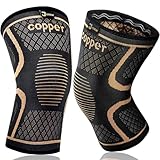
- [Compression Protection] To better fit the knee compression sleeves to the curve of the knee, we use 3D compression technology to achieve full protection of the knee, help stabilize the patella, reduce the wear and tear of the patella during activity, cushion and reduce pressure, protect the knee joint from injury.
- [Copper nylon] 60% copper ion fiber + 21% nylon + 16% polyester. copper ion helps to promote blood circulation and relieve pain and swelling, JIUFENTIAN uses the latest weaving technology to weave copper ion fiber into knee sleeves to help relieve knee pain and also more breathable and sweat absorbent.
- [Stay in Place] : Double-layer anti-slip strip. You will love the feeling of sport with our copper knee sleeves. but please be sure to follow our size chart to measure and choose your size instead of your habits. Latex / Silicone people allergic caution.
- [Professional]JIUFENTIAN copper knee brace for men and women is ideal for work that require regular use of the knee, such as standing work, morning walks, hiking, running, ball games, cycling and gym workouts (including the elderly). The knee brace for knee pain is ideal for arthritis, swelling, meniscus and post-operative knee recovery.
- [Worry-free Shopping] Our copper knee brace are primarily based on compressive and copper ion fiber to exert constant pressure on the knee joint, providing muscle support during exercise and leisure activities. If your size is wrong, it will be too small or slip down. Please feel free to contact us to get the right size.
Those statements describe uncertainty and disagreement, not a settled standard of care. PRP should therefore be approached as a clinician discussion about alternatives after better-established measures have been considered, not as a routine next step or a guaranteed regenerative treatment.
Independent reader supportYour contribution helps us test, update, and keep practical guides available for everyone.Comparing the options
| Option | What it is | When guidance is most favorable | Expected role | Agreement among guidelines |
|---|---|---|---|---|
| Therapeutic exercise and physical therapy | Ongoing movement and function program, with optional supervision. | Broadly applicable, tailored to the person. | Longer-term support for movement and daily function; consistency is central. | Guidelines support therapeutic exercise, while VA/DoD does not prefer one structured format or delivery method. |
| Brace | External support intended to address selected loading or stability problems. | Instability, abnormal loading, or a clear likelihood of functional improvement; compartment-specific recommendations may apply. | Adjunct for movement and function, not a cure. | Ranges from selected use (VA/DoD) and compartment-specific support (ACR/Arthritis Foundation) to non-routine use (NICE). |
| Corticosteroid injection | Clinician-delivered intra-articular procedure. | Persistent pain despite other measures, unsuitable alternatives, or a need to enable therapeutic exercise. | Short-term symptom relief; NICE states 2–10 weeks. | VA/DoD and NICE support a limited role. |
| Hyaluronic acid injection | Viscosupplementation procedure. | No single cross-guideline indication is established. | Potential symptom treatment where a clinician considers it appropriate, but comparative benefit is uncertain. | Recommendations range from NICE advising against it to VA/DoD finding insufficient evidence and German S3 finding contradictory evidence. |
| PRP injection | Injection prepared from the patient’s blood products. | Only a possible consideration after other measures are unsuitable or ineffective in the German S3 position. | Uncertain symptom and function benefit; not established routine care. | VA/DoD: insufficient evidence; German S3: conditional consideration; ACR/Arthritis Foundation: strongly against. |
How to build a non-surgical plan
- Confirm what condition is being treated. The recommendations above concern knee OA. Clarify the diagnosis and which part of the knee is affected, especially if a brace is being considered.
- Set a function-based goal. Choose a task that matters, such as walking a particular route, using stairs or standing from a chair. This gives every intervention a practical test.
- Start or refine therapeutic exercise. Use a tailored program, with supervision when it helps you begin, learn or adapt. Expect that symptoms may temporarily increase at the start, as NICE explains, and review the plan rather than assuming all exercise is unsuitable.
- Assess whether a device solves a defined problem. For a brace or walking aid, identify instability, abnormal loading, balance difficulty or another reason to expect improved movement. Have the device fitted and evaluate its effect on the chosen function.
- Discuss injections only for a clear purpose. If pain remains persistent or prevents exercise, ask whether a corticosteroid injection could provide a short-term window for activity. For hyaluronic acid or PRP, ask which guideline supports the proposal and how uncertainty affects the decision.
- Reassess based on function and symptoms. Keep the options that make movement or daily life better enough to justify their burden. If there is no meaningful improvement, return to the clinician or therapist to revise the plan rather than adding treatments automatically.
Questions to ask before choosing a brace or injection
- Which knee compartment or mechanical problem is this treatment intended to address?
- What specific activity or function should improve, and over what period will we assess it?
- How does this recommendation align with the VA/DoD, NICE, German S3 or ACR/Arthritis Foundation guidance relevant to my care?
- For an injection, is the goal temporary pain relief, participation in exercise, or something else?
- What are the alternatives if the treatment is ineffective or unsuitable?
- How will the exercise program continue while using the device or after any short-term injection benefit fades?
Putting the evidence into perspective
Exercise and therapeutic movement have the broadest role because they address movement and function over time and can be adapted as needs change. Braces are more selective: the potential benefit is tied to stability, loading and the likelihood of improved function, and guideline recommendations are not identical. Corticosteroid injections have a defined but temporary role when pain blocks other care. Hyaluronic acid and PRP require particular caution in interpretation because current guidelines disagree or find the evidence insufficient.
A clinician or physical therapist can help match the intervention to the knee problem and the activity you want to regain. The most defensible plan is one that has a stated functional goal, uses exercise as its foundation, adds a device only for a clear indication, and treats injections as time-limited or uncertain options rather than disease-reversing solutions.
Quick Recap
Product prices and availability are accurate as of the date/time indicated and are subject to change. Any price and availability information displayed on Amazon at the time of purchase will apply.

