Free tools Windows power users keep installed
One-click scans. No signup required.
Use a microSD Express card if you need more Nintendo Switch 2 storage. Nintendo Switch 2 supports microSD Express cards for downloaded games, updates, downloadable content, screenshots, and videos. External USB hard drives are not currently supported as Switch 2 storage. A card is optional at present: Nintendo says the console has 256 GB of internal UFS storage, with some capacity reserved for system use, and no individual game currently requires extra storage to play.
At a glance: which storage option does what?
| Reader need | microSD Express card | External USB drive |
|---|---|---|
| Store or load downloaded Switch 2 games | Supported for software data | Not currently supported |
| Store updates and DLC | Supported as software data | Not supported as external console storage |
| Store screenshots and videos | Supported | Not supported as a direct storage destination; transfer captures to a computer by USB cable or upload them to the Nintendo Switch App |
| Store game saves | No. Saves remain in system memory | No supported USB-drive save path is documented by Nintendo |
| Compatibility and capacity | microSD Express only, up to 2 TB | No supported capacity because USB drives are not a supported expansion route |
| Buy immediately? | Optional under Nintendo’s current guidance | Do not buy one for Switch 2 game storage |
This is a compatibility question, not a contest between drive speeds. Nintendo documents one supported removable-storage format for Switch 2: microSD Express. The console does not offer an external-USB option that you can use to install or play its software.
As an Amazon Associate I earn from qualifying purchases.
What microSD Express storage does on Switch 2
Downloaded software
A compatible card can hold digital games and the associated software data needed to run them. That includes downloaded titles, updates, and downloadable content. When the card is installed, Switch 2 can use that data instead of consuming the same amount of internal space.
Recommended Free Tools
Captures
Screenshots and videos can also be stored on the card. This makes an Express card useful even if you mostly buy physical game cards, because a large capture library can occupy internal space over time.
#1 Best Overall

- NEXT GEN GAMING: Works with Nintendo Switch 2.
- READY FOR TOMORROW. Ready for future products with a PCIe-NVMe interface; performs at UHS-I speeds with microSD UHS-I and UHS-II devices.
- EXPONENTIALLY FASTER PERFORMANCE. Up to 4.4 times faster transfer speeds than our fastest microSD UHS-I cards [9]. Transfer a 2-hour HD movie in less than 3.5 seconds [1]; save up to 2.8 minutes transferring 60 minutes of 4K UHD video [4] shot at 30 fps when paired with the SanDisk PRO-READER SD Express Dual Card (sold separately) [9]
- DURABILITY YOU CAN COUNT ON: Cards are waterproof, temperature-proof, humidity-proof, drop-proof, shock-proof, magnetic-proof, x-ray proof, and wear-out proof [5].
- HEAT MANAGEMENT REIMAGINED. SanDisk ThermAdapt helps keep devices from overheating with a specially designed enclosure and controller that uses dynamic adaptive thermal management.
What it does not do
The card is not a save-data backup device. Nintendo says game saves stay in system memory, regardless of whether the game is downloaded or played from a game card. Moving software to removable storage therefore does not move your progress with it.
Why an external USB drive is not the equivalent choice
Nintendo Support’s Data Management FAQ states: “External USB hard drives are not currently supported.” That wording means a USB hard drive cannot serve as a Switch 2 game library, update location, DLC location, or general expansion drive through the console’s supported features.
A USB drive can still be part of a capture workflow, but only indirectly. Nintendo describes copying captures to a computer with a USB cable or uploading them to the Nintendo Switch App. Those are transfer methods, not a way to leave the drive attached and have Switch 2 use it as installed storage.
What’s actually slowing this PC down?
Pick the symptom - the matching free tool is one click away.
Why formatting or using an adapter does not change the answer
USB storage support is a console feature, not merely a question of whether a drive has the right file system or connector. A USB-to-card adapter, powered enclosure, or larger desktop drive does not turn an unsupported USB device into an approved Switch 2 software destination. Nintendo’s current documentation does not provide a supported setup for any of those arrangements.
How much internal storage Switch 2 has
Nintendo lists 256 GB of internal UFS storage for Switch 2. Some of that capacity is reserved for system use, so the amount shown as available to games and captures is lower than the headline figure. The usable number can also change as system software and other console data occupy space.
Nintendo currently says no individual game requires additional storage space to play. That does not mean every owner’s library will fit forever: a person with many digital games, frequent updates, downloadable content, or lots of videos may reach the available limit sooner than someone who buys mostly physical games and deletes finished downloads.
Rank #2

- TRANSFER SPEEDS UP TO 800 MB/S: With sequential read speeds up to 800 MB/s, get into your game up to 4× faster than our standard microSD cards (UHS I)¹.
- DYNAMIC THERMAL GUARD: Keeps its cool even when the action heats up. Dynamic Thermal Guard helps reduce overheating for fast, smooth gameplay.
- ALL YOUR GAMES ON ONE TINY CARD: Store all your games and downloadable content (DLCs) with up to 512GB of reliable storage. No deleting. No compromises.
- 6-PROOF PROTECTION WITH 3-YEAR LIMITED WARRANTY: Built to last, made for peace of mind. Anything can happen when you’re gaming on the go. With 6 types of protection²⁻⁹, the P9 Express can handle it all—helping maintain your game progress.
- NEXT-GEN AND BACKWARD COMPATIBLE: Your microSD Express card is compatible with Nintendo Switch 2¹⁰ and microSD UHS-I¹¹ devices, including tablets, drones, cameras and more.
When waiting is sensible
You can postpone buying a card if the free-space indicator remains comfortable and you are not building a large digital library. Since Nintendo does not identify a currently released title that requires an Express card, there is no universal day-one requirement.
Outdated Drivers Are Slowing You Down
One free scan finds every outdated or missing driver and matches the right update for your exact hardware.Free scan · exact hardware matchWindows Errors? Fix Them Before They Spread
Repair common Windows errors and clear accumulated junk for a smoother, more stable PC - no reinstall needed.Free scan · no reinstallWhen an expansion card becomes practical
- You buy most games digitally and want several large titles installed at once.
- Updates and downloadable content repeatedly reduce the free-space warning.
- You record many screenshots or videos and want to keep them on the console.
- You prefer not to delete and redownload software when changing games.
microSD Express compatibility rules
Express is mandatory for Switch 2 software
Nintendo’s compatibility guidance says Nintendo Switch 2 is only compatible with microSD Express cards for this purpose. An ordinary microSD or microSDXC card that worked in the original Nintendo Switch cannot store or load Switch 2 digital games, updates, or DLC.
Existing ordinary cards still have a limited use
Nintendo says an existing non-Express card can be used to import screenshots and videos from an original Nintendo Switch. That limited transfer capability should not be confused with Switch 2 expansion support. The same card is not interchangeable for installing Switch 2 software.
Capacity ceiling
Switch 2 supports microSD Express cards up to 2 TB. Nintendo says any card that meets the microSD Express standard within that limit can be used; the card is sold separately.
Should you use one card or several?
Nintendo recommends using one microSD Express card. Its support guidance warns that software data stored across multiple cards cannot later be combined onto one card. If you rotate cards as separate libraries, you may have to manage each card’s software independently rather than merging the installations into a single collection.
Do these 3 things before closing this tab:
1Scan for outdated or missing drivers - takes under a minute2Repair Windows errors before they cause bigger problems3Fix the driver behind crashes, sound loss and screen glitchesA single card also simplifies troubleshooting and makes it clear where downloaded software and captures are located. Choose a capacity that fits your likely library instead of buying several smaller cards on the assumption that they can be consolidated later.
Rank #3
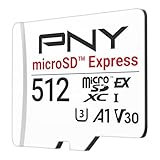
- ELEVATE YOUR GAMING: Engineered with next-generation PCIe Gen 3x1 microSD Express technology to achieve blazing fast performance up to 890MB/s Read and up to 810MB/s Write speeds.²
- LIGHTNING FAST DOWNLOADS: Experience extreme performance up to 4.4x faster than standard UHS-I microSD cards, to spend less time waiting and more time playing! More than double your gaming device’s internal storage with up to 512GB of expanded AAA game space.¹,²
- READY FOR NEXT-GEN GAMING: Compatible with microSD Express Host Devices, including Nintendo Switch 2, and backwards compatible with microSD UHS-I and UHS-II devices like portable gaming devices and more!⁴
- STAY COOL UNDER PRESSURE: Engineered to maximize cooling efficiencies with a heat dissipation dissipative design and adaptive thermal technology.³
- A1 APP PERFORMANCE: A1 Application Performance rating allows users to run gaming apps directly from the microSD card when gaming and delivers faster app launch and performance.
Setting up a microSD Express card
The first use has one requirement that is easy to miss: Nintendo says the console must complete a system update over the internet before the card can be used. Plan the installation when Switch 2 can connect online and finish the update without interruption.
- Check the label. Confirm that the card is explicitly microSD Express and does not exceed the 2 TB supported maximum. An ordinary microSD card is not a substitute for Switch 2 software storage.
- Prepare an internet connection. The first card setup requires a system update delivered over the internet. Charge the console or keep it connected to power while the update runs.
- Insert the card into Switch 2. Use the console’s microSD card slot and follow the on-screen instructions. Do not remove the card while the system is updating or writing data.
- Let the console finish recognition. If Switch 2 requests the required update, complete it before trying to download software to the card.
- Confirm available space. Use the console’s storage or data-management information to verify that the card is recognized and to see how internal and card space are being allocated.
- Keep the card installed during normal use. Downloaded software, updates, DLC, and captures stored there will not be available while the card is removed.
Nintendo’s guidance does not identify a need to buy a particular brand or model. The relevant qualification is compliance with the microSD Express standard and the 2 TB maximum, not a claimed benchmark speed or a specific retailer listing.
What happens to saves, including cloud backups?
Game saves remain in system memory. Installing a game on a microSD Express card does not put its save file on that card, and deleting or replacing the card is not a save-transfer procedure.
For supported titles, Nintendo Switch Online members can use cloud save backup. Eligibility and behavior depend on the game and Nintendo’s service rules; cloud backup should be treated as a separate protection method from storage expansion. A card gives you room for software and captures, not an additional copy of progress.
Before removing or replacing a card
- Close any game that is running.
- Make sure downloads and updates have finished.
- Confirm that important captures are copied or uploaded if you plan to format, replace, or erase the card.
- Do not assume that a card swap carries save data with it.
Freeing space without buying a card
Delete software and redownload later
Nintendo says software data can be deleted and downloaded again later. This is useful when internal storage is temporarily tight and you have a reliable internet connection. Deleting the installed software is different from deleting save data; the progress remains in system memory unless you deliberately remove the save through the console’s separate data controls.
Move captures off the console
If screenshots or videos are consuming space, copy them to a computer with a USB cable or upload them to the Nintendo Switch App before deleting them from Switch 2. This gives you an archive without treating an external USB drive as a console expansion device.
Rank #4

- NEXT GEN GAMING: Works with Nintendo Switch 2.
- READY FOR TOMORROW. Ready for future products with a PCIe-NVMe interface; performs at UHS-I speeds with microSD UHS-I and UHS-II devices.
- EXPONENTIALLY FASTER PERFORMANCE. Up to 4.4 times faster transfer speeds than our fastest microSD UHS-I cards [9]. Transfer a 2-hour HD movie in less than 3.5 seconds [1]; save up to 2.8 minutes transferring 60 minutes of 4K UHD video [4] shot at 30 fps when paired with the SanDisk PRO-READER SD Express Dual Card (sold separately) [9]
- DURABILITY YOU CAN COUNT ON: Cards are waterproof, temperature-proof, humidity-proof, drop-proof, shock-proof, magnetic-proof, x-ray proof, and wear-out proof [5].
- HEAT MANAGEMENT REIMAGINED. SanDisk ThermAdapt helps keep devices from overheating with a specially designed enclosure and controller that uses dynamic adaptive thermal management.
Review both storage locations
When deciding what to remove, check internal storage and the microSD Express card separately. A nearly full card will not be relieved by deleting an item that is stored internally, and vice versa. Storage-management information on the console identifies where software and captures reside.
The Tool Desk
Outbyte Driver Updater FREEFix the driver behind crashes, sound loss and screen glitchesFind Drivers →Outbyte PC Repair FREEClear out junk files and repair common Windows errorsFree Scan →Common misconceptions and the accurate answer
“My original Switch card is large, so it should work.”
Size is not the deciding factor. An ordinary card from the original Switch is not supported for storing or loading Switch 2 digital games. Only microSD Express cards meet the documented requirement. The older card’s supported role is limited to importing original-Switch screenshots and videos.
“A USB SSD should be faster than a card, so Switch 2 should use it.”
Switch 2 does not expose an external-USB storage option in Nintendo’s current support documentation. A theoretical speed advantage cannot override compatibility. A USB drive may hold files after you transfer captures to a computer, but it is not an install location for Switch 2 software.
“The card will back up my saves.”
It will not. Saves stay in system memory. Use the supported cloud-save feature for eligible games and Nintendo Switch Online accounts when you need an additional save-data protection method.
“Every new game will require an expansion card.”
Nintendo currently says no individual game requires additional storage space to play. Extra capacity is a convenience for larger libraries and capture collections, not a stated requirement for every title.
Troubleshooting by symptom
The console rejects the card or does not offer it for game storage
- Verify that the card says microSD Express, not merely microSD, microSDHC, or microSDXC.
- Check that its capacity is no more than 2 TB.
- Connect Switch 2 to the internet and complete the required first-use system update.
- Power down before reseating the card, then allow the console to recognize it again.
If an ordinary card is being used, replacing it with a compliant Express card is the relevant fix; reformatting the old card does not change its standard.
Best Value

- Ultra-Fast Read Speeds — Experience read speeds up to 900 MB/s and write speeds up to 620 MB/s, delivering rapid file transfers and smooth performance for gaming, photography, and 4K video recording.
- Optimized for Gaming & Devices – Tested with Switch 2 and compatible with laptops, tablets, cameras, and Android devices that support microSD Express or UHS-I. Ideal for expanding storage without lag.
- 4K Video & High-Resolution Support – Capture and store 4K UHD videos and high-res photos seamlessly thanks to Class 10, U3, V30, and A2 performance ratings.
- Reliable & Durable Design – Built for long-term use with shockproof, temperature-resistant, waterproof, and X-ray-resistant protection, keeping your data safe wherever you go.
- Multiple Capacity Options – Available in 256GB, 512GB and 1TB options to suit your storage needs. Note that actual usable storage may be slightly less due to system formatting and a portion reserved for card management functions, which is a standard industry practice to ensure optimal performance and reliability.
A downloaded game is missing after a card swap
Software data is associated with the card on which it was stored. Reinsert the original card and allow the console to read it, or redownload the software to the card you intend to keep using. Do not expect data spread across cards to merge automatically; Nintendo specifically advises using one card because later consolidation is not supported.
The card has room but the console still reports low internal space
Check where the large items are stored. Saves remain internal, and some system capacity is reserved there. Deleting an item from the card cannot increase internal free space; manage the location that is actually full.
You want to copy captures to a USB hard drive
First transfer the captures to a computer over USB or upload them to the Nintendo Switch App. After that, you can manage the files on the computer, including copying them to another drive. The unsupported part is attaching the drive to Switch 2 as its own storage library.
Choosing a sensible storage plan
Mostly physical-game players
Start with the built-in 256 GB system and monitor free space. Physical game cards can reduce the amount of downloaded software you keep installed, although updates and downloadable content still consume storage. Buy a microSD Express card when your actual usage, rather than a hypothetical future requirement, justifies it.
Mostly digital players
A microSD Express card is the supported expansion path. Pick one card within the 2 TB limit and leave it installed so downloads, updates, DLC, and captures have a consistent destination. The card is optional on day one, but it becomes practical sooner when you keep many digital titles installed simultaneously.
Capture-heavy players
Use an Express card for on-console screenshot and video capacity, then periodically archive captures to a computer or the Nintendo Switch App. This separates day-to-day console space from long-term media storage and avoids relying on an unsupported USB-drive connection.
Players trying to protect progress
Do not purchase a card or USB drive expecting save backup. Keep in mind that saves remain in system memory and use cloud save backup for supported games if you are a Nintendo Switch Online member.
Bottom-line buying decision
For Nintendo Switch 2, microSD Express is the only supported removable expansion format for software and captures, with support up to 2 TB. An external USB hard drive is not currently a game-storage alternative. Because Nintendo says no individual game currently requires extra storage and the console includes 256 GB before system-reserved capacity, many owners can wait, delete and redownload software, or move captures off the console. When you do need more room, buy one compliant microSD Express card and remember that it expands software and media capacity—not save-data storage.
Quick Recap
Product prices and availability are accurate as of the date/time indicated and are subject to change. Any price and availability information displayed on Amazon at the time of purchase will apply.

