A SAML login that fails after a NetScaler patch is not proof that the patch introduced a SAML regression. First capture one failed transaction, then verify the SAML trust values, policy evaluation, virtual-server links, and high-availability state in a controlled order. Only the exact appliance model, release/build, platform, and patch sequence can be matched to an official release note or support advisory.
Establish what changed before changing configuration
Start with a written incident record. Include the appliance model or VPX environment, the complete NetScaler release and build before and after patching, the patch date and sequence, and whether the failure began immediately or after another change. Record whether the appliance is standalone, an HA pair, or a cluster, and identify which node handled the failed request.
As an Amazon Associate I earn from qualifying purchases.
- Scope: all users or a subset, one tenant or every tenant, and one IdP or every SAML profile.
- Client type: browser, Workspace app, VPN client, or another access method.
- Path: public gateway, internal gateway, load balancer, proxy, and identity-provider route.
- Symptoms: redirect loop, blank page, generic login error, certificate warning, timeout, or successful IdP sign-in followed by rejection.
- Comparison point: a known-good node or environment, but only if its configuration and IdP path are understood to be equivalent.
These details determine whether a release-specific issue can be looked up accurately. Citrix upgrade guidance does not establish a patch-specific SAML regression, so do not label the patch as the root cause until the exact build and platform match an official release note or a Citrix support advisory.
Capture one controlled failure with aaad.debug
Do not begin by changing certificates or policies. Capture the AAA daemon’s view of one reproducible attempt first. Citrix describes aaad.debug as a stream of raw authentication events and says it can reveal general authentication errors, username/password failures, policy-configuration errors, and group-extraction discrepancies.
#1 Best Overall
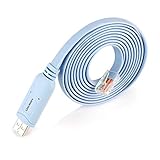
- ❤Console cable❤ :6FT-USB-RS232-RJ45 console cable .It's used for debugging and configuring network equipment ❤!!Please NOTE❤ this is USB to RJ45 CONSOLE CABLE ,Not ETHERNET !!!It is 8p8c!! Look carefully of the Pin is match with your device. Before ordering , please confirm it is you need. After receiving ,please read user manual /instruction at first . Customer service always online.
- ❤Works for console port❤this USB to rj45 console cable Replaces COM port RS232 (DB-25/DB-9) serial port perfectly, connects to any laptop/PC's USB port directly to a console port like a charm. No more RS232 Female and male adapters。32 and 64 bit operating systems are both support.except Chrome OS
- ❤Essential tools for network engineers❤The Cisoc Console Cable It's designed for that a PC or laptop‘s USB port connect to the console port with their Cisco modem, router, firewall, switch or other Serial based Cisco device. Cisco,Juniper,NETGEAR,Ubiquity,LINKSYS,TP-Link ,huawei, H3C, HP, 3com compatibly.
- ❤The pinout names❤Cisco usb console cable USB2.0 (1.1 compatible); CONSOLE's DTE Pinouts: RTS(1), DTR(2), TXD (3), GND(4), GND(5), RXD (6), DSR(7), CTS(8); the RJ45 pinout names is 1-CTS, 2-DSR, 3-RXD, 4-GND, 5-GND, 6-TXD, 7-DTR, 8-RTS. Cable length 1.8m/6ft, Maximum RS232 speed 500kbaud
- ❤LIFETIME CUSTOMER SUPPORT❤beside get 1pack *6ft cisco usb to console,you also back with 180-day no reason free return and refund and 24-hour online service.
- Connect to the appliance CLI. SSH is appropriate when available; a console connection is an alternative when remote access is unavailable.
- Enter the appliance shell.
- Change to the temporary directory with
cd /tmp. - Start the live view with
cat aaad.debug. - Reproduce one login failure while watching the output. Note the time, username or test identifier, client type, and node handling the request.
- Stop the live display with Ctrl+Z.
- Preserve the captured output with
cat aaad.debug | tee /var/tmp/<debuglogname>. Use a meaningful filename that includes the date, time, and node, without placing passwords or tokens in the name.
Authentication logs can contain usernames, group data, assertion details, and other operationally sensitive information. Store them in an approved location, restrict access, and use your organization’s secure transfer process when sharing them with support. A log from the wrong HA node or from a test that did not reproduce the failure is much less useful than a short, correctly identified capture.
Use the event stream to separate broad failure classes
| Example code | Documented indication | What to check next |
|---|---|---|
| 4003 | Server timeout | Reachability and response time between NetScaler and the authentication service or IdP path; correlate the timestamp with network and system logs. |
| 4005 | Socket error communicating with an authentication server | Connection path, firewall or proxy behavior, service availability, and whether the failure occurs on one node or both. |
| 4020 | Possible misconfiguration or unsupported authentication/action setup | Authentication action type, policy expression, binding, cascade order, and release-supported options. |
These are general AAA diagnostic references, not evidence of a SAML defect in a particular patch. Interpret each event with the request timestamp and the configuration that was active on the handling node.
Validate every SAML trust input as a set
SAML validation fails when one side’s trust or request values differ from the other side’s expectations. Compare the live NetScaler profile with the identity provider’s configuration or metadata rather than checking fields in isolation.
Quick wins for a faster PC:
Clear out junk files and repair common Windows errorsFree Scan →Fix the driver behind crashes, sound loss and screen glitchesFind Drivers →Repair Windows errors before they cause bigger problemsFix Now →Certificate and signing material
- Confirm that the current IdP signing certificate is installed on NetScaler and has not expired, been replaced, or been removed during the patch or configuration restore.
- Verify which NetScaler certificate and private key are used when signing requests, if request signing is enabled. The certificate must be the one the IdP trusts for that behavior.
- Check the assertion-signing requirement. If the IdP signs assertions but NetScaler expects a different signed element, validation can fail even though the user authenticated successfully at the IdP.
- Review assertion-rejection settings and any certificate-chain requirements supported by the deployed release.
URLs, issuer, and audience
- Compare the IdP redirect or single-sign-on URL with the URL configured in the NetScaler SAML action. Scheme, hostname, path, and trailing-slash differences can matter.
- Verify the service-provider issuer value sent by NetScaler against the issuer configured at the IdP.
- Verify the audience restriction expected by the IdP and the audience value NetScaler validates in the returned assertion.
- Check that a reverse proxy, content-switching rule, or hostname change has not caused the browser to use a URL different from the registered service-provider endpoint.
Algorithms and binding
The current NetScaler configuration instructions describe RSA-SHA256 as the signature algorithm and SHA256 as the digest method for the documented workflow. Confirm that the deployed release supports the selected values and that the IdP emits compatible signatures. A legacy Gateway 13.1 page contains Active Directory Federation Services instructions that mention SHA-1; do not copy those older settings into a current deployment without verifying version-specific support.
Check the SAML binding on both sides. The current configuration page states that NetScaler, acting as the service provider, supports POST, REDIRECT, and ARTIFACT bindings. The selected binding must match what the IdP expects for the request and response. A binding mismatch can produce a redirect or form post that appears normal to the user but cannot be consumed by the receiving endpoint.
Rank #2

- !!Please NOTE: this is MALE RS232 to DB9 SERIAL CABLE ,Not VGA!!!It is 9 pin, NOT 15 pin!! Look carefully of the Pin is match with your device. Before ordering , please confirm the interface gender is waht you need. After receiving ,please read user manual /instruction at first and download the Driver at first from FT232 Official website or Cisco website . Customer service always online.
- Wide range of applications: USB to RS232 DB9 male serial adapter can work with your Windows (10 / 8.1 / 8 / 7 / Vista / XP), MAC or Linux system and other platforms. USB adapter is designed to connect to serial devices, such as serial modem with DB9, ISDN terminal adapter, digital camera, label writer, palm computer, barcode scanner, PDA, cash register, CNC, PLC controller, tax printer, POS, bar code scanner, label printer, etc
- High quality: ftdi usb serial,the latest ftdi chip set ensures more reliable and faster operation. USB 2.0 to RS232 male DB9 console cable will support 1Mbps date transfer rate.
- Most convenient: rs232 to usb simple installation, plug and play, COM port creation, baud rate can be changed to the required settings. USB power supply - no external power supply required.
- Exquisite design: usb-to-serial,Gold Plated USB RS232 connector and PVC cable ensure high performance and extra durability. Powered by USB port, this USB to DB9 series RS232 adapter cable is designed to fit easily into your handbag.
NameID, group claims, and clock skew
- Inspect the actual NameID and claim names in the assertion, then compare them with NetScaler’s user-field and group-name claim mappings.
- Confirm that the claim value contains the identifier NetScaler uses for the session. A successful IdP login with an unexpected NameID format can still result in an unusable gateway session.
- Check group extraction if authorization depends on group membership. A changed claim URI, casing, delimiter, or nested-group representation can prevent the expected policy from matching.
- Verify the allowed clock-skew setting and the time on NetScaler and the IdP. A not-before or expiration check can reject an otherwise valid assertion when either clock is inaccurate.
Trace authentication-policy evaluation and cascade order
An advanced authentication policy has two parts: an expression that decides whether it applies and an authentication action that defines what happens. Check both parts on the node that handled the request.
- Open the policy and verify that its expression matches the affected request, hostname, client path, and any group or traffic conditions.
- Verify that the action points to the intended SAML action, not an old action left from a migration or a different IdP.
- Confirm that the policy is bound to the intended authentication virtual server.
- Check binding priority and next-factor settings. A higher-priority policy can intercept the request, while an incorrect next-factor reference can send it down an unintended path.
- Confirm that the authentication virtual server is linked to the VPN virtual server through the expected authentication profile.
Citrix documents a behavior that is easy to mistake for a silent SAML failure: SAML authentication uses the username, and a failed SAML authentication does not send a failure response to notify the user. In the documented cascade scenario, SAML should be the only policy or the last policy in the cascade. Citrix also states that SAML cannot be bound as the secondary authentication type. If a password or another factor is configured after SAML, the browser may appear to stop without a useful error even though policy flow is the problem.
Do these 3 things before closing this tab:
1Clear out junk files and repair common Windows errors2Scan for outdated or missing drivers - takes under a minute3Repair Windows errors before they cause bigger problemsSymptoms that point to policy flow rather than trust
- IdP login succeeds, then the gateway returns to the sign-in page: inspect issuer, audience, assertion signature, NameID mapping, and the SAML policy action.
- Only some URLs or clients fail: inspect the policy expression, virtual-server binding, and hostname-dependent redirect values.
- The IdP page never appears: inspect the SAML action, redirect URL, binding, and whether another policy captures the request first.
- Authentication appears complete but access is denied: inspect group claims, group extraction, authorization policies, and the authentication-to-VPN virtual-server link.
Compare HA nodes and preserve upgrade evidence
In an HA pair, do not assume both appliances changed identically. Identify the node that served the failed transaction and compare its SAML profile, certificates, policy bindings, virtual-server links, and system time with the peer. A successful test on the other node is meaningful only when both nodes use the same IdP route, certificates, configuration state, and network reachability.
For an upgrade-related case, preserve the following before making disruptive changes:
- Configuration files from the appliance; collect them from both appliances in an HA pair.
- Relevant
newnslogfiles, plusns.logand themessagesfile covering the failure window. - The exact release/build and patch sequence for every node.
- A network-topology diagram showing clients, NetScaler virtual servers, proxies or firewalls, the IdP, and any load-balancing or content-switching layers.
- The timestamped
aaad.debugcapture and a concise reproduction procedure.
Citrix’s general upgrade troubleshooting guidance recommends checking release notes, Knowledge Center articles, and FAQs for issues beyond the cases listed in the general page. Use the exact release, build, platform, and feature combination when doing that lookup. If the evidence points to a build-specific problem, provide the preserved files and timeline to Citrix support rather than assuming a downgrade or certificate replacement will fix it.
Rank #3

- Gold-Plated USB 2.0 to RS232 Female DB9 Serial Cable connects serial DB9 devices such as modems, cash registers, and scanners to standard computer USB ports. [Note]: This adapter features a female RS232 connector, NOT male. Please confirm your device's serial port type before purchase
- Built with Prolific PL2303 chipset, this USB to RS232 adapter supports Windows 11/10/8.1/8/7, Linux, and macOS. Windows 11/10/8.1/8/7 typically support plug-and-play and automatically identify the device as a COM port. For offline Windows, macOS, and most Linux systems, please download and install the official Prolific driver. You can also download and install the official driver from CableCreation official website. Ubuntu Linux supports plug and play without driver installation
- Widely compatible with modems, ISDN terminal adapters, digital cameras, label writers, palm PCs, PDAs, cash registers, CNC, PLC controllers, tax printers, POS machines, barcode scanners, and other devices with standard DB9 serial ports. Please note this adapter is NOT compatible with cutting plotters and certain SCM equipment. Please confirm your device interface and model before placing an order
- Features tinned copper conductor and triple shielding for stable data transmission. USB bus-powered design requires no external power adapter. If your device does not communicate with this adapter, a null modem adapter (pins 2 and 3 crossed) may be required
- CableCreation provides 24-month warranty and lifetime professional customer service. This 6.6ft USB 2.0 to RS232 Female DB9 serial converter cable follows standard pin definition, suitable for the device requiring female RS232 interface. If you encounter any problems of driver installation or device compatibility, please contact our customer service at any time, and we will assist you within 24 hours
Choose the diagnostic method that captures the right evidence
| Method | Best use | Limitations and safeguards |
|---|---|---|
aaad.debug from the appliance CLI |
Observing one live AAA/SAML transaction and correlating it with policy or group-extraction errors. | Must be run on the node handling the request; output may contain sensitive identity data and should be stored securely. |
| Saved system and upgrade logs | Correlating authentication events with patch timing, HA state, service restarts, and appliance errors. | Logs alone may not identify the assertion field or policy decision that failed; preserve the correct time window and node. |
| Known-good node or environment | Finding configuration or path differences after confirming equivalent IdP and network conditions. | A difference does not prove causation; mismatched topology, certificates, or policy state can invalidate the comparison. |
| Console access | Reaching the CLI when SSH is unavailable or the network path is impaired. | A console cable is optional, not a SAML requirement. Confirm the appliance connector and workstation interface before selecting hardware; general guidance does not specify a universal connector. |
Use a safe decision sequence after evidence collection
- Classify the failure: timeout or socket errors suggest communication; assertion or signature errors suggest trust inputs; silent completion suggests policy cascade or mapping.
- Correct one confirmed mismatch at a time: for example, install the current IdP certificate, correct a redirect URL, or fix a claim mapping. Record the previous value and the change time.
- Retest with one controlled account: capture a fresh
aaad.debugsegment and note whether the event changed. - Validate authorization separately: after authentication succeeds, confirm group extraction and VPN authorization without changing unrelated policies.
- Escalate with a complete package: include build details, topology, configuration files, logs, the reproducible timeline, and the exact symptom. Ask for confirmation against the specific build rather than a generic “SAML patch issue.”
Avoid a blind downgrade, wholesale certificate replacement, or broad policy reordering as a first response. Those actions can destroy the baseline needed to identify the fault and can create a second outage. If a rollback is required by your change process, capture the current state first, confirm the recovery image and HA procedure, and schedule a validation test for both authentication and authorization afterward.
Recommended Free Tools
Common pitfalls that prolong diagnosis
- Testing only the IdP: A successful IdP sign-in proves that the user reached the IdP, not that NetScaler accepted the returned assertion or mapped its claims correctly.
- Reading the wrong node: In an HA pair, a debug capture from the idle or secondary node may show no corresponding event. Correlate the request time and virtual-server handling node first.
- Changing several values together: Replacing a certificate, changing the binding, and reordering policies in one change removes the ability to identify which mismatch mattered.
- Comparing unlike environments: A test environment with another hostname, IdP tenant, certificate, or proxy path is not a reliable control.
- Ignoring time: Certificate validity and assertion lifetime checks depend on accurate clocks and the configured skew allowance.
- Copying legacy instructions: Algorithm names and supported options can differ by release. The current documented workflow uses RSA-SHA256 and SHA256, while an older Gateway 13.1 page contains SHA-1 wording.
- Overlooking authorization: Authentication can succeed while missing group claims prevent the user from receiving the expected VPN authorization.
- Sharing unredacted logs: Remove secrets, private keys, session tokens, and unnecessary personal data before sending files outside the approved support process.
What a complete handoff to support should contain
Support can work faster when the package answers “what changed, where, and when” without requiring a new reproduction. Include:
- Appliance model or VPX details and exact builds before and after patching.
- HA or cluster roles and the node that processed the failed request.
- IdP product and tenant or realm identifier, with secrets and private keys removed.
- One timestamped failed attempt, client type, test identifier, and browser or application result.
aaad.debugoutput, relevantnewnslog,ns.log, andmessagesfiles.- The SAML metadata or a field-by-field comparison of certificate, URLs, issuer, audience, algorithms, binding, claims, and clock settings.
- Authentication-policy expressions, actions, bindings, priorities, cascade settings, and the authentication-to-VPN virtual-server relationship.
- Network topology and any proxy, firewall, DNS, or load-balancer changes made at the same time.
This evidence supports a build-specific determination without overstating what the patch did. Until an official note or advisory ties the exact build to a SAML defect, treat the timing as a useful lead—not a confirmed cause.
Independent reader supportYour contribution helps us test, update, and keep practical guides available for everyone.Quick verification worksheet
Use a single worksheet for the failed attempt and the first successful retest. Record the exact UTC timestamp, handling node, client type, gateway hostname, IdP endpoint, and test account identifier. Then mark each item as confirmed, mismatched, or not applicable:
- NetScaler release/build before and after patching.
- IdP signing certificate thumbprint, validity period, and installation status.
- Request-signing certificate and private key, if enabled.
- Redirect URL, issuer, audience, response binding, and assertion-signing requirement.
- Signature algorithm, digest method, and release support for those values.
- NameID format, user field, group claim, and group extraction result.
- NetScaler and IdP clock values and permitted clock skew.
- Policy expression, SAML action, binding priority, next factor, and authentication virtual-server link.
- AAA event code and matching entries in
ns.log,messages, andnewnslog.
A worksheet prevents a familiar-looking field from being treated as verified when only the IdP-side value was checked. It also gives support a precise record of what changed between attempts.
The Tool Desk
Outbyte Driver Updater FREEScan for outdated or missing drivers - takes under a minuteDriver Scan →Outbyte PC Repair FREEClear out junk files and repair common Windows errorsFree Scan →Rank #4

- USB C cisco console cable is to help those who have a PC or laptop and want to use a USB-C connection to connect the console port with their Cisco modem,router,firewall,switch or other serial based Cisco device. This is the exact cable to solve such problem.
- USB Type C to RJ45 for Cisco Router Console Cable, Works great for tables Type-C USB port directly to a console port like a charm.
- FTDI FT232R chip + RS232 Level Shifter, Compatible with any laptop/PC with a USB-C Port.
- Brand : OIKWAN ; Cable length:3m (10 feet); Color: light blue ;Warranty : 3-years
Frequently Asked Questions
Why did NetScaler SAML stop working after an update?
The timing alone does not establish that the update caused the failure. Capture the exact release and build, reproduce one attempt with aaad.debug, and compare certificates, URLs, issuer, audience, claims, algorithms, binding, policy flow, and clock settings. Then check the exact build against official release notes or a Citrix support advisory.
What is the first NetScaler command to run for a SAML failure?
Use the documented CLI procedure: enter the shell, run cd /tmp, start cat aaad.debug, reproduce one failure, stop with Ctrl+Z, and preserve the output with cat aaad.debug | tee /var/tmp/<debuglogname>. Run it on the node handling the request.
Why does the user see no useful SAML error?
Citrix documents that a failed SAML authentication does not send a failure response to notify the user. In the described cascade behavior, SAML should be the only policy or the last policy, and it cannot be the secondary authentication type. Inspect policy order, next-factor settings, and the authentication-to-VPN virtual-server link.
Which SAML values should be compared after patching?
Compare the IdP signing certificate, request-signing certificate if used, redirect URL, service-provider issuer, audience, assertion-signing requirement, signature and digest algorithms, binding, NameID and group claims, and clock-skew allowance. Compare both NetScaler and IdP sides.
What’s actually slowing this PC down?
Pick the symptom - the matching free tool is one click away.
Can a certificate mismatch look like a policy problem?
Yes. The IdP can authenticate the user successfully while NetScaler rejects the returned assertion because the certificate, signed element, issuer, audience, or algorithm does not match. Use the AAA event and a field-by-field trust comparison before changing policy order.
Best Value

- !!Please NOTE: this is FEMALE USB RS232 to DB9 SERIAL CABLE ,Not VGA!!!It is 9 pin, NOT 15 pin!! Look carefully of the Pin is match with your device. Before ordering , please confirm the interface gender is waht you need. After receiving ,please read user manual /instruction at first and download the Driver at first from FT232 Official website or Cisco website . Customer service always online.
- Gold Plated USB 2.0 Male to RS232 Female DB9 Serial Cable connects a serial DB9 (9 PIN) device, such as a modem, to a USB port on your computer. USB port with 1Mbps data transfer rate. 👉NOTE: It's USB to RS232 FEMALE adapter,(It's NOT 15 pin VGA Monitor Cable)
- 9 pin to usb adapter built with the Industry Leading FTDI Chip,supports Windows 10/8.1/8/7/Vista/XP//2000 /Linux 2.4 or above, Mac OS X 10.6 and above; Drivers can be downloaded at FTDI website.
- USB to RS232 adapter works with modems, ISDN Terminal Adapters, digital cameras, label writers, palm PCs, PDAs,cashier register,CNC,PLC controller,tax printer,POS, bar code scanner, label printer,and devices with DB9 serial ports
- Plug-and-play convenience:DB9 serial port is seen as a COM port by your computer, and is available for use by any program that accesses COM ports,No need for an external power adapter:draws power directly from your computer via the USB connection
What should I collect from an HA pair?
Identify the node that processed the failed request, then collect configuration files from both appliances, the timestamped aaad.debug capture, relevant newnslog, ns.log, and messages files, exact builds, and the topology. Compare certificates, SAML profiles, policies, virtual-server links, and system time between peers.
Should I downgrade NetScaler immediately?
No. Preserve the current configuration and logs first, verify the recovery image and HA procedure, and determine whether the exact build has an official SAML issue. A blind downgrade or broad configuration change can destroy the baseline and create another outage.
Do I need a USB-to-serial console cable?
Only if SSH is unavailable and console access is required. It is an optional CLI-access tool, not a SAML requirement. Confirm the appliance connector and workstation interface before purchasing because a universal connector is not specified.
Free tools Windows power users keep installed
One-click scans. No signup required.
The Bottom Line
Treat a post-patch SAML failure as an evidence problem before treating it as a patch defect. Capture one controlled aaad.debug event, verify every trust and claim value, inspect policy cascade and virtual-server links, compare the handling HA node with its peer, and preserve the build-specific logs and configuration. Escalate only with the exact release, platform, timeline, and reproducible evidence.
Quick Recap
Product prices and availability are accurate as of the date/time indicated and are subject to change. Any price and availability information displayed on Amazon at the time of purchase will apply.

