What’s actually slowing this PC down?
Pick the symptom - the matching free tool is one click away.
Microsoft 365 can give a small business a connected set of tools for email, documents, meetings, file storage, scheduling, and security. The right setup depends on which apps your team needs, whether desktop software matters, how you collaborate, and what you can spend—not on a promise that software alone will grow revenue.
What Microsoft tools can do for a small business
Microsoft’s business plans bring together familiar productivity and communication apps, but the exact bundle varies by subscription. Check the specific plan before buying rather than assuming every listed service comes with every tier. Microsoft’s business plan comparison is the starting point.



As an Amazon Associate I earn from qualifying purchases.
Everyday work and communication
- Word, Excel, and PowerPoint support document, spreadsheet, and presentation work.
- Outlook and Exchange support email and calendar needs; confirm whether the plan offers the business email features you require.
- Teams supports team communication and meetings. Verify whether it is included with the plan you are considering or sold separately.
- OneDrive and SharePoint support cloud file storage and sharing. Compare the included storage and how your team needs to organize shared files.
Scheduling, planning, and customer workflows
Depending on the plan, Microsoft lists tools such as Bookings, Planner, Forms, Loop, and Clipchamp. These can support appointment scheduling, task planning, surveys or intake forms, collaborative project work, and basic video creation. Their presence in a plan establishes access to those capabilities, not a guaranteed business result.
How to choose a Microsoft 365 plan
Microsoft’s business plan pages describe plans for organizations of up to 300 users. If you are close to that limit or expect to exceed it, confirm eligibility and alternatives directly with Microsoft. Plan names, included features, and local terms can change; compare the current plan page for your country before purchase.
| Decision point | What to verify |
|---|---|
| Desktop or web/mobile apps | Whether your staff need installable desktop versions of Office apps or can work with web and mobile apps. Plan entitlements differ. |
| Email and meetings | Whether business email through Outlook/Exchange and Teams are included in the exact subscription and configuration you want. |
| Storage and workflows | Included cloud storage and access to tools such as Bookings, Planner, or Forms for the workflows you actually use. |
| Security and device management | Whether the plan covers your device protection, management, and information-protection requirements. |
| Team size and future needs | Whether your current headcount and expected growth fit the plan’s user limit and licensing model. |
| Local price and billing | Country-specific price, billing frequency, contract terms, promotions, and whether the displayed offer applies to your organization. |
Start with required apps and work practices, then compare plans against that list. A lower-cost web-and-mobile option may suit a team that does not need desktop apps; teams that rely on desktop Office software should confirm that entitlement before subscribing.
Security: what to check before choosing
Microsoft describes Business Premium as including device security and management, advanced threat protection, and capabilities for discovering, classifying, and protecting sensitive data. Those descriptions can help you identify a plan to evaluate, but you should map them to your own devices, policies, and risk requirements rather than treating a plan label as proof that every security need is covered.
Rank #2
Microsoft also lists Defender for Business as a standalone service and as included in Business Premium on its US business pricing page. That page displayed Defender for Business at $3 per user per month when paid yearly when accessed in 2026. This is a US-listed price, not a global quote; verify current local pricing and terms before budgeting.
Copilot: an optional AI add-on
Microsoft presents Copilot as a paid add-on for eligible business subscriptions. Its business information describes Copilot features in Word, Excel, PowerPoint, Outlook, and Teams, with work-context assistance. Eligibility depends on the underlying subscription and licensing, so check the current requirements before planning a rollout.
Microsoft’s US pricing page displayed a Copilot Business promotional offer of $18 per user per month, paid yearly, from $21 when accessed in 2026. The page’s offer and eligibility terms may change. Microsoft Adoption separately states a $30-per-user monthly price on its undated SMB page; that figure has a different source and basis and should not be treated as interchangeable with the current US promotional listing. Check the live local price and billing conditions before making a cost comparison.
Microsoft also describes Copilot Chat as available without an additional charge to users with an eligible Microsoft 365 subscription and Microsoft Entra account. That is distinct from the paid Copilot add-on: confirm which experience, access conditions, and features apply to your organization in Microsoft’s Copilot for Business information. Microsoft’s SMB Copilot resources provide deployment and adoption material; use them to plan training and rollout, not as evidence that AI will produce a specific business outcome.
Rank #4
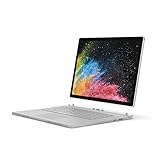
- Microsoft Surface Book 2 Features a 8th generation Intel Dual Core i7 Processor, 15" Touchscreen 3000 x 2000
- 512GB of storage SSD, 16GB RAM
- NVIDIA GeForce GTX 1050 GPU (2GB GDDR5), Up to 17 hours of video playback, SDXC Media Card Slot
- Detachable 2-in-1 Laptop, 2 x USB 3.1 Gen 1 Type-A, 1 x USB 3.1 Gen 1 Type-C (with USB Power Delivery revision 3.0), 2 x Surface Connect ports, 3.5 mm headphone jack
- Windows Hello face authentication camera (front-facing), 5.0 MP front-facing camera with 1080p HD video, 8.0 MP rear-facing autofocus camera with 1080p HD video, Windows 10 Professional 64-bit Edition
A practical pre-purchase checklist
- List the work to support. Identify who needs documents, spreadsheets, presentations, business email, meetings, file sharing, appointments, or task planning.
- Mark desktop requirements. For each role, decide whether web/mobile access is enough or desktop Office apps are necessary, then match that need to the specific plan.
- Confirm collaboration and email details. Check Teams availability, business email features, shared storage, and any separate licensing requirements.
- Review security and devices. Decide what protection and device-management capabilities your business needs, then validate the plan’s included features against those requirements.
- Evaluate Copilot separately. Confirm eligibility, identify users who would use it, and compare the incremental cost and billing terms with the value of those workflows to your business.
- Check the local offer before checkout. Use the pricing page for your country and verify renewal price, billing basis, promotional eligibility, and user limits.
Microsoft’s product pages describe capabilities and bundle terms; they do not establish that adopting those tools causes a small business to grow. Choose the smallest plan that meets your confirmed needs, and reassess as your team, workflows, or security requirements change.
Quick Recap
Product prices and availability are accurate as of the date/time indicated and are subject to change. Any price and availability information displayed on Amazon at the time of purchase will apply.

