PC Slower Than It Used to Be?
A free scan shows the junk files, broken settings and background clutter dragging Windows down - then fixes them in one click.Free scan · Windows 10 & 11Crashes, No Sound, or Screen Glitches?
Random freezes, missing sound and display glitches usually trace back to one bad driver. Find and replace yours safely.Free scan · under a minuteProbably not demonstrably. A 2024 laboratory study showed that carefully controlled ball milling can convert ritonavir between crystal forms, including recovery of the less stable “disappearing” form I. It did not show that Abbott could have used the method during the 1998 crisis, scaled it to validated pharmaceutical production, or avoided $250 million in real costs.
The counterfactual is therefore plausible as a research idea, not proven as a financial outcome. The historical event, the later experiment and the two different meanings attached to “$250 million” must be kept separate.
As an Amazon Associate I earn from qualifying purchases.
What happened to ritonavir in 1998?
Abbott Laboratories marketed the HIV protease inhibitor ritonavir as Norvir. According to Morissette and colleagues in a 2003 Proceedings of the National Academy of Sciences paper, the drug launched in 1996 as an oral capsule built around the then-known crystal form, called form I.
Free tools Windows power users keep installed
One-click scans. No signup required.
In 1998, a second crystal structure, form II, began appearing in capsule lots. Those lots failed dissolution testing because form II was approximately 50% as soluble as form I. A capsule that dissolves more slowly or incompletely can deliver a different amount of active ingredient than intended, so the formulation could not simply remain on the market unchanged. The capsule was eventually withdrawn while a replacement formulation was developed.
#1 Best Overall
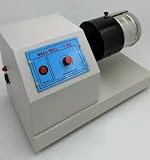
- HEAVY DUTY GRINDING MILL: Built for demanding laboratory and industrial milling applications, this 2 kg ball mill delivers consistent and reliable performance.
- ADJUSTABLE SPEED REGULATOR: Features a precision speed regulator dial for exact control over the milling process, ensuring repeatable and accurate particle reduction results.
- ROBUST CONSTRUCTION: Sturdy, durable housing withstands continuous heavy-duty use in lab, quality control, or workshop environments without compromising performance.
- EASY OPERATION: Straightforward control panel with a power switch and speed regulator knob makes setup and daily operation simple and intuitive for all users.
- VERSATILE MILLING MACHINE: Suitable for grinding a wide range of dry materials including minerals, chemicals, ceramics, and grains to achieve fine, uniform particle sizes.
This was a solid-state problem rather than a change in ritonavir’s molecular identity. Polymorphs are different arrangements of the same molecules in a crystal lattice. They can have different solubility, dissolution rate, density, melting behavior, stability and processing characteristics. A drug can therefore pass an early chemical identity check while its solid form creates a serious product-performance problem.
Morissette’s account became a classic warning for pharmaceutical development: testing one convenient crystal form is not the same as identifying the full range of forms an active ingredient can adopt. Their later high-throughput investigation used about 2,000 crystallization attempts to map ritonavir’s crystal-form diversity. That number belongs to the 2003 screening work, not to the later milling experiments.
Why the phrase “$250 million” is ambiguous
Two publications attach different meanings to the same headline number. They should not be presented as if they were one audited loss.
| Claim | Publication and date | What the number represents | What it does not establish |
|---|---|---|---|
| $250 million | Morissette et al., PNAS, March 4, 2003 | A footnote identifying projected Norvir sales for the entire year of 1998 | It is not identified in that paper as Abbott’s reformulation cost or as money that could have been saved |
| $250 million (£200 million) | Chemistry World, April 11, 2024 | A reported estimate for withdrawing and reformulating the drug | It is a secondary-source estimate, not an audited cost verified by the primary papers |
The distinction matters to the counterfactual. Avoiding lost sales, avoiding development and manufacturing expense, and avoiding a withdrawal are different financial claims. The available publications do not establish Abbott’s actual total cost, nor do they show that the entire amount would have been preventable with a different solid-state technique.
What mechanochemistry changes
Mechanochemistry uses mechanical force—often grinding, milling or shearing—to drive chemical or structural change. In a pharmaceutical solid, repeated impacts can fracture particles, create fresh surfaces, alter crystal defects and provide enough energy for molecules to reorganize. A small amount of liquid can be added to the powder to improve molecular mobility; this is commonly called liquid-assisted grinding.
Rank #2

- High-Quality Ceramic Jar: Comes with a durable 0.4L ceramic grinding jar, resistant to wear and corrosion, ensuring sample purity.
- Adjustable Speed: Easily control the rotation speed to suit different material properties and experimental requirements.
- Compact & Portable: The lightweight 3D printed main body has a small footprint (310x150x90mm), making it perfect for limited bench space.
- Easy to Operate: Simple structure for reliable performance and easy cleaning.
- Wide Voltage Compatibility: Equipped with a DC 12V working voltage and supports AC 100-240V input, suitable for global use with the appropriate adapter.
That approach differs from conventional solution crystallization. Solution methods dissolve a compound and control supersaturation, cooling, evaporation and seeding to obtain a desired crystal. Milling starts with a solid and manipulates it directly. Neither approach automatically guarantees a particular polymorph: solvent identity, solvent amount, milling energy, time, particle-size evolution, temperature and molecular conformation all influence the result.
What the 2024 ball-milling study actually demonstrated
Sacchi and co-authors reported their ritonavir work online on April 1, 2024, in PNAS. Their significance statement says that ball-mill experiments under carefully designed conditions—including solvent and milling time—allow discovery of form II and recovery of form I. That is a laboratory finding, not a report of a Norvir manufacturing campaign.
Equipment and experimental scale
The experiments used a Retsch MM400 mixer mill, 5 mL stainless-steel jars and 7 mm stainless-steel balls. The authors examined form I and form II while varying milling conditions and analyzing particle size, particle shape and molecular conformation. They reported that both forms could be produced consistently under different conditions.
The apparatus and quantities represent bench experiments. A small jar can reveal whether a transformation is physically possible, but it does not answer questions about kilogram or tonne-scale heat transfer, mixing uniformity, containment, cleaning, batch reproducibility or continuous operation.
The two conversion directions are not equivalent
| Starting form | Liquid-assisted condition reported | Observed outcome | Interpretation |
|---|---|---|---|
| Form I | Isopropanol; solvent-to-powder ratio 0.25 microlitres per milligram | Full conversion to form II in 15 minutes under one tested condition | This is the form I-to-form II direction, not recovery of the original form |
| Form II | Water; solvent-to-powder ratio 0.25 microlitres per milligram | Typically about 150 minutes to convert to form I | This is the reported recovery direction and took substantially longer |
Calling the result a “15-minute recovery” reverses the experiment. Fifteen minutes describes conversion from form I to form II with isopropanol. Recovery from form II to form I with water typically took about 150 minutes under the reported condition. Other milling times, solvents, particle characteristics and conformations were also investigated, so these figures are not universal processing specifications.
Rank #3
- Adjustable Speed: Easily control the rotation speed to suit different material properties and experimental requirements.
- High-Quality Ceramic Jar: Comes with a durable 0.4L ceramic grinding jar, resistant to wear and corrosion, ensuring sample purity.
- Compact & Portable: The lightweight 3D printed main body has a small footprint (310x150x90mm), making it perfect for limited bench space.
- Wide Voltage Compatibility: Equipped with a DC 12V working voltage and supports AC 100-240V input.
- Easy to Operate: Simple structure for reliable performance and easy cleaning.
Could that method have been used during Abbott’s crisis?
There are several separate hurdles between showing a transformation in 2024 and preventing a product failure in 1998. The available publications do not resolve any of them.
The Tool Desk
Outbyte PC Repair FREERepair Windows errors before they cause bigger problemsFix Now →Outbyte Driver Updater FREEScan for outdated or missing drivers - takes under a minuteDriver Scan →1. Was the technique available at the necessary moment?
The 2024 paper is retrospective. It does not establish that Abbott had an equivalent milling protocol, equipment, analytical method or mechanochemical expertise when form II appeared. A modern demonstration cannot be treated as proof that a workable solution was known or accessible three decades earlier.
2. Could investigators have found the right conditions quickly?
The reported outcome depends on choices that are easy to underestimate: which solvent to add, how much liquid to use, how long to mill, and how particle size and molecular conformation evolve. Form I and form II do not respond symmetrically. Discovering the recovery condition would have required experiments and solid-state characterization while the company was already dealing with failed dissolution lots.
3. Could a bench process become a pharmaceutical process?
A commercial process would need a defined design space and validated controls. A development team would have to demonstrate, at minimum:
- consistent polymorph identity and purity throughout a batch;
- control of residual solvent and water content;
- uniform milling energy, temperature and residence time at the intended scale;
- acceptable particle-size distribution, flow and powder handling;
- protection against contamination, cross-contamination and equipment wear;
- stability through storage, encapsulation and distribution; and
- reliable dissolution and dose performance in the finished capsule.
Those are not optional add-ons. A form that is correct immediately after milling can transform during downstream processing or storage. Validation would also have to show that the process remains within specifications across operators, equipment, raw-material lots and normal manufacturing variation.
Rank #4

- Durable Construction: Crafted with a sturdy stainless steel body, this heavy-duty ball mill ensures long-lasting performance for grinding and mixing materials in the laboratory.
- Ample Capacity: Boasting a generous 1 kg capacity, this mill can accommodate larger sample volumes, enhancing productivity and efficiency.
- Precise Grinding: The rotating chamber and steel balls facilitate precise and consistent grinding, ensuring uniform particle size distribution.
- User-Friendly Controls: Equipped with a straightforward control panel, this ball mill allows for easy operation and adjustment of settings.
- Compact Design: With its space-saving footprint, this ball mill can be conveniently integrated into any laboratory setup, optimizing workspace utilization.
4. Would regulators have accepted a changed process?
Changing the solid form or the way the active ingredient is produced can affect the chemistry, manufacturing and controls package, as well as product-performance evidence. Abbott would have needed analytical comparability, stability data and regulatory interaction before distributing a replacement. The 2024 article does not report such a submission, approval or historical timeline.
5. What exactly would have been saved?
Even if a validated process had been found, the avoided amount would not automatically equal $250 million. A realistic calculation would separate lost sales, inventory disposal, plant changes, analytical work, clinical or regulatory activities, legal exposure and the cost of developing the alternative formulation. No reviewed source supplies that accounting.
Historical formulation versus later milling
The meaningful comparison is not “old method failed, new method solved it.” It is a comparison between two different kinds of evidence.
| Axis | 1990s ritonavir response | 2024 mechanochemistry study |
|---|---|---|
| Problem addressed | Capsule dissolution failures after form II appeared | Controlled production and recovery of ritonavir polymorphs |
| Core approach | Development of a new formulation after withdrawal | Ball milling with selected solvents and milling times |
| Evidence scale | Drug-product and manufacturing crisis described retrospectively | Bench-scale mixer-mill experiments and mechanistic analysis |
| Conversion focus | Preventing unacceptable product performance | Both form I-to-form II and form II-to-form I transformations |
| Commercial throughput or cost | Not stated in the cited papers | No head-to-head throughput, GMP validation or cost comparison reported |
This table also explains why the 2024 result is scientifically important without being a historical rewrite. It gives researchers a controllable way to interrogate a notoriously difficult solid-state system. It does not recreate Abbott’s manufacturing environment or prove that milling would have been faster, cheaper or acceptable to regulators.
What the study says about “disappearing” polymorphs
Form I is often described as a disappearing polymorph because it can be replaced by the more stable form II under certain conditions, making it difficult to isolate or reproduce. The 2024 work shows that disappearance need not be irreversible in a practical laboratory sense: with a suitable milling environment, form II can be driven back toward form I.
Best Value

- CAPACITY: 2KG ball mill machine designed for efficient grinding and mixing of materials in laboratory and industrial applications
- SPEED CONTROL: Features adjustable speed regulation system with simple control panel for precise grinding intensity management
- CONSTRUCTION: Durable white and gray housing with robust metal components ensures reliable long-term performance
- OPERATION: Electric-powered system with convenient mains switch and clear control interface for user-friendly operation
- GRINDING MEDIA: Includes steel ball bearings for effective material processing and consistent grinding results
That reversibility is useful for scientific investigation. Researchers can study how crystal size, shape and conformational changes influence which form survives. It also offers a possible route for screening and manipulating solid forms that resist ordinary crystallization. But “recoverable in a mill” is not the same as “suitable as the active ingredient in a marketed capsule.” Solubility, stability, dose uniformity and process control still have to be demonstrated.
What would have to be shown to support a real savings claim?
A defensible historical or economic claim would need evidence beyond the two PNAS papers and the 2024 trade report. At least these questions would require documented answers:
- When did an equivalent mechanochemical protocol and analytical capability become available to industry?
- Could the protocol have been discovered before the affected lots were released or withdrawn?
- Did milling recover enough form I, with acceptable impurity and residual-solvent profiles, for the intended dose?
- Could the process be transferred from a 5 mL jar to the required production scale without changing the polymorph outcome?
- Would the resulting active ingredient and capsule have met contemporary regulatory requirements?
- What costs would the milling route have incurred, and which documented costs would it have avoided?
- Does Abbott’s accounting show an actual $250 million reformulation expense, rather than projected sales or a later estimate?
Without those answers, the strongest conclusion remains conditional: mechanochemistry might have been a route worth investigating, but the evidence cannot turn that possibility into a quantified avoided loss.
Recommended Free Tools
Bottom line on the counterfactual
Ball milling could not have been shown, on the present evidence, to save Abbott Laboratories $250 million. Sacchi et al.’s 2024 experiments demonstrate controlled ritonavir polymorph conversion under specified laboratory conditions, including recovery of form I from form II in a water-assisted experiment that typically took about 150 minutes. They do not establish 1990s availability, rapid discovery, scale-up, regulatory approval or commercial economics.
The headline number is also unsettled. Morissette et al. recorded $250 million as projected Norvir sales for all of 1998, while Chemistry World described $250 million (£200 million) as an estimated withdrawal-and-reformulation cost. Neither fact proves that Abbott spent that amount or that a milling process could have prevented it. The historically responsible answer is therefore “possibly worth exploring, but not demonstrably a $250 million solution.”
Quick Recap
Product prices and availability are accurate as of the date/time indicated and are subject to change. Any price and availability information displayed on Amazon at the time of purchase will apply.

