Marketplace GST TCS is not a substitute for your regular GST payment. Under section 52, an e-commerce operator collects tax at source on qualifying taxable supplies when it collects the consideration, and the amount collected is credited to the seller’s electronic cash ledger. The seller still reports its outward supplies and settles its own GST liabilities. Notified section 9(5) supplies are different: the operator pays tax on those supplies as if it were the supplier.
What is the difference between marketplace TCS and regular GST payment?
| Point | Section 52 marketplace TCS | Seller’s regular GST payment |
|---|---|---|
| Who pays or collects | The e-commerce operator collects TCS from qualifying supplies where it collects the consideration. (CGST Act, section 52) | The seller settles its own applicable GST liabilities through the GST Portal payment and ledger process. (GST Payment Rules) |
| What it relates to | The statutory “net value of taxable supplies” made through the operator, subject to section 52’s conditions. (CGST Act, section 52) | The seller’s applicable GST liabilities; the amount depends on the seller’s circumstances and returns. |
| Where the amount goes | It is credited to the supplier’s electronic cash ledger, not the electronic credit ledger. (CBIC Sectoral FAQs) | A successful portal deposit is credited to the Electronic Cash Ledger; applicable liabilities are then settled under the payment rules. (Online Payments Modes; GST Payment Rules) |
| Where to report | GSTR-1 Table 14(a) is used for section 52 operator supplies whose taxable value and tax liability have already been reported in other GSTR-1 tables. (GSTR-1 advisory, 10 January 2024) | Report outward supplies in the relevant return tables and settle the resulting liability through the return and payment process. (GSTR-1 tutorial; GST Payment Rules) |
When does section 52 TCS apply?
Section 52 applies to the net value of qualifying taxable supplies made through an e-commerce operator where the operator collects the consideration. It is not a blanket deduction on every marketplace transaction. Check the transaction and statutory conditions rather than assuming all orders, sellers, or amounts shown in a settlement statement are subject to TCS. The CGST Act authorizes a notified rate within a statutory ceiling; the CBIC FAQ’s one-percent wording is older explanatory material and does not establish the rate currently applicable to a particular tax period. Verify the current notification before relying on a rate. (CGST Act, section 52; CBIC Sectoral FAQs)
As an Amazon Associate I earn from qualifying purchases.
Do not confuse section 52 TCS with section 9(5)
For supplies notified under section 9(5), the e-commerce operator pays the tax as if it were the supplier. That differs from section 52, where the operator collects TCS and the supplier remains responsible for reporting its own outward supplies and settling its own liabilities. The GSTR-1 advisory reflects this distinction: section 52 operator supplies are reported in Table 14(a), while section 9(5) supplies are reported separately in Table 14(b). Values in Table 14(b) populate the relevant GSTR-3B field; Table 14(a) does not itself populate taxable value or tax liability into GSTR-3B. (GSTR-1 advisory, 10 January 2024)
How to reconcile marketplace sales, returns, and GST records
Keep three records distinct: the marketplace settlement statement, your outward-supply figures and filed return, and the GST Portal’s electronic cash ledger. Reconcile the marketplace’s supply and return adjustments with the sales you report; then separately check that TCS credits appear in the cash ledger. A settlement deduction is not, by itself, proof that your GST return is complete or that the corresponding tax liability has been paid.
#1 Best Overall

- LARGE EIGHT-DIGIT DISPLAY – Clear and easy-to-read 8-digit display, perfect for everyday calculations and ensuring accurate results in home or office settings.
- TAX & CURRENCY EXCHANGE FUNCTIONS – Effortlessly handle tax calculations and convert home currency to other currencies for easy financial management.
- GENERAL PURPOSE CALCULATOR – Ideal for a wide range of applications, from basic math to business and personal use, with memory keys for quick storage and recall.
- USER-FRIENDLY KEYBOARD – Easy-to-use layout, featuring square root, percent calculation, and simple functions that make it perfect for everyday tasks.
- COMPACT & PORTABLE DESIGN – Space-saving design that fits easily on any desk or in a briefcase, making it ideal for both home and office use.
- Review the marketplace statement. Identify supplies, returns or other adjustments, and the amounts the operator reports as collected. Match the statement to your underlying sales records.
- Prepare GSTR-1 using the appropriate reporting tables. Enter the outward supplies in the relevant tables, and use Table 14(a) for the section 52 operator summary described in the GST Portal advisory. Use Table 14(b) separately for covered section 9(5) supplies. (GSTR-1 tutorial; GSTR-1 outward supplies tutorial)
- Check the cash ledger. Confirm that the TCS credit is reflected in the electronic cash ledger. It is not an input-tax credit in the electronic credit ledger. (CBIC Sectoral FAQs; GST Payment Rules)
- Calculate and settle your own applicable liability. Table 14(a) alone does not enter the taxable value or tax liability into GSTR-3B. Follow the applicable return and payment process for the seller’s liability rather than treating the operator’s TCS collection as full settlement. (GSTR-1 advisory, 10 January 2024)
How to make a regular GST payment through the portal
The GST Portal’s payment guidance describes creating a challan and making a deposit through a payment mode available on the live portal. A successful deposit is credited to the Electronic Cash Ledger. The payment rules identify PMT-06 as the challan for specified payments. Since available payment modes may change, use the options shown on the GST Portal when paying instead of relying on an old list of banks or channels. (Online Payments Modes; GST Payment Rules)
Quick Recap
Best Value
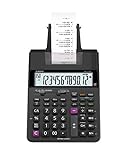
- FAST TWO-COLOR PRINTING – Prints at 2.0 lines per second with dual-color output (black/red) for easy distinction between positive and negative values.
- CHECK, CORRECT & RE-PRINT – Review and correct up to 150 steps before printing; use re-print and after-print functions for efficient documentation.
- TAX & BUSINESS FUNCTIONS – Includes cost/sell/margin, mark-up/mark-down, tax calculation keys, and currency exchange for quick financial operations.
- BIG DISPLAY & EASY INPUT – Features a 12-digit LCD and large, clearly spaced plastic keys for comfortable, accurate data entry.
- UPGRADED DESIGN – New version of the HR-100TM, ideal for taxes, bookkeeping, and accounting with clock/calendar printouts, subtotal & grand total, and percent functions.
Rank #4

- COMPACT & PORTABLE- Mini desktop size with rubberized keys for fast, comfortable input in office or on-the-go environments.
- BIG DISPLAY & EASY INPUT – 12-Digit LCD Display, large, easy-to-read screen ideal for quick and accurate business or personal calculations.
- ONE-COLOR PRINTING WITH DATE & TIME-Prints in crisp black and automatically includes the date and time—ideal for accurate recordkeeping, receipts, budgets, and accounting tasks.
- TAX & BUSINESS FUNCTIONS- Includes cost/sell/margin, tax calculation, and currency exchange functions for efficient financial decision-making.
- CHECK, CORRECT & RE-PRINT – Review and correct up to 150 steps before printing; use re-print and after-print functions for efficient documentation.
Rank #3

- EXTRA-LARGE 12-DIGIT DISPLAY – Clear, easy-to-read screen enhances visibility for fast, accurate data entry—ideal for finance, accounting, and office use.
- COST/SELL/MARGIN KEYS – Quickly calculate profit margins with dedicated keys designed to streamline business and retail calculations.
- TAX CALCULATION FUNCTIONS – Easily add or subtract tax values with built-in tax keys, simplifying invoice and pricing work.
- KICKSTAND DESIGN – Built-in angled display stand offers optimal viewing and reduces neck strain during long sessions.
- SOLAR + BATTERY POWER – Dual power source with solar panel and battery backup ensures reliable performance in any lighting condition.
Rank #2

- Profit margin calculation
- Quick and easy tax calculation
- Square root, sign change, and memory keys
- Attractive metallic design
- 12 digits
What to verify for your own filing
- Whether the transaction meets section 52’s conditions, including whether the operator collected the consideration.
- Whether a supply instead falls under a notified section 9(5) category.
- The current notified TCS rate for the relevant tax period; do not infer it from an older FAQ.
- Your registration status, applicable output tax treatment, return frequency and due dates, any exemption, and the resulting net liability. These depend on the seller and transaction facts and current rules.
Product prices and availability are accurate as of the date/time indicated and are subject to change. Any price and availability information displayed on Amazon at the time of purchase will apply.

