Yes, a magnetic stirrer can contribute to inconsistent results, but the effect is method- and setup-dependent. Unstable bar motion, incomplete mixing, vessel position, temperature differences, bubbles or a vortex can change what a reaction or measurement sees. A 2025 JACS Au study found position-associated differences in reaction rates, nanoparticle properties, catalyst preparation and parallel catalytic cross-coupling examples; it does not show that every experiment is affected.
Find out by observing the bar, standardizing the stirrer, vessel, bar, position, speed and temperature, then comparing the original setup with a relevant control. Fix the mechanical cause first, and only claim that stirring caused a discrepancy when the controlled comparison supports that conclusion.

As an Amazon Associate I earn from qualifying purchases.
Can a magnetic stirrer affect reaction results?
Mixing determines how quickly heat, dissolved reagents, catalysts and suspended solids move through a sample. If the bar intermittently loses coupling, leaves stagnant regions, pulls a deep vortex or introduces bubbles, different parts of the vessel can experience different concentrations or temperatures. A result may then vary even when the written protocol appears unchanged.
Do these 3 things before closing this tab:
1Clear out junk files and repair common Windows errors2Scan for outdated or missing drivers - takes under a minute3Repair Windows errors before they cause bigger problemsThe strongest direct evidence in the supplied literature is the 2025 paper Magnetic Stirring May Cause Irreproducible Results in Chemical Reactions by Valentin P. Ananikov and coauthors. In the reaction examples they studied, vessel location on a parallel plate and stirring conditions were associated with differences in reaction rates, nanoparticle properties, catalyst preparation and catalytic cross-coupling outcomes. The authors treat the effect as multifactorial and reaction-dependent, and recommend control experiments plus documentation of apparatus and placement. Read the paper at ACS Publications.
#1 Best Overall
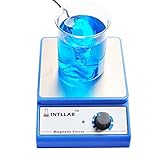
- Corrosion-Resistant 316 Stainless Steel Top Plate: Ensures durability and excellent performance.
- Large Capacity for Various Needs: With a capacity of up to 3000ml, it is ideal for home brew yeast starters.
- Easy-to-Use Design: Offers stepless adjustable stirring speed, allowing for speed regulation up to 3000 rpm.
- Long-Term Warranty: Comes with a 1-year warranty as it is designed to have a long lifespan.
- Versatile and Portable: It is perfect for use in scientific research, industry, agriculture, homebrew and other fields, convenient for you to take it for different applications.
That finding is a reason to control stirring, not a universal prevalence estimate. No source establishes what percentage of laboratory experiments are affected. A controlled test with your sample and measurement is therefore more informative than assuming either that stirring is harmless or that it explains every poor result.
Symptoms that point to a stirring problem
The bar does not rotate smoothly
Watch the bar through a transparent vessel, not just the liquid surface. A properly coupled bar should rotate continuously and remain centered for the required period. Rattling, skipping, stopping, visible wobble or spinning off-center can indicate excessive speed, an unsuitable bar, poor vessel geometry, high viscosity, solids, or excessive distance between the bar and the drive magnet. The University of Wisconsin–Madison teaching guidance specifically warns that high speed can throw a bar off-center and reduce mixing; see its stirring guidance.
The surface looks active but the bulk is not mixed
A dramatic funnel is not proof of uniform mixing. A deep vortex can expose air, draw bubbles into the sample and leave bottom or corner regions poorly exchanged. Conversely, a modest surface movement can be adequate if the whole volume turns over and solids remain distributed. Judge the bar’s coupling and the sample’s actual mixing requirement together.
What’s actually slowing this PC down?
Pick the symptom - the matching free tool is one click away.
Replicates diverge by position
If otherwise identical wells, vials or flasks give trends that track their location on a plate, record the positions and inspect the drive layout. The 2025 study found location-related effects in its parallel setups. Position correlation alone does not prove causation: evaporation, heating, illumination and pipetting can also vary by location. It does justify a position-balanced control.
Rank #2

- Compact Design and Easy Use: Compact design with small footprint for Portable use, 12 Voltage available for mobile use, lightweight and quiet operation. Not suitable for highly viscous solutions
- High Lab Quality Material:Maintenance free brushless DC motor enable stable and strength operation with stepless speed and long lifespan
- Powerful Functions: Max stirring quantity 3L; Default PET top provides excellent chemical resistance and easy cleaning
- Wide Use: Perfect for stirring in scientific research, industry, agriculture, health and medicine, homebrew, like brew yeast starters, wine making, Juice mixing, wine decanting and etc
- 1 Year Service: we are manufacturer which has more than 20 years experience in the field of lab products. . Any quality problem, we will provide free replacement
The measurement changes when speed changes
Run a small, relevant comparison at the same temperature and time while changing only stirring. A result that shifts with speed may reflect better dissolution, altered mass transfer, bubble formation, shear, temperature distribution or another method-specific mechanism. Record the observation rather than labeling it as a stirrer fault before ruling out those alternatives.
A step-by-step diagnostic workflow
- Observe the bar under the actual load. Use the same vessel, volume, solids and temperature as the experiment. Confirm that the bar starts reliably, stays coupled and remains centered. Note rattling, pauses, spinout, splashing, bubbles and whether material accumulates at the bottom or walls.
- Reduce speed and ramp up gradually. Begin at a low setting, then increase only until the sample is adequately mixed. Stop increasing when the bar becomes unstable, splashing starts, bubbles appear or a deep vortex forms. The cited sources provide no universal RPM, so choose a setting by observed performance rather than a number copied from another vessel.
- Inspect the bar. Look for chips, cracks, rough coating, discoloration, embedded solids and deformation. Check that its length and shape fit through the vessel opening and suit the vessel’s bottom. A damaged or poorly matched PTFE-coated bar is a sensible replacement candidate, but a new bar cannot compensate for an unsuitable vessel, excessive viscosity or a misaligned drive.
- Check coupling geometry. Keep the vessel centered over the drive magnet and use a flat, compatible vessel bottom where possible. Excessive distance between the bar and drive, a curved or thick base, an oversized bar or a vessel that constrains the bar can all reduce coupling. Repeat the inspection with the vessel filled to the protocol volume; a bar that works in a shallow test may fail in the real geometry.
- Standardize the setup. For comparable runs, use the same stirrer model, bar type and condition, vessel material and dimensions, liquid volume, position, speed, duration and temperature. Record these fields in the run record rather than relying on a dial mark or memory.
- Run a relevant control. Repeat representative samples under the original setup and the standardized setup while holding every other protocol variable constant. For a parallel plate, balance sample identities across positions or repeat the same sample in multiple positions. A single-vessel control can help separate position effects from chemistry, as recommended in the 2025 study.
- Test the measured outcome. Compare the endpoint that matters to your method: conversion, rate, particle property, catalyst performance, concentration or another validated readout. Report the result as specific to that sample and method. Do not state that the stirrer caused an earlier discrepancy unless the controlled comparison supports that inference.
- Change the mixing method if the load requires it. If the bar repeatedly loses coupling or leaves unmixed regions because of viscosity, volume, solids or geometry, evaluate an overhead mechanical stirrer or another validated approach. If heating is not allowed, use a stir-only plate instead of an integrated hotplate.
How to choose a stirring speed
There is no single correct speed for all magnetic stirrers, vessels or samples. The useful setting is the lowest speed that achieves the mixing your method requires without destabilizing the bar or creating an unwanted measurement artifact.
Start low, then increase
Starting at low speed lets the bar couple before fluid forces become large. Increase in small steps while watching the bar itself. If the bar begins to orbit, slap the vessel, stop intermittently or move off-center, reduce the setting until it recovers. A high dial position is not evidence of better mixing.
Stop at adequate turnover
Use the visual criterion appropriate to the sample: dissolved material should disappear within the validated time, suspended solids should remain distributed when required, and no persistent stagnant layer should remain. Avoid using vortex depth as the sole criterion. A shallow, stable motion can be preferable to a deep funnel.
Protect bubble-sensitive measurements
Excess speed can entrain air. In Karl Fischer titration, METTLER TOLEDO warns that bubbles can falsify measured values, while too little stirring or too little time can leave the sample incompletely dissolved. This guidance is specific to that titration and should not be generalized to every assay. Read the troubleshooting page at METTLER TOLEDO.
Match the bar, vessel and sample
Magnetic coupling is a system property. Bar size, shape and coating interact with vessel geometry, sample viscosity, abrasiveness and the drive magnet. The SP Scienceware selection guide describes these factors and provides practical selection advice in its magnetic stirring bar selection and use data sheet.
| What to check | Why it matters | What to do |
|---|---|---|
| Bar length and shape | A bar that is too large, too small or poorly shaped for the vessel may couple unreliably or leave dead zones. | Choose a bar that fits through the opening and follows the vessel bottom without striking the walls. |
| Coating and condition | Damage, roughness or embedded solids can contaminate a sample and disturb rotation. | Inspect before use; replace a damaged bar and document the replacement. |
| Vessel base and drive distance | Excess separation or a curved, thick base weakens magnetic coupling. | Center the vessel over the drive and keep vessel type consistent between runs. |
| Viscosity and solids | Thick or particle-loaded samples demand more torque than a small bar and drive may provide. | Test coupling under the real load; consider overhead mixing when the bar cannot maintain motion. |
| Volume and geometry | Large volumes and tall or narrow vessels can have stagnant regions even when the surface moves. | Validate mixing throughout the volume rather than judging the top surface alone. |
When selecting a PTFE-coated bar, treat it as a fit-for-purpose component rather than a universal upgrade. The correct length, shape and coating depend on the vessel and sample. Replacement is most justified when inspection finds damage, contamination, poor fit or unreliable coupling.
Why position and configuration matter in parallel experiments
Parallel plates and multi-vessel setups make small mechanical differences consequential. The drive field, vessel-to-magnet distance, plate flatness and local temperature can vary across positions. The 2025 study’s findings therefore support documenting the exact apparatus and placement used for each run.
Rank #4

- POWERFUL STIRRING: this magnetic stirrer has an adjustable and powerful stirring speed up to 3000 rpm. You can change and select the suitable stirring speed as per your need.
- BIG CAPACITY: This stir plate has the maximum of 3000ML. It is very good choice for home brew yeast starters.
- WIDE USE: the ANZESER magnetic stir plate can be used for stirring and mixing in food processing, school laboratory, industry, agriculture and home brew, etc. Not suitable for stirring high viscosity liquids, such as epoxy resins, etc.
- EASY USE: Simple single-button design. Stepless adjustable stirring speed, mixing speed regulation up to 3000 rpm, and rotate to the left end is off.
- LIFETIME WARRANTY: We ensure topnotch quality and durability, and offer a lifetime warranty on our products. Contact us at any time to discuss a replacement if you have any issues with your magnetic stirrer plate.
Build a position-aware control
- List every position used and assign each sample identity before starting.
- Place replicates or treatment groups across different positions instead of putting one condition in one corner.
- Repeat the same sample in multiple positions when material allows.
- Keep the plate, vessel type, bar type, speed and temperature unchanged while comparing positions.
- Analyze whether the endpoint tracks position after accounting for sample identity and other protocol variables.
If a position effect appears, do not silently average it away. Report the affected positions, the control design and whether standardization reduced the spread. Position is one possible cause, not proof that the stirrer alone produced the difference.
When magnetic stirring is the wrong tool
Magnetic stirring is generally most suitable for lower-viscosity applications. IKA’s overview of magnetic versus overhead mixing explains that overhead stirring can provide more torque for demanding samples; read the comparison.
| Situation | Magnetic stirring | Alternative decision |
|---|---|---|
| Low-viscosity liquid in a compatible vessel | Usually practical when the bar remains centered and the volume turns over. | Validate speed and temperature, then document the setup. |
| High-viscosity or heavily loaded sample | May lose coupling, stall or leave unmixed regions. | Assess an overhead mechanical stirrer or another validated high-torque method. |
| Large volume or tall vessel | Surface motion may not represent bulk mixing. | Test the full volume and consider an impeller-based method. |
| Sample must not be heated | An integrated hotplate introduces an avoidable heating function. | Use a stir-only plate, as advised in the University of Pennsylvania heating-reactions guidance. |
| Bubble-sensitive measurement | High speed or a deep vortex can entrain air. | Use the lowest validated speed and monitor bubbles; change method if necessary. |
The University of Pennsylvania Environmental Health and Radiation Safety fact sheet discusses choosing stir-only equipment when heating is not appropriate; consult its heating-reactions guidance. Any alternative mixer must be validated for the sample, vessel, contamination controls and measurement.
Recommended Free Tools
Safety checks before troubleshooting
Do not increase speed indefinitely or leave a questionable setup running unattended. National Academies guidance on laboratory equipment discusses ignition hazards around flammable vapors and calls attention to failure, overload and blocked motion during prolonged or unattended operation. Review Prudent Practices in the Laboratory and your equipment manual.
Best Value

- Powerful:Mini Electric Magnetic with stepless speed regulation 350-3000RPM and max stirring quantity 3000ML Luiqd.
- Easy Use:Magnetic stirrer with compact design, easy to operate, 12v voltage for mobile use, maximum speed 3000RPM, please use our dedicated power plug, otherwise it may affect the machine speed
- High Lab Quality Material:Magnetic Stirrer Maintenance-free brushless DC motor enable stable and strength operation,Frosted countertop are wear-resistant, corrosion-resistant and easy to clean.
- Widely used:The magnetic stir plate mixer is suitable for stirring and mixing in scientific laboratory, industry, agriculture, health and medicine, self-made, wine making, juice mixing, wine decanting,coffee stirrers electric and other fields.Tip: Not suitable for stirring high viscosity liquid.
- Notice For Use: Please use a beaker or a container with a flat and thin bottom. Put the stir bar into the container first, and then slowly turn the knob to keep the stir bar synchronized with the magnetic field, so as to obtain the best use effect.Please note there's no beakers in our package.
- Keep flammable vapors away from ignition sources and use the controls required by your laboratory’s chemical-hygiene plan.
- Stop the run if the bar is jammed, the vessel is vibrating, liquid is splashing, the motor overheats or the drive emits an unusual noise.
- Do not reach into a moving or heated vessel to reposition a bar; stop, isolate and cool the equipment according to local procedures.
- Use secondary containment where a spill, breakage or vigorous reaction is plausible.
- For unattended operation, confirm that the device is rated for the duration and load, that ventilation and temperature control are adequate, and that a responsible person can respond to failure.
Recordkeeping that makes results reproducible
A dial setting alone is not a reproducible stirring specification. Record enough detail for another operator to recreate the mechanical conditions:
- Stirrer manufacturer and model, including whether the unit is a hotplate-stirrer or stir-only plate.
- Bar material or coating, shape, nominal length, condition and any replacement date.
- Vessel material, dimensions, bottom geometry and working volume.
- Plate or vessel position, especially in parallel experiments.
- Speed setting, ramp procedure, total stirring time and any pauses or spinout events.
- Sample viscosity or solids information when relevant, plus temperature and heating status.
- Observed bar behavior, vortex depth, splashing and bubbles.
- Measured endpoint, replicate identity and the setup used for any control comparison.
Photographs or a short video of the bar under load can help resolve disputes that a surface-vortex description cannot. Store the observation with the run record and state whether the setup was original, standardized or an alternative method.
Troubleshooting by symptom
| Symptom | Likely contributors | First corrective action |
|---|---|---|
| Bar spins off-center at higher settings | Excess speed, poor centering, unsuitable bar or vessel geometry. | Lower the speed, recenter the vessel and test a properly sized bar. |
| Bar stops when solids or a viscous sample is added | Insufficient torque, excessive load or weak coupling. | Test at low speed under the real load; evaluate overhead mixing if coupling remains unreliable. |
| Surface has a deep funnel and visible bubbles | Speed is higher than the method needs or vortexing is drawing in air. | Reduce speed and verify the measurement is not bubble-sensitive. |
| Material remains on the bottom or wall | Bar shape, vessel geometry or speed does not provide adequate circulation. | Reposition and resize the bar within the vessel’s limits, then validate turnover. |
| Parallel replicates differ by location | Position-dependent stirring, heating, evaporation or another plate gradient. | Run a position-balanced control and record exact locations. |
| Results vary after changing vessels | Different base thickness, diameter, material or bar-to-drive distance. | Use one standardized vessel type and repeat the comparison. |
How to interpret a failed or successful control
If the standardized setup reduces variability or shifts the endpoint while all other conditions remain stable, you have evidence that the original mechanical configuration contributed to that method’s behavior. The result still does not establish that every experiment in the laboratory will respond the same way.
PC Slower Than It Used to Be?
A free scan shows the junk files, broken settings and background clutter dragging Windows down - then fixes them in one click.Free scan · Windows 10 & 11Crashes, No Sound, or Screen Glitches?
Random freezes, missing sound and display glitches usually trace back to one bad driver. Find and replace yours safely.Free scan · under a minuteIf standardization produces no meaningful change, do not force a stirring explanation. Check reagent identity and age, pipetting, temperature calibration, evaporation, timing, instrument performance and sample homogeneity. A stable bar does not guarantee a valid experiment, and an unstable bar does not prove it was the only source of error.
When the control is inconclusive, improve its power rather than changing several variables at once. Use enough representative replicates for the method, randomize or balance positions, define the endpoint before examining results and keep a written log of deviations. If the sample is difficult to mix magnetically, compare a validated alternative method under matched temperature and timing conditions.
A concise decision checklist
- Can you see the bar, and does it remain coupled for the full run?
- Does the lowest effective speed avoid spinout, splashing, bubbles and a deep vortex?
- Are bar, vessel, volume, position, temperature and duration identical across comparable runs?
- Is the bar undamaged and correctly sized for the vessel?
- Could viscosity, solids, volume or geometry exceed magnetic stirring’s practical range?
- Have you run a position-aware, method-relevant control before assigning causation?
- Would an overhead stirrer or stir-only plate better match the sample’s needs?
- Are ignition, overload, blocked-motion and unattended-operation risks controlled?
Answering these questions turns a vague suspicion into a testable equipment variable. Keep the setup that delivers adequate, repeatable mixing for the specific method, and document the evidence behind that choice.
Quick Recap
Product prices and availability are accurate as of the date/time indicated and are subject to change. Any price and availability information displayed on Amazon at the time of purchase will apply.
The Tool Desk
Outbyte PC Repair FREERepair Windows errors before they cause bigger problemsFix Now →Outbyte Driver Updater FREEFix the driver behind crashes, sound loss and screen glitchesFind Drivers →
