Crashes, No Sound, or Screen Glitches?
Random freezes, missing sound and display glitches usually trace back to one bad driver. Find and replace yours safely.Free scan · under a minuteWindows Errors? Fix Them Before They Spread
Repair common Windows errors and clear accumulated junk for a smoother, more stable PC - no reinstall needed.Free scan · no reinstallNeither control style is universally better. Lock-on melee is usually strongest when a fight rewards keeping one opponent centered and making deliberate attacks against that target. Free-aim, or unlocked, melee is often better when you must choose attack direction, move fluidly between threats, or preserve a wide view of a group. The deciding factor is not the label in the settings menu; it is how a particular game handles target selection, camera movement, switching, reacquisition, off-screen enemies, and accessibility options.
Some games also separate target lock from camera follow. You can have a selected enemy without forcing the camera to track it, or a camera that follows your character without selecting an opponent. Compare those systems independently before deciding which feels better for you.
| # | Preview | Product | Price | |
|---|---|---|---|---|
| 1 |
|
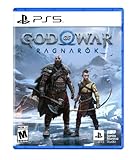
God of War Ragnarök - PlayStation 5 | $37.95 | Buy on Amazon |
| 2 |

|
God of War Ragnarök | $31.95 | Buy on Amazon |
| 3 |
|
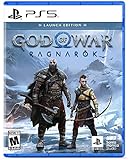
God of War Ragnarök Launch Edition - PlayStation 5 | $27.99 | Buy on Amazon |
| 4 |

|
God of War Ragnarök (PS5) | $37.02 | Buy on Amazon |
| 5 |

|
God Of War Ragnarok | Launch Edition | PS5 Game (PlayStation 5) | Brand NEW | PS6 PS5 Upgrade Soon | $46.44 | Buy on Amazon |
As an Amazon Associate I earn from qualifying purchases.
What “lock-on” and “free-aim” mean in melee games
In a lock-on system, you select an enemy and the game maintains a relationship between your character, that target, and often the camera. Pressing a lock-on button may keep the opponent in front of you, constrain movement around them, or make attacks and defensive inputs orient toward them. The exact behavior differs substantially between games.
Free-aim melee removes that persistent target relationship. Your attacks may follow the character’s facing, the camera direction, the movement stick, or a hybrid of those inputs. You normally turn toward a threat yourself and decide when to redirect an attack. “Unlocked” does not necessarily mean completely manual: camera assists, attack magnetism, soft targeting, and automatic facing can still influence the result.
#1 Best Overall
- Feel your journey through the Norse realms, made possible by immersive haptic feedback and adaptive trigger functionality.
- Take advantage of multidirectional 3D Audio; hear enemies approaching from any direction. (3D audio with stereo headphones (analog or USB))
- Bask in the beautiful worlds you travel through, brought to life by precise art direction and arresting attention to detail.
- Switch between full 4K resolution at a targeted 30 frames per second, or dynamic resolution upscaled to 4K at a targeted 60fps. (4K resolution requires a compatible 4K TV or display)
Before comparing the two, identify which parts of the system your game actually locks:
- Target selection: which enemy is selected and how you select another.
- Camera follow: whether the view rotates or recenters around the selected enemy.
- Attack orientation: whether strikes automatically face the target.
- Persistence: whether the selection survives distance, interruption, aiming, or a target’s death.
- Reacquisition: whether the game finds a new target after the original disappears.
A game can offer one option for each behavior rather than a single all-or-nothing choice.
When lock-on works best
Single-target duels
Lock-on is most predictable in a duel. A single boss, rival, or elite enemy remains centered while you study attack tells, dodge timing, and openings. Because the camera and attack direction are less likely to drift, you can concentrate on spacing and defense instead of repeatedly correcting your view.
Do these 3 things before closing this tab:
1Scan for outdated or missing drivers - takes under a minute2Clear out junk files and repair common Windows errors3Fix the driver behind crashes, sound loss and screen glitchesThis is especially useful when an opponent circles quickly, teleports short distances, or punishes attacks aimed past its body. A reliable target relationship can reduce accidental swings into empty space and make directional dodges easier to read.
Precision attacks and deliberate spacing
Lock-on can help when the combat system expects controlled movement around an enemy. Strafing, waiting for a parry window, and stepping into a narrow punish opportunity are easier when the selected opponent remains the reference point. Ranged abilities used inside a melee encounter can also benefit if they automatically orient toward the selected target.
Players who struggle with camera management
Manual camera control competes with movement, attack, dodge, and block inputs. A lock-on option can reduce that workload, particularly for players using a controller, playing on a small screen, or relying on accessibility aids. The benefit is not that the game becomes easier in every respect; it is that fewer inputs are devoted to keeping an enemy visible.
When free-aim works best
Fights with several simultaneous threats
Free-aim can be faster when enemies surround you. You can swing toward the nearest danger, turn into an incoming attack, or continue a broad-area combo without waiting for a target selector to move to the correct opponent. This is valuable when the game rewards awareness of threats outside the center of the screen.
Recommended Free Tools
Rank #2
Directional attacks and crowd control
Some melee systems make attack direction part of the strategy. A horizontal sweep may be preferable when enemies flank you, while a forward thrust may be needed to interrupt a distant attacker. Unlocked controls let you choose that direction directly instead of allowing the selected target to determine it.
Maintaining a broad view
A camera that is not tied to one enemy can preserve environmental information: ledges, projectiles, reinforcements, hazards, and objectives. Free-aim is often more comfortable when the camera can remain pointed toward the space you are navigating rather than constantly rotating to face one opponent.
Lock-on is not one feature: a detailed example
God of War Ragnarök demonstrates why the term alone is insufficient. Its PlayStation settings include a Lock-On Camera choice with Off, Classic, Auto-Target, and Auto Target+ options. The player activates lock-on with the Lock-On Button and uses the Move Stick to switch targets.
Classic
Classic keeps an enemy in view until that enemy dies. The lock can be temporarily released while aiming, and special moves or excessive range can break it. This is a relatively persistent duel-oriented behavior, but it is not permanent under every action or distance.
What’s actually slowing this PC down?
Pick the symptom - the matching free tool is one click away.
Auto-Target
Auto-Target persists while you aim and switches to a new on-screen target after the current target dies. That makes it more suitable for encounters in which enemies arrive in sequence, provided the next opponent is visible to the camera.
Auto Target+
Auto Target+ adds off-screen enemy targeting. The game can select an opponent outside the current view, which may reduce the time spent searching for a surviving threat but can also rotate your attention toward an enemy you cannot currently see. Whether that feels helpful depends on the encounter and your tolerance for sudden camera movement.
Recenter Camera on Attack
The same game separately offers Recenter Camera on Attack modes. These move the camera behind the player during melee attacks, with priority modes that center the nearest on-screen or off-screen enemy. This separation matters: changing target persistence does not automatically produce the same camera behavior, and changing camera recentering does not necessarily change which enemy is selected.
Rank #3
- Launch Edition includes in-game downloadable content Kratos Risen Snow Armor & Atreus Risen Snow Tunic (Cosmetic)
- Feel your journey through the Norse realms, made possible by immersive haptic feedback and adaptive trigger functionality.
- Take advantage of multidirectional 3D Audio; hear enemies approaching from any direction. (3D audio with stereo headphones (analog or USB)
- Bask in the beautiful worlds you travel through, brought to life by precise art direction and arresting attention to detail.
- Switch between full 4K resolution at a targeted 30 frames per second, or dynamic resolution upscaled to 4K at a targeted 60fps. (4K resolution requires a compatible 4K TV or display)
Target selection, switching, and reacquisition
In a group fight, the quality of target management often matters more than whether a system is technically locked. Evaluate these questions in order:
- Can you select the intended enemy? Test whether the selector favors distance, screen position, facing, or enemy type.
- Can you switch quickly? Move the stick or use the stated target-switch input while several enemies overlap. Check whether switching is predictable or cycles through inconvenient targets.
- What happens when the target dies? Some games keep the lock until you release it; others select another opponent automatically.
- Can you reacquire after interruption? Test knockdowns, cutscenes, dodges, blocked line of sight, and a temporary move outside the arena.
- Are off-screen targets eligible? An off-screen selection can save time, but it can also pull the camera away from an immediate visible threat.
A lock-on system with poor switching may be more frustrating than free aim, while a free-aim system with sluggish turning may make target selection feel equally restrictive.
Camera follow and target lock are separate decisions
Camera follow determines how the view moves; target lock determines which enemy the game treats as your opponent. The distinction is visible in Immortals Fenyx Rising, whose accessibility options describe both Target Lock-On and Camera Follow.
Target Lock-On lets you lock specific enemies so they can be targeted for abilities or combat. Camera Follow is a separate choice: the camera can move behind the player at a fixed distance, or remain still so you rotate it manually. A player might therefore prefer a selected target for abilities while disabling automatic camera movement, or use camera follow without relying on a hard target lock.
This separation creates useful middle-ground settings. If a fully tracking camera causes disorientation, try retaining target selection while reducing or disabling follow. If manual camera rotation makes duels difficult, enable follow but leave attack direction less constrained where the game allows it.
How another game handles automatic assistance
Star Wars Jedi: Survivor documents several independent controls. Auto-Lock Target in Combat can be turned on or off. Auto-Switch Target on Enemy Death offers Off, Visible Enemies Only, and Always. A Camera Follow Lock slider adjusts how strongly the camera follows the locked target.
These options create three distinct experiences. Turning auto-lock off emphasizes manual target choice. Choosing Visible Enemies Only limits automatic reassignment to opponents currently in view. Choosing Always allows reassignment beyond that visible set. The camera slider then changes how much the view follows the selected enemy without necessarily changing the target-selection rule.
Rank #4
The game also has separate combat difficulty settings affecting enemy resistance and parry windows. Those settings are not evidence that auto-lock is inherently superior; they show that targeting assistance and combat challenge can be tuned independently.
Free-aim questions to test in any game
Official documentation commonly describes lock-on settings in greater detail than formal free-aim modes, so treat free aim as a set of behaviors to inspect rather than a single standardized feature. Ask:
- Does the attack follow the character’s facing, the camera, the movement stick, or the direction held when the attack began?
- Can you redirect during a combo, or is the first input committed?
- How quickly can the character turn while attacking?
- Does the camera preserve a useful view of flanking enemies and projectiles?
- Do wide attacks cover the intended arc, or does hidden aim assistance pull them toward a nearby enemy?
- Can sensitivity, camera acceleration, attack remapping, or alternate controls be changed?
These answers determine whether free aim feels expressive or merely imprecise. A generous turning radius and clear attack feedback can make it highly controllable; a narrow facing cone and slow camera can make even simple encounters feel cumbersome.
Accessibility and comfort considerations
Lock-on, camera follow, remapping, and auto-switch settings are accessibility tools as much as combat preferences. Players with limited camera-control dexterity may benefit from automatic tracking. Players prone to motion sickness may prefer a fixed camera, lower follow strength, or no recentering. Players who find rapid target cycling confusing may want auto-switch disabled even if they keep a manual lock.
Ubisoft director of user experience Jonathan Bedard described target lock-on and camera follow as part of a broader effort to include more accessibility features, alongside multiple difficulty levels. In the same Ubisoft article, Bedard reported that about 95% of players kept subtitles on throughout their Assassin’s Creed Odyssey gameplay experience. That figure concerns subtitle use, not combat controls; the article does not provide the underlying study, sample size, or method, so it should not be treated as evidence that most players prefer lock-on.
When evaluating comfort, test a setting for a full encounter rather than a single attack. Camera behavior that feels helpful in a duel may become tiring in a crowded arena, and an option that reduces hand movement may increase visual motion.
Free tools Windows power users keep installed
One-click scans. No signup required.
A practical comparison method
Use the following repeatable test whenever a game offers both approaches. It takes only a few encounters but exposes the differences that matter.
Best Value
- Those who break fate: Atreus seeks knowledge to help him understand the prophecy of "Loki" and what role he is to play in Ragnarök. Kratos must decide whether he will be chained by the fear of repeating his mistakes or break free of his past to be the father Atreus needs.
- Weapons of war : The Leviathan Axe, Blades of Chaos and Guardian Shield return alongside a host of new abilities for both Kratos and Atreus. As they take on gods and monsters from across the Nine Realms, Kratos's deadly Spartan skills will be tested like never before as he fights to protect his family.
- Explore the realms :Journey to dangerous and stunning landscapes and face a wide variety of enemy creatures, monsters and Norse gods as Kratos and Atreus search for answers and allies.
- Please note that this item is not for sale to people under the age of 18. By placing an order for this product, you declare that you are 18 years of age or older. This item must be used responsibly and appropriately.
- Choose a controlled fight. Start with one ordinary enemy, then repeat against two or more enemies and finally a mobile elite or boss.
- Record the default behavior. Note whether the game begins with a target selected, how the camera moves, and which input changes targets.
- Test a duel with lock-on. Circle the enemy, dodge through an attack, aim, and move beyond normal range. Observe when the lock releases.
- Test a group with lock-on. Kill the selected enemy and watch whether the game chooses another. Try switching to a visible target, then to one outside the screen.
- Test the same encounters unlocked. Keep the camera on the arena, turn toward each threat manually, and try to redirect attacks during a combo.
- Change one camera setting. If the game separates camera follow or recentering from targeting, alter only that setting and repeat the duel.
- Check accessibility controls. Try target persistence, auto-switch, follow strength, sensitivity, remapping, and alternate control options individually.
- Judge errors, not just successes. Count the mistakes that matter to you: attacking the wrong enemy, losing a threat off-screen, unwanted camera rotation, or failing to face a target quickly enough.
The better system is the one that reduces your most costly errors in the encounters you actually play.
Recommended settings by encounter type
| Encounter or priority | Starting point | Why | Watch for |
|---|---|---|---|
| One boss with readable attack tells | Classic or manual lock-on with moderate camera follow | Keeps the boss centered for spacing, dodges, and parries | Lock breaks during special moves or at long range |
| Several enemies in a confined arena | Lock-on with manual switching, or free aim with a wide camera view | Lets you choose whether target precision or group awareness matters more | Automatic switching may select an unsafe opponent |
| Enemies frequently die in sequence | Auto-switch on, preferably visible-only first | Reduces repeated target-selection inputs | Always-switch may select an off-screen enemy |
| Threats attack from outside the screen | Free aim or a lock mode with carefully tested off-screen behavior | Preserves awareness or deliberately supports off-screen selection | Camera snaps can hide another immediate threat |
| Motion sensitivity or camera discomfort | Lower camera follow, disable recentering, or retain target lock without follow | Reduces involuntary view movement | Manual camera work may become more demanding |
| Directional crowd-control attacks | Free aim or a hybrid setting | Allows attacks to follow the desired arc rather than a selected target | Slow turning or hidden aim assistance |
Common failure modes and fixes
The camera keeps pulling away from the real danger
Disable off-screen auto-targeting or reduce camera follow first. If the game offers separate recentering, turn that off while retaining manual target selection. In a system with visible-only auto-switch, use that mode instead of an always-switch option.
The lock disappears during attacks
Check whether the game intentionally releases the target while aiming, during special moves, or beyond a range limit. In God of War Ragnarök, Classic can temporarily release while aiming and may break from special moves or range. If that behavior is deliberate, try Auto-Target or adjust your distance rather than assuming the setting is malfunctioning.
The Tool Desk
Outbyte Driver Updater FREEScan for outdated or missing drivers - takes under a minuteDriver Scan →Outbyte PC Repair FREEClear out junk files and repair common Windows errorsFree Scan →The game selects the wrong enemy after a kill
Switch manually before the finishing blow when possible, or disable automatic reassignment. If the game provides visible-only and always options, visible-only is the safer starting point in crowded fights.
Free aim feels slow and inaccurate
Increase camera or stick sensitivity in small increments, verify whether attacks follow camera or character facing, and practice turning before the attack begins. If the game supports remapping, place camera and attack inputs where they can be used simultaneously.
Lock-on makes groups feel claustrophobic
Use lock-on only for priority targets, then release it when repositioning. A hybrid approach—manual lock for an elite, unlocked attacks for surrounding enemies—often avoids the extremes.
What the available evidence can and cannot prove
The official documentation for God of War Ragnarök, Star Wars Jedi: Survivor, and Immortals Fenyx Rising establishes that these targeting, camera, and accessibility options exist and how the developers describe them. It does not provide controlled comparisons of hit rate, completion time, player preference, or accessibility outcomes between lock-on and free aim.
Quick wins for a faster PC:
Scan for outdated or missing drivers - takes under a minuteDriver Scan →Clear out junk files and repair common Windows errorsFree Scan →No cross-game statistic establishes a universal winner. A setting can be excellent in one title and frustrating in another because camera rules, attack tracking, enemy design, and switching logic differ. Treat “lock-on” and “free aim” as starting points for testing, not as quality ratings.
Verdict: choose the system that matches the fight
Choose lock-on when you need a dependable reference point for a duel, precise defense, or a mobile priority target. Choose free aim when directional control, group awareness, and uninterrupted camera control matter more. If the game exposes separate controls, the strongest solution is often hybrid: select a target manually, limit automatic switching to visible enemies, and reduce camera follow or recentering until the view remains comfortable.
The useful comparison is therefore not “Which is better in every game?” but “Which system gives me fewer costly mistakes in this game’s encounters?” Test target selection, camera movement, switching, reacquisition, off-screen behavior, and accessibility controls, then keep the setting that supports your own timing and awareness.
Quick Recap
Product prices and availability are accurate as of the date/time indicated and are subject to change. Any price and availability information displayed on Amazon at the time of purchase will apply.

