Neither the published LEGO studies nor index-fund theory supports a universal winner. Two academic studies report materially different historical LEGO results because they use different samples, periods, portfolio methods and return measures. One reports a 1.20% annual real return for a survivorship-bias-adjusted, value-weighted index of 10,588 sets from 1966–2018; another reports at least 11% a year (8% after inflation) for a different sample from 1987–2015. Those figures are not forecasts and are not directly comparable with one another or with a fund you can buy today.
For a real decision, compare realized net outcomes, concentration, liquidity, costs, diversification, work and time horizon. LEGO is a physical collectible that must be stored and sold to another buyer. An index fund is a mutual fund or exchange-traded fund designed to track a specified market index, with market risk and fund-specific expenses. Your choice should follow those differences—not a headline return number.
As an Amazon Associate I earn from qualifying purchases.
What the LEGO-versus-index-fund question really asks
“LEGO sets vs. index funds: which has better returns?” sounds like a simple performance contest, but it combines unlike assets. A LEGO set is an individual manufactured object whose price depends on rarity, theme, condition, completeness, collector interest and the availability of a buyer. An index fund is a pooled security holding a basket selected by an index provider. You buy and sell fund shares rather than individual physical items.
That distinction changes what “return” means. A quoted secondary-market price may be an asking price, a modeled estimate or a price for a particular condition. It is not necessarily the amount you receive, the speed at which you can sell, or the amount left after shipping, platform charges, taxes, storage, damage and other costs. Fund performance is also not automatically your return: expenses, trading frictions, taxes and the timing of your purchases matter.
#1 Best Overall

- Engage your kids in pretend play by letting them build their own play toys, such as creating a toy house or toy scooter. This classic creative kit of LEGO bricks comes includes 33 different colors of bricks
- This brick box includes 8 different types of toy windows and toy doors, 2 green baseplates and 6 toy tires and toy wheel rims to create hours of creativity for kids
- Kids will become creative builders as they use these color toys to build a figure or build a castle while also engaging in kids playtime
- The large build and play LEGO Creative Brick toy playset is compatible with all LEGO construction sets for never-ending creative play
- The green baseplates in this build it yourself set measure over 6-inch long and 6-inch wide, and 4-inch long and 2-inch respectively. Kids will get to build and play with 790 pieces and is ideal for boys and girls of any age
The evidence therefore answers a narrower question: how particular historical LEGO samples performed under particular academic methods. It does not establish that any currently sold set is a sound investment, nor that every index fund will deliver the market’s full return.
What the published LEGO studies found
| Study | Sample and period | Reported result | How to interpret it |
|---|---|---|---|
| Shanaev, Shimkus, Ghimire and Sharma, Journal of Risk Finance (2020) | 10,588 sets; 1966–2018 | 1.20% annual inflation-adjusted return for a survivorship-bias-adjusted, value-weighted LEGO index; 5.54% annual inflation-adjusted equity return for the comparison | A broad historical index construction with explicit adjustment for sets that survived in the data. It is not a forecast or a quote for a particular set. |
| Dobrynskaya and Kishilova, Research in International Business and Finance (2022) | LEGO sample; 1987–2015 | At least 11% average return per year, or 8% in real terms; a 4%–5% multifactor alpha and a Sharpe ratio of 0.4 | A different sample and methodology. Alpha and Sharpe ratio are model-dependent metrics, not additional raw returns that can be added to the 11% figure. |
The periods overlap only partly, the portfolios are constructed differently, and the available publication records do not provide enough detail to reconcile every difference in pricing, selection, costs or portfolio weighting. Do not average the two estimates or present either one as the “LEGO rate.” The 2020 paper also reports that including a 5%–25% LEGO allocation in a diversified portfolio was beneficial for investors with varying risk aversion in its analysis. That is a result of that model, not a personal allocation recommendation.
Do LEGO sets appreciate in value?
Some retired sets have sold for more than their original prices, but appreciation is not automatic. A set can remain common, lose collector interest, suffer missing pieces or packaging damage, or be difficult to match with a buyer. The historical studies measure prices and portfolios in their samples; they do not guarantee appreciation for a set purchased now.
What’s actually slowing this PC down?
Pick the symptom - the matching free tool is one click away.
Why retirement and age matter in the evidence
The 2020 study finds higher returns for older sets and describes this pattern as a liquidity effect. In a secondary market, a scarce older item may attract more attention, while a newer item may have many competing listings. This is a sample finding, not a rule that every old set will rise or that holding a set for a fixed number of years will produce a profit. Older inventory can also be harder to verify, complete and sell.
Rank #2

- Fun and Engaging - Kids will spend hours engaging in pretend play with this medium-sized building kit. Create toy trains or tiger figurines with this classic collection of LEGO bricks in 35 different colors
- Endless Builds - This creative toy for boys and girls includes windows, toy eyes, 18 tires and toy wheel rims that can be placed on a green baseplate for kids to role-play; plus the container can be used as toy storage
- Imaginative Play - Kids can use their imagination, picking an assortment of bricks to bring to life any building toy they want with these colorful toys, fostering kids' playtime and building creativity throughout the process
- Cross Compatible - Kids won't have to stop the role play with just the LEGO Creative Brick playset as these building toys are compatible with all LEGO construction sets.
- Fun for Everyone - In this 484-piece kit, the green baseplate measures over 3 inches long and 6 inches wide; for boys and girls between the ages of 4 and 99 years old
Condition is part of the asset
For a collectible, the effective asset is the set plus its condition and documentation. Sealed packaging, complete contents, clean storage and proof of authenticity can influence what a buyer is willing to pay. A built set, a box with wear, or a set missing a specialized part may trade in a different market from a factory-sealed example. Storage space, humidity, sunlight, pests and accidental damage can change the resale outcome even when the set itself is no longer produced.
A price quote is not a realized return
To calculate an investor’s result, start with the total cash paid, not only the shelf price. Include delivery, taxes where applicable, protective storage and any restoration or replacement parts. At sale, subtract marketplace or payment charges, packing, postage, returns, taxes and the value of time spent listing and handling the transaction. The sources used here do not establish a current, universal fee schedule for LEGO resale, so a precise net figure cannot be supplied without specifying a marketplace, country and date.
How index funds work
An index is a rules-based basket or benchmark; it is not itself an investable security. An index fund is a mutual fund or exchange-traded fund that seeks to track that index. A fund may use full replication, holding the constituents in their index weights, or sampling, holding a selection intended to produce similar results. The fund’s prospectus identifies its index, strategy, expenses, trading arrangements and risks.
Index exposure is not a promise of the index return
The U.S. Securities and Exchange Commission’s Office of Investor Education and Advocacy states in its Investor Bulletin: Index Funds (August 6, 2018): “Fees and expenses reduce the value of your investment return.” A fund can also lag its benchmark because of transaction costs, cash holdings, taxes, portfolio sampling, rebalancing and other tracking differences. A fund tracking a narrow sector or a small group of securities may be much less diversified than one tracking a broad market. The index methodology, not the label “index,” determines what you own.
Rank #3
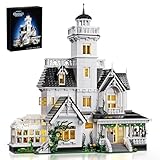
- 【Design Inspiration】The design of this house is inspired by Owen's home in the family comedy movie. It is a Victorian-style building with kitchens, greenhouses, bedrooms, corridors, etc. as the model, which is magnificent.
- 【Rich details design】This toy set has rich interior details. The first floor is the living room, kitchen, dining room and greenhouse, the second floor is the bedroom and study, and the third floor is the daughters' bedroom. In addition, there is an observation deck where you can stand on it to enjoy the beautiful scenery nearby
- 【Easy to Assemble】This Magic house uses 1877 pcs ABS plastic material, safe and smooth, no burrs, Comes with clear and easy-to-understand paper instructionsand easy to assemble
- 【Ideal Gift】This Magic house toy set is a great gift, whether it is a festival such as Halloween, Christmas or birthday, it will stimulate your creative thinking during the construction process and bring you unlimited exploration fun.
- ❤️We Care About You❤️ Our Magic house are fully tested before shipping and the quality is confirmed, you can buy with confidence. If you have any questions, please contact us so that we can offer you a statisfying solution
Risks identified by the SEC
The SEC describes general investment risk, limited flexibility, tracking error and potential underperformance caused by fees, expenses, trading costs and tracking error. “Passive” describes how the portfolio follows its index; it does not mean the investment is risk-free or that losses are impossible. The securities in the underlying index can fall, sometimes sharply, and an investor can lose principal.
LEGO and index funds compared across the decisions that matter
| Decision factor | LEGO sets | Index funds |
|---|---|---|
| Return evidence | Historical estimates range from 1.20% real annually (1966–2018, 2020 study) to at least 11% nominal and 8% real (1987–2015, 2022 study). The studies are not directly comparable. | Results depend on the tracked index, fund implementation, period and investor cash flows. No universal index-fund return is established by the LEGO studies. |
| Main risk | Set-specific demand, condition, authenticity, concentration and the possibility of no timely buyer. | Market losses in the underlying securities, concentration in the chosen index, tracking error and fund expenses. |
| Liquidity | Requires finding and completing a secondary-market sale; quoted prices may not be executable. | Shares generally trade or redeem through the fund structure, but execution, spreads, market conditions and fund rules vary. |
| Costs | Purchase premium, shipping, taxes, storage, damage, replacement parts and selling or payment charges. Contemporary amounts depend on location and venue. | Expense ratio and other fund expenses, trading costs, bid-ask spread where relevant, taxes and possible account charges. |
| Diversification | Usually concentrated in selected themes, years or individual sets unless you deliberately build a broad collection. | Holdings and concentration follow the chosen index; a broad index and a narrow index have different diversification. |
| Work and access | Requires selecting inventory, checking condition, storing it and eventually listing, packing and shipping it. | Requires choosing a fund and monitoring suitability, fees, tax treatment and tracking; no physical inventory is involved. |
| Evidence quality | Academic estimates are historical and method-specific; they do not identify a guaranteed current winner. | Fund documents disclose objectives, holdings, expenses and risks, allowing analysis of a specific product. |
How to compare returns on an equal basis
Use the same dates and inflation convention
First write down the measurement period, currency and whether a number is nominal or inflation-adjusted. The 2020 LEGO estimate is a 1.20% annual real return over 1966–2018; the 5.54% equity figure in that paper is also inflation-adjusted for the same comparison. The 2022 LEGO estimate covers 1987–2015 and reports at least 11% nominal, or 8% in real terms. Mixing these periods or treating the nominal and real figures as interchangeable creates a false comparison.
Use net, investor-level cash flows
For LEGO, record every cash outflow and the actual amount received when a sale settles. For a fund, use the fund’s published total-return information where available, then account for the expense ratio, trading costs, taxes and your purchase and sale dates. Do not compare a LEGO listing price with a fund’s pre-expense index return.
Quick wins for a faster PC:
Scan for outdated or missing drivers - takes under a minuteDriver Scan →Clear out junk files and repair common Windows errorsFree Scan →Fix the driver behind crashes, sound loss and screen glitchesFind Drivers →Separate raw return from risk-adjusted metrics
The 2022 study’s 4%–5% multifactor alpha describes performance relative to a selected model of risk factors, while its Sharpe ratio of 0.4 relates excess return to volatility under that model and period. Neither metric is a second estimate of the item’s cash profit, and neither can be compared directly with a fund’s advertised return without matching definitions, benchmark, risk-free rate, frequency and costs.
Rank #4

- Give a movie fan or any kid who lives for high-flying adventures a gift full of details to inspire the imagination with this LEGO Disney and Pixar ‘Up’ House (43217) set
- This 598 piece LEGO Disney set includes a partial house built with balloons, different rooms and functions, 2 minifigures, a LEGO animal figure and plenty of accessories to spark play
- The set includes beloved Disney and Pixar movie characters: Carl Fredricksen and Russell LEGO minifigures, and a Dug LEGO dog figure for dog lovers. The set is made for unlimited adventures on land or floating through the clouds
- Disney and Pixar fans with a passion for adventure will enjoy this set full of imaginative possibilities, with a house based on an iconic movie
- One of a limited number of LEGO sets created to celebrate Disney’s 100th anniversary; collect them all! Great for kids ages 9+. This also makes an impressive gift for adult Disney fans
Liquidity, concentration and practical risk
LEGO resale is a market process
You must locate a buyer who accepts the item’s condition and price, complete payment and deliver the set. A theoretically valuable set may remain unsold, require a lower price or incur additional handling costs. The reported older-set liquidity effect suggests that age and market depth mattered in the 2020 sample, but it does not tell you how quickly a particular listing will sell.
Fund liquidity depends on structure and market conditions
Exchange-traded funds trade during market hours and can show bid-ask spreads and temporary deviations from net asset value. Mutual funds generally transact at a calculated net asset value under their rules. Both structures can face stressed markets, trading halts, redemption terms or thin underlying securities. Check the specific prospectus rather than assuming every index fund has identical liquidity.
Concentration changes the size of a loss
Owning one theme, one release year or a few expensive sets exposes you to idiosyncratic collector demand. A fund holding hundreds or thousands of securities can spread company-specific risk, but a sector, country or single-industry index can remain concentrated. Diversification is a property of the actual holdings, not the word “fund.”
Free tools Windows power users keep installed
One-click scans. No signup required.
Costs that can turn a gross gain into a loss
LEGO cost checklist
- Acquisition price, including any premium over the original retail price.
- Delivery, taxes and payment charges when buying.
- Secure, dry storage and insurance where appropriate.
- Replacement parts, cleaning or authentication work needed to make the set saleable.
- Listing, payment, shipping, packaging, returns and tax costs when selling.
- The opportunity cost of money tied up until a buyer appears.
No single contemporary resale-cost percentage is established in the cited material. Treat any marketplace fee as a variable to verify for your country, account type, item category and sale date.
Best Value

- BUILD AN ICON – Build the ultimate retro gaming display with the LEGO Game Boy (72046) model kit for adults ages 18 and up
- RELIVE THE EXCITEMENT – Remember powering up your Game Boy for the first time? Experience the thrill again with this authentic of the handheld gaming sensation
- DISCOVER AUTHENTIC DETAILS – The instantly-recognizable Game Boy features classic button layout, contrast dial, and interchangeable Game Pak and lenticular screens
- RETRO ROOM DECOR – Display this buildable model kit on any flat surface in your home or office as an eye-catching centerpiece that celebrates your love of LEGO and Game Boy
- GIFT FOR MEN & WOMEN – This unique DIY Building kit for adults is sure to thrill retro gaming fans, Nintendo collectors, and pop culture enthusiasts who remember their first Game Boy
Index-fund cost checklist
- Annual expense ratio and any other expenses shown in the prospectus.
- Bid-ask spread and brokerage charges for exchange-traded purchases, if applicable.
- Trading costs and tracking differences inside the fund.
- Account, advice or platform charges outside the fund.
- Taxes on distributions and realized gains according to your jurisdiction.
A lower expense ratio can help, but it does not remove market risk or make a fund suitable for every objective. Compare the fund’s actual tracking history and documents with the index it follows.
A decision framework for a potential LEGO buyer
- Define the purpose. Decide whether the purchase is primarily a hobby, a collectible you would enjoy owning, or a financial asset. If you would be unwilling to keep the set when resale takes longer than expected, the financial case is fragile.
- Set a loss and storage limit. Determine how much capital and physical space you can devote without affecting emergency savings, debt payments or near-term obligations.
- Specify the exit route before buying. Identify the likely selling venue, buyer type, documentation and shipping method. Obtain the current rules and charges for that venue rather than relying on a generic percentage.
- Record condition and provenance. Keep receipts, photographs, component inventories and storage notes. These records help distinguish your item from a damaged or incomplete example.
- Model a conservative net outcome. Use a sale price below the most optimistic listing, allow for a delayed sale and subtract every purchase and selling cost. The result is a scenario, not a promised return.
- Keep the position appropriately sized. The 2020 paper’s 5%–25% portfolio result belongs to its model and investor assumptions. It should not be copied as a personal allocation without considering your finances, taxes, risk tolerance and other assets.
A decision framework for choosing an index fund
- Read the fund objective. Confirm the exact index, geographic scope, security types, weighting method and rebalancing rules.
- Check implementation. Determine whether the fund uses full replication or sampling, and review its historical tracking difference rather than assuming perfect replication.
- Read all costs. Review the expense ratio, transaction arrangements, spreads and any account-level charges. The SEC’s investor bulletin is U.S. investor education; its guidance does not automatically cover every jurisdiction’s rules or tax treatment.
- Measure concentration. Inspect the top holdings, sector weights and country exposure. A fund can be index-based and still be narrowly concentrated.
- Match the horizon and risk. Equity funds can lose value over short periods. Choose an asset mix and cash reserve that can withstand the time you may need to remain invested.
- Use the fund’s documents. Confirm dealing times, redemption arrangements, distributions, tax reporting and any eligibility restrictions before investing.
When each option may fit—and when it may not
LEGO may fit a collector who accepts uncertainty
A collector may value the objects themselves, enjoy researching themes and have the space, patience and skills to manage resale. In that case, any financial upside is an uncertain supplement to the hobby. The historical evidence can inform expectations about how collectible markets have behaved, but it cannot identify a current winner.
An index fund may fit someone seeking market exposure
An index fund can provide a specified basket of securities through a regulated fund vehicle, with disclosed holdings and expenses. It still exposes you to the risks of that market and to implementation differences. A broad fund, a narrow fund and a bond-index fund are not interchangeable choices.
Neither is a substitute for essential financial planning
Emergency cash, high-interest debt, insurance, taxes and retirement needs can dominate the outcome of a speculative purchase or a market investment. A comparison of historical returns cannot determine suitability without your time horizon, liquidity needs, jurisdiction and existing portfolio.
Bottom line: are LEGO sets a good investment?
LEGO can be an enjoyable collectible with a possibility of appreciation, but it is a concentrated physical asset whose realized result depends on set selection, condition, storage, buyer demand, selling speed and all transaction costs. The two cited studies produce different historical estimates—1.20% real annually for 1966–2018 in one and at least 11% nominal (8% real) for 1987–2015 in another—so they do not establish a single expected return.
Index funds provide market-index exposure through a fund, not a guaranteed market return. Their risks include losses in the underlying securities, concentration, tracking error and expenses. Compare a specific fund’s documents and net performance with a conservative, after-cost LEGO scenario over the same period. If the LEGO purchase would not make sense without a hoped-for price increase, it is speculation rather than a dependable investment plan.
Quick Recap
Product prices and availability are accurate as of the date/time indicated and are subject to change. Any price and availability information displayed on Amazon at the time of purchase will apply.
Recommended Free Tools

