Short answer: A laser projector is not automatically brighter, cheaper, or more colorful than a Xenon projector. The result depends on the laser architecture (blue-laser phosphor, RGB pure laser, or hybrid), the exact projector model, screen, operating mode, and local ownership costs. Xenon generally has a lower purchase price and a color performance close to DCI-P3, while laser systems can hold brightness more consistently, eliminate lamp changes, reduce power use in some configurations, and offer wider gamut options. Compare matched projector models and a site-specific total-cost calculation rather than the word “laser” on a specification sheet.
What the light source changes
The illumination system affects the image you see and the work required to keep it on screen. It influences brightness, color gamut, contrast, operating life, energy use, and maintenance. As Christie Digital Systems puts it: “At the heart of every cinema projector is the illumination system, which helps determine the brightness, color gamut, contrast, operational lifetime, and energy consumption of the projector.”
As an Amazon Associate I earn from qualifying purchases.
In commercial cinemas, the relevant comparison is between a replaceable Xenon arc lamp and several different laser designs. Treating all laser projectors as one category creates misleading comparisons. A blue-laser-phosphor projector uses blue laser light to excite a phosphor wheel or phosphor element, then filters and processes the resulting light. An RGB pure-laser projector has separate red, green, and blue laser sources. Hybrid systems combine laser and phosphor or other illumination elements. Each design has different efficiency, gamut, brightness-retention, and service characteristics.
Xenon lamps
A Xenon projector forms its image from the white light of a high-intensity arc lamp. The lamp is a consumable: its output declines with use, and the cinema replaces it when brightness falls below an acceptable presentation level or when the lamp reaches its service limit. Replacing the lamp can restore much of the original brightness, but the theater must budget for the lamp, labor, handling, and downtime.
#1 Best Overall
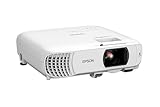
- HOME THEATER PROJECTOR — Bring your entertainment experience to the next level; With detailed 1080p images and fast data processing, the Epson Home Cinema projector is optimized for fast-action sports and more; Also an exciting casual gaming projector
- ULTRA BRIGHT IMAGES — 4,000 Lumens of Color Brightness (IDMS rated) and 4,000 Lumens of White Brightness (ISO Rated)¹; Wall projector for tv and movies delivers clear and crisp images in a variety of lighting conditions
- VIVID AND PRECISE COLOR — Advanced 3LCD technology displays 100% of RGB color signal for every frame, providing precision color accuracy while maintaining vivid color brightness, without distracting "rainbowing" or "color brightness" issues
- VERSATILE CONNECTIVITY — Streaming projector features two HDMI ports and a USB port that functions as a power source for streaming devices²; Connect laptops and devices, including Fire TV, Apple TV, Roku, and Chromecast; Seamless video conferencing
- QUICK AND SIMPLE SETUP — The built-in speaker means you can start using this projector immediately; Easy setup for video and audio right out of the box; Portable projector with speaker can also be easily repositioned
Blue-laser phosphor
Blue-laser-phosphor designs use blue laser diodes with a phosphor conversion stage. They can provide long illumination life and avoid routine lamp replacement. However, reaching a cinema color target can require substantial filtering and color correction. Christie’s comparison says that extensive yellow-notch filtering and color correction to reach DCI-P3 can reduce brightness by nearly 50% in the cited blue-only configuration. That is a model-and-mode result, not a universal penalty for every laser phosphor projector.
RGB pure laser
RGB pure-laser projectors dedicate sources to red, green, and blue. This architecture gives the image-processing system direct control over each primary and can support a wider gamut than Xenon or blue-laser phosphor systems in the cited Christie comparison. It also tends to occupy a different price and performance tier, so an RGB model should be compared with a similarly capable Xenon or phosphor model rather than with an entry-level projector.
Brightness: compare the picture on your screen
Advertised lumens are a starting point, not a guarantee of equal cinema brightness. On-screen luminance depends on projector configuration, screen dimensions and gain, throw distance, 2D or 3D mode, color filters, calibration, and the luminance target required by the theater. A higher lumen number can produce a dimmer picture if more light is discarded by filtering or if the projector is used on a larger screen.
Free tools Windows power users keep installed
One-click scans. No signup required.
Christie’s current cinema overview lists these ranges for its own product families:
| Christie product family | Light-source architecture | Published output | How to interpret it |
|---|---|---|---|
| CineLife+ RGB pure laser | RGB pure laser | 15,000–57,000 lumens | Manufacturer range for that lineup; not a universal RGB limit. |
| Enhanced laser phosphor RBe models | Laser phosphor | 6,000–11,000 lumens | Manufacturer range for those models; filtering and operating mode still matter. |
A separate 2018 Christie comparison listed blue-only laser phosphor products up to 33,000 lumens and RGB pure-laser products up to 60,000 lumens. Those are historical figures for the products in that comparison, not current limits for every projector.
Rank #2

- 4K PRO-UHD (1) Projection technology — a new type of 4K home theater experience, utilizing advanced technologies for resolution Enhancement, color and image processing
- True 3-chip projector design — Advanced 3LCD technology displays 100 percent of the RGB color signal for every frame without any “rainbow effect” or color brightness issues
- 4K resolution processing — pixel-shifting technology precisely controls three individual, high-definition LCD chips to parallel process millions of pixels
- Full 10-bit HDR (2) — accepts 100 percent of the HDR source information to faithfully reproduce HDR content for an amazing visual performance, Plus hog support
- Digital video processing — Real-time, 12-bit analog-to-digital video processing for smooth tonal transitions; helps eliminate banding, blocking and other compression artifacts from the final visual performance
Laser regulation can keep output more stable over years of operation. Xenon output falls as the lamp ages, so a theater may begin with sufficient brightness and later need a lamp change or a lower screen-luminance target. A proper comparison therefore records brightness at the intended screen, mode, and calibration point, then asks how that brightness is expected to change during the planned operating period.
Questions to put in a brightness quotation
- What is the measured or specified on-screen luminance on the actual screen, not only the projector’s maximum lumen rating?
- Is the number for 2D, 3D, or another presentation mode?
- Which color filter, gamut setting, and calibration target are used?
- What brightness endpoint does the manufacturer use for its life rating?
- How much headroom remains for lamp aging, screen changes, or a future 3D installation?
Color: architecture matters more than the label
Color gamut is where “laser” is most often oversimplified. Christie describes Xenon’s native color as naturally close to DCI-P3, so comparatively little filtering is needed to reach that cinema target. Its comparison describes blue-only laser phosphor as capable of Rec. 709 and DCI-P3, but says that substantial filtering and color correction are required for DCI-P3 and reduce brightness in the cited configuration.
The Tool Desk
Outbyte Driver Updater FREEScan for outdated or missing drivers - takes under a minuteDriver Scan →Outbyte PC Repair FREERepair Windows errors before they cause bigger problemsFix Now →Christie’s RGB pure-laser comparison lists Rec. 709, DCI-P3, and up to Rec. 2020. The wider gamut can be valuable for content mastered beyond P3, provided the projector, media server, calibration, and content chain all support it. A wider theoretical gamut does not make ordinary P3 content look automatically better; it gives the system more color volume when the content and mastering use it.
| Architecture | Color information reported by Christie | Practical consequence |
|---|---|---|
| Xenon | Naturally approaches DCI-P3 | Relatively little filtering is needed for the cited cinema target, but lamp output changes with age. |
| Blue-only laser phosphor | Rec. 709 and DCI-P3 | Reaching DCI-P3 can require extensive filtering and correction, with a nearly 50% brightness reduction in the cited comparison. |
| RGB pure laser | Rec. 709, DCI-P3, and up to Rec. 2020 | Dedicated red, green, and blue sources can support a wider gamut, subject to model, processing, and content support. |
These are vendor-reported comparisons, not independent measurements across a matched set of projectors. Ask for the exact gamut mode, calibration procedure, and expected luminance in that mode before treating a color claim as a buying specification.
Cost: purchase price is only one line
Xenon commonly has the lower initial projector price, while laser can remove lamp purchases and reduce power consumption in some installations. Neither statement is sufficient to determine the cheaper system. Include electricity, lamps or illumination modules, labor, cooling, service, downtime, and the number of operating hours you actually expect.
Rank #3

- Home Cinema Experience
- Game Display Mode
- Easy Installation
Christie published an illustrative 2018 comparison for 20,000-lumen cinema projectors over 30,000 operating hours:
| System in Christie’s illustration | Projector price | Illumination cost over 30,000 hours | Illustrated total |
|---|---|---|---|
| Xenon | $45,000 | $7,700 for 11 lamp replacements | $52,700 |
| Laser phosphor | $65,000 | $10,400 for two illumination-system replacements | $75,400 |
Christie characterized Xenon as approximately 20% lower in total cost of ownership in that specific scenario. The figures are illustrative 2018 prices, exclude duties, taxes, and shipping, and are not a current market quotation. They also do not establish what your electricity rate, labor rate, cooling load, service contract, or downtime cost will be.
Build a site-specific total-cost model
- Record the operating profile. Estimate annual screening hours, seasonal peaks, the number of screens, and the planned ownership period. A projector running a few hours each day has a different payback calculation from one running continuously.
- Get comparable purchase quotes. Request the projector, lens, required media and control electronics, installation, calibration, shipping, taxes, and any warranty or service package as separate lines.
- Price illumination and labor. For Xenon, include the correct lamp part number, replacement frequency, disposal, and technician time. For laser, include any specified illumination-module replacement and its labor.
- Calculate electricity and cooling. Use the projector’s power draw in the actual presentation modes and your local electricity tariff. Include ventilation or cooling costs where they are material.
- Assign a downtime cost. A missed show, emergency lamp delivery, or service visit can outweigh a small difference in energy consumption. Use your own schedule and revenue data instead of a generic assumption.
- Test the result. Run low-, expected-, and high-utilization cases. If the conclusion changes with modest changes in hours or electricity price, the decision is sensitive and should not be based on a single headline number.
Christie says newer laser cinema projectors can consume less power per lumen than equivalent-brightness legacy Xenon systems and need no lamp replacements. That is a product-generation and configuration comparison, not a guarantee that every laser installation costs less to operate.
Vendor-specific efficiency claims
Christie states that its RealLaser VDR can reduce laser power consumption by up to 30% and extend laser lifetime by up to 50%. Barco advertises its Laser Light Upgrade as saving up to 70% on the energy bill and extending projector life by up to 30,000 hours. Both statements apply to the manufacturers’ eligible products or upgrade configurations. They are not independent guarantees for every installation; require a written calculation for your model, screen, operating mode, and region.
Lifespan: define the endpoint
“Laser lasts 30,000 hours” is incomplete unless it says how much brightness remains at that point. Christie’s 2018 comparison gives these product-specific figures:
What’s actually slowing this PC down?
Pick the symptom - the matching free tool is one click away.
Rank #4
![[Built-in Apps & 2026 Upgraded] Mini Projector with Wi-Fi 6 & Bluetooth 5.4, 1080P 4K Support Full HD, Auto Keystone 360° Portable Home Cinema Smart Projector for iOS/Android X1](https://m.media-amazon.com/images/I/51e6NRuy1xL._SL160_.jpg)
- 【SMART Android 14 Projector with Auto Keystone Correction | Built-in Apps】This intelligent projector features integrated Android TV, providing immediate access to: Over 10,000 apps and extensive streaming libraries; 800+ complimentary channels; Seamlessly cast content from your smartphone to share videos, games or photos in moments.
- 【NATIVE 720P Full HD Projection | 300 ANSI Lumens High Brightness】Delivering certified Full HD 720P resolution with 300 ANSI lumens brightness and 15,00:1 dynamic contrast for exceptional detail reproduction and rich colour accuracy, recreating an authentic cinema-scale viewing experience.
- 【WIFI 6 & Bluetooth 5.4 | Stable Streaming with Minimal Latency】Experience significantly reduced buffering with Wi-Fi 6 connectivity, maintaining consistently smooth playback for films and games. Seamlessly pair wireless speakers via Bluetooth or utilise the integrated 3W RMS stereo sound system for enhanced audio immersion. Ideal for cinematic viewing, gaming sessions or ceiling-mounted installations.
- 【PORTABLE & Multi-Mount Design】This compact mini projector (L6"x φ3" , 0.8 lbs) features versatile mounting options including ceiling, tabletop, and tripod installation - adapting effortlessly to any space or occasion. Its ultra-lightweight body makes it perfect for home theaters, outdoor movies, or on-the-go presentations.
- 【EYE Comfort Technology with Extended Durability】Designed for prolonged viewing comfort, the blue light reduction lens helps minimise eye strain during extended use. Coupled with an energy-efficient 30,000-hour LED light source (rated lifespan under standard testing conditions) and low-noise thermal management system, the projector maintains consistent performance. Includes HDMI/USB for games consoles, streaming devices or external audio systems.
| Illumination type | Published operating-life figure | Brightness endpoint |
|---|---|---|
| Blue-only laser phosphor | 30,000 hours | 50% brightness |
| RGB pure laser | 30,000 hours | 80% brightness |
Christie’s current overview also says RealLaser lifetimes can exceed 50,000 hours at reduced brightness. That statement describes a different product-specific condition and should not be merged with the 30,000-hour figures. Ask whether a quoted life is to 50%, 80%, or another output threshold, and whether it applies to the whole projector, the light source, or a replaceable module.
Projector life and light-source life are separate. Optical components, cooling systems, electronics, seals, and mechanical parts may require service before the light source reaches its rated endpoint. A laser light source can avoid scheduled lamp swaps without making the entire projector maintenance-free.
What Xenon maintenance involves
Xenon lamps are replaceable consumables. Output declines over time, and a lamp change can restore brightness when presentation quality is no longer acceptable. For a replacement, match the lamp to the exact projector make, model, and part number; a generic “xenon projector replacement lamp” search term is only a starting point, not proof of compatibility. Confirm the lamp specification with the projector documentation or an authorized service provider.
- Plan replacement inventory around your actual run hours and delivery time.
- Use the specified lamp and follow the manufacturer’s handling procedure.
- Have trained personnel perform the change because Xenon lamps operate under high pressure and require correct installation.
- Record lamp hours and measured brightness so replacement is based on presentation quality, not only a calendar date.
What laser maintenance involves
Laser systems remove routine lamp changes, but they still need optical cleaning, cooling-system care, calibration, software and electronics support, and eventually an illumination-module service or replacement where specified. A service contract should state response times, parts availability, calibration responsibility, and what happens if a laser module fails during a scheduled run.
Do these 3 things before closing this tab:
1Clear out junk files and repair common Windows errors2Scan for outdated or missing drivers - takes under a minute3Repair Windows errors before they cause bigger problemsHow to choose for a real cinema
Choose Xenon when the installation favors low capital cost
- The initial budget is tight and the theater can support planned lamp purchases.
- The screen and presentation mode can meet their luminance target with a current Xenon model.
- Local technicians and replacement-lamp logistics are reliable.
- The ownership period or annual hours are too short for energy and maintenance savings to offset a laser premium.
Choose blue-laser phosphor when consistency and simpler illumination service matter
- Stable output and fewer scheduled consumables are more valuable than the lowest purchase price.
- The required gamut and screen brightness can be met without an unacceptable filtering penalty.
- The supplier can document module life, brightness endpoint, service process, and parts availability.
Choose RGB pure laser when color volume is a priority
- The content pipeline and calibration workflow can use a gamut beyond DCI-P3.
- The screen, lens, and operating mode justify the higher-capability projector.
- The budget supports the purchase price and specialized service requirements.
Consider a hybrid or upgrade path
Some theaters can upgrade an existing platform rather than replace the complete projector. Barco describes a Laser Light Upgrade that replaces the Xenon light source on eligible Series 2 projectors, while its Series 3 upgrade extends the existing laser light source. Eligibility is model-specific. Verify the projector family, configuration, warranty effect, installation work, calibration, and regional availability with the manufacturer or an authorized service provider.
Best Value
![Outdoor-Projector-4K [VIDAA Live TV/40W Dolby/920 ISO] with WiFi6 and Bluetooth Compatible with Netflix, Smart Projector, AI Voice Control & Auto Focus, HDR10, Movie Proyector for Ceiling Home Theater](https://m.media-amazon.com/images/I/51R8227Xr5L._SL160_.jpg)
- 【2026 No.1 Fast VIDAA OS | Cloud Storage & Data Security】The upgraded X9 PRO 4k projector builds on the classic X9 proyector with superior speakers, higher brightness, and the exclusive VIDAA OS—designed to feel like a smart TV but perform even smoother. Unlike standard Android or Google TV projectors, VIDAA stays fast and stable over months of heavy use, with zero lag. It includes cloud storage to keep local memory free, and no data tracking, no targeted ads, and no personal collection. Kids mode with enhanced privacy protection. Whether at home, camping, or watching live sports, you get a secure, distraction‑free cinema experience every time
- 【Massive Apps | AI Recommendations | 1,000+ Live Channels】This smart projector delivers buttery‑smooth playback with popular streaming pre‑loaded—compatible with Netflix, YouTube, and Prime Video are ready with one tap. It also intelligently recommends region‑specific apps like Disney+, Hulu, Peacock, HBO MAX and TV Channels. With over 1,000 built‑in live TV channels, including Sky News (5507) and FIFA+ (5340), it becomes the complete entertainment hub for the whole family. No more switching devices—everything is personalized and easy to access on this feature‑packed outdoor projector
- 【True 920 ISO ANSI Brightness | 4K Decoding | HDR10】Delivering a real 920 ANSI lumens (ISO‑standard), the 4K projector outperforms many that inflate their "3500 brightness" claims. With native 1080P resolution, 4K video decoding, a 130% NTSC wide color gamut, and HDR10 support, images are vivid, rich, and deep. Even in moderately lit rooms, picture quality stays impressive—sports motion is crisp, and movie scenes transition naturally from light to shadow. Whether you're using this outdoor projector for blockbuster films or live matches, the visual experience is consistently stunning. Note: 4K‑labeled content plays at native 1080P, commonly known as "4K decoding," ensuring exceptional clarity
- 【2*20W Speakers | Dolby Audio | Bluetooth 5.4 | HDMI ARC & CEC】Equipped with 2×20W dual‑cavity speakers and Dolby Audio certification, this bluetooth projector brings cinematic sound to any space—from clear dialogue to powerful bass. Upgraded two‑way Bluetooth 5.4 gives you flexibility: connect an external soundbar wirelessly for a full theater setup, or switch to standalone speaker mode instantly. HDMI ARC and CEC support means a single cable links to your soundbar or external speakers, streamlining your gear while elevating every listening experience. It’s TV and audio combined, simplified
- 【Official AirPlay 2 & HomeKit | Smartphone Voice Control】Enjoy versatile casting with native AirPlay and screen mirroring—no third‑party apps required, unlike typical Google TV systems. It's simpler, faster, and more reliable on this AirPlay-compatible outdoor movie projector. Seamlessly integrated with Apple HomeKit, you can control power and menu navigation remotely from your iPhone, iPad, or Mac. The VIDAA app also turns your smartphone into a full remote, and both the remote and app support voice commands. Perfect for bedroom movies, outdoor camping, gym sessions, or hosting friends—this smart projector fits every occasion effortlessly
Compatibility and support checks
Brightness and color are visible, but an illumination upgrade can fail as a business decision if the surrounding platform is unsuitable. Confirm:
- Content formats, frame rates, 2D and 3D requirements, and media-server compatibility.
- Available lenses and the throw range for the existing booth and screen.
- Power, ventilation, cooling, and physical mounting requirements.
- Warranty terms after a light-source conversion or third-party service.
- Regional technician coverage, response time, spare parts, and loaner policy.
- Calibration tools and who is responsible for verifying luminance and color after installation.
Common comparison mistakes
Comparing maximum lumens from unrelated models
Maximum output may use a different color mode, lens, or screen assumption. Compare measured on-screen luminance in the same presentation mode and at the same target gamut.
Calling every laser projector “wide gamut”
RGB pure laser and blue-laser phosphor do not have the same color path. A phosphor system may need filtering that reduces usable brightness, while a wider RGB gamut matters only when the content and processing chain support it.
Recommended Free Tools
Using light-source hours as a projector warranty
A 30,000-hour illumination rating does not promise that every projector component will operate without service for 30,000 hours. Read the warranty and service terms separately.
Assuming a long life guarantees lower TCO
The dated Christie illustration favored Xenon despite its lamp replacements because the laser projector cost more at purchase and had stated illumination costs. Your electricity price, annual hours, labor, and downtime can reverse or reinforce that result.
Ignoring the brightness endpoint
Thirty thousand hours to 50% brightness is not equivalent to 30,000 hours to 80% brightness. Keep the endpoint beside every life number in a quotation and in your internal budget.
A practical decision worksheet
Before selecting a projector, write down the following values for each candidate:
| Decision field | Required entry |
|---|---|
| Screen and lens | Screen width and height, gain, throw distance, lens, and intended seating geometry |
| Presentation target | Required on-screen luminance, 2D/3D modes, color gamut, and calibration standard |
| Light-source architecture | Xenon, blue-laser phosphor, RGB pure laser, or hybrid, with exact model |
| Life definition | Rated hours, brightness endpoint, and whether the figure covers a module or the full projector |
| Annual use | Expected operating hours, peak schedule, and planned ownership period |
| Ownership cost | Purchase, electricity, lamps or modules, labor, cooling, service, and downtime |
| Support | Warranty, response time, parts, compatibility, upgrade eligibility, and regional coverage |
Then request a demonstration or calibrated measurement on a screen comparable to yours. Have the supplier document the mode used, color filter, luminance, power draw, and assumptions behind every cost and life figure. This turns a technology preference into an auditable installation decision.
Quick Recap
Product prices and availability are accurate as of the date/time indicated and are subject to change. Any price and availability information displayed on Amazon at the time of purchase will apply.

