Yes, conditionally. Home Assistant’s Android Debug Bridge (ADB) integration is a normal local-control method for Fire TV, but ADB is privileged debugging access. Keep the Fire TV and Home Assistant on a trusted private network, approve only your Home Assistant host, never expose the ADB port to the internet, and turn debugging off when you do not need it.
What “safe” means in this setup
ADB is not an ordinary media-control API. It is a developer and debugging interface that can accept commands from an authenticated computer. When Home Assistant connects to a Fire TV Stick over ADB, it is using that privileged interface rather than a narrowly scoped television remote protocol.
As an Amazon Associate I earn from qualifying purchases.
The practical safety boundary is therefore the network and the list of hosts that the Fire TV trusts. ADB can be appropriate on a private, access-controlled home network. It becomes risky when unknown devices can reach the Fire TV, when the ADB listener is forwarded from the internet, or when an old computer remains authorized after your Home Assistant installation has changed.
Android’s security model uses an RSA-key approval prompt before a device accepts debugging commands. That prompt is useful, but it is not a substitute for network security: approve only the Home Assistant machine you operate, and do not treat a familiar Wi-Fi name as proof that every connected client is trustworthy.
#1 Best Overall

- Compatibile with TV Stick ( 3rd Gen), TV Stick 4K (1st / 2nd Gen / Select / Plus), TV Stick 4K Max (1st / 2nd Gen), TV Cube(2nd/3rd Gen), TV Stick Lite( 1st / 2nd Gen)
- Compatible with Omni, Ember, Insignia, Toshiba, Pioneer Smart TVs that support voice commands
- This remote is compatible with streaming devices and smart TVs, and the pairing methods differ. Please refer to the instructions for pairing
- Voice Function: Use voice commands to find your favorite content faster than ever before
- Package Contents: 1 Replacement Voice Remote, 1 User Manual (Batteries not included: requires 2 AAA)
How Home Assistant controls Fire TV over ADB
Fire TV configuration
Amazon’s developer documentation describes ADB as a debugging interface. The Fire TV must have ADB debugging enabled, and Home Assistant needs the stick’s local IP address. Fire TV shows that address under Settings > My Fire TV > About > Network. Menu wording and the location of developer controls can vary by Fire OS generation, so use the labels displayed on your particular model.
Home Assistant’s connection
Home Assistant’s official Android Debug Bridge integration supports Android devices and Amazon Fire TV. Its default recommendation is the built-in Python ADB implementation. An ADB server is an optional alternative when the default implementation has stability problems; it is not a security upgrade and should not be enabled merely because it sounds more advanced.
At the network level, the connection is from the Home Assistant host to the Fire TV’s ADB listener. Amazon documents the conventional form as:
What’s actually slowing this PC down?
Pick the symptom - the matching free tool is one click away.
adb connect <ip>:5555
The port may differ if your device or software uses another setting. The important point is that this is a direct local connection, not a requirement to publish the Fire TV to a cloud service or to the public internet.
Rank #2

- Compatible with Streaming Devices (2018-2026): TV stick 4K Max (1st, 2nd Gen), TV stick 4K (1st, 2nd Gen, Plus, Select), TV stick (HD, 3rd Gen), TV cube (3rd Gen), TV stick lite (1st, 2nd Gen)
- Compatible with Smart TVs: works seamlessly with Insignia, Toshiba, Omni, 2-Series and 4-Series smart TVs with voice control
- Incompatible Devices: Not compatible with TV stick (1st, 2nd Gen), soundbar or other receiver
- Voice Control Features: Quickly search content, launch apps, and adjust volume using voice commands for hands-free convenience
- Instant Access Shortcuts: 4 pre-programmed buttons provide one-tap access to popular streaming apps and channels
The first pairing
On the first connection, Fire TV presents an approval dialog. The dialog identifies the computer requesting debugging access and may offer an option to always allow that host. Accept it only when the requester is your Home Assistant instance. If the prompt appears unexpectedly, choose the option that refuses the request and investigate which device is attempting to connect.
Set up ADB with a secure trust boundary
- Inventory and update the endpoints. Identify the exact Fire TV Stick model and Fire OS build, the machine running Home Assistant, and the router or access point carrying their traffic. Install available updates for Home Assistant, Fire TV, and router firmware before pairing. Behavior can vary by Fire TV generation and software build.
- Place both devices on a private network. Use a home LAN or a deliberately configured IoT network where you know which clients can communicate. Do not use a guest network that prevents the Home Assistant host from reaching the Fire TV, and do not place the stick on a segment where untrusted users or unmanaged devices can freely connect.
- Enable ADB debugging on Fire TV only when ready to pair. Open the Fire TV developer settings and switch on ADB debugging. Because the exact menu path changes between Fire OS releases, confirm that the label refers to ADB debugging rather than another developer option.
- Record the local address. In Settings > My Fire TV > About > Network, note the IP address shown for the stick. A DHCP reservation on your router can make that address more stable, but it does not replace authentication or firewall rules.
- Add the official integration in Home Assistant. Choose the Android Debug Bridge integration and use its built-in Python ADB implementation unless you have a demonstrated stability reason to run an ADB server. Enter the Fire TV address and the port required by your device.
- Inspect the Fire TV prompt. Pair only when the request is initiated by your Home Assistant host. If you select an “always allow” option, understand that you are creating a persistent trust relationship with that host; do not select it for a temporary laptop, an unknown IP address, or a shared computer.
- Test the smallest useful control. Verify that Home Assistant can perform the media or power action you need, then check that the Fire TV remains reachable after a sleep and wake cycle. Avoid adding additional ADB clients simply because pairing succeeded.
- Apply the network rules described below. A successful pairing is not the end of the security setup. Restrict who can reach the Fire TV and confirm that no internet-facing rule exposes its ADB port.
Network controls that matter most
Keep ADB local
Do not create a router port-forward for TCP 5555 or for any other ADB port. Port-forwarding turns a local debugging listener into an internet-reachable administration interface. ADB is designed for a controlled, secure environment, and an open listening socket gives remote attackers another service to probe.
Limit peer reachability
Use router firewall rules, an IoT VLAN, or equivalent access-control features to permit connections from the Home Assistant host to the Fire TV while denying unnecessary clients. The rule should be as narrow as your network design allows: the intended source host, the Fire TV’s address, and the ADB port only. Segmentation reduces the number of devices that can even present a pairing request or attempt to communicate with the listener.
Free tools Windows power users keep installed
One-click scans. No signup required.
Do not confuse Wi-Fi encryption with complete isolation
A WPA-protected network can still contain a compromised phone, an infected computer, a visitor who received the password, or an IoT device with poor security. Treat every client that can route to the Fire TV as part of the ADB threat model. A separate segment is especially useful when your home network contains devices you do not administer.
Rank #3

- “Alexa, find my remote.” - Use a device with Alexa, the Alexa app or Fire TV app and Alexa Voice Remote Pro will emit a ring. No searching cushions.
- Backlit for your convenience - Navigate movie night with a motion-activated backlight that illuminates buttons in dimly-lit rooms.
- Two customizable buttons - Create your own shortcuts to favorite channels, apps, or any Alexa commands.
- Dedicated headphone button - A new shortcut to the on-screen Bluetooth menu that lets you pair your wireless headphones fast.
- Integrated TV controls - Control power, volume, plus surf live TV with dedicated channel buttons all from one remote.
Manage authorization over the life of the installation
Verify every approval
The RSA approval dialog is a meaningful safeguard because it requires an on-device acknowledgement before debugging commands are accepted. Read the host information shown on the Fire TV instead of approving automatically. If the dialog appears when you are not configuring Home Assistant, deny it and review the connected clients and Home Assistant logs.
Revoke old hosts
If you replace the Home Assistant machine, restore from a different installation, or suspect that a computer was compromised, remove old ADB authorizations using the Fire TV’s developer controls. The exact wording differs by Fire OS build, but the relevant action is the control for revoking or resetting debugging authorizations. Pair the replacement host again and approve only that host.
Disable debugging when it is not needed
ADB debugging does not need to remain enabled permanently for a one-time setup or a temporary maintenance task. Turn it off when you no longer require remote control, particularly before moving the stick to another network, lending it to someone, or troubleshooting an unfamiliar connection prompt. If your automation depends on continuous ADB access, document that decision and compensate with strict network rules.
PC Slower Than It Used to Be?
A free scan shows the junk files, broken settings and background clutter dragging Windows down - then fixes them in one click.Free scan · Windows 10 & 11Crashes, No Sound, or Screen Glitches?
Random freezes, missing sound and display glitches usually trace back to one bad driver. Find and replace yours safely.Free scan · under a minuteRisk by exposure scenario
| Situation | What it means | Action |
|---|---|---|
| Home Assistant and Fire TV on a private, filtered LAN | Reachability is limited to devices you control; the Fire TV still requires host approval. | Keep the pairing limited to Home Assistant and maintain updates. |
| Fire TV on a guest Wi-Fi or broadly shared IoT network | More clients may be able to discover or contact the ADB listener. | Move it to a controlled segment or add firewall rules that allow only Home Assistant. |
| ADB port forwarded from the internet | The debugging interface is exposed to unsolicited remote traffic. | Remove the forward immediately; never publish an ADB port. |
| A temporary laptop was approved with “always allow” | That host remains in the Fire TV’s trust set even after the setup task ends. | Revoke debugging authorizations and pair only the permanent Home Assistant host. |
| Home Assistant host is compromised | ADB commands originate from a machine that Fire TV already trusts. | Isolate or rebuild the host, revoke its Fire TV authorization, and re-pair after the incident. |
What ADB can and cannot protect you from
ADB’s host approval protects against an unknown computer immediately issuing commands without acknowledgement. It does not protect against a computer that you already approved and later lost control of. It also does not stop an attacker who can alter your router rules, take over the Home Assistant host, or persuade someone at the Fire TV to approve a fraudulent prompt.
Rank #4

- 【COMPATIBLE WITH】:This Smart TVs Stick Remote fit for Smart TVs Stick Lite,fit for Smart TVs Stick 1st/2nd Gen 4K,fit for Smart TVs Stick 1st Gen 4K Max),fit for Smart TVs Stick (2nd/3rd Gen),fit for Smart TVs Cube (1st/2nd/3rd Gen),and fit for Smart TVs (3rd Gen),Please make sure your device model fit our remote before place an order
- 【 VOICE FUNCTION 】:Press and hold the voice command button on the remote control. Speak clearly into the microphone (" Turn on the TV "or" Search for action movies "). It's that simple and convenient
- 【HOW TO PAIR】: Before pairing, ensure your device is powered on and connected to the television: Go to Settings > Controllers and Bluetooth Devices > TV Remote on your device. Select “Add New Remote”, then press and hold the Home button on the remote for 10 seconds. The Smart Remote LED will flash, indicating it has entered pairing mode. Tap Connect. When the LED turns off, pairing is successful
- 【 PLEASE NOTE】: If the remote isn’t responding, replace or recharge the batteries. Ensure your device’s software is updated (Settings > My TV > About > Check for Updates). This remote control requires 2 AAA batteries (batteries are not included)
- 【 CUSTOMER SERVICE】:If you encounter any problems or have any questions about your device, our professional support team will be there to assist you. We guarantee to provide timely solutions to ensure the best performance and improvement
Likewise, Home Assistant’s normal local command flow is not the main hazard. The larger concern is unnecessary reachability to a privileged debugging service. Keeping the listener private, reducing the number of reachable clients, and revoking stale keys address that concern more directly than changing ordinary media automations.
Independent reader supportYour contribution helps us test, update, and keep practical guides available for everyone.Reliability and compatibility considerations
Sleep, reboot, and IP changes
Fire TV may sleep, reboot, update, or obtain a different DHCP address. Those events can make an otherwise safe connection appear unreliable. Reserve an address where practical, confirm that Home Assistant reconnects after the stick wakes, and test after a Fire OS update. A reconnect problem is not a reason to expose the ADB port publicly.
Python ADB versus an ADB server
Home Assistant recommends its built-in Python ADB implementation as the default. Use an ADB server only when you have a specific stability issue that the server resolves, and secure that server and its host with the same care as the Home Assistant instance. Adding a second process does not reduce the privilege of the commands or the need for network controls.
Quick wins for a faster PC:
Repair Windows errors before they cause bigger problemsFix Now →Scan for outdated or missing drivers - takes under a minuteDriver Scan →Clear out junk files and repair common Windows errorsFree Scan →Model and build differences
Developer-menu labels, prompt behavior, sleep handling, and reconnect behavior can differ across Fire TV models and Fire OS builds. Record the model and build when troubleshooting, and verify the current behavior after a major update rather than assuming that instructions for another generation apply unchanged.
Best Value
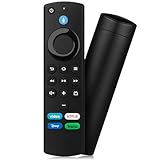
- Compatible with: Replacement Voice Remote Control (3rd Gen) Fit For AMZ smart TV stick lite, smart TV stick 2nd Gen, smart TV stick 3rd Gen, smart TV stick 4K MAX, smart TV stick 4K 1st Gen, smart TV stick 4K 2nd Gen, smart TV cube 1st Gen 2nd Gen, smart TV cube 3rd Gen, smart TV 3rd Gen
- Not Compatible: This remote isn’t compatible with Smart TVs 1st/2nd Gen, Smart TVs Stick 1st Gen, or Smart TVs Edition. Check your device model before ordering to ensure a fit. If it doesn’t work, contact us—we’ll provide the best solution
- With Voice Function: Voice control lets you find, launch, control content, play music, check weather, view live camera feeds, and control compatible smart home devices. Standard navigation/playback controls let you jump to favorite scenes quickly
- How to Pair: Remove the stick from TV and disconnect its power. Reconnect power, then reinsert the stick into TV. Hold the Home button for 10-15 seconds until the LED indicator flashes amber rapidly for 10 seconds—your remote will pair automatically
- What You Get: 1 *Voice Function Remote Control(2 AAA batteries not included),1 * User Manual and our friendly customer service
Comparing ADB with other control approaches
If you consider replacing ADB, compare the security properties rather than focusing only on whether a method can start or pause playback.
| Criterion | ADB through Home Assistant | Cloud or vendor API | HDMI-CEC, infrared, or another local method |
|---|---|---|---|
| Network exposure | Local Fire TV listener; unsafe if forwarded or reachable by untrusted clients. | Depends on the service; may require an internet account and outbound cloud access. | Depends on the equipment; some methods avoid IP reachability altogether. |
| Authentication and revocation | On-device RSA host approval plus your network controls; revoke old hosts on Fire TV. | Depends on account, token, and provider controls; details vary by implementation. | May use physical proximity or device-specific pairing; details vary. |
| Command scope | Broad debugging access, not just media buttons. | Usually limited to the API exposed by the provider, but scope varies. | Often limited to signals supported by the connected equipment. |
| Sleep and reboot behavior | Must be tested for the exact Fire TV model and Fire OS build. | Depends on provider availability and device state. | Depends on line-of-sight, cabling, and the capabilities of the control hardware. |
| Version dependence | Fire OS, Home Assistant integration, and ADB implementation can all affect behavior. | Provider API and account-policy changes can affect behavior. | Hardware and protocol compatibility determine behavior. |
ADB is a reasonable choice when you want local automation and can enforce a private, segmented network. Choose another method only after checking its own authentication, outage, and privacy trade-offs; “cloud” does not automatically mean safer, and “local” does not automatically mean secure.
What the 2.8% Home Assistant figure means
Home Assistant’s 2026 page data shows its Amazon Fire TV virtual integration in 2.8% of active installations. That is a usage-share figure, not a vulnerability rate, safety score, or incident statistic. No authoritative source establishes a numeric probability or incident rate for attacks against a Home Assistant-to-Fire-TV ADB setup, so a precise percentage risk would be misleading.
Troubleshoot without weakening security
The integration cannot find the Fire TV
- Confirm ADB debugging is still enabled on the Fire TV.
- Recheck the address under Settings > My Fire TV > About > Network; a DHCP change may have made the saved address stale.
- Check that Home Assistant and the Fire TV are on networks permitted to communicate and that a firewall rule is not blocking the ADB port.
- Do not test by creating an internet port-forward.
The approval prompt never appears
- Verify that the connection is initiated from the intended Home Assistant host and that the Fire TV has not already stored a different authorization.
- Revoke old debugging authorizations on Fire TV, then retry the pairing from Home Assistant.
- If another device’s name or address appears, cancel the request and investigate before approving anything.
Control works until the stick sleeps or reboots
- Confirm the exact Fire OS build and Fire TV model.
- Check Home Assistant’s reconnect behavior after wake and reboot.
- Use a stable local address and the recommended Python ADB implementation before trying an ADB server.
- Keep the same network restrictions during testing; reliability problems do not justify broader exposure.
Verdict
Using ADB to control a Fire TV Stick from Home Assistant is safe enough for a carefully managed home network, not as an internet-facing service. The decisive controls are local-only reachability, strict host approval, removal of stale authorizations, segmentation or firewall rules, current software, and disabling ADB when it is not required. Treat the connection as privileged administration access, and verify the details on your specific Fire TV model and Fire OS build.
Quick Recap
Product prices and availability are accurate as of the date/time indicated and are subject to change. Any price and availability information displayed on Amazon at the time of purchase will apply.

