Yes—if you specifically want a small touchscreen convertible that you can repair, reconfigure and run with Linux. The current 2026 Framework Laptop 12 adds Core Series 3 processors, rear Thunderbolt 4, Wi‑Fi 7 and optional backlit keyboard and fingerprint-reader hardware. It starts at $549 on Framework’s product page, while a prebuilt Fedora configuration was announced at $699. Those are starting figures, not necessarily the final cost of a ready-to-use computer after choosing memory, storage, operating system, accessories, shipping and taxes.
It is a weaker value for someone who mainly wants the fastest processor, the most polished display and speakers, or the lowest possible price. Independent reviews available for this guide tested the original 2025 generation, not the 2026 refresh, so their battery, performance and finish criticisms must be read as older-model evidence rather than tests of the current machine.
As an Amazon Associate I earn from qualifying purchases.
What the 2026 Framework Laptop 12 is
The Framework Laptop 12 is a 12.2-inch 2-in-1 computer. Its hinge lets you use it as a conventional laptop, a tent for presentations or video, and a tablet-style device for touch interaction and notes. Framework lists stylus support, but the pen is optional.
The defining idea is modular ownership. Memory uses a replaceable SO-DIMM, storage uses an M.2 2230 NVMe slot, and the four side expansion-card positions let you choose the ports you actually need. Framework also sells replacement parts through its Marketplace. That makes the Laptop 12 unusually serviceable, but it does not guarantee that every part will remain available forever or that a future repair will always be cheaper than replacing the computer.
#1 Best Overall
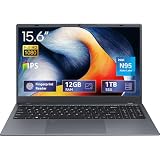
- 2-Year Warranty & Office 2024 - UOWAMOU Laptops meet high standards for performance and durability, backed by a 2-year manufacturer's warranty, and come pre-installed with lifetime free Office 2024 Professional Plus
- Experience Immersive Visuals with Comfort – UOWAMOU's 15.6" FHD Display (1920×1080 ) offers stunning clarity with an impressive 85% screen-to-body ratio and ultra-slim bezels. Precision-engineered for vibrant colors and reduced eye fatigue, this display is ideal for professional work, creative design, or immersive entertainment
- Upgradable Design & Much Faster RAM/SSD - Future-proof your UOWAMOU Laptop with upgradable/expandable RAM and SSD slots—easily boost storage or memory yourself. Pre-installed with 12GB LPDDR5 RAM and 1TB NVMe SSD, much faster then LPDDR4/LPDDR3 RAM or SATA SSD.
- Versatile Connectivity Hub & WiFi5, BT5.0 – Seamlessly connect all your peripherals and devices with our laptop’s comprehensive port selection, including: 2× USB 3.0 ports, 1x Full Functional Type C port, 1× USB 2.0 port, Standard HD, 3.5mm headphone jack, MicroSD card reader
- Optimized for Programming & Development - Pre-installed with Win11 Pro, fully compatible with VS Code, Python, Java, C/C++, Arduino IDE and all mainstream programming tools. Please refer to the user manual to disable Secure Boot for optimal performance with embedded development software.
Framework announced the 2026 refresh on August 18, 2026, opened pre-orders then and said Batch 1 was scheduled to ship in October. Availability and delivery timing depend on region and configuration, so check the live product page before ordering.
Core specifications that matter to a buying decision
| Feature | 2026 Framework Laptop 12 information | Why it matters |
|---|---|---|
| Form factor | 12.2-inch convertible touchscreen | Works as a laptop, tent or tablet-style device; useful for handwritten notes and compact study setups. |
| Processor choices | Intel Core 3 304, Core 5 320 or Core 7 350 | Lets you match the configuration to light work, general productivity or a higher performance budget. |
| Memory | Upgradeable SO-DIMM; up to 64GB DDR5 at up to 6400 MT/s | You can replace or expand memory instead of treating the original capacity as permanent. |
| Storage | M.2 2230 NVMe slot | The drive is a replaceable component, subject to compatible module availability. |
| Expansion slots | Four total; the front two are USB 3.2 Gen 2 and the rear two add Thunderbolt 4 | You can select the port mix you need, with Thunderbolt 4 available on the refreshed rear positions. |
| Charging through expansion cards | Framework says all four slots support power input | Charging does not depend on one fixed side of the machine. |
| Wireless | Wi‑Fi 7 through an upgradeable Intel BE213 card | Provides a current wireless option and leaves the card replaceable, but your network and operating system must support it. |
| Biometrics and keyboard | Framework says the new fingerprint reader and backlit Input Cover are backwards compatible with the original Laptop 12 | The refreshed options address two omissions noted on some 2025 configurations and can also be used as replacement parts. |
The 2026 port and wireless details belong to the refresh. Do not assume that a 2025 review describing a different port layout or wireless card is describing the current model.
How much does the Framework Laptop 12 cost?
Framework’s current product page lists the 2026 Laptop 12 from $549. Framework’s August 18 announcement gives $699 as the starting price for a prebuilt Fedora Linux configuration. The two figures describe different purchasing paths and should not be treated as identical specifications.
What’s actually slowing this PC down?
Pick the symptom - the matching free tool is one click away.
| Purchase path | Published starting price | Check before treating it as your total |
|---|---|---|
| Framework product-page starting configuration | $549 | Configured RAM and SSD, operating system, optional expansion cards, stylus or other accessories, shipping, taxes and regional availability. |
| Prebuilt Fedora Linux configuration announced August 18, 2026 | $699 | Exact memory and storage, Fedora edition, shipping batch, local taxes and any accessories included with the regional offer. |
A low headline price can become a substantially different purchase once you add memory, storage, port cards and an operating system. Before comparing it with another compact convertible, write down the complete configuration you would actually use. Include the cost of upgrading later only if you are comfortable doing the installation and can find compatible parts.
What the starting price does—and does not—tell you
- It establishes an entry point, not a universal ready-to-work price.
- It does not prove that the least expensive configuration is suitable for your workload.
- It does not include a promise that every optional accessory is bundled.
- It cannot be compared fairly with a rival’s advertised price until RAM, SSD, operating system and warranty terms are aligned.
Who should buy it?
Students and note-takers
The compact convertible format, touchscreen and optional stylus are a good match for lecture notes, reading, research, travel between classes and light office work. A student who expects to keep the machine for several years can also value replaceable memory, storage and other parts. The decision is less obvious if display quality, speakers and touchpad feel are more important than serviceability; the available 2025 reviews were cautious about those areas.
Linux users
Linux is a supported buying path rather than an afterthought. Framework announced prebuilt configurations with Fedora 44 KDE Plasma Desktop. The same announcement says Core Series 3 and the new BE213 Wi‑Fi card require a Linux distribution with kernel 7.1 or newer. Check your distribution’s current kernel, Wi‑Fi driver and fingerprint-reader support before ordering. A machine can boot Linux while still lacking full support for a particular reader, sleep behavior or other device.
Owners who repair and upgrade their own hardware
The Laptop 12 makes the most sense when you will actually use its modular design: replacing a damaged component, changing storage, increasing memory or selecting a different port card. Framework’s Marketplace provides a source for replacement parts, and the company says the Core Series 3 mainboard, fingerprint reader and backlit Input Cover are backwards compatible with the original Laptop 12. Those are concrete compatibility claims for named parts, not a guarantee that every future generation will fit or that a repair will always be economical.
Free tools Windows power users keep installed
One-click scans. No signup required.
Rank #2

- [This is a Copilot+ PC] — A new AI era begins. Experience enhanced performance and AI capabilities with Copilot+ PC, boosting productivity with security and privacy in mind.
- [13" OLED Touch Screen Display] — Cinematic display on-the-go. 1M:1 contrast ratio delivers a wider range of colors.
- [All day battery life] — 14 hours of battery life[5], fast charging with 65W PSU via Surface Connect or USB-C.
- [Flexibility at Any Angle] — Use with the detachable Surface Pro Flex Keyboard (sold separately). Shift from tablet to laptop to sketchbook with its unique kickstand.
- [Outstanding Performance] — Snapdragon X Plus (10 core) or Elite (12 core) with powerful NPU, faster than MacBook Air M3[1].
People who need a small secondary computer
As a compact travel or study machine, the 12.2-inch screen and convertible hinge can be more useful than a larger conventional laptop. The tradeoff is limited workspace for long spreadsheets, video editing timelines or large coding projects. Decide whether you want a small primary computer or a flexible second machine before paying for a higher processor tier.
Who should skip it?
- Performance-first buyers: independent testing of the 2025 model found it adequate for everyday work but less capable in long processor-heavy jobs. There is no independent 2026 benchmark in the available evidence.
- Display and entertainment perfectionists: 2025 reviewers described a reflective panel with relatively narrow color coverage and criticized the less-premium audio and touchpad experience. The 2026 panel should be checked against the current specification rather than assumed to fix those issues.
- Buyers who never repair or upgrade: modularity has little value if you will use the original memory, SSD and ports for the entire ownership period. A conventional compact laptop may offer more polish for the same configured price.
- People shopping only by the $549 headline: the final total depends on configuration, software and accessories. Compare complete systems, not bare starting prices.
Repairability and upgradeability in practical terms
Parts you can plan around
The upgrade path is clearest for the SO-DIMM memory and M.2 2230 NVMe storage. Framework lists memory capacity up to 64GB and speeds up to 6400 MT/s for the 2026 platform. Confirm the exact module type and capacity supported by the configuration you order; a theoretical maximum does not mean every module or operating system combination will behave identically.
Expansion cards let you choose the connectors on the sides of the computer. On the 2026 model, the rear two positions provide Thunderbolt 4 and the front two provide USB 3.2 Gen 2. All four positions support power input, according to Framework. This is useful if you alternate between a dock, external display, storage, audio and charging accessories, but you still need to buy the cards that match your devices.
Backward compatibility
Framework says the 2026 Core Series 3 mainboard, fingerprint reader and backlit Input Cover are backwards compatible with the original Laptop 12. That can extend the practical life of a 2025 machine or make a later repair possible without replacing the entire chassis. It is a specific statement about those components; do not extend it to every future mainboard, display or battery without confirmation.
Do these 3 things before closing this tab:
1Fix the driver behind crashes, sound loss and screen glitches2Repair Windows errors before they cause bigger problems3Scan for outdated or missing drivers - takes under a minuteThe economic limit of modularity
Repairability reduces waste and can avoid a full-system replacement when one part fails. It does not eliminate parts prices, shipping, tools, labor or the risk of installing the wrong component. If a replacement mainboard costs close to a new computer, the environmental and educational value of the repair may still matter, but the financial calculation changes. Check current Marketplace pricing and compatibility at the moment you need a part.
Performance and battery life: what is known
Framework’s 2026 battery claim
Framework reports that early testing with the Core 5 320 showed a 70% increase in Netflix 4K streaming battery life compared with the original Laptop 12 using a Core i5-1334U. Framework’s disclosed July 2026 setup used 16GB of RAM, a 512GB WD SN5000S SSD, the display at 150 nits, Wi‑Fi enabled and Best Power Efficiency mode. The company warns that actual battery life varies with configuration, software, use and conditions.
This is a manufacturer-reported comparison for a defined streaming workload, not an independent runtime result and not a promise that every Core Series 3 configuration will last 70% longer in web browsing, video calls, compiling code or gaming.
Rank #3

- ASUS Vivobook 14 Laptop i7-1355U Beat AMD Ryzen 7 4700U: ASUS Vivobook 14inch laptop powered by 10-core Intel Intel Core i7-1355U processor and fast wireless Wi-Fi 6 for high performance, instant responsiveness loads content-rich web pages fast.【Bundled with Mouse】
- ASUS Vivobook 14inch Laptop: ASUS 14inch laptop FHD IPS display with narrow bezels shows come to life in true-to-life color and crisp, clear details.【Bundled with Mouse】
- Windows 11 Pro Laptop with Office 365 One Year: Business laptop for college students comes with Windows 11 Pro with microsoft office included: Bring your ideas to life. Your creativity now gets a boost with Microsoft 365. Office - Word, Excel, and PowerPoint. One year subscription included.
- ASUS Vivobook laptop Core i7 12GB RAM 512GB SSD: Computadora portátil laptop 12GB RAM, 512GB PCIe SSD. Original Seal is opened for upgrade Professionally ONLY. We do provide a 1-year standard warranty on upgraded SSD.
- Features: 3.09lbs Lightweight, USB Type-C, Long Battery Life, Webcam, Fast Charge.
What the 2025 reviews found
| Source and generation | Observed strengths | Observed limitations |
|---|---|---|
| RTINGS, 2025 Laptop 12 | Appropriate for students, note-taking and casual productivity; strong serviceability and customization case. | Less suitable for demanding tasks; other compact laptops can offer better upfront value or a more polished experience. |
| Samuel Gibbs, The Guardian, 2025 Laptop 12 | Repairable 2-in-1, swappable ports, accessible components and useful everyday format; tested Core i5 was adequate for ordinary work. | Reflective, relatively narrow-gamut screen; older processor; limited battery in his use; that configuration lacked biometrics and keyboard backlighting; longer processor-heavy work was less capable. |
The Guardian reviewer reported roughly seven to eight hours in light office use on the tested original-generation machine. That is one reviewer’s scenario, not a controlled statistic and not a 2026-model result. The refresh adds newer processors and claims better streaming endurance, but no independent reviewer statistic for the 2026 machine is established here.
Quick wins for a faster PC:
Fix the driver behind crashes, sound loss and screen glitchesFind Drivers →Repair Windows errors before they cause bigger problemsFix Now →Screen, keyboard, touchpad and tablet use
The 12.2-inch touchscreen is the reason to choose this form factor over a conventional small laptop. It supports touch navigation, tent mode and tablet-style use, with an optional stylus for handwriting or marking documents. Those features are practical for note-taking and reading, but a small panel also means less room for side-by-side windows and dense creative applications.
Reviews of the 2025 generation identified a reflective screen with relatively narrow color coverage, along with a less-premium touchpad, audio system and chassis feel than some compact alternatives. The 2026 refresh’s optional backlit Input Cover and fingerprint reader improve the feature list, but the available evidence does not establish a new independent assessment of panel quality, speakers or touchpad behavior. If those traits determine your purchase, inspect the current specifications and arrange a return window rather than assuming the refresh changed every physical component.
Linux compatibility checklist
- Choose the distribution. Framework announced Fedora 44 KDE Plasma Desktop as a prebuilt option. If you plan to install another distribution, verify that it supports the hardware you are selecting.
- Check the kernel. Framework says Core Series 3 and the Intel BE213 Wi‑Fi card require Linux kernel 7.1 or newer. Confirm the kernel shipped by your chosen distribution and its update policy.
- Verify Wi‑Fi and fingerprint support. A recent kernel requirement does not by itself confirm every reader, firmware package or desktop integration. Check current compatibility guidance for the exact card and reader.
- Decide whether you need Windows as well. Dual-booting, virtualization and proprietary applications can change the storage and memory configuration you should order.
- Plan recovery media. Keep a bootable installer and a backup of important files before changing partitions, firmware or drivers.
Jef Spaleta, Fedora Project Lead, said in Framework’s August 18, 2026 announcement: “The Fedora KDE Plasma Desktop contributors work hard to make the Fedora KDE Plasma Desktop edition the premier KDE experience for users. It’s great to see Framework customers have the choice to have it pre-installed.” The preinstalled choice is useful, but buyers should still verify regional availability and hardware support for the exact order.
How it compares with a conventional compact laptop
The right comparison is not “modular versus non-modular” in isolation. Compare complete systems along the dimensions that affect your work.
PC Slower Than It Used to Be?
A free scan shows the junk files, broken settings and background clutter dragging Windows down - then fixes them in one click.Free scan · Windows 10 & 11Outdated Drivers Are Slowing You Down
One free scan finds every outdated or missing driver and matches the right update for your exact hardware.Free scan · exact hardware match| Decision axis | Framework Laptop 12 question | What a conventional alternative may prioritize |
|---|---|---|
| Total price | What is the final configured cost after RAM, SSD, operating system, port cards, accessories, shipping and tax? | A bundled configuration may be easier to price, even if fewer components are replaceable. |
| Workload | Is a Core 3, Core 5 or Core 7 configuration enough for your applications? | A different compact laptop may deliver higher sustained performance or a stronger cooling design. |
| Portability | Do you value a 12.2-inch convertible more than a larger screen? | A conventional model may offer more workspace, battery capacity or a lighter design; verify its actual specifications. |
| Ports | Will selectable cards and rear Thunderbolt 4 solve your docking and display needs? | Another computer may include the ports you need without buying modules. |
| Display and input quality | Can you accept the 2025 review caveats about reflection, color coverage, touchpad and audio until current testing says otherwise? | A polished consumer model may win on panel, speakers, keyboard feel or touchpad consistency. |
| Serviceability | Will you use replaceable memory, storage, expansion cards or Marketplace parts? | Some alternatives trade serviceability for a thinner, more integrated design. |
| Operating system | Does your distribution meet the kernel and device-support requirements? | A Windows-first machine may require less Linux troubleshooting, while offering fewer documented modular options. |
Do not assign a winner before pricing equivalent RAM, storage and software. The Laptop 12’s advantage is most meaningful when modularity, repair and Linux are part of your requirements rather than abstract preferences.
Independent reader supportYour contribution helps us test, update, and keep practical guides available for everyone.A buying process that avoids the common mistakes
- Write down your workload. Separate browser tabs, documents and video calls from sustained compiling, large data work, 3D applications or other processor-heavy tasks. Select the processor tier for the work you actually do.
- Set a memory target. Choose enough RAM for your applications now, then treat the 64GB platform limit as an upgrade ceiling rather than a reason to overbuy.
- Choose storage for your files. Account for the operating system, applications, local media and backups. The M.2 2230 slot is replaceable, but the replacement still has to be compatible and available.
- Map your ports. List every device you connect: charger, display, dock, external SSD, camera, audio interface and card reader. Put high-bandwidth or display needs on the rear Thunderbolt 4 positions where appropriate, and remember that the front positions are USB 3.2 Gen 2.
- Select the operating system. For Fedora, compare the announced $699 prebuilt path with a self-configured order. For another Linux distribution, verify kernel, Wi‑Fi and fingerprint-reader support first.
- Add the features you will use. A backlit Input Cover, fingerprint reader and stylus can improve daily use, but do not pay for accessories that will remain unused.
- Calculate the complete total. Include taxes, shipping, accessories and any later upgrade. Compare that number with fully configured alternatives, not their lowest advertised prices.
- Check delivery and return terms. The 2026 announcement identified October Batch 1 shipping, but timing can vary by region and configuration.
- Plan maintenance. Keep backups, retain small parts and document any component changes. Modular hardware is easiest to benefit from when you are prepared before a failure occurs.
Common pitfalls and how to handle them
Mistaking a 2025 review for a 2026 test
Look for the processor generation, port layout and review date. Reports about the original Core i5-1334U machine describe the 2025 hardware. They cannot establish the Core Series 3 system’s actual performance or battery life.
Rank #4

- 🌞 [ANTI-GLARE] BoxWave Screen Protector Compatible With Framework Laptop 12. Disperses light so the glare does not reflect back into your eyes. Whether you're using your device outdoors with natural lighting, or viewing indoors with overhead lights, the ClearTouch Anti-Glare REDUCES 90% UV rays, protecting your eyes. ⭐ *** PLEASE NOTE, LAPTOP 12 DEVICE NOT INCLUDED ***
- 😎 [SMOOTH SURFACE] Ultra smooth matte surface gives you a FUTURISTIC high-end look and feel to your device screen. Has a paper-like surface that is comfortable to the touch, and pleasing to the eye!
- 💦 [CLEAN APPLICATION] The special GLUELESS adhesive will never leave any sticky residue that may damage your screen.
- 👔 [PERFECT DESIGN] Specifically designed for your device. These ClearTouches will fit your device screen perfectly, GUARANTEED! All ClearTouches are PRECISION-CUT to fit your device screen's exact dimensions along with any contours and cut-outs. All functionality will be fully accessible.
- ✌ [TWO-PACK] Comes with TWO (2) ClearTouch Anti-Glare screen protectors and installation accessories. Save the extra one for later, or share it with a friend! Disclaimer: ClearTouch Packaging may not be the exact one pictured on this listing.
Reading the 70% figure as guaranteed runtime
The figure applies to Framework’s early Netflix 4K comparison under its disclosed test conditions. Brightness, browser workload, video calls, wireless traffic, background services and power mode all change runtime.
Assuming every Linux distribution is equally ready
The current platform’s stated kernel requirement and BE213 card make distribution choice important. Check support for the exact kernel, firmware and fingerprint reader rather than relying on a generic “Linux works” statement.
Recommended Free Tools
Buying modularity without a use case
If you do not expect to repair, replace, expand or reconfigure anything, calculate whether the configured price and physical experience still beat a simpler laptop. Serviceability is a benefit you should plan to use.
Ignoring the small-screen tradeoff
A 12.2-inch convertible is excellent for portability and tablet-style work but less comfortable for dense, simultaneous windows. Test your main applications at that scale or plan for an external display.
Verdict: is the Framework Laptop 12 worth buying?
The 2026 Framework Laptop 12 is worth buying for a buyer who wants all of the following: a genuinely compact touchscreen convertible, configurable ports including rear Thunderbolt 4, replaceable memory and storage, a realistic repair path, and the option of Fedora or another supported Linux setup. The $549 starting price is attractive only after you confirm what is included and price the configuration you need; the announced Fedora prebuilt starts at $699.
Choose carefully if your priorities are sustained performance, the most refined screen and audio, or the lowest fully equipped price. The strongest independent criticisms available—reflective display, limited color coverage, modest battery in one test, and less-premium input and chassis details—apply to the 2025 generation. Framework’s 2026 battery improvement is a promising company result, but independent testing of the refresh is not yet established in the evidence available here.
In short, buy the Laptop 12 for its repairable, configurable convertible design and Linux path—not on the assumption that it automatically beats every compact laptop on speed, polish or value.
Quick Recap
Product prices and availability are accurate as of the date/time indicated and are subject to change. Any price and availability information displayed on Amazon at the time of purchase will apply.

