Do these 3 things before closing this tab:
1Fix the driver behind crashes, sound loss and screen glitches2Repair Windows errors before they cause bigger problems3Scan for outdated or missing drivers - takes under a minuteIonic liquids make stretchable biomedical sensors possible by supplying mobile ions inside a soft polymer network. The network can be a hydrogel, ionogel or liquid-free ionic elastomer. When it is stretched, compressed or bent, its geometry and ion movement change. Electronics then read that change as resistance, capacitance or, in some designs, a self-generated piezoionic signal.
Those principles have produced research prototypes that follow joint motion, breathing, speech, swallowing and pulse-like movements. They are not, on the evidence available, clinically validated or established as commercial diagnostic devices. The most useful way to judge them is by their material platform, signal mechanism, test conditions and biocompatibility requirements—not by treating a single impressive number as a product specification.
As an Amazon Associate I earn from qualifying purchases.
What an ionic liquid contributes to a biomedical sensor
An ionic liquid is used in these devices as an ionic medium with mobile charge carriers and adjustable physical and chemical properties. A polymer host holds that medium in a quasi-solid form, so the result can bend and stretch instead of behaving like a loose liquid. The 2026 review of ionic-liquid conductors describes this family as promising candidates for flexible ionic conductors (Li and Yao, 2026).
Free tools Windows power users keep installed
One-click scans. No signup required.
The polymer supplies mechanical shape and recovery; the ionic phase supplies moving ions. Together they form a soft conductor that can be laminated to a surface, embedded in an elastomer or shaped into a transparent hydrogel. Deformation changes either the path available to the ions or the geometry of the device. A measurement circuit converts that physical change into data.
#1 Best Overall
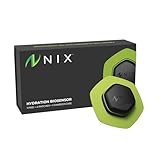
- Real-Time Hydration Data & Alerts - Stay optimally hydrated with real-time, personalized data and notifications sent directly to your phone, watch, or bike computer. Nix's hydration monitor analyzes your sweat as you train, quantifying exactly when, what, and how much to drink for peak performance. The perfect fitness tracker for endurance athletes training for their next marathon, Ironman or triathlon.
- Sweat-Powered, Science-Backed Performance - Nix is the first biosensor to scientifically analyze sweat and deliver real-time hydration insights. Track your fluid, electrolyte, and sodium losses using your own biomarkers - no needles, no pricks, just a single-use adhesive patch that works only when you’re actively sweating. It requires as little as 4.5 microliters of sweat to obtain a reading.
- Advanced App Features & Hydration Calculators - The free Nix Solo app connects via Bluetooth and gives you deep hydration analytics: sweat composition, environmental conditions, activity tracking, and custom drink inputs. Plus, use five in-app calculators (Custom Drink, Recovery, Race Day, Predictive, and Priming) for pre workout and post workout tailored hydration guidance. Available in multiple languages, including Spanish, French, and Portuguese. Compatible with iOS and Android devices.
- Designed for Serious Training & Race Prep - Perfect for endurance sessions 45+ minutes long runs, cycling (indoor or outdoor), brick workouts, or race training. The rechargeable Nix Pod clips onto a new single-use patch each session. With up to 36 hours of battery life, over 70% of Nix users rely on it for endurance prep. Seamlessly integrates with Garmin smartwatches, Apple Watch, and Garmin bike computers.
- Complete Starter Kit & Athlete-Trusted Tech - The Nix Hydration Biosensor Starter Pack includes 1 rechargeable Pod, 1 Sweat Patch Refill (4 patches), 1 charger case, and 1 USB-A to USB-C cable. Used by elite athletes across the NBA, NFL, NHL, MLB, PGA, Olympians, and Ironman competitors.
This is different from a conventional metal strain gauge. Metals primarily change resistance through small dimensional and resistivity changes, while an ionic conductor can also show large geometry-dependent effects, interfacial polarization and unequal ion transport. The resulting sensor can tolerate very large deformation, but its response also depends on rate, temperature, humidity, electrode arrangement and the chemistry of the polymer network.
Three ways the deformation becomes a signal
Resistive sensing
In a resistive design, stretching changes the conductor’s length, cross-sectional area and the ionic pathways between electrodes. The measured resistance rises or falls with deformation. A gauge factor expresses how strongly the normalized resistance changes relative to strain, but it is meaningful only with the test setup and strain range that produced it. Resistive readout is comparatively simple and can run from a small measurement circuit, although contact resistance, hysteresis and drift must be characterized.
Capacitive sensing
A capacitive device uses deformation to change electrode spacing, overlap area or dielectric geometry. Because the ionic material can act as a compliant electrode or dielectric component, a soft capacitor can follow bending and stretching without the rigid conductors used in many conventional devices. Capacitance measurements can reduce dependence on the absolute resistance of the material, but the readout needs stable electrodes and careful control of parasitic capacitance.
What’s actually slowing this PC down?
Pick the symptom - the matching free tool is one click away.
Piezoionic and self-powered sensing
Some devices are designed so that mechanical stimulation drives unequal ion transport and produces a measurable electrical potential without an external power supply. This piezoionic mechanism is related to, but not interchangeable with, resistive or capacitive sensing. It has different electrode and measurement requirements, and a result from one mechanism should not be used to rank another. The sensing mechanisms are reviewed in the stretchable-sensor sections of the 2026 review.
The material platforms researchers use
| Platform | What holds the ionic liquid | Why it is useful | Questions to test |
|---|---|---|---|
| Ionic conductive hydrogel | A water-containing polymer network | Soft contact, large deformation and, in some formulations, transparency | Water loss, temperature and environmental stability; skin and tissue compatibility |
| Ionogel | A solid or gel-like polymer network that immobilizes the ionic medium | Can combine high stretchability with adhesion and reduced leakage | Long-term fatigue, solvent retention and behavior over temperature |
| Liquid-free ionic conductive elastomer | An elastomeric polymer in which ionic functionality is built into the solid material | Aims to avoid a freely mobile liquid phase while preserving soft ionic conduction | Conductivity, manufacturing consistency and biocompatibility |
These categories are material architectures, not a universal ranking. The available reviews do not provide a standardized, head-to-head benchmark across hydrogels, ionogels and ionic elastomers (Li and Yao, 2026). A hydrogel that excels at transparent skin contact may not be the best choice for a dry, long-duration patch, and a durable ionogel may require a different electrode and encapsulation strategy.
Rank #2

- ACCURACY - SMART SENSING - Oura tracks over 50 health metrics, including sleep, activity, stress, heart health, and women’s health metrics. Oura Ring 4 is powered by Smart Sensing, which adapts to you — delivering accurate, continuous data, day and night
- ACCURATE SIZING ESSENTIAL - Oura Ring 4 uses unique sizing different from standard jewelry rings; use the Oura Ring 4 Sizing Kit to find your perfect fit before purchasing
- LONG LASTING BATTERY - With up to 8 days of battery life, no screens and no vibrations, Oura Ring 4 allows you to focus on the present. From a workout to a night out — you’re free to forget it’s on. Until you start getting compliments
- OURA MEMBERSHIP - First month of membership is included with purchase, for new members only. Subscription is 5.99/mo afterwards. Membership is tied to your account via the Oura App, not your physical ring
- HSA/FSA ELIGIBLE - We can accept HSA or FSA funds for the following: Oura Ring, additional chargers, and shipping
How a stretchable ionic sensor is designed
The following workflow describes the engineering decisions that determine whether a prototype produces a useful signal. It is a design framework, not a single published manufacturing recipe.
- Define the movement. Specify the strain or pressure range, speed, cycle count and body location. A throat patch, knee strap and pulse sensor impose different deformation and adhesion demands.
- Select the platform. Choose a hydrogel, ionogel or ionic elastomer according to the required softness, transparency, environmental tolerance and resistance to leakage or drying.
- Choose the transduction mechanism. Use resistive readout when a simple resistance measurement is practical, capacitive readout when geometry can be controlled reliably, or piezoionic operation when a self-powered response is central to the design.
- Form the ionic network. The polymer must immobilize the ionic medium while allowing ions to move. One 2021 nanocomposite ionogel used [EMIM][Cl] ionic liquid, clay nanosheets and ultraviolet polymerization to make an adhesive, stretchable material (He and Yuan, 2021).
- Pattern electrodes and interconnects. Electrode geometry determines the current path or electric field. Soft electrodes and strain-relieved interconnects help prevent the wiring from becoming the failure point.
- Calibrate under realistic conditions. Record the baseline, loading and unloading curves, rate dependence, hysteresis, temperature response and drift. Calibration made only on a benchtop tensile test may not transfer to a moving body.
- Validate the intended use. Test the complete patch, including adhesive, encapsulation, wiring and electronics, through repeated motion and environmental exposure. A material-level result does not establish performance of a finished wearable.
What published prototypes have actually shown
| Study | Reported result | Demonstration and qualification |
|---|---|---|
| 2017 ionic-liquid/elastic-polymer strain sensor | 0.1%–400% strain range; gauge factor 7.9 | Joint bending and signals associated with breathing, speech, swallowing and pulse were demonstrated. These were laboratory demonstrations, not diagnostic validation (Sensors, 2017). |
| 2021 embedded-ionic-liquid sensor | 10,000 rapid stretch-release cycles at 100% peak strain, with minor deviation in response | The figure belongs to that prototype and its specified cycling test; it is not a universal fatigue rating (Scientific Reports, 2021). |
| 2021 clay-nanosheet nanocomposite ionogel | Stretchable and adhesive material made with [EMIM][Cl] and UV polymerization | Authors discussed electronic-skin, human-machine-interaction and biosensor applications. Those are proposed uses, not validated deployment (ACS Applied Materials & Interfaces, 2021). |
| 2024 ionic-liquid-and-glycerol hydrogel | Conductivity, transparency and environmental tolerance, with human-motion sensing demonstrations | Presented as a possible platform for future motion sensors and electronic skin, rather than an approved biomedical product (2024 study record). |
The 2017 strain range and the 2021 cycle count answer different questions. One describes deformation range and sensitivity in a particular sensor; the other describes behavior during a specified fatigue test. Because the devices, protocols and metrics differ, neither number can be used as a standardized comparison or a guarantee of service life.
Recommended Free Tools
What “biomedical” means in this context
Wearable demonstrations can monitor motion that accompanies a biological activity without diagnosing a disease. A resistance trace from a chest patch may follow breathing-related expansion; a neck-mounted device may detect swallowing or speech-related movement. Turning those traces into a clinical measurement requires additional validation: a defined population, reference instruments, accuracy and repeatability targets, signal-processing rules, and evidence that the result changes care.
The biomedical-materials literature covers ionic-liquid systems in biomaterials, drug delivery, tissue engineering, antimicrobial work and biosensing. It also stresses that a biosensor material should be biocompatible and, where the application demands it, biodegradable (Frontiers in Chemistry, 2021). That principle does not mean every ionic-liquid formulation is safe on skin, suitable for implantation or biodegradable.
Skin contact
For an epidermal patch, researchers must assess irritation, sensitization, ionic-liquid migration, adhesive residues and the effect of sweat. Encapsulation can reduce exposure, but it also changes stretchability, water loss and the measured signal. A material shown to adhere in a laboratory test is not automatically cleared for prolonged human use.
Rank #3

- COMFORTABLE SOFT RING SENSOR: The lightest, smallest ring sensor for continuous tracking, durable and adapt to most fingers.
- DETAILED APP & PC REPORT: Free APP & PC software provides graphic report and trends of data, reviewing real-time data in APP dashboard. Unlimited sharing of PDF and CSV reports
- UNUSUAL DATA MARKING: If the SpO2 level is lower than the preset threshold and heart rate is lower or higher than the preset threshold, the device will mark it in the report.
- UNLIMITED STORAGE IN APP: When the device is connected to the APP via Bluetooth, the data will be uploaded automatically. The built-in memory can store 4 groups of 10 hours of data on device.
- RECHARGEABLE: The device runs automatically when you wear it, up to 16 hours for a full charge.
Implantation or internal use
Implantable applications add sterility, degradation products, immune response, mechanical mismatch and long-term containment requirements. The reviewed sources do not establish clinical approval or implant safety for the prototypes described here.
Performance factors that matter more than one headline number
- Working strain and sensitivity: Match the sensor’s calibrated range to the movement. A very wide range is not useful if small physiological changes are buried in noise.
- Hysteresis and drift: Loading and unloading can produce different readings, and the baseline can move over time. Both affect interpretation of slow or repeated motions.
- Rate dependence: A response measured during rapid stretching may differ from a response during a slow joint movement or respiration cycle.
- Cycle durability: Report the strain amplitude, speed, number of cycles and acceptance criterion. “10,000 cycles” has meaning only with those conditions attached.
- Environmental stability: Temperature, humidity, sweat and solvent loss can alter ionic conductivity and adhesion. The 2024 hydrogel study specifically emphasized environmental tolerance, but that result belongs to its formulation and tests.
- Signal and power architecture: Resistive and capacitive sensors require an electronic readout; a piezoionic sensor may generate a signal from deformation but still needs suitable amplification and data capture.
- Mechanical integration: The patch, electrode, cable and adhesive must stretch together. A robust gel cannot compensate for a rigid connector that delaminates.
Why adoption is still limited
The 2026 review identifies mechanical robustness, ionic conductivity, biocompatibility, environmental stability and durability as unresolved development needs. It also notes that ionic responses can be less responsive or less controllable than electron-based approaches (Li and Yao, 2026).
Manufacturing is another hurdle. A laboratory sample can be cast or polymerized under carefully controlled conditions, while a practical wearable needs repeatable thickness, electrode placement, encapsulation and quality control over many units. Formulations must retain their signal after storage, transport, body heat, sweat and repeated attachment. None of the cited studies establishes a common manufacturing standard or a clinically validated service lifetime.
Researchers also need better cross-study reporting. A useful comparison should state the ionic-liquid formulation, polymer network, electrode geometry, strain rate, temperature and humidity, number of cycles, calibration method and failure definition. Without those details, a gauge factor, conductivity value or cycle count can be impressive yet difficult to reproduce or compare.
How to read a claim about an ionic-liquid wearable
- Ask what was measured. Is the claim about resistance, capacitance, generated voltage, conductivity, adhesion or motion-classification accuracy?
- Find the test conditions. Check strain amplitude, loading rate, cycle count, temperature, humidity and whether the result came from the material or the complete device.
- Separate demonstration from diagnosis. A trace that follows breathing or pulse-like motion is not evidence of disease detection or clinical accuracy.
- Check the contact route. Skin, wound, implanted and disposable applications have different biocompatibility and containment requirements.
- Look for an explicit limitation statement. Practical adoption remains limited, and the reviews call for improvements rather than declaring the field commercially settled.
Where the field is heading
The most credible near-term direction is better integration: ionic conductors that remain stable while attached to moving skin, paired with low-power electronics and calibration that accounts for temperature and motion rate. Transparent and environmentally tolerant hydrogels could support unobtrusive motion interfaces, while adhesive ionogels may simplify placement. Liquid-free elastomers may address containment and manufacturing concerns if they can preserve conductivity and biocompatibility.
Those are development paths, not guarantees. The strongest evidence today shows that ionic liquids can turn large, soft deformation into an electrical signal and that researchers can demonstrate human-motion monitoring in controlled studies. It does not yet show a universally superior material, a standardized performance benchmark or a clinically approved ionic-liquid sensor.
Quick Recap
Product prices and availability are accurate as of the date/time indicated and are subject to change. Any price and availability information displayed on Amazon at the time of purchase will apply.

