Mahatma Gandhi was born in Porbandar, Gujarat, on 2 October 1869. The house identified as his ancestral birthplace and the adjoining Kirti Mandir memorial are connected parts of a visit, but they are not the same building: one is the family home associated with his birth, while the other is a later memorial and museum honoring Gandhi and Kasturba Gandhi.
Where Gandhi was born—and what Kirti Mandir is
The Porbandar district government identifies Gandhi’s ancestral house as his birthplace and says it stands immediately beside Kirti Mandir, a memorial temple built in memory of Mohandas Karamchand Gandhi and Kasturba Gandhi. The district’s Kirti Mandir listing gives Gandhi’s birth date as 2 October 1869.


As an Amazon Associate I earn from qualifying purchases.
The Kirti Mandir Management Committee describes the site as two parts: the room and house where Gandhi was born, and the memorial built later to pay homage to him. The Ministry of Culture’s Digital District Repository likewise distinguishes the ancestral home from the later monument. So, Kirti Mandir is often used for the visitor destination as a whole, but the birthplace house and the memorial are distinct spaces.
Free tools Windows power users keep installed
One-click scans. No signup required.
The management committee says Gandhi’s great-grandfather Harjeevan Rahidas Gandhi purchased the building in 1777 and that his grandfather Uttamchand Gandhi later expanded it to three floors. These are details given by the committee’s About page.
#1 Best Overall
- Product Condition: No Defects
- Prakash Book Depot
- Books, Subjects
How the memorial took shape
The ancestral house is associated with Gandhi’s birth; the modern memorial has a separate history. Gujarat Tourism says Darbar Gopaldas Desai laid the foundation for the current edifice in 1947, during Gandhi’s lifetime. It says industrialist Nanjibhai Kalidas Mehta commissioned the museum, funded the acquisition of the ancestral home, and supported construction of a complex to display Gandhi’s mementoes.
After Gandhi’s death, Sardar Vallabhbhai Patel unveiled the memorial on 27 May 1950. The Ministry of Culture’s Directory of Indian Museums lists 1950 as the museum’s establishment year. The dates mark distinct moments: Gandhi’s birth in 1869, the memorial’s foundation in 1947, and its unveiling and museum establishment in 1950.
Rank #2
What visitors can see inside
The Ministry of Culture’s Directory of Indian Museums entry describes Kirti Mandir as a person-focused museum on Kasturba Road in Porbandar, owned by the state government. It documents items used by Gandhi, life-size paintings of Gandhi and Kasturba, old photographs, and a library of books written by Gandhi or related to his philosophy.
The Ministry’s Digital District Repository entry identifies a ground-floor exhibition, the memorial place, and a library. Taken together, the official descriptions point to two complementary ways of encountering the site: the intimate historical association of the birth house and the curated objects and interpretation in the memorial complex.
Why six religious symbols appear in the design
The Kirti Mandir Management Committee explains the memorial’s religious imagery as an expression of equality among religions. Its About page names symbols associated with Buddhism, Jainism, Hinduism, Christianity, Islam, and Zoroastrianism. The site spells the last as “Jorostranism”; the conventional English spelling is Zoroastrianism.
Opening hours and practical planning
Published schedules do not agree. The current national tourism listing gives hours of 07:30 to 19:00, while the Porbandar district census handbook, published with the 2011 Census, records split hours of 07:30–13:00 and 14:00–19:00. The district’s current tourist-place listing confirms the attraction but does not provide a schedule. Check with Kirti Mandir or district authorities shortly before visiting rather than relying on either timetable as definitive. The national listing is available at Incredible India’s Kirti Mandir page.
Rank #4
For broad arrival planning, the district government says Porbandar has a domestic airport with connections to Mumbai, a Western Railway station, and road access via National Highway 8-B. These are general access points, not current transport timetables; confirm services for your travel date through the relevant transport providers. The district’s visitor information is on its Kirti Mandir page.
How to think about the two spaces
| Space | Historical role | What official sources document | Interpretive focus |
|---|---|---|---|
| Ancestral house | The family home identified as Gandhi’s birthplace | The room and house associated with his birth | Gandhi’s early life and family setting |
| Kirti Mandir memorial and museum | A later memorial honoring Gandhi and Kasturba Gandhi | Exhibition, Gandhi-related objects, paintings, photographs, and library | Their public legacy and Gandhi’s philosophy |
The available official descriptions establish the adjoining house and memorial as connected visitor experiences, but they do not establish ticket categories or a formal guided-tour option.
Best Value
A book to read alongside a visit
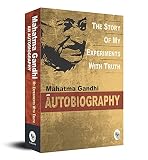
The Ministry of Culture repository references Gandhi’s autobiography, The Story of My Experiments with Truth, and the museum directory notes a library of Gandhi’s writings and works about his philosophy. If you want context before or after seeing the house and collection, the autobiography is a natural starting point; the museum sources do not specify a particular edition or current availability.
Quick Recap
Product prices and availability are accurate as of the date/time indicated and are subject to change. Any price and availability information displayed on Amazon at the time of purchase will apply.

