Short answer: A hypermarket usually combines a large grocery operation with extensive household and non-food departments, while a supermarket concentrates mainly on food and everyday grocery lines. A hypermarket can be the better choice for a planned one-stop trip; a supermarket is often more efficient for a food-only shop. There is no worldwide size rule and no format that is always cheaper, so the best choice depends on the specific branch, your basket, travel time, stock and local prices.
What is a hypermarket?
A hypermarket is a very large self-service store designed to sell groceries alongside a substantial range of non-food merchandise. Typical additional departments can include cleaning products, kitchenware, clothing, small appliances, home furnishings, seasonal goods, toys and personal-care items. The format is intended to let a household combine several errands in one visit rather than make separate grocery and general-merchandise trips.
As an Amazon Associate I earn from qualifying purchases.
The label is descriptive rather than globally standardized. In United Kingdom valuation guidance, HM Revenue & Customs (HMRC) describes a hypermarket as a large superstore, usually outside a traditional town centre and often in an out-of-town retail park. HMRC’s guide says it would generally exceed 10,000 m² of gross internal area (GIA) and offer a wider range of food, household and non-food goods, including clothing and domestic electrical goods. Those figures belong to UK valuation practice, not to every country or retailer.
What’s actually slowing this PC down?
Pick the symptom - the matching free tool is one click away.
What is a supermarket?
A supermarket is a self-service grocery store whose assortment is weighted toward food. It normally carries fresh produce, meat or alternatives, dairy, bakery, frozen food, packaged groceries and drinks, plus household and personal-care essentials. Some supermarkets also sell clothing, small electrical items or seasonal merchandise, but those departments occupy less of the business than they do in a hypermarket.
#1 Best Overall

- Sturdy Rip-stop Fabric: the WISELIFE reusable grocery bag is made of heavy-duty non-woven fabric reinforced with finished stitches; these large grocery shopping bags are strong and can accommodate odd-shaped items and hold up to 50 lbs
- Super Easy To Clean: the shopping totebags' special fabric is easy to clean; simply use a wet cloth to wipe off the dirt or rinse off under cold water and allow the bag to air dry
- Two Ways of Carrying: the grocery bag has a long and wide handle for easy carrying by hand or over the shoulder; the handle is 9.5 inch long to fit any body type; sturdy fabric ensures that the bag will not break
- Foldable and Portable : each grocery bag measures 16.1” x 13” x 10.2” (L x H x W); folds flat for easy storage in your kitchen, car, handbag, backpack, and luggage; great not only for veggies and fruit, but also great for food shopping, or clothes
- Reusable: one reusable shopping bag is equivalent to 1000+ times of using plastic disposal bags; as an alternative to single-use plastic bags, reusable shopping bags make the future cleaner and more livable
HMRC uses the term superstore for a similar large format in the UK rather than presenting a universal supermarket definition. Its guidance places a superstore broadly between 2,500 and 10,000 m² GIA and says the sales mix becomes increasingly concentrated on food and household goods as floor space falls. Treat this as UK valuation guidance, not a worldwide supermarket cutoff.
Why there is no universal size cutoff
Store names change meaning with the country, the statistical purpose and the area being measured. A sales-area threshold excludes offices, stockrooms and staff space; a gross-internal-area threshold includes more of the building. Turnover tests can also matter, so two stores with similar footprints may receive different labels.
France: sales area and food share
France’s national statistics institute, INSEE, defines a hypermarket as a self-service store with at least 2,500 m² of sales area and more than one-third of turnover from food. Its supermarket category covers 400 to 2,500 m² of sales area and requires more than two-thirds of turnover to come from food. These are current French statistical definitions and cannot be transplanted directly to a UK or US branch.
United States: retailer categories rather than one footprint rule
The US Department of Agriculture’s Food and Nutrition Administration (FNS) defines a supermarket for SNAP purposes as a store primarily engaged in selling an extensive variety of grocery and other store merchandise. FNS separately recognizes very large supermarkets and superstores, including some mass merchandisers and membership retail or wholesale hybrids. The categories show why an everyday label on a storefront may not match a formal classification used by a government program.
How to read labels when shopping abroad
Use the local retailer’s description, store map and department list instead of assuming that a word has the same legal meaning everywhere. A branch called a supermarket in one country may be larger and carry more non-food goods than a store called a hypermarket elsewhere. For comparisons, record the actual selling area, departments, location and assortment of the branches you could visit.
Rank #2
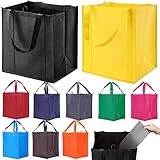
- STURDY & DURABLE: There are reinforced handles sewn to the bottom of the tote bag for extra durability, and there is a thick removable plastic bottom insert for extra strength while grocery shopping.
- LARGE CAPACITY: 15" H x 13" L x 10" W. After extensive research, we believe this size is the most practical size. You can carry the grocery bags over your shoulder and easily carry heavy loads.
- ECO-FRIENDLY: Made of recycled polypropylene, use reusable bags to protect the environment.
- EASY TO CLEAN: Machine Washable, Hand Washing recommended, easy to fold after wash the tote bags, Hang dry only.
- VERSATILITY: These heavy duty reusable shopping bags are great for GROCERY SHOPPING, picnics, laundry, the beach, travel, and more.
Hypermarket vs. supermarket at a glance
| Shopping factor | Hypermarket tendency | Supermarket tendency | What it means for you |
|---|---|---|---|
| Core offer | Food plus broad household and general merchandise | Food-led, with household and personal-care essentials | Choose the hypermarket when your list spans groceries and several non-food categories. |
| Premises | Usually the larger building and site | Usually smaller, though individual branches vary | A larger footprint can increase assortment but also walking time. |
| Location | Often outside traditional centres or in retail parks in the UK guidance | Can be in neighbourhood, town-centre or retail-park locations | Compare driving, public transport and parking with the value of a one-stop trip. |
| Parking | Large sites commonly provide extensive parking; HMRC notes generally free parking in its UK description | Parking ranges from a large lot to a small or paid facility | Check the individual branch’s rules and availability rather than relying on the format name. |
| Trip length | More departments and longer routes can make a full visit slower | Food-only baskets are often quicker to navigate | Use a supermarket for a short replenishment shop when its stock meets your needs. |
| Price | No automatic price advantage | No automatic price disadvantage | Compare identical products, pack sizes, promotions and travel costs in your local basket. |
Which format fits your shopping trip?
Choose a hypermarket for a planned one-stop errand
A hypermarket is a practical candidate when one visit needs to cover a weekly food shop, laundry supplies, toiletries, cookware, clothing or another general-merchandise need. The wider departments can save a second journey, especially when the store is on a route you already travel and parking is easy. Make a categorized list before leaving so the extra assortment does not turn a focused trip into unplanned browsing.
Choose a supermarket for a food-focused top-up
A supermarket is often the better fit when you need a few ingredients, fresh food for the next day or a regular grocery basket and do not need non-food departments. A smaller route can reduce time spent walking and may be closer to home, work or public transport. The advantage is convenience, not a guaranteed lower bill.
Do these 3 things before closing this tab:
1Clear out junk files and repair common Windows errors2Fix the driver behind crashes, sound loss and screen glitches3Repair Windows errors before they cause bigger problemsUse the branch that has the required stock
Format labels do not guarantee availability. A supermarket may have a stronger local bakery, fresh-food counter or dietary range than a much larger store. Conversely, a hypermarket may be the only nearby branch carrying a particular appliance, bulk pack or household line. Check the retailer’s current inventory or call the branch for items that would otherwise force a second trip.
Account for mobility, delivery and carrying limits
Long aisles and a large car park can be tiring for shoppers with mobility constraints, young children or limited carrying capacity. A nearby supermarket, pickup point or delivery service may be more suitable even when a hypermarket has a broader range. Evaluate the whole journey—from door to checkout and back home—not just shelf prices.
Are hypermarkets cheaper than supermarkets?
No reliable rule says that one format is always cheaper. The USDA Economic Research Service explains that store format—including physical characteristics, product offerings, business practices and marketing—helps explain variation in retail food prices, alongside regional and market conditions. A larger store may have scale advantages on some staples while a nearby supermarket may discount fresh food, run a loyalty promotion or avoid the travel cost that makes the larger trip more expensive.
Rank #3

- Large Capacity w/ Front Pocket & Hanging Loop – 14.6” W x 14” H x 10” D - 8.7 Gallons or 32.9 Liters of storage capacity. Fit more items than your traditional plastic grocery bags with its spacious nature. Place your grocery list, phone, or money in the convenient outside pocket which is located on the front of the bag for easy retrieval. You can even hang the bag on a shopping cart with the small loop that is located at the top of the bag for convenient and easy grocery shopping!
- Stays Upright & Easy to Shop w/ Hard Bottom – Keep your items stable and from tipping over when carrying the tote bag or when placed in your car, trunk, shopping cart, counter, or floor with the hard bottom! Easily load and unload with this sturdy bag which stays upright and maintains its shape due to the hard bottom. Place a set of 4 bags in your shopping cart for easy, convenient, and organized shopping!
- Sturdy & Durable Water-Resistant Structure – Carry up to 45 lbs. with the strong yet lightweight construction. Made from a high-grade, water-resistant, and thick PP-woven material that is made to last while the strong poly webbing handles wrap around and under the grocery bag for increased load capacity and heavy-duty usage! Carry comfortably by hand or over your shoulder with the 12” handles and easily clean this folding beach tote bag with wipes then let air dry.
- Multi-Functional – Multi-purpose and can be used for various occasions such as grocery shopping, beach, work, picnics, or trips! Perfect for packing your groceries, bringing food for a picnic, carrying your beach essentials, and transporting your work supplies. VENO reusable bags are versatile, functional, and fashionable for everyday use and timelessness. U.S. Patent Pending, Application Number 29887865.
- Reusable & Sustainable to Protect the Environment – VENO reusable grocery shopping bags are created through maximizing the use of post-consumer material to make high-grade bags that save plastic from ending up in oceans, lakes, and landfills. Help us in protecting our environment to create a cleaner, more livable future. Collapsible and foldable for future use and easy storage in your car, glove compartment, kitchen, cabinet, drawer, luggage, or purse!
Compare a real basket, not a single headline price
- Write down the exact products, brands or quality levels, pack sizes and quantities you normally buy.
- Compare the shelf or online prices for identical units at the branches you can realistically reach.
- Convert multi-buy offers and different pack sizes to a common unit price, such as price per kilogram or litre.
- Include membership requirements, delivery or pickup fees, parking charges, fuel, public-transport fares and the value of extra travel time.
- Check whether a promotion is temporary, limited to a loyalty scheme or restricted to a maximum quantity.
- Repeat the comparison for the categories that matter most to you; a store can be cheaper on staples but dearer on fresh food or household goods.
This method produces a decision for your household and local market rather than an unsupported claim about an entire retail format.
Free tools Windows power users keep installed
One-click scans. No signup required.
A practical decision method before you leave home
Step 1: Define the trip
Classify the visit as a food-only top-up, a full grocery shop, a combined grocery-and-household trip, or a general-merchandise errand with some food. The more categories you need to combine, the more useful a hypermarket’s breadth may be.
Step 2: Set a time and travel limit
Decide how long you can spend shopping and how far you are willing to travel. A large store is worthwhile only if its extra range or one-stop convenience compensates for the longer route, parking search and in-store walking.
Step 3: Verify the branch
Use the specific branch’s website, map or telephone line to check opening hours, parking, accessibility, pickup options, fresh counters and the departments you need. Do not infer these details from the word supermarket or hypermarket alone.
Step 4: Check availability and alternatives
Mark essential items separately from nice-to-have items. If an essential product is unavailable, choose the branch that can complete the trip or plan a second stop before setting out.
Windows Errors? Fix Them Before They Spread
Repair common Windows errors and clear accumulated junk for a smoother, more stable PC - no reinstall needed.Free scan · no reinstallOutdated Drivers Are Slowing You Down
One free scan finds every outdated or missing driver and matches the right update for your exact hardware.Free scan · exact hardware matchRank #4
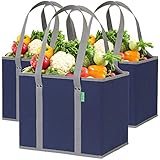
- Stands Up & Stays Open: Making shopping so much easier! With a rigid box structure, our reusable bags are super easy to load & unload compared to ordinary floppy bags – Long handles let you carry tall items or sling a tote bag over your shoulder
- Extra Large so You can Carry More: A 3 pack of our large tote bags holds the same as 10 single-use grocery bags! Great for family sized trips to the supermarket, for carrying bulky items, and for organizing produce, meats, and grocery items
- Sturdy & Made to Last: Our super strong grocery tote bag maintains its shape like a box even when fully loaded with groceries or whatever you need to carry – Each sturdy utility tote is crafted from top quality materials for reliable use over and over
- Won't Fall Over in the Trunk: Best shopping bags for groceries! Design is spill proof so items stay put while driving – No more groceries rolling around in the trunk – Bananas, bread, produce and other soft items won't be damaged on your way home
- Easy to Clean: Simply use a damp cloth or sanitizer wipe to clean, then allow to air-dry – Our reusable grocery bags are foldable like a notebook when not in use – conveniently stores under your car seat, trunk, or a kitchen drawer
Step 5: Compare total trip cost
Add the basket total to travel expenses and any parking, delivery or membership charges. If two stores are close in price, choose the one that saves meaningful time or has better access and stock.
Step 6: Reassess after a few trips
Keep receipts or a simple note of substitutions, missing items, time spent and final totals. Local promotions and assortments change, so a choice that works this month may not be best next month.
Advantages and trade-offs in detail
Hypermarket advantages
- One visit can cover food, cleaning products, toiletries and general merchandise.
- Large premises may support a broader range of pack sizes, brands and seasonal lines.
- Out-of-centre sites can offer substantial parking and easier loading, subject to branch rules.
- Families or shared households can consolidate errands into fewer journeys.
Hypermarket trade-offs
- The larger site and wider aisles can make a small shop slower.
- Out-of-centre locations may require a car or a longer public-transport journey.
- A broad assortment can encourage impulse purchases that were not in the budget.
- Popular lines may still be out of stock despite the store’s size.
Supermarket advantages
- Food-focused layouts can make routine grocery trips easier to navigate.
- Neighbourhood branches may reduce travel time and make frequent top-ups practical.
- Smaller stores can be easier for shoppers who find long walks or large car parks difficult.
- Some branches differentiate through strong fresh-food, local or specialist ranges.
Supermarket trade-offs
- Non-food selection may be too narrow for a combined household-and-grocery trip.
- Limited floor space can mean fewer pack sizes or less depth in a category.
- Parking, opening hours and accessibility vary widely by branch.
- A separate trip may be needed for clothing, appliances or other general merchandise.
Common mistakes when comparing the two
Assuming the name defines the size
International definitions use different measures and thresholds, and retailers use everyday labels for marketing. Ask what the branch actually sells and measure the travel and assortment you will experience.
Comparing different products
A lower shelf price is meaningless if one pack is smaller, a different quality grade or subject to a loyalty condition. Use unit prices and like-for-like specifications.
Ignoring the cost of the journey
Fuel, fares, parking and time can erase a small shelf-price saving. Include them whenever stores are not equally convenient.
Best Value

- 1. lightweight, long handles and comfortable carrying: Our reusable grocery bags can hold up to 50+ pounds of groceries and replace 2-3 conventional grocery bags. The widened handles distributed the pressure, making it easier to lift. Made of ripstop and nylon fabric which makes them hold heavy loads safely.
- 2. Easy to Fold & Store: Our reusable grocery bags can be easily folded into the attached pocket-size pouch, so you can carry them in your purse or car without taking up too much space.
- 3. Machine Washable & Reusable: Our reusable tote bags are Machine Washable to save your time, and you can reuse these grocery tote bags to reduce your carbon footprint and plastic usage.
- 4. Fashion to Colorful Life: Our reusable grocery bags come in 6 variety colors that are suitable for both men and women, and make great gifts for Christmas, Thanksgiving, and Mother's Day
- 5. Suitable for a Variety of Occasions: Our reusable shopping bags are perfect for daily trips, birthday parties, grocery stores, supermarkets, and more.
Treating promotions as permanent
Record the normal price as well as the offer price and note any quantity limits. Base a recurring shopping decision on prices you can reasonably expect, not one exceptional week.
Assuming a large store has every item
Stock depends on local demand, deliveries and department policy. Confirm essential items before making a long trip.
What official household data can—and cannot—tell you
A 2015 USDA Economic Research Service analysis reported that 90 percent of both SNAP households and food-insecure households in its US study usually shopped at a supermarket or supercenter. That statistic describes those US household groups and the study period; it is not a current worldwide estimate and does not prove that a supermarket is best for every trip. It does show that supermarket-type formats were central to everyday grocery shopping in that analysis.
The Tool Desk
Outbyte PC Repair FREEClear out junk files and repair common Windows errorsFree Scan →Outbyte Driver Updater FREEFix the driver behind crashes, sound loss and screen glitchesFind Drivers →The finding also should not be read as a direct comparison of hypermarket and supermarket value. The categories used in US household data, SNAP administration and commercial signage do not map perfectly onto the UK and French definitions above.
How to decide in common situations
| Your situation | Likely starting point | Reason to switch |
|---|---|---|
| Five-minute top-up for dinner | Nearby supermarket | Switch if the required ingredient is unavailable or priced unusually high. |
| Weekly groceries plus detergent and toiletries | Either; compare total basket and travel | Choose the hypermarket if it avoids another stop without adding excessive travel. |
| Groceries plus clothing or a small appliance | Hypermarket | Use a supermarket only if a separate general-merchandise trip is already planned nearby. |
| Limited mobility or no car | Most accessible supermarket or delivery option | Use a hypermarket when public transport, parking and in-store distances are genuinely manageable. |
| Specialist dietary or fresh-food needs | Branch with verified stock, regardless of label | Change stores when availability, quality or substitution risk outweighs distance. |
| Budget-sensitive routine shop | Store with the lowest measured unit-price basket | Recalculate when promotions, fuel costs or household quantities change. |
Bottom line: which is better?
Neither format wins universally. Pick a hypermarket when you value a broad non-food range, one-stop convenience and practical parking for a planned, larger trip. Pick a supermarket when the job is primarily groceries and a closer, faster or more accessible visit matters more. Make the final call using the actual branch, your complete basket, current unit prices, stock, opening hours and the full cost of getting there. The format name is a useful starting clue—not a guarantee of price, quality or convenience.
Quick Recap
Product prices and availability are accurate as of the date/time indicated and are subject to change. Any price and availability information displayed on Amazon at the time of purchase will apply.

