Very close, according to a 2025 Nature study of a two-dimensional polyaramid called 2DPA-1. Self-supporting nanofilms held gases so effectively that their measured nitrogen permeability approached the exceptional barrier associated with pristine graphene. The result is a laboratory demonstration on ultrathin films—not proof that a commercial package coating, solar-cell encapsulant, or consumer product is ready.
What the Nature study actually demonstrated
Cody L. Ritt and colleagues reported exceptionally low gas transport through self-supporting films of 2DPA-1, a two-dimensional polyaramid. Their most prominent result is a nitrogen permeability below 3.1 × 10⁻⁹ Barrer. In the comparison used in the paper, that is nearly four orders of magnitude below the polymer classes traditionally used as barriers.
As an Amazon Associate I earn from qualifying purchases.
“Barrer” is the conventional unit for polymer gas permeability: a lower value means that less gas passes through a film under a defined pressure and thickness. The reported figure is not a universal constant for every piece of 2DPA-1. It is a measurement-derived threshold tied to the film geometry, the microwell test, the gas, and the observation period used in this study.
The Tool Desk
Outbyte Driver Updater FREEScan for outdated or missing drivers - takes under a minuteDriver Scan →Outbyte PC Repair FREERepair Windows errors before they cause bigger problemsFix Now →The result matters because graphene is widely treated as a near-ideal molecular barrier, while ordinary polymers contain molecular free volume and chain-scale pathways that allow gases to diffuse. 2DPA-1 attempts to combine a similarly restrictive two-dimensional structure with the chemical processability associated with polymers. The paper’s title describes the result as approaching pristine graphene’s impermeability, not as demonstrating that every 2D polymer film is identical to defect-free graphene.
#1 Best Overall

- High thermal conductivity
- Low heat conduction due to low layer thickness of only 0.025mm
- Long-term stability and corrosion resistant
- High cooling capacity
- Caution! Electrically conductive
What 2DPA-1 is and how it is made
A two-dimensional polyaramid network
The researchers synthesized 2DPA-1 by polycondensation of melamine and trimesoyl chloride (TMC). Instead of producing predominantly one-dimensional chains, the reaction creates covalent extension in two dimensions. The resulting sheets can stack densely, giving gases fewer connected spaces through which to travel.
This architecture is different from simply making a conventional polymer film thinner. In a conventional material, reducing thickness shortens the diffusion distance but does not remove the molecular free-volume elements that form transport pathways. In 2DPA-1, the intended barrier comes from the chemistry and arrangement of the network itself: rigid covalent connectivity, closely packed layers, and very restricted openings between them.
Spin-coated, self-supporting nanofilms
The reported films were made by spin coating and covered a thickness range of approximately 4 to 65 nanometres. They were sufficiently self-supporting for the gas-retention experiment, in which each film spanned a small etched microwell rather than being laminated onto a commercial backing layer.
That distinction is important when interpreting the result. A free-standing nanofilm is a carefully controlled research specimen. A real package or device coating must also survive handling, bending, humidity, solvents, thermal cycling, scratches, pinholes, and the roughness of the surface beneath it. The Nature paper established the transport behavior of its test films; it did not qualify a production coating against those practical stresses.
Rank #2

- Versatile Size Options: KryoSheet pads are available in various sizes to suit your needs, including 24 x 12 mm, 25 x 25 mm, 29 x 25 mm, 33 x 33 mm, 38 x 38 mm, 44 x 37 mm, 50 x 50 mm, 68 x 51 mm, 75 x 72 mm each 0.2 mm thick. Perfect for fitting a range of CPUs and GPUs.
How the gas-permeability measurement worked
- Prepare the film. The team spin-coated a 2DPA-1 layer and produced specimens in the nanometre thickness range.
- Mount it over a microwell. Each membrane was suspended across an etched cavity. The film and the well formed a small sealed volume.
- Expose the membrane to gas. Gas pressure on one side of the membrane caused the thin film to bulge when gas was retained in the cavity.
- Track bulge retention. The researchers monitored whether the bulge relaxed over time. A persistent bulge indicates that gas loss through the membrane is extremely slow.
- Convert the observation to a permeability limit. When no measurable loss occurred during the observation window, the result was expressed as a value below the experiment’s detection threshold rather than as an exact transport rate.
This is why the nitrogen result is best written as “below 3.1 × 10⁻⁹ Barrer.” It is an upper limit inferred from retention, not a claim that the instrument measured a precise nonzero flow at that value. Some longer observations did not show bulge loss, and the authors discuss how the edge seal can influence what the apparatus sees.
The rim-seal issue
The film does not exist in isolation during a microwell test. Its perimeter must seal against the rim of the etched cavity. Leakage at that film–rim interface can make a genuinely impermeable membrane appear more permeable, while an imperfect seal or other edge effect can complicate interpretation of a very long retention period. The paper therefore distinguishes transport through the 2DPA-1 itself from leakage around its edge.
That caveat does not erase the result; it defines its scope. The experiment shows that the membrane’s intrinsic transport is low enough to reach the apparatus’s limit under the tested conditions. It does not establish that a large-area sheet with seams, defects, and repeated handling would have the same barrier performance.
Quick wins for a faster PC:
Fix the driver behind crashes, sound loss and screen glitchesFind Drivers →Repair Windows errors before they cause bigger problemsFix Now →Which gases were tested?
The paper reports similarly low permeability behavior for helium, argon, oxygen, methane, and sulfur hexafluoride in addition to nitrogen. The published nitrogen value is the clearest numerical headline, but the multi-gas response is significant: it suggests that the observed restriction is not limited to one gas with an unusually favorable size or interaction with the polymer.
Rank #3
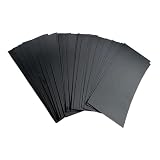
- ✸It can protect sensitive electronic components from damage caused by excessive temperature
- ✸Comes with high temperature resistance adhesive, can be freely pasted to the required place
- ✸It has good electromagnetic shielding performance
- ✸Size and thickness can be selected from the options
- ✸4 Pcs Graphene Sheets/set
| Measurement or demonstration | Reported result | Context |
|---|---|---|
| Nitrogen permeability | Below 3.1 × 10⁻⁹ Barrer | Self-supporting 2DPA-1 nanofilms measured by bulge retention over etched microwells |
| Film thickness | Approximately 4–65 nm | Spin-coated films used for the gas-retention experiments |
| Other gases showing similarly low behavior | Helium, argon, oxygen, methane, and sulfur hexafluoride | Reported in the same 2025 Nature study; no single permeability number for each gas was published |
| Calculated nitrogen barrier | 65.6 kJ mol−1 | Translocation across a bilayer pore in the most occluded modeled case |
| Calculated multilayer barrier | 77.0 kJ mol−1 | Sequential hopping through a modeled 100-layer film |
| Oxygen permeability in a device coating | 3.3 × 10⁻⁸ Barrer | 60 nm 2DPA-1 coating on MAPbI3 perovskite |
| Perovskite degradation rate | 14-fold reduction | Air-sensitive MAPbI3 demonstration with the 60 nm coating |
| Polyaramid resonator | About 8 MHz; quality factor up to 537 | Separate resonator demonstration reported by the paper |
Why the structure can block gas so effectively
Fewer free-volume pathways
Gas molecules move through ordinary polymers by repeatedly entering and leaving transient gaps between chains. Those gaps are often described as free volume. A dense, rigid two-dimensional network can reduce the size, number, and connectivity of those gaps. Stacked sheets add another constraint: a molecule must find a compatible opening in one layer and then continue through a tortuous sequence of openings in the next.
Calculated barriers are not measured permeability
The authors used calculations to estimate the energetic difficulty of nitrogen moving through representative pores and across many stacked layers. The calculated values in the table describe molecular barriers in a model. They help explain why transport could be so slow, but they are not substitutes for the bulge-retention measurement and should not be quoted as direct permeability numbers.
The model also illustrates how sensitive the material could be to defects. A single approximately 1 nm Knudsen pore would substantially increase permeability. In practical terms, the exceptional barrier depends on maintaining an effectively continuous film, not merely on possessing the correct chemical formula.
What’s actually slowing this PC down?
Pick the symptom - the matching free tool is one click away.
How close is this to pristine graphene?
“Approaches graphene” is a comparison of barrier performance, not a claim that the two materials are interchangeable. Pristine graphene is an atomically thin crystalline sheet with an exceptionally compact carbon lattice. 2DPA-1 is a multilayer polymeric material whose performance depends on covalent network formation, stacking, film continuity, and edge sealing.
Rank #4

- High Purity 99% Carbon
- Super Chemical Resistant
- High temperature Resistant
- Differential Thermal Conductive
- Compressable, Conformable, Self-lubricating
The fair comparison uses several axes:
- Gas and measurement: the 2DPA-1 result is a measured nitrogen retention limit, supported by similarly low behavior for several other gases. It is not a commercial package test performed side by side with a graphene laminate.
- Thickness: the reported 2DPA-1 specimens span several nanometres, whereas pristine graphene is one atomic layer. Thickness alone cannot determine barrier quality, but it affects material use and integration.
- Intrinsic transport versus edge leakage: the microwell experiment had to account for the rim seal. Large-area graphene or polymer barriers likewise need defect and edge control before their intrinsic lattice properties translate into a usable coating.
- Fabrication and transfer: 2DPA-1 was synthesized from molecular precursors and deposited by spin coating. That points toward solution or coating processes, but the study did not demonstrate roll-to-roll production, transfer onto flexible packaging, or industrial-scale yield.
- Demonstrated use: the paper shows laboratory demonstrations, including a protected perovskite sample and resonators. It does not establish a graphene-versus-2DPA-1 head-to-head qualification for a commercial application.
The practical advantage suggested by the work is therefore not “polymer replaces graphene everywhere.” It is the possibility of a molecularly impermeable material that can be synthesized and coated more like a polymer while retaining a barrier approaching the graphene benchmark.
What the perovskite demonstration adds
To show that the barrier could protect a sensitive material, the researchers coated air-sensitive MAPbI3 perovskite with a 60 nm layer of 2DPA-1. In that specific laboratory test, the coating reduced the lattice degradation rate 14-fold. The reported oxygen permeability for the coated experiment was 3.3 × 10⁻⁸ Barrer.
This demonstration connects gas retention with a device-relevant problem: oxygen and moisture can degrade perovskite absorbers. However, it should not be read as validation of a finished solar cell. The reported test covered a particular MAPbI3 sample, coating thickness, environment, and observation period. It does not establish outdoor lifetime, optical compatibility, electrical performance, adhesion after cycling, or manufacturing yield.
What the resonator result means
The paper also reports polyaramid resonators operating at about 8 MHz with a quality factor as high as 537. A high quality factor indicates relatively low energy loss in the resonant structure, making the result relevant to mechanical or acoustic components where a stable, low-loss film is useful.
Best Value

- During the operation of electronic components, high temperature and heat will be generated, which requires ultra-thin flexible graphite sheet for heat dissipation. The heat generated by electronic components will be uniformly transmitted through graphite paper, which can ensure that electronic components will not be burned by high temperature and prolong the service life.
- Package Content: 5pcs x Graphite Flexible Foil; Material: Graphite; Size(LxW): 250x200mm/10x8 inch; Thickness: 1mm
- The graphite sheets you receive have the features of high purity, low resistivity, oxidation resistance and high temperature resistance.
- Ultra thin graphite foil sheet is easy to cut, and can be cut into any shape to fit on the surface of various electronic components.
- Please check the thickness of the graphite foil before ordering.
This is a separate functional demonstration from the gas-barrier test. It shows that the material can participate in a resonator architecture; it does not prove that the same specimen simultaneously delivers a package-grade seal, survives environmental cycling, or can be manufactured in large volumes.
What remains unproven
- Commercial availability: no source establishes a currently marketed 2DPA-1 film, coating service, or consumer product.
- Production scale: the study does not report industrial-area coating, continuous manufacturing, production yield, or cost per square metre.
- Defect tolerance: the modeled 1 nm pore shows that a very small defect could materially raise permeability.
- Long-term durability: the 2025 Nature study does not qualify resistance to flexing, abrasion, humidity, solvents, ultraviolet exposure, heat, or repeated thermal cycling.
- Food-packaging approval: there is no regulatory qualification for food contact, pharmaceutical packaging, or other controlled uses.
- Solar-cell deployment: the perovskite test is a laboratory protection experiment, not evidence of a certified or field-deployed module.
- Lifecycle sustainability: the authors describe molecularly impermeable polymers as promising for future sustainability goals, but the 2025 Nature study includes no lifecycle assessment demonstrating an environmental benefit.
Where 2DPA-1 could matter next
If the film can be made uniformly over large areas and integrated without pinholes, its low gas transport could be useful for encapsulation, corrosion protection, oxygen or moisture barriers, and other applications where a very small amount of material must block molecular ingress. Thin coatings are attractive because they can add barrier function without the mass of a thick laminate.
Possible applications remain conditional. Packaging needs reliable seams, puncture resistance, regulatory approval, and predictable performance over a product’s shelf life. Solar cells need optical transparency where appropriate, adhesion to the device stack, electrical compatibility, and weather resistance. Sensors and resonators need controlled mechanical properties and stable interfaces. The 2025 demonstrations did not include any of those qualification steps.
Free tools Windows power users keep installed
One-click scans. No signup required.
How to read the headline number without overclaiming
When you encounter the nitrogen threshold, keep four qualifiers attached to it: the gas was nitrogen; the specimens were ultrathin 2DPA-1 films; the measurement used bulge retention over etched microwells; and the value is a limit derived from what the setup could detect. Removing those qualifiers turns a precise laboratory result into an unsupported claim about every possible film.
The strongest defensible conclusion is narrower and more useful: 2DPA-1 provides experimental evidence that a processable, two-dimensional polymer network can reach gas-barrier performance close to the exceptional benchmark associated with pristine graphene. The work establishes a compelling materials result and several laboratory demonstrations, while leaving scale-up, durability, regulation, and commercial deployment open.
Quick Recap
Product prices and availability are accurate as of the date/time indicated and are subject to change. Any price and availability information displayed on Amazon at the time of purchase will apply.

