Do these 3 things before closing this tab:
1Fix the driver behind crashes, sound loss and screen glitches2Clear out junk files and repair common Windows errors3Scan for outdated or missing drivers - takes under a minuteUravu Labs says its Clausius system could use low-temperature waste heat from data centers to draw moisture from air, then condense that moisture into distilled water while returning chilled water to a facility cooling loop. The approach combines atmospheric water harvesting with heat reuse, but the published output and cooling benefits remain company claims—not independently verified results from a confirmed commercial data-center deployment.
How does a data center make water from air?
Uravu’s Clausius platform uses a liquid-salt desiccant: a solution designed to absorb water vapor from air. The company says waste heat from servers, chillers, or other processes can regenerate the moisture-rich solution, allowing the captured water to be released as vapor and collected as distilled water. The system is also designed to return chilled facility water to a cooling loop.
As an Amazon Associate I earn from qualifying purchases.
- Air passes through an absorber. The liquid desiccant captures some of the water vapor in the air.
- Low-grade heat regenerates the solution. Uravu says the system can use waste heat at 35–60°C. In Data Center Dynamics’ April 21, 2026 account, the process also uses a vacuum pump to lower pressure, supporting evaporation at lower temperatures.
- Released vapor is collected. The vapor is condensed into distilled water, while the regenerated desiccant can capture moisture again.
- Cooling water returns to the facility loop. Data Center Dynamics reported Uravu’s explanation that the process can return cooling water at 27–32°C.
This is not simply a device that turns exhaust air into water. It depends on a facility’s available heat, the design and temperatures of its cooling system, and the amount of moisture in the surrounding air. The company describes its platform and heat range on its product page; the more detailed operating description comes from Data Center Dynamics’ report.
What water output and efficiency does Uravu claim?
Uravu’s current product page advertises output of up to 30,000 liters per megawatt per day. Data Center Dynamics separately reported the company’s claim of up to 30 cubic meters of distilled surplus water per day for each megawatt of data-center power, while quoting CEO Swapnil Shrivastav’s lower-end estimate of five cubic meters per day per megawatt. The report says output varies with humidity and ambient conditions, so these figures should be read as company estimates rather than a guaranteed yield for every site.
#1 Best Overall

- Advanced 4-Stage Filtration for Pure Drinking Water - Air Filtration: Removes dust and contaminants. - PPF + Activated Carbon: Pre-filters sediments and chemicals. - Reverse Osmosis (RO): Eliminates dissolved impurities (e.g., microplastics). - UV Filtration: ensuring water safety.
- Generates up to 10 liters (2.64 gallons) of water per day in optimal conditions. Reduces plastic bottle use, lowering your environmental footprint, Replace 15,000+ bottles annually. Portable + Sleek Modern Design
- Equipped with UV filter system for maximum purity. Ensures clean, great-tasting water for drinking and cooking. Easy to Use + Automatic + Smart Alerts
- Seamless automatic operation with minimal user intervention. Simple interface ideal for both home and outdoor use. Integrated alarms and alerts for optimal performance and maintenance. Energy + Water Efficient
- Compact, space-saving design perfect for homes, studios, offices, and outdoor settings. Easy to carry and place anywhere you need clean water, No Installation Required.
Uravu also advertises a PUE of 1.05–1.1 and negative WUE on its product page. These are promotional performance claims; the company page does not provide an independently audited energy-and-water balance establishing how they were measured or how they would apply at a particular facility. Operators would need to assess the system’s net energy use and cooling performance alongside its water output, rather than treating water production alone as proof of an overall efficiency gain.
How mature is the data-center system?
Data Center Dynamics reported on April 21, 2026 that Uravu had developed a 125 kW unit and was targeting a standardized 1 MW modular block. It also reported agreed terms for a hyperscaler pilot expected to start in Q2 2026 and discussions with five other digital-infrastructure firms. That article described plans and expectations; it does not confirm that the pilot began or that the 1 MW block reached commercial operation.
Rank #2
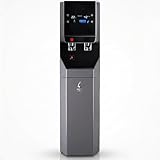
- MAKE PURE DRINKING WATER FROM AIR The Aqua Vitale A20L atmospheric water generator produces up to 20 liters (5.3 gallons) of fresh drinking water per day directly from ambient air. No plumbing, no water lines, and no bottled water deliveries required.
- Equipped with advanced multi-stage purification including sediment filtration, activated carbon, reverse osmosis polishing, mineral enhancement, and UV sterilization to ensure clean, fresh-tasting water in every glass.
- PREMIUM EUROPEAN DESIGN Engineered to complement luxury kitchens, offices, yachts, and modern interiors. The A20L combines high performance with elegant aesthetics — a true appliance, not an industrial machine.
- ELIMINATE BOTTLED WATER FOREVER Stop lifting heavy bottles and scheduling deliveries. Enjoy on-demand drinking water generated inside your home or workplace — ideal for families, offices, gyms, and wellness-focused environments.
- ENERGY-EFFICIENT WITH EASY MAINTENANCE Designed for reliable daily use with user-friendly controls, washable air filtration, and scheduled filter replacement intervals. Built for long-term performance and dependable hydration.
The same report said Uravu supplied water from air to 40 hospitality clients using a Bangalore laboratory machine with a stated capacity of five cubic meters per day. That is evidence of the company’s separate hospitality activity, not proof that its data-center cooling configuration has been deployed commercially. The report quoted Shrivastav describing the original motivation: “Our college campus ran out of water,” he recalls. “There was a two-week hiatus in water supply, and when that happened, we realized the full impact of having a water source disrupted and the multiplying effect that has on day-to-day life. That’s when we started to work on this more closely.”
Free tools Windows power users keep installed
One-click scans. No signup required.
How does Uravu’s approach compare with other systems?
Other companies also describe atmospheric water systems for data centers, but the available vendor descriptions do not provide comparable independent measurements that would establish which system performs best.
Rank #3

- Produce Fresh Water Directly from Air: Turn humidity into clean, fresh water without relying on municipal water supplies. Under optimal conditions, this atmospheric water generator can produce up to 2.9 gallons (11 liters) of alkaline water (PH:7.6-8.5) per day, providing a reliable source of drinking water for homes, offices and emergency situations
- Multi-Stage Water Purification System: Every drop passes through a comprehensive purification process featuring Air Filter, PAC Filter, UF Membrane Filtration, Post Activated Carbon Filter, and UV Sterilization. Designed to improve water quality and maintain freshness throughout the storage system. Note: Filter replacement intervals vary based on usage and environment
- Dual-Tank Freshness System - Unlike single-tank designs where water sits stagnant for days, a 1 gal (3.8L) collection tank pairs with a dedicated 1.2L ready-to-drink tank, keeping freshly made water separate and flowing. Smart sensors pause production when full and trigger internal circulation to guard against secondary contamination, so every glass tastes freshly made. Filter replacement reminders take the guesswork out of maintenance.
- Quiet, Solar-Ready & Energy-Efficient - Runs at a hushed 45 dB or less on only 245W thanks to a high-efficiency piston compressor, and works with solar generators and portable power stations, delivering dependable off-grid water for homes, offices, studios, RVs and shared spaces.
- Compact Desktop Design: Measuring 10.2 x 14.5 x 17.5 inches, this water generator fits conveniently on countertops and desktops while providing chilled water at temperatures between 50F - 57F for refreshing hydration throughout the day
| Company | Described approach | What the cited source establishes |
|---|---|---|
| Uravu Labs | Liquid-salt desiccant absorbs moisture; waste heat regenerates it, producing distilled water and returning chilled water to a cooling loop. | Uravu’s product description and claims; Data Center Dynamics’ reporting on a developed 125 kW unit, a targeted 1 MW block, and a planned pilot. Neither source independently verifies data-center output or a completed commercial deployment. |
| AirJoule | A sorbent-based system uses facility heat in atmospheric-water capture chambers and a patented thermal-pressure swing process to regenerate the sorbent. | AirJoule says its system can capture water vapor at relative humidity as low as 20%. This is a vendor claim, not a comparative test result. See its data-center description. |
| Water From Air | Sorbent materials are regenerated at low temperatures and ambient pressure; the company says waste heat releases moisture as distilled water. | The company describes its technology as designed for arid conditions, but the cited technology page does not supply a comparable independent performance result. |
A meaningful comparison would need measurements under similar operating conditions, including:
- Water output across temperature and humidity ranges, not just a best-case figure.
- Net energy use and cooling performance after integration with the facility.
- Water quality and any treatment required for the intended use.
- Compatibility with existing air- or liquid-cooling infrastructure.
- Pilot or commercial operating history and independently measured results.
What would a data-center operator need to verify?
The concept is most relevant to facilities with a usable source of low-grade heat, a cooling-loop design that can accommodate the system, and local conditions that support useful moisture capture. A site evaluation should establish whether the recovered water and cooling benefits justify the equipment and integration requirements.
Quick Recap
Best Value

- Produces up to 18 gallons of purified drinking water per day Generates fresh water directly from humidity in the air Operates best in environments with 50% humidity or higher Direct-fill design dispenses water into bottles or containers Ideal for boats, marine use, RVs, homes, offices, and off-grid living Multi-stage filtration and purification system Energy-efficient atmospheric water generation technology Helps reduce dependence on bottled water and traditional water sources Compact modern design with durable construction Great for sustainable living, disaster preparedness, boating, and backup water supply 1 Year Manufacturers Warranty
Rank #4
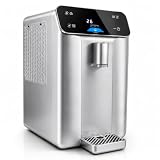
- Produces up to 10 liters of pure cold drinking water per day directly from the air — No plumbing required Advanced 4-stage filtration system (PAC + Ultrafiltration + Carbon Block + UVC) for clean tasting water Perfect for Home, Office, RV, Camping and Off-Grid use — simply plug into 110V outlet Compact countertop design with easy-to-use LED display — no installation needed Cold water dispensed between 8°C and 12°C — ideal for daily drinking water
- Site-specific yield: Ask for expected output across the facility’s actual temperature and humidity conditions, including seasonal variation.
- Whole-system energy balance: Request measured energy use for the complete installation and its effect on cooling—not only the amount of water produced.
- Water quality and destination: Confirm the required treatment and whether the resulting water is suitable for the facility’s intended use.
- Integration details: Determine how the equipment connects to the existing cooling loop and how it affects operating temperatures and controls.
- Evidence and status: Distinguish design targets and vendor claims from measured pilot results, and ask whether results have been independently verified.
Product prices and availability are accurate as of the date/time indicated and are subject to change. Any price and availability information displayed on Amazon at the time of purchase will apply.

