An oscillating multitool is safe and effective when you match the accessory to the material, secure the workpiece, keep both hands out of the cutting path, and use light, moving pressure. Disconnect the tool before changing a blade, inspect accessories for damage, and wait for the oscillation to stop before setting the tool down.
In this guide, “multitool” means a powered oscillating multitool. The tool does not grip objects by itself; gripping means holding the workpiece with a clamp or vice while you cut.
As an Amazon Associate I earn from qualifying purchases.
What an oscillating multitool does
An oscillating multitool drives an accessory through a very small, rapid back-and-forth arc. Bosch’s UniversalMulti 18V-32 is specified at 2.8 degrees of oscillation and up to 19,000 oscillations per minute. Those figures belong to that model and are not a universal specification for every multitool.
With the right accessory, an oscillating tool can make controlled cuts where a circular saw, reciprocating saw, or drill cannot easily fit. Manufacturer-listed applications for Bosch’s GOP18V-30 include vertical and horizontal cuts in wood board, openings in drywall, and cuts in pipe close to a surface. Such applications are model-specific: read the instructions for your own tool, attachment mount, and material before copying a technique.
#1 Best Overall

- 3-speed selector allows users to choose their speed setting based on the application. A brushless motor delivers up to 57% more runtime over brushed
- Dual-Grip variable-speed trigger gives users ultimate speed and application control. Universal accessory adaptor for use with most oscillating tool accessory brands
- Quick-Change accessory system allows blades and attachments to be changed quickly without wrenches
- Bright LED illuminates dark worksurfaces for accurate cutting
- 3 Year Limited Warranty
What “gripping” means here
The oscillating mechanism cuts, sands, or scrapes; it is not a powered gripper. To keep stock from moving, use a suitable clamp or a vice. The Triton manual extract specifically advises securing movable workpieces with a clamp or vice. Confirm any additional workholding warnings in the complete manual for your tool.
Prepare before connecting power
Read the exact manual
Accessory mounts, permitted materials, guards, speed controls, and battery procedures vary by model. Read the manual for the tool in your hands and for the accessory system it accepts. Do not assume that a blade that fits one oscillating tool is approved for another, or that a setting used for wood is suitable for metal, plastic, drywall, or pipe.
Choose the blade for the material and the job
There is no single “best” multitool blade. Select by the material, the type of cut, the likelihood of embedded metal, the blade geometry, and the attachment interface. An intact blade that is designed for the job cuts more predictably than a damaged or improvised accessory.
Recommended Free Tools
| Job or material | Selection guidance | Important qualification |
|---|---|---|
| Soft wood | Use an undamaged wood-cutting plunge or flush-cut blade suited to the tool. | Bosch identifies soft materials such as wood as suitable for plunge cuts on its UniversalMulti 18V-32; other models may differ. |
| Gypsum board or drywall | Use an accessory intended for drywall and the opening or trimming task. | Check for hidden fasteners and services before cutting; follow the material and tool manual. |
| Wood containing nails or screws that can be removed | Remove the fasteners before cutting whenever practical, then use a wood blade. | Do not force a wood-only blade through known metal. |
| Wood or building material where embedded metal cannot be removed | Use a bi-metal saw blade recommended for the tool and the intended cut. | Bosch gives this advice for nails or screws that remain embedded. |
| Pipe close to a surface | Use a blade rated for the pipe material and a tool approved for close-to-surface pipe cuts. | The GOP18V-30 listing is a model-specific example, not a general permission for every multitool. |
Inspect the accessory
Before fitting a blade, look for bends, cracks, missing teeth, excessive dullness, or other damage. Bosch DIY warns that bent or dull blades can break, impair the cut, or contribute to kickback. Replace a compromised accessory rather than trying to straighten, sharpen, or continue using it.
Put on task-appropriate protection
The Triton manual extract calls for eye, hearing, respiratory, and cut-resistant hand protection when circumstances require them. Eye protection should contain dust and fragments; hearing protection is sensible during prolonged or loud work; respiratory protection depends on the material and dust produced; and gloves must not compromise your ability to control the tool. Follow the complete manual and the requirements for the material being cut. Tie back long hair, remove loose clothing and jewelry, and keep bystanders away from the cutting area.
Rank #2
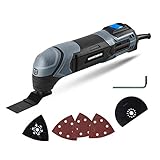
- Powerful Motor - The 2. 2-Amp motor delivers up to 20, 000 OPM for easy cutting, sawing, trimming, grinding and sanding
- Ergonomic Design - Compact size and ergonomic soft grip provides optimal handling and control of the tool
- Variable Speed Dial – Adjust the speed for different applications
- Universal Collet System - Compatible with standard oscillating multi-tool blades and accessories on the market
- Bright LED Light – Light where you need it
Secure the workpiece instead of holding it
Clamp short or movable stock
Place the material on a stable support and clamp it so the cut will not close on the blade or shift as the accessory enters. A vice is appropriate for small pieces that can be held without crushing them. For longer pieces, support the material on both sides of the cut while leaving a clear path for the blade.
Check the clamp setup
- Position the clamp or vice away from the intended cut and away from the accessory’s travel.
- Tighten enough to prevent movement, but verify that the material has not bowed or been damaged by the pressure.
- Confirm that the off-cut can fall or move without pinching the blade.
- Keep your free hand outside the blade path. Never steady unstable stock by placing fingers beneath or immediately beside the cut.
Recheck the setup if the workpiece starts vibrating, rotating, or lifting. Stopping to reposition a clamp is safer than compensating with extra force on the tool.
Outdated Drivers Are Slowing You Down
One free scan finds every outdated or missing driver and matches the right update for your exact hardware.Free scan · exact hardware matchPC Slower Than It Used to Be?
A free scan shows the junk files, broken settings and background clutter dragging Windows down - then fixes them in one click.Free scan · Windows 10 & 11Safe operating sequence
- Disconnect the power source. Unplug a corded tool. For a battery model such as the cited UniversalMulti 18V-32, remove the battery before changing an accessory or performing maintenance.
- Fit the approved accessory. Install the blade according to the tool’s mount instructions and confirm that it is seated and locked. The interface must match the tool; Bosch identifies Starlock and StarlockPlus compatibility for the GOP18V-30 family, but that does not establish compatibility for other tools.
- Inspect the setup. Verify the blade direction, clamp position, support, and intended cut line. Make sure no part of the accessory will strike the bench, clamp, or another object when the tool starts.
- Start with controlled contact. Hold the tool securely, place the accessory at the intended starting point, and use low, even pressure. Do not begin by jamming the teeth into the material at full force.
- Keep the tool moving. Guide the blade through the cut and move it back and forth as appropriate to the task. Bosch’s working advice says consistent, low contact pressure is important because excessive pressure impairs performance and may make the accessory jam.
- Monitor heat and resistance. If progress slows, the blade squeals, the housing becomes unusually hot, or the accessory starts to bind, ease off, stop, and investigate. A dull or unsuitable blade, an unsecured workpiece, or embedded metal may be the cause.
- Finish without twisting. Keep the accessory aligned with the cut as the blade exits. Do not lever the tool sideways to hurry the final part of the cut.
- Stop and set down safely. Release the control and wait until the accessory has stopped completely before placing the tool on a bench or moving it to another location.
How to make a plunge cut
A plunge cut starts inside a board or panel rather than at an exposed edge. Bosch’s UniversalMulti 18V-32 guidance identifies soft materials such as wood and gypsum board for plunge cuts on that model.
Plan the entry
Mark the opening and confirm that the blade length and shape can reach the material without striking the support underneath. Check for nails or screws. Remove them when possible; if they must remain in the material, Bosch advises a bi-metal saw blade rather than a wood-only blade.
Enter gradually
With the workpiece clamped or otherwise stable, place the front portion of the blade on the marked area and begin with light pressure. Allow the oscillation to establish the kerf instead of forcing the teeth downward. Once the blade is engaged, guide it along the marked line while keeping your hands away from the entry point.
Rank #3

- The 3-speed selector of DEWALT 20V tools allows users to choose their speed setting based on application.
- Brushless motor of DEWALT oscillating tool delivers up to 57% more run time over brushed
- Dual-Grip variable speed trigger of DEWALT cordless tools gives users ultimate speed and application control
- Universal accessory adapter for use with most oscillating tool accessory brands. Oscillations/min: 0-13,000/ 0-17,000/ 0-20,000 OPM
- Quick-Change accessory system allows blades and attachments to be changed quickly without wrenches
Complete the opening
Maintain a controlled speed around corners and narrow sections. If the blade starts to bind, stop the tool, wait for it to stop, and determine whether the cut is closing, the blade is dull, or a fastener is being encountered. Never pull a moving blade sideways to free it.
Quick wins for a faster PC:
Scan for outdated or missing drivers - takes under a minuteDriver Scan →Repair Windows errors before they cause bigger problemsFix Now →Sawing, flush cutting, and trimming
Cutting wood board
Support the board close enough to the cut that it cannot flex excessively, but leave room for the accessory. A straight guide or marked line helps you control the direction, while the clamp or vice prevents the stock from walking. Use a wood blade unless the material contains metal that cannot be removed, in which case select a compatible bi-metal blade.
Flush cuts
Flush-cut blades are useful when a protruding piece must be trimmed close to a surface. Keep the flat side of the blade aligned with the surface and advance slowly. Protect the finished surface from accidental contact and stop if the tool begins to twist; twisting can damage the surface and stress the accessory.
Drywall openings
For a drywall opening, secure the panel or work from a stable section, mark the perimeter, and use an accessory intended for gypsum board. Bosch lists drywall openings as an application for the GOP18V-30. The exact blade and permitted depth depend on your tool and accessory instructions.
Pipe cuts near a surface
A close-to-surface pipe cut leaves little room for a larger saw. Bosch lists this use for the GOP18V-30, but the pipe material and blade rating still matter. Clamp or support the pipe so it cannot rotate, keep the tool square to the cut, and stop immediately if the blade catches or the pipe begins to move.
What’s actually slowing this PC down?
Pick the symptom - the matching free tool is one click away.
Rank #4
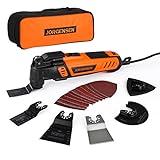
- 5° Oscillating Angle: 5° oscillating angle makes working more efficient. Compared with normal oscillating tool, 4-5 times
- 16-piece Electric Multitool Accessories: Includes 1-5/16" Flush-Cut Wood Sawblade, 1-5/16" Bi-Metal Flush-Cut Universal Sawblade, 2-11/16" Flush-Cut Wood Sawblade, 3-1/2'' Flush Cut Oscillating Tool Blade, Oscillating Scraper Blade, Oscillating Sanding Pad, 10 Pcs Sanding Paper: 60 / 80 / 120 / 180 / 240 grit x 2 Pcs
- Quick Change: JORGENSEN vibrating saw achieve quick change of the blades. Additional locking bracket protects your finger from clipping in the blade-change-process. Quick-Change Attachments design provides you higher efficiency by saving time
- 7 Variable Speed & Wide Applications: 6-speed switches allow users to; JORGENSEN oscillating tool has 7-speed position with 8,000-16,000 OPM, that appropriate output speed can be easily customized to your needs while working. With versatile accessories, you can use this tool to do various household projects, such as cutting, scraping, sanding, cleaning, polishing and more
- Ergonomic Design: Slim body engonomic design soft grip provides the best cutting performance for long-time usage, in the meantime provides convenient and stable operation for users; Universal fit system matches most brands of blades or other accessories
Why light pressure and movement matter
Pressing harder does not reliably make an oscillating multitool cut faster. Bosch’s exact instruction is to use “a consistent, low contact pressure”; otherwise performance can be impaired and the accessory may jam. Excess force also makes it harder to keep the blade aligned.
Moving the tool during the cut helps distribute wear and limits heat buildup at one tooth or section of the blade. Use a controlled back-and-forth motion where the accessory design permits it, but do not scrub aggressively or rock the tool. If the blade is not advancing with light pressure, change the diagnosis rather than the force: check the material, blade type, sharpness, workholding, and embedded fasteners.
Independent reader supportYour contribution helps us test, update, and keep practical guides available for everyone.Common problems and safe fixes
| Symptom | Likely contributors | Safe response |
|---|---|---|
| The blade stalls or jams | Excess pressure, a closing kerf, a dull blade, or stock that is moving. | Release the control, wait for a complete stop, secure or support the workpiece, and refit a suitable blade if needed. |
| The cut is slow and rough | Blade is dull, bent, damaged, or mismatched to the material. | Disconnect power and replace the accessory with an intact, material-appropriate one. |
| The tool kicks or twists | Accessory catches, embedded metal is encountered, or the operator is forcing the cut. | Stop, disconnect, inspect for fasteners, choose a bi-metal blade when removal is impossible, and resume with low pressure. |
| The workpiece vibrates or shifts | Insufficient clamping or inadequate support around the cut. | Stop and reposition the clamp or vice; do not hold the stock by hand while cutting. |
| The tool or blade gets unusually hot | Continuous heavy pressure, no movement, or a blade that is too dull for the task. | Stop to let the accessory cool, then correct the pressure, motion, support, or blade choice. |
| The accessory will not fit or lock | Wrong attachment interface or incomplete installation. | Keep the tool disconnected and use only an accessory approved for that mount; never modify the blade or lock. |
Changing blades and handling the tool afterward
Changing an accessory is a power-isolation task, not a quick adjustment. Unplug a corded model or remove the battery from a battery model before loosening the mount. Keep the removed blade pointed away from your hands, install the replacement according to the manual, and verify the lock before reconnecting power.
After a cut, release the trigger or switch and wait for the accessory to stop completely before setting the tool down. Do not place a still-oscillating blade on the bench, floor, or workpiece. Inspect the blade after demanding cuts, especially if it contacted a nail, screw, clamp, or other hard object.
Model-specific details you should not generalize
Bosch UniversalMulti 18V-32
Bosch DIY’s working advice for this battery model describes 2.8-degree oscillation, up to 19,000 oscillations per minute, low consistent contact pressure, movement during work, battery removal before accessory changes, and waiting for a complete stop before setting the tool down. The same guidance identifies wood and gypsum board as soft materials for plunge cutting and recommends removing embedded nails or screws or using a bi-metal blade when they remain.
Best Value

- Powerful Oscillating Saw: The 3.0 Amp motor of the WORKPRO Oscillating Power Tool provides excellent power. The 3° oscillation angle of the blade significantly improves work efficiency. This tool is suitable for cutting, sawing, polishing, and dressing various materials, including medium and low-hardness metal pipes, wood, nails, screws, and more
- Multi-Speed Adjustment: With 7 speed settings ranging from 15,000 RPM to 23,000 RPM, this tool can meet the needs of various renovation projects. Adjusting the speed allows for efficient and high-quality work
- Tool-Less and Universal Fit: Replacing accessories is quick and easy with just three simple steps. Move the flip button, change the saw blade, and press the button to complete the process—no spanner required, saving you time and effort. The WORKPRO Multifunctional Oscillating Saw features a universal accessory interface compatible with most accessory brands
- Comfortable and Convenient to Use: Activating the oscillating tool is as simple as pressing the on/off switch at the top. The ergonomic design allows for easy control of vibration and straightforward operation to complete tasks efficiently
- 17 pcs Accessories: 2 pcs wood/metal blades, 3 pcs wood and plastic saw blades, 1 pc scraper, 1 pc sanding pad, 10 pcs sanding sheets, 1 pc user manual, 1 pc oscillating tool kit
Bosch GOP18V-30
Bosch Professional lists vertical and horizontal wood-board cuts, drywall openings, and pipe cuts close to surfaces for the GOP18V-30. Its product information names Starlock and StarlockPlus accessory compatibility for that model family. Treat those applications and interfaces as specifications for the cited tool, not as a promise that every oscillating multitool accepts the same blades or performs the same cuts.
Triton safety guidance
The Triton manual extract advises securing movable workpieces with a clamp or vice and using eye, hearing, respiratory, and cut-resistant hand protection in relevant circumstances. Because only an extract is available here, consult the complete manual for the exact model’s warnings, accessory limits, and protective-equipment requirements.
A practical decision rule
Before each cut, answer four questions: What material am I cutting? Could nails or screws be embedded? Which blade geometry is intended for this cut? Does the accessory mount match my exact tool? If any answer is uncertain, stop and consult the tool or blade manual instead of experimenting on the workpiece.
Safe multitool work is controlled work: an intact, compatible blade; a secured workpiece; appropriate protection; disconnected power during changes; light, even pressure; continuous, deliberate movement; and a complete stop before the tool is put down.
Quick Recap
Product prices and availability are accurate as of the date/time indicated and are subject to change. Any price and availability information displayed on Amazon at the time of purchase will apply.

