Windows Errors? Fix Them Before They Spread
Repair common Windows errors and clear accumulated junk for a smoother, more stable PC - no reinstall needed.Free scan · no reinstallOutdated Drivers Are Slowing You Down
One free scan finds every outdated or missing driver and matches the right update for your exact hardware.Free scan · exact hardware matchTake an at-home COVID-19 antigen test as soon as flu-like symptoms begin, and follow that kit’s instructions exactly. If the result is negative, repeat the antigen test 48 hours after the first test—or ask a health care provider whether a molecular test is a better next step. A negative result does not rule out COVID-19, and a COVID-only test cannot tell you whether flu or another illness is causing your symptoms.
Before you test: choose the right test and check the kit
Most at-home COVID-19 self-tests are antigen tests. They look for viral proteins in the sample and can provide a result in minutes, but they are generally less sensitive than molecular tests such as NAAT or PCR. A home test only checks for the viruses named on its label: a COVID-only test does not test for influenza.
As an Amazon Associate I earn from qualifying purchases.
Some at-home multiplex tests check for SARS-CoV-2 and influenza A and B. Read the package to confirm its targets, whether it is authorized for home use, and the instructions for that particular test. Test procedures and repeat-testing directions can differ by kit. The CDC says it has no specific guidance for using at-home flu tests, so use the manufacturer’s instructions and seek clinical advice when a result may affect treatment. See the CDC’s 2025–2026 flu-season guidance.
Recommended Free Tools
Think first about what you need to know. If you want a quick check for COVID-19 at home, an antigen self-test may be convenient. If a negative antigen result would leave an important treatment or care decision unresolved, ask a clinician whether a molecular NAAT/PCR test is more appropriate. If you want to check for more than one virus, verify that a multiplex test lists each target you want tested; the word “multiplex” alone does not establish that it checks for flu or any particular virus. The CDC says molecular multiplex tests are preferred over antigen self-tests in clinical contexts when results can inform timely treatment and care.
#1 Best Overall

- FDA Authorized 15-Minute Flu A&B, COVID Test Kit: Over-the-counter flu and COVID test for home use with rapid results in just 15 minutes.
- Made for Ages 2 and Above; Parents Can Stop Guessing: Quickly identify whether you or your kids are dealing with coronavirus or influenza A & B. Adult-collection is required for those aged 2-13 years, and self-collection by individuals aged 14 years and older.
- Same Ease-of-Use; Get 3 Results in 1 Test: Utilizing the familiar 4 user-friendly steps of at-home COVID tests, you can now get all 3 results for COVID-19 and Flu A & B at once with 5 drops of sample.
- Fast and Convenient COVID and Flu Tests for Home: Use this COVID and influenza rapid test kit in the comfort of your home. Bypass the need for a doctor's visit and protect your loved ones from potential exposure to contagious illnesses at school, work, or public gatherings.
- Compact Design for On-the-Go Testing: Stay safe wherever you go with our COVID-19, Flu A & B 3-in-1 self-test. Its compact design ensures easy storage and convenient portability for your travel bag.
- Check the expiration date. If it has passed, check the manufacturer’s website to see whether the expiration date was extended. Do not assume an expired date is still valid without checking.
- Read the entire package insert before opening or using the test. Confirm the required specimen, swab technique, processing steps, number of drops if applicable, and result-reading window.
- Wash your hands before and after collecting the nasal specimen.
- Check the FDA’s current list of authorized tests and manufacturer information when you are unsure about a product’s authorization or an extended expiration date.
Tests are available online, in pharmacies, and in retail stores. Some health insurance plans may reimburse the cost, but reimbursement depends on the plan. If you expect to use the recommended repeat test, a multi-test pack can make it easier to have another test available; compare its directions and expiration information just as you would for a single test. The CDC’s self-testing guidance explains how to use and interpret a self-test.
How to take the test
- Set up the kit as directed. Use the sample type and materials specified in its instructions. Do not substitute another test’s swab method or improvise a specimen.
- Collect the sample exactly as shown. Follow the kit’s directions for how to use the swab and how long or how far to insert it. The correct technique is kit-specific. A technique used with another brand or type of test may not apply to this kit.
- Process the sample using the specified steps. If the instructions call for a tube, buffer, or a particular number of drops, use those directions rather than estimating. Follow the listed order of steps; do not skip or add steps.
- Start a timer and read the result only in the stated window. Do not interpret the test early or after the manufacturer’s permitted reading time; a result outside that window may not be valid.
Not following the manufacturer’s instructions can lead to an incorrect result, according to the CDC. That is why the package insert—not a general video or directions for a different kit—should guide the specimen collection, processing, and timing. Wash your hands before and after collecting the nasal specimen, and use the included collection device as directed.
If the control indicator does not appear as described, the test is invalid: it did not work properly, so do not treat it as a negative result. Follow the package directions for using a new test, or contact the manufacturer or a health care provider for help. If you are not sure whether a line or indicator matches the kit’s examples, check the specific instructions rather than guessing.
Free tools Windows power users keep installed
One-click scans. No signup required.
What to do with the result
If the result is positive
A positive self-test means SARS-CoV-2 was detected and you have a COVID-19 infection. Take precautions to reduce the chance of spreading illness to others, monitor your symptoms, and contact a health care provider, community health center, or pharmacy to ask whether treatment is appropriate. COVID-19 treatment must begin within several days of symptom onset to be effective, so do not delay asking about eligibility. Seek emergency care for emergency warning signs; if symptoms are severe, contact emergency services.
A positive COVID-19 result does not show whether you also have influenza or another respiratory illness. If you have flu-like symptoms and are at higher risk of serious complications, contact a provider promptly rather than assuming that the COVID result answers every question about your care. Testing and treatment decisions can depend on which infections are suspected and how long you have had symptoms.
Rank #2
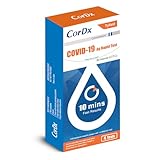
- Fast Results in 10 Minutes – Get reliable Covid-19 test results in as little as 10 minutes, perfect for quick checks before gatherings or travel.
- Easy to Use, No Lab Needed – Simple step-by-step instructions allow you to self-administer the test at home with no need for professional assistance.
- Detects All Major Variants – Effectively identifies all known Covid-19 variants, giving you confidence in the test’s ability to track evolving strains.
- Compact and Travel-Friendly – Conveniently sized for travel, this kit allows you to test anywhere, giving you the flexibility to stay safe on the go.
- Only 5 turns per nostril —why bother with 10? Get quick and reliable results with less effort, making testing easier for the whole family, Our Covid-19 test kit for home works for individuals ages 2+.
If the result is negative
A negative antigen result means the test did not detect the virus in that sample at that time. It does not prove that you are uninfected: antigen levels may not yet be detectable, and another illness, including influenza, may be causing your symptoms. When you have symptoms, repeat the antigen test 48 hours after the first one. A NAAT or PCR test may be an alternative to repeating the antigen test or may be used to confirm an antigen result. The CDC provides this timing in its self-testing guidance.
In other words, “not detected” is not the same as “definitely not infected.” The result applies to the sample collected at that point in time, and a single negative antigen test can miss an infection. Do not stop thinking about COVID-19 solely because of one negative home result, particularly if symptoms continue. Follow the kit’s directions for the repeat test and wait the recommended 48 hours after the first test.
A negative result also does not identify what is causing your symptoms. A COVID-only test cannot tell you that you have flu; it only reports that it did not detect its stated target in that sample. Consider whether another illness or a broader test is relevant, and contact a health care provider if symptoms worsen, you are at higher risk, or you need help deciding what to do next.
Continue everyday steps to avoid spreading illness while you are sick. Consider contacting a health care provider if symptoms worsen or you need help deciding whether further testing or care is appropriate. If you have a time-sensitive treatment question, do not wait for a repeat test before seeking advice.
If the result is invalid
An invalid result is not evidence for or against COVID-19. It means the test did not work properly, for example because the control did not appear as the instructions require. Use a new test according to the package directions. If another test is also invalid, ask the manufacturer or a health care provider for help. Do not count an invalid test as the first or second negative result in your repeat-testing decision.
Rank #3

- FDA Authorized 15-Minute Self-Test: The test is a 15-minute self-test to detect whether or not an individual has COVID-19. The test can be completed in the comfort of your own home without the need to ship your sample to a lab.
- Easy to Use with Zero Discomfort: Test can be done by inserting 1/2 to 3/4 inch of a simple non-invasive nasal swab. Step-by-step instructional videos are available in our app (Installation of app is optional).
- For Ages 2 and Above : The self-administered test is recommended for individuals aged 15 years and older. Adult-collection is required for testing children 2-14 years old.
- Manage Group Testing Via Mobile App: The iHealth Test app allows the administrator of a small group to monitor and track the group members’ test results as needed at school, work or an event.
- Independently-sealed packaging ensures safe and hygienic testing. The swabs and test cards of iHealth COVID-19 Antigen Rapid Test are sealed and independently packaged to ensure the safety and hygiene of the product.
When flu-like symptoms call for more than a COVID test
COVID-19, influenza, and other respiratory illnesses can cause similar symptoms. A negative COVID result cannot identify the cause; it only reports that the test did not detect its target in that sample. If you need to check for more than COVID-19, a multiplex test may include influenza A and B as well as SARS-CoV-2. Confirm the exact targets on the package rather than assuming every multiplex test checks the same viruses.
Quick wins for a faster PC:
Clear out junk files and repair common Windows errorsFree Scan →Fix the driver behind crashes, sound loss and screen glitchesFind Drivers →The CDC says it does not have specific guidance for using at-home flu tests. That means the instructions for the particular product are essential, and a home result should not replace medical advice when you need an assessment. Some at-home tests are designed to detect flu A and B and SARS-CoV-2, but tests differ in their targets and procedures. Check whether the product is authorized for home use and what its label says a negative result means.
People at higher risk of serious flu complications should seek medical care promptly when flu-like symptoms begin, to determine whether antiviral medication is needed. If someone at higher risk gets a positive flu result on a home test, the CDC advises contacting a doctor as soon as possible about flu antivirals. Do not wait for a home test result before seeking assessment when that person needs care. The CDC’s 2025–2026 flu-season guidance was published August 5, 2025, and updated September 1, 2026.
The same practical caution applies when a COVID test is negative but the person is at elevated risk or getting worse: a negative home antigen result should not delay care. When treatment eligibility may depend on timely assessment, contact a clinician promptly and explain when symptoms began, what test you took, and the result. A provider can help decide whether another test or a different kind of test is useful.
Which testing option fits your situation?
| Option | What it can tell you | What to consider |
|---|---|---|
| At-home COVID-19 antigen self-test | Whether SARS-CoV-2 antigen was detected in the sample. | Quick result, but generally less sensitive than a molecular NAAT. If you have symptoms and the result is negative, repeat after 48 hours. Follow the kit instructions and check its expiration date. CDC self-testing guidance. |
| At-home COVID/flu multiplex test | Whether one or more of the viruses listed on that test were detected. | Check which targets it includes, whether it is authorized for home use, its instructions, and what to do after a negative result. Home test directions vary; the CDC says it has no specific guidance for at-home flu-test use. CDC flu-season guidance. |
| Clinical molecular NAAT/PCR or multiplex test | Molecular detection of one or more respiratory viruses. | Generally more sensitive than antigen testing. The CDC says molecular multiplex tests are preferred over antigen self-tests in clinical contexts when results can inform timely treatment and care. CDC testing and respiratory viruses guidance, dated August 18, 2025. |
The useful choice depends on which viruses you need to check, whether the test is antigen or molecular, whether it is intended for home or clinical use, how quickly you need an answer, and whether the result could affect time-sensitive treatment. A clinician can help decide based on symptoms, risk factors, and treatment eligibility.
Rank #4

- # 1 At-Home COVID Test Supplier: Trusted by millions of families, with over 1 billion tests delivered nationwide through the federal government’s free COVID-19 test program during pandemic.
- FDA 510(k) Cleared 15-Minute Self-Test: The test is FDA 510(k) cleared and can be used as a 15-minute self-test to detect whether or not an individual has COVID-19. The test can be completed in the comfort of your own home without the need to ship your sample to a lab.
- Detects Multiple COVID-19 Variants: The test is designed to detect multiple COVID-19 variants, helping you stay informed even as the virus evolves.
- Easy to Use with Minimal Discomfort: The test can be done by inserting 1/2 to 3/4 inch of a simple non-invasive nasal swab. Step-by-step instructional videos are available in our app (Installation of the app is optional).
- For Ages 2 and Above: The self-administered test is recommended for individuals aged 15 years and older. Adult-collection is required for testing children 2-14 years old.
These options answer different questions. A home antigen test offers a quick result for the COVID-19 target named on its label, but a negative result when symptomatic needs follow-up with another antigen test 48 hours later or consideration of a NAAT/PCR. A COVID/flu multiplex test may address more than one virus, but you still need to verify the targets and follow the product’s own instructions. A clinical molecular test is generally more sensitive than an antigen test and may be useful when a more sensitive answer or a treatment decision matters. It may also check multiple viruses, depending on the test ordered.
There is no single best option for every person with flu-like symptoms. Consider how quickly you need information, whether you need to distinguish among viruses, and whether the answer could change care. A clinician can help weigh those questions against symptoms and risk factors. Do not assume that a home test is equivalent to a clinical molecular test simply because both are called COVID tests.
Independent reader supportYour contribution helps us test, update, and keep practical guides available for everyone.When to contact a health care provider
Contact a health care provider promptly if you are at higher risk of severe COVID-19 or flu, because treatment decisions may be time-sensitive. Also seek advice if symptoms worsen, you are unsure how to interpret a result, or you need a more sensitive test to guide care. A negative home antigen result should not delay assessment when you are at elevated risk or getting worse.
For emergency warning signs, seek emergency care. The CDC’s self-testing page advises emergency care for such signs; if a situation is severe, contact emergency services. Do not rely on a home test to decide whether an emergency needs attention.
If you contact a provider, be ready to say when symptoms began, whether you have tested, which type of test you used, and whether the result was positive, negative, or invalid. These details can help guide a discussion about further testing and time-sensitive treatment. A provider, community health center, or pharmacy can advise about COVID-19 treatment options; for a positive home flu result in a higher-risk person, the CDC advises contacting a doctor as soon as possible about flu antiviral drugs.
Best Value

- COVID TEST KITS: 4 BinaxNOW COVID-19 Rapid Test Kits includes 4 foam-tipped swabs, 4 test cards, and 4 dropper bottles with simple instructions
- HSA/FSA ELIGIBLE: Abbott’s BinaxNOW at-home COVID test kits are HSA/FSA eligible
- TRUSTED TECHNOLOGY: FDA authorized BinaxNOW COVID tests utilize the same technology doctors use to test for COVID-19; BinaxNOW rapid COVID tests detect multiple COVID-19 variants*
- FAST COVID-19 TEST RESULTS: Each COVID rapid test provides fast, reliable results in just 15 minutes—no appointment required
- FOR AGES 2 and ABOVE: COVID-19 tests are suitable for kids when administered by an adult; ages 15 and older are able to self-administer COVID home tests with easy-to-follow instructions
Frequently Asked Questions
What does a negative COVID-19 test mean?
A negative antigen test means SARS-CoV-2 was not detected in that sample at that time. It does not prove that you do not have COVID-19, and it does not identify whether flu or another illness is causing symptoms. If you have symptoms, repeat the antigen test 48 hours after the first one, or ask a provider whether a NAAT/PCR test is appropriate.
Should I trust the results of a self-test?
Use the result as directed, but remember that one negative antigen result is not conclusive. Follow the exact kit instructions for the sample, processing, and reading window; an invalid test should not be treated as negative. A positive result means the virus was detected. If symptoms persist, worsen, or raise treatment questions, contact a health care provider.
Should I take another test after a negative result?
Yes. When you have symptoms and an at-home antigen test is negative, repeat the antigen test 48 hours after the first test. A NAAT/PCR test may be an alternative to repeating or may help confirm an antigen result. Follow the test manufacturer’s directions.
The Tool Desk
Outbyte Driver Updater FREEScan for outdated or missing drivers - takes under a minuteDriver Scan →Outbyte PC Repair FREERepair Windows errors before they cause bigger problemsFix Now →Can a COVID-only home test tell me whether I have flu?
No. It checks only for the target named on its label. Some at-home multiplex tests check for SARS-CoV-2 and influenza A and B, but targets and directions vary. Check the package, and seek prompt care if you are at higher risk of serious flu complications.
What should I do if my home test is invalid?
Do not interpret an invalid result as either positive or negative. Follow the package directions for a new test. If the control indicator fails again or you need help, contact the manufacturer or a health care provider.
Where can I get an at-home COVID-19 test, and will insurance cover it?
The CDC says self-tests can be bought online, in pharmacies, and in retail stores. Some health insurance plans may reimburse the cost, but reimbursement depends on the plan. Check your plan’s terms before counting on reimbursement.
The Bottom Line
Test promptly when flu-like symptoms begin, follow your specific kit’s instructions, and repeat a negative antigen test 48 hours later. A negative home result is not proof that COVID-19 is absent and cannot identify flu. If you are at higher risk, symptoms worsen, or treatment may be time-sensitive, contact a health care provider promptly rather than waiting on another home result.
Do these 3 things before closing this tab:
1Repair Windows errors before they cause bigger problems2Fix the driver behind crashes, sound loss and screen glitches3Clear out junk files and repair common Windows errorsQuick Recap
Product prices and availability are accurate as of the date/time indicated and are subject to change. Any price and availability information displayed on Amazon at the time of purchase will apply.

