Free tools Windows power users keep installed
One-click scans. No signup required.
The most effective budget upgrade is not a pile of expensive staples. Keep the commander and the deck’s reason for existing, find the roles that are missing or unreliable, and make deliberate one-for-one swaps. Set a spending limit, audit the 99, replace cards that underperform in your own games, then test before buying another round of cards.
What a budget Commander upgrade should accomplish
A preconstructed Commander deck is designed to function out of the box, but it also has to demonstrate several themes and card types at once. That makes it a useful starting point rather than a finished list. A good upgrade makes the deck more consistent at doing its chosen thing: developing mana, drawing into action, interacting with opponents and eventually winning through the commander’s plan.
As an Amazon Associate I earn from qualifying purchases.
“Better” does not necessarily mean more competitive. Commander is a social multiplayer format, so a card that is objectively powerful can still be a poor upgrade if it pulls the deck away from its theme or makes games unpleasant for the group. Wizards of the Coast’s introductory guidance emphasizes choosing threats and support that fit what you want the deck to do, rather than treating raw card power as the only goal.
There is no universal correct budget, number of swaps, role ratio or guaranteed power increase. Prices, printings, availability, commanders and playgroups differ. Treat the process below as a repeatable way to make informed changes, not as a fixed recipe.
#1 Best Overall

- READY-TO-PLAY COMMANDER DECK FOR NEWCOMERS AND FANS: Join friends in epic battles! This Magic: The Gathering Starter Commander Deck, First Flight (White-Blue), is ready to play straight out of the box
- INTRO TO MAGIC’S MOST POPULAR FORMAT: Commander is a multiplayer way to play Magic! Learn how to play with your own deck, easy-to-follow rules, strategy tips, and reference card
- 100 CARD WHITE-BLUE DECK: With the First Flight deck, take wing with the sphinx Isperia, Supreme Judge, and overwhelm foes with a squadron of flying friends
- FOIL-ETCHED LEGENDARY CREATURE CARD: Includes 1 legendary creature card with gorgeous art and a foil-etched treatment. This card serves as your "commander" with unique abilities that make plays even more powerful
- INCLUDES ACCESSORIES AND DECK BOX: Also comes with 10 two-sided tokens, a deck box for storage, and punchout counters to keep track of creature buffs
Know the deck you are allowed to build
Commander decks contain exactly 100 cards, including the commander. Apart from basic lands and cards that specifically allow multiples, the deck normally follows singleton construction: only one card with a particular English name may be included. Every card must also fit the commander’s color identity.
Color identity is broader than the colors of a card’s frame. The relevant colored mana symbols in a card’s mana cost, rules text and other deck-building information can affect legality. A card that looks colorless, or a permanent whose front face appears to match your colors, can still be illegal because of a colored symbol in its text. Check each proposed addition individually.
Before finalizing a list, verify the current Commander rules and banned list. The detailed color-identity and singleton explanations in the Commander (2019 Edition) Release Notes are useful background, but legality can change after a release. A card that was legal when a precon was printed is not automatically legal forever, and a newly printed card may have special wording that matters for construction.
Step 1: Set the constraint before looking for cards
Write down the limit you are comfortable spending for this round. Decide whether cards already in your collection count toward that limit, and whether shipping, taxes or minimum-order costs matter. Because prices and stock change with printings and region, avoid treating an old list price as a permanent value or assuming that a particular amount guarantees a specific power level.
Start with the least expensive options:
- Read the complete deck list and identify cards you already own that fill an obvious gap.
- Check unused cards from other decks, draft leftovers and trade binders before buying anything.
- Compare several legal candidates for the same role instead of searching for a single “best” card.
- Keep a written record of each purchase and the card it replaces.
If you do not own a deck yet, Wizards’ product guide describes Commander preconstructed decks as products intended for multiplayer games. If you already own a precon, buying individual singles that address identified weaknesses is the more directly relevant path. No fixed price comparison establishes that one route is always cheaper; availability and local prices determine that decision.
Step 2: Describe the commander’s plan in plain language
Write two or three sentences before opening a card marketplace. State what the commander does, what the deck wants to do during the early turns, and how it expects to win. For example, your description might be “use the commander to create a board of small creatures, turn that board into cards, and win through a wide attack.” The exact wording depends on the precon, but it should name a sequence of actions rather than a vague theme such as “play good cards.”
Separate the commander’s identity from decorative inclusions. A creature type, mechanic or flavor theme may be important to you even when it is not the fastest route to victory. Keep those elements unless you have intentionally decided to rebuild the deck. The goal of an upgrade is to make the existing plan more reliable, not to replace it with a different deck that happens to use the same commander.
Use the plan as a filter for every candidate. Ask:
- Does this card advance the stated plan, protect it or help me find it?
- Does it solve a problem I have actually seen?
- Will I be happy to draw it before the commander is on the battlefield?
- Does it still make sense if an opponent removes the commander?
Step 3: Audit the 99 by function
Read the list as a collection of jobs, not just names. Mark what each card does when it is drawn. A single card can receive more than one mark, but be honest about its primary contribution. A deck that appears full of synergy pieces may still fail because it cannot make land drops, refill its hand or answer an opposing permanent.
| Function | Questions to ask | Signs the role is weak | What an upgrade should provide |
|---|---|---|---|
| Mana development | Can the deck make early land drops and deploy its commander or key spells on time? | You keep hands that stall on mana, or important cards remain stranded in hand. | More dependable lands, ramp or cost reduction that fits the colors and plan. |
| Mana smoothing and fixing | Can the deck produce the colors its spells require, including in the early turns? | You have lands but cannot cast the spells you drew. | Sources that improve color access without creating an excessive number of tapped turns. |
| Card draw and selection | After trading cards with opponents, can you keep seeing action? | Your hand is empty after a board wipe or you top-deck for several turns. | Repeatable or efficient ways to draw, filter or recover cards while supporting the commander. |
| Interaction | Can you respond to a threatening creature, artifact, enchantment, spell or graveyard plan? | An opponent resolves a decisive permanent and you have no legal answer. | Answers that cover the threats your group actually plays and are castable in your colors. |
| Threats and payoff | Once the engine is running, how does the deck turn advantage into a win? | You generate resources but cannot close a game, or your payoff cards are dead without a board. | Finishers that directly reward the commander’s engine and remain useful in realistic game states. |
| Protection and resilience | Can the deck recover when the commander or key permanent is removed? | A single removal spell ends your plan for the rest of the game. | Protection, recursion or redundant effects that do not dilute the main strategy. |
These categories come from Wizards’ introductory deckbuilding guidance, which highlights threats, answers, card draw, mana smoothing and mana fixing. They are diagnostic lenses, not a mandatory numerical template. A spellslinger deck, a landfall deck and a sacrifice deck will distribute cards differently.
Step 4: Find a gap rather than a card to buy
Turn your audit into a short problem list. “I need more power” is too broad to guide a purchase. “I miss my third land drop,” “I cannot answer enchantments,” or “I run out of cards after a sweeper” gives you a testable objective.
Rank #2
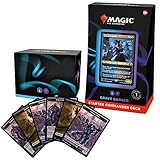
- READY-TO-PLAY COMMANDER DECK FOR NEWCOMERS AND FANS: Join friends in epic battles! This Magic: The Gathering Starter Commander Deck, Grave Danger (Blue-Black), is ready to play straight out of the box
- INTRO TO MAGIC’S MOST POPULAR FORMAT: Commander is a multiplayer way to play Magic! Learn how to play with your own deck, easy-to-follow rules, strategy tips, and reference card
- 100 CARD BLUE-BLACK DECK: With the Grave Danger deck, ally with the human wizards and siblings Gisa and Geralf and overwhelm foes with a multiplying army of zombies
- FOIL-ETCHED LEGENDARY CREATURE CARD: Includes 1 legendary creature card with gorgeous art and a foil-etched treatment. This card serves as your "commander" with unique abilities that make plays even more powerful
- INCLUDES ACCESSORIES AND DECK BOX: Also comes with 10 two-sided tokens, a deck box for storage, and punchout counters to keep track of creature buffs
For each problem, search for several affordable candidates. Prioritize cards that are:
Do these 3 things before closing this tab:
1Fix the driver behind crashes, sound loss and screen glitches2Clear out junk files and repair common Windows errors3Scan for outdated or missing drivers - takes under a minute- Directly relevant: They advance the commander’s plan or repair a documented weakness.
- Reliable: They work in more than one common game state instead of requiring a narrow setup.
- Castable: Their mana cost and color requirements fit the deck’s actual development.
- Appropriate for the table: They match the group’s expectations about speed, locks, tutors and mass land destruction.
- Legal and available: They fit the commander’s color identity, current format rules and your region’s supply.
A card from your collection that meets four of these tests is often a better first change than a premium staple that meets only one.
Step 5: Make a one-for-one swap
Every addition should have a named cut. This keeps the deck at 100 cards and forces you to explain what is improving. Record the change in a simple log:
| Added card | Removed card | Role change | Reason to expect improvement | What to watch for |
|---|---|---|---|---|
| Candidate that supports the commander | Lowest-performing card in the same or a redundant role | For example, narrow payoff to flexible draw | More useful in the game states you regularly encounter | Whether the new card is castable and actually changes the outcome |
The replacement does not have to share the exact card type. A weak creature can become a mana rock if the deck is consistently slow, while a redundant combat trick can become an answer. What matters is the function gained and the function intentionally surrendered.
Prefer removing cards that are narrow, overcosted for what they do, redundant beyond what the deck needs, or disappointing whenever you draw them. Do not automatically cut every high-mana card, theme card or basic land. A card that looks inefficient in isolation may be a key payoff, and cutting too many lands or enablers can create a different problem.
The Tool Desk
Outbyte PC Repair FREERepair Windows errors before they cause bigger problemsFix Now →Outbyte Driver Updater FREEScan for outdated or missing drivers - takes under a minuteDriver Scan →Step 6: Check legality and social fit before buying
Run each proposed list through this checklist:
- The deck remains exactly 100 cards including the commander.
- The card is legal under the current Commander banned list.
- Its complete color identity fits the commander.
- It does not violate singleton construction or a card-specific deck-building restriction.
- Its play pattern is acceptable to the people you normally play with.
- The total cost, including delivery and taxes where relevant, stays within your stated limit.
Commander games benefit from a short conversation before play. Tell the group what the deck is trying to do, how quickly it usually becomes threatening and whether the changes add tutors, repeated extra turns, resource denial or other effects the table may consider unusually strong. “More consistent at doing its thing” is often a better shared goal than “as powerful as possible.”
Step 7: Test a modest batch, then learn from games
Do not change the entire list at once. If every card is new, you cannot tell which change solved a problem or created one. Make a manageable group of swaps, play several normal games and take notes immediately afterward.
Record concrete events rather than impressions:
- How often did you miss a land drop or fail to produce a required color?
- Did you have cards to cast after an opponent interacted with you?
- Which opposing permanent or strategy repeatedly went unanswered?
- Did the commander advance your plan, or did the deck function without it?
- When you were ahead, what actually ended the game?
- Which cards sat in your hand because their conditions never appeared?
Use those observations to choose the next swap. This is an iterative recommendation, not a published formula with a guaranteed number of games or a measured percentage improvement. Keep the removed cards together so you can reverse a change when it weakens the deck or makes games less enjoyable.
How to improve the major roles without changing the deck’s identity
Mana, fixing and the curve
Start with the turns on which the deck needs to act. If the commander costs four mana, examine whether the list can reach that point consistently rather than adding expensive ramp that competes with the commander. In one- or two-color decks, basic lands may provide enough support; decks with more colors often need additional fixing. The right mix depends on the commander, curve and existing land package.
Quick wins for a faster PC:
Scan for outdated or missing drivers - takes under a minuteDriver Scan →Clear out junk files and repair common Windows errorsFree Scan →Look for lands or mana sources that enter at useful times, produce the colors you need and do not undermine your other synergies. A source that technically fixes colors but enters tapped at the wrong moment may not solve the problem you observed.
Rank #3
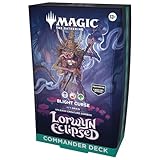
- RETURN TO THE LAND OF LIGHT AND SHADOW—Lorwyn returns, not as it once was, but a world split in two. Explore this dual-aspect plane filled with enchanting creatures and embrace the powers of order and chaos.
- READY-TO-PLAY COMMANDER DECK—Pick up and play Magic’s most popular multiplayer format
- CONTENTS—100-card Blight Curse deck with 12 new cards (including 2 foil Mythics), deck box, 10 double-sided token cards, strategy insert, reference card
Card draw and selection
Distinguish drawing cards from merely replacing one card. A cantrip can smooth a draw, while a repeatable engine can keep the deck functioning through several turns. Choose effects that interact with the commander’s plan: a creature-based deck may prefer a creature-triggered engine, while a deck built around casting spells may value a different kind of payoff.
Be wary of draw that requires a board state you cannot reliably create. If the deck often loses its creatures before the draw engine matters, a more resilient option may be the better budget change.
Interaction
Map the threats your group actually presents. If opponents rely on artifacts and enchantments, creature-only removal leaves a visible hole. If graveyards regularly power opposing decks, include an answer that can be held until it matters. Flexible answers are valuable, but their mana cost and timing restrictions still matter.
Interaction should protect your plan as well as disrupt opponents. A spell that can remove a blocker, stop a combo piece or save your key permanent may be more useful than a narrower effect that is stronger in only one situation.
Threats and closing the game
Many precons generate resources but lack a clean way to convert them into a win. Add payoffs that reward actions the deck already takes instead of unrelated finishers. A token deck might want a payoff for going wide; a graveyard deck might want a finisher that uses the cards it naturally accumulates.
Avoid filling the deck with expensive finishers that are poor draws early. One reliable payoff supported by the existing engine can be more useful than several spectacular cards that compete for the same late-game slot.
Protection and recovery
If removing the commander turns off every meaningful line, add redundancy or protection before adding another payoff. Recovery can be a recursion effect, a source of card advantage or a second way to use the resources the deck already produces. The objective is not to make the deck impossible to disrupt; it is to ensure one answer does not end your participation in the game.
What to cut when every card feels important
Use evidence from your games and a repeatable set of questions:
- Did this card contribute to the stated plan when you drew it?
- Was its cost reasonable in the turn on which you needed it?
- Did it remain useful after an opponent disrupted your board?
- Is another card already performing the same job more efficiently?
- Would you choose it again if you were building the list today?
Start with cards that repeatedly fail these tests. Preserve enough of each function to keep the deck operating; cutting all the interaction to make room for payoffs usually creates a deck that goldfishes well but loses to real opponents. Likewise, removing too many theme cards can produce a stronger-looking list that no longer feels like the deck you bought.
Common budget-upgrade mistakes
Buying staples without a problem to solve
A famous card is not automatically an upgrade. If it does not support the commander, fill a missing role or improve a recurring game state, spend the money elsewhere.
Rank #4

- READY-TO-PLAY COMMANDER DECK FOR NEWCOMERS AND FANS: Join friends in epic battles! This Magic: The Gathering Starter Commander Deck, Draconic Destruction (Red-Green), is ready to play straight out of the box
- INTRO TO MAGIC’S MOST POPULAR FORMAT: Commander is a multiplayer way to play Magic! Learn how to play with your own deck, easy-to-follow rules, strategy tips, and reference card
- 100 CARD RED-GREEN DECK: With the Draconic Destruction deck, go on the attack with Atarka, World Render, and double down on dragon damage to overwhelm foes with a multiplying army
- FOIL-ETCHED LEGENDARY CREATURE CARD: Includes 1 legendary creature card with gorgeous art and a foil-etched treatment. This card serves as your "commander" with unique abilities that make plays even more powerful
- INCLUDES ACCESSORIES AND DECK BOX: Also comes with 10 two-sided tokens, a deck box for storage, and punchout counters to keep track of creature buffs
Changing too much at once
A total rebuild hides cause and effect. Make targeted changes, test them and keep the removed cards for comparison.
PC Slower Than It Used to Be?
A free scan shows the junk files, broken settings and background clutter dragging Windows down - then fixes them in one click.Free scan · Windows 10 & 11Outdated Drivers Are Slowing You Down
One free scan finds every outdated or missing driver and matches the right update for your exact hardware.Free scan · exact hardware matchIgnoring the mana base
Adding impressive spells cannot fix a deck that cannot cast them. Audit lands, colors and early development before increasing the top end.
Confusing theme with weakness
Some cards are present because the deck is meant to express a particular mechanic or creature type. Replace them only when you have decided that changing that identity is acceptable.
Assuming price equals performance
Card prices reflect printings, demand and availability, not a universal measure of how well a card fits your list. Compare candidates by plan, role, legality, table fit and current total cost.
Skipping the pre-game conversation
A deck can be legal and still be a poor fit for a particular evening. Discuss expectations before playing, especially when an upgrade adds fast mana, powerful tutors, repeated extra turns or resource denial.
Recommended Free Tools
When a different commander is the honest answer
If repeated testing shows that the commander does not support the experience you want, changing commanders may be reasonable—but that is a rebuild, not a routine budget upgrade. First make sure the problem is not a missing role, an inconsistent mana base or an unclear win condition. If the commander is the obstacle, keep the original list intact and build the new version separately so you can still play the deck you originally chose.
A practical decision sheet for every proposed swap
| Decision axis | Pass condition |
|---|---|
| Plan fit | The card advances, protects or reliably finds the commander’s central plan. |
| Role need | It addresses a weakness observed in the current list or replaces a demonstrably poor card. |
| Legality | It satisfies color identity, singleton rules, card-specific restrictions and the current banned list. |
| Table fit | Its power and play pattern match the expectations of the group. |
| Cost and access | The current regional price and availability fit the budget, including delivery costs. |
| Testability | You can describe what game event would show whether the swap helped. |
Use the sheet to compare two or more candidates rather than ranking them by price alone. A cheaper card that fills the exact gap and is easy to cast may be the superior upgrade, even when a more expensive card has a higher ceiling.
Further perspective on making the deck your own
Michael Hinderaker, a senior game designer quoted by Wizards Play Network while discussing ways to make deck-building more approachable, said: “The hardest part of Magic is going from, ‘I think this game is fun,’ to, ‘I can build this and make it my own.’” That is a useful standard for a precon upgrade. The finished deck should not merely contain stronger cards; it should reflect a plan you understand and choices you can explain.
Keep the commander’s identity, repair the most visible functional gap, make a named cut for every addition, verify legality and social fit, then let actual games determine the next change. That process improves consistency without forcing you to spend on cards that do not belong in the deck.
What’s actually slowing this PC down?
Pick the symptom - the matching free tool is one click away.
Quick Recap
Product prices and availability are accurate as of the date/time indicated and are subject to change. Any price and availability information displayed on Amazon at the time of purchase will apply.

