Turn running into a game by linking every workout to a four-part loop: choose one measurable goal, award points for the behavior you planned, unlock levels after sustainable progress, and trade progress for a reward that makes the next run easier to start. Score consistency, duration and recovery-friendly choices—not just speed or personal records—so the game keeps you training instead of pushing you into overuse.
You can build the system with paper and a calendar, use a running app, or combine self-made rules with narrative and social features. The framework below works for a first walk-run plan, a 5K build-up and regular training alike.
As an Amazon Associate I earn from qualifying purchases.
The four-part running game loop
A useful running game has a clear input, visible progress and a safe reason to continue. Keep the loop simple enough to run without negotiating with yourself before every workout.
Recommended Free Tools
- Choose a measurable goal. State what you will do and when you will know it is complete.
- Award points for planned behavior. Give credit for starting, completing the planned work and following your weekly schedule.
- Unlock levels at sustainable thresholds. Use session counts, minutes or completed weeks rather than speed alone.
- Exchange progress for a supportive reward. Make the reward enjoyable and compatible with rest, fueling and recovery.
The goal is not to make exercise childish. It is to convert an abstract benefit—better fitness later—into immediate feedback after each run.
#1 Best Overall

- Powerful Bass Stereo Sound: Upgraded bluetooth earbuds with 11mm dynamic drivers and clear calls technology, our ear buds deliver superior sound quality, powerful bass, and crystal-clear phone calls. Enjoy your music and conversations with exceptional clarity.
- Up To 16 Hours Playtime: With an improved polymer lithium battery, Boean sports headphones offer up to 16 hours of playtime. Enjoy a superior audio experience with extended endurance, allowing you to immerse yourself in your favorite music or engage in important conversations without interruption. We recommend using the supplied USB-C cable for faster charging. Other cables are not recommended.
- Flexible ear hooks designed specifically for sports: The Boean lightweight, ergonomic headphones wireless bluetooth feature ear hooks, in-ear tips, and a headband for a secure fit, making them ideal for running, jogging, hiking, cycling, gym workouts, and use outdoors or at home.
- All‑in‑one Boean App: Pair your Bluetooth headphones with the Boean app to unlock AI‑powered music creation to produce your own original tracks. Unwind with built‑in soothing sleep audio whenever you need to relax. You can easily save all your creations and share them with others. Additionally, the app supports real-time translation in 91 languages and real-time transcription in 66 languages.
- One-Step Auto Pair: Equipped with the latest Bluetooth 5.3 technology, these running headphones are easy to connect to your iOS/Android/Windows devices and auto-pair in 1 second. (Note: Smartwatch connectivity is not supported.)
Start with one season goal
Choose a four- to eight-week “season” and write one outcome that can be checked after every planned session. A single goal prevents competing scoring systems from taking over.
Good season goals
- Complete three planned runs per week for four weeks.
- Finish a beginner 5K plan, including its run-walk sessions.
- Accumulate a target number of running or run-walk minutes without judging pace.
- Complete one longer, easy session each week while keeping the other sessions short and manageable.
Make the goal observable
“Get fitter” is a direction, not a game objective. “Complete 12 planned sessions by the end of week four” gives you a result to mark after each workout. If your schedule changes, change the target deliberately at the start of a week rather than silently moving the finish line after a missed session.
Set a minimum viable workout
Define the smallest version that still counts on a difficult day—for example, 20 minutes of the scheduled run-walk session, or the warm-up plus the first two intervals. This is not permission to ignore the plan; it is a way to preserve continuity when sleep, weather or work disrupts the ideal session. If pain or illness is involved, recovery takes priority and the workout should not be forced.
Design a points system that rewards controllable actions
Points should reinforce actions you can choose today. Pace, race times and distance are useful training data, but making them the main currency can turn an easy day into a competition and encourage excessive load.
A practical point menu
| Action | Example points | Why it belongs in the game |
|---|---|---|
| Start the planned session | 10 | Rewards overcoming the start barrier. |
| Complete the planned duration or intervals | 10 | Credits following the training objective. |
| Finish an easy or recovery session at an easy effort | 5 | Protects low-intensity work from being treated as failure. |
| Meet the week’s planned session count | 15 | Rewards consistency rather than one heroic workout. |
| Complete a pre-planned mobility, strength or cool-down task | 5 | Recognizes supporting habits without making them mandatory for every runner. |
| Set a personal record | Optional 2–5 | Keeps performance exciting without making it the largest source of points. |
The numbers are examples, not a universal prescription. Keep the largest award attached to completing the plan and showing up repeatedly. Do not subtract points for a slower pace, a shortened session approved by your plan, or a rest day that was scheduled in advance.
Use effort bands instead of pace targets when conditions vary
Heat, hills, wind, terrain and fatigue can make the same pace represent very different effort. If you want a performance component, score whether the run stayed in its intended effort band—easy, steady or interval—rather than demanding one speed in every condition.
Rank #2
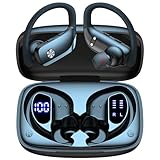
- 80H Playtime with Dual LED Display Charging Case: Enjoy uninterrupted music with an ultra-long 80-hour battery life powered by the portable charging case. The digital display on the left clearly shows the remaining case power, while the right LED indicators display the earbuds’ charging status. Each earbud offers up to 8 hours of playtime per charge, and when used alternately with the charging case, total usage extends to an impressive 80 hours, perfect for travel, work, and extended workouts.
- Immersive Stereo Sound & Clear Calls with Dual Mics: Built with advanced 10mm dynamic drivers and dual microphones, these wireless earbuds deliver crisp treble, rich bass, and stunning clarity across your music, movies, and games. The microphones are designed to capture your voice precisely, reducing surrounding noise and ensuring your conversations remain clear whether you’re outdoors, in transit, or on video calls, giving you a consistently enjoyable listening and communication experience.
- Seamless Bluetooth Connectivity & Dual Button Controls: Featuring advanced Bluetooth technology, earbuds ensure quicker pairing, stable connections, and lower latency across multiple devices. Once removed from the case, they reconnect automatically to your last paired device for seamless use. With separate main and volume buttons, you gain direct and intuitive control over music, calls, and adjustments—avoiding the frustration of complicated touch gestures or accidental taps during workouts.
- All-Day Fit & Wide Device Compatibility: Designed with adjustable ear hooks that follow ergonomic principles, these bluetooth earbuds adapt naturally to different ear shapes and sizes, ensuring they stay firmly in place during running, cycling, or intense workouts. The secure fit minimizes slippage and maximizes comfort, while universal Bluetooth compatibility allows these ear buds to seamlessly pair with smartphones, tablets, and laptops, providing a smooth audio experience across all devices.
- Designed for Active Lifestyles & Portability: Compact charging case easily fits into your pocket or bag for travel and daily carry, reducing the risk of losing your earbuds. With a sweat-resistant and dust-resistant build, they are prepared to support your workouts, outdoor runs, or busy commutes without slowing you down. Durable, secure, and convenient, these bluetooth headphones are an excellent companion for people who need reliable audio that keeps pace with their active routine.
Prevent point farming
Write down what counts before the season starts. Decide whether a walk-run session, treadmill workout or short replacement session earns the base points. Otherwise you may unconsciously redesign the rules to collect points while skipping the behavior that improves your fitness.
What’s actually slowing this PC down?
Pick the symptom - the matching free tool is one click away.
Create levels with visible thresholds
Levels should arrive often enough to feel attainable and far enough apart to represent real repetition. A calendar, spreadsheet or paper progress bar works; the important feature is that you can see the next unlock before the workout begins.
Example four-week level track
| Level | Threshold | Example unlock |
|---|---|---|
| Level 1: Starter | Four completed sessions | Choose a new route or playlist. |
| Level 2: Builder | Eight completed sessions | Add a social run or a favorite post-run drink. |
| Level 3: Pathfinder | 12 completed sessions, including one longer easy run | Visit a new running location or buy a small, planned accessory. |
| Level 4: Finisher | Complete the season goal | Take a deliberately easy celebration day and select the next season goal. |
Thresholds can use total sessions, total minutes or completed weeks. Choose one primary measure so the progress bar cannot become confusing. A longer run can be an additional requirement, but it should not cancel all progress if the rest of the season was completed safely.
Make the next unlock obvious
- Display a row of 12 boxes and fill one after each completed session.
- Use a weekly calendar with a separate mark for planned rest days.
- Put the next threshold in your phone lock-screen note or training log.
- Record the reason a session was modified, such as heat or soreness, so “not as planned” does not become “did not happen.”
Turn workouts into missions and collectibles
Narrative gives a run an immediate purpose. A route can become a scouting mission, intervals can become a boss encounter, and each completed workout can reveal a fictional item, map tile or story chapter. Keep the fiction optional: some runners want a story, while others prefer a clean checklist.
How a narrative layer works
The official Zombies, Run! guide describes audio stories that play through headphones at intervals during a workout. It also describes automatically collecting supplies and collectible items while moving in the real world, then using those materials to rebuild and expand Abel Township. This is a concrete example of converting minutes and distance into mission progress and world-building rather than displaying metrics alone.
A qualitative, PubMed-indexed study of that app reported that a storyline may change how exertion is perceived and help engage people in physical activity. That finding concerns one app and one mechanism; it is not a guarantee that every runner will enjoy narrative training or experience less effort.
Rank #3

- Ultra-Comfort with Open-Ear Design: Experience matchless comfort even for all-day wear with these non-intrusive, open-ear Bluetooth earbuds.
- Enhanced Situational Awareness: V20i open-ear wireless earbuds let you stay connected to the world while enjoying pristine playback. Ideal for both urban life and outdoor ventures.
- Four Adjustable Positions for a Secure, Comfy Fit: Easily rotate to find the sweet spot for your ears with these bluetooth earbuds, boosting stability and comfort. Listen and move freely with V20i open-ear earbuds throughout the day.
- Powerful Sound with 16mm Drivers: Immerse in rich, resonant bass fueled by V20i's advanced 16mm drivers—featured in these wireless earbuds—with titanium-coated domes and soundcore's proprietary BassUp technology.
- Clear Calls with 4 Mics and AI Enhancement: Equipped with four mics and an AI algorithm, V20i open-ear Bluetooth earbuds ensure crisp and clear calls wherever you are.
Build a no-app mission system
- Give each workout a role: scout, supply run, rescue, patrol or boss encounter.
- Assign one collectible to the completion condition, such as a map square for an easy run or a “key” for completing all intervals.
- Reveal the item only after the planned behavior is complete.
- Keep a one-sentence story log so the fiction remains a prompt, not another obligation.
Never make the story require you to run through unsafe conditions. A “chase” can end when the planned interval ends, not when you exceed it.
Use social play without turning beginners into spectators
Shared goals can add accountability, but leaderboards based only on distance or pace favor people with more training time. A fair team challenge counts completed sessions or minutes so different abilities can contribute.
Team formats that include mixed abilities
- Session relay: each completed workout adds one team point, regardless of pace.
- Minutes together: members contribute planned running or run-walk minutes during a fixed week.
- Consistency chain: the team unlocks a badge when everyone completes at least one planned session.
- Route discovery: each person adds a safe, accessible route or treadmill session to a shared map.
Strava’s September 20, 2023 announcement describes challenges built around connection, engagement and a shared goal, with athletes tracking progress and unlocking rewards. A May 18, 2023 Nike release similarly describes hosted challenges, activity sharing, progress tracking and rewards. These examples show the pattern; challenge rules, integrations and reward eligibility can change, so check the current terms inside the relevant service.
Quick wins for a faster PC:
Repair Windows errors before they cause bigger problemsFix Now →Fix the driver behind crashes, sound loss and screen glitchesFind Drivers →Clear out junk files and repair common Windows errorsFree Scan →Set social boundaries
Agree that rest days, modified sessions and injury-related pauses are valid. Do not require public posting of route details if that creates a privacy or safety concern. A private group chat, shared spreadsheet or weekly check-in can provide accountability without a public leaderboard.
Choose rewards that support the habit
A reward should arrive after the behavior and make the next healthy choice easier. It does not need to be expensive, and it should never pressure you to ignore pain or skip recovery.
Useful reward categories
- Entertainment: a new playlist, podcast episode or story chapter reserved for runs.
- Experience: coffee with a friend, a scenic route or a rest-day activity.
- Comfort: a favorite meal, bath or extra time for sleep.
- Equipment: a small, planned running accessory when the level threshold is reached.
- Choice: let the completed level determine which route or workout format you use next.
Keep rewards proportional. A weekly consistency bonus might unlock a playlist; completing an entire season might justify a larger experience. Avoid food rules that make eating conditional or punitive, and avoid rewards that require extra exercise to “earn back.”
Rank #4

- Get 9+ Hours Per Earbud, Plus 26+ More From The Case With Its Built-In Usb Cable — No Extra Cord Needed. Power Through A Full Week Of Commutes Or Daily Gym Sessions On One Charge.
- EQ3 Sound, C3 Clear Calling Choose JLab Signature, Balanced, Or Bass Boost Eq Modes To Match Your Music. C3 Clear Calling Uses Dual Mems Mics — One Captures Your Voice, One Cancels Background Noise — For Cleaner Calls Anywhere.
- Ergonomic Earhook, IP55 Rated The Ergonomic Earhook Is Sized To Fit Even The Smallest Ears, Staying Locked In During Runs And Hiit Workouts. IP55 Sweat And Dust Resistance Protects The Buds. Be Aware Audio Lets Outdoor Sound In For Safer Listening.
- Dual Connect Bluetooth. Dual Connect Lets You Use Either Earbud Independently. Each Bud Has A Mems Mic. Compatible With Ios, Android, And Pc.
- JLab App, 2-Year Warranty Use The JLab App To Swap Eq Presets, Adjust Be Aware Audio Levels, And Remap Touch Controls To Fit How You Train. Every Go Sport+ Is Backed By JLab'S 2-Year Warranty.
Build a four-week running game: step by step
- Write the season goal. Example: complete three planned sessions per week for four weeks.
- List the sessions. Include run-walk, easy, interval and rest days from your chosen plan. Mark rest days as part of the schedule.
- Assign points. Use a base award for starting, a completion award for the planned duration or intervals, and a weekly consistency bonus.
- Set level thresholds. For example, unlock levels at four, eight and 12 completed sessions, with one longer easy run required for the final level.
- Choose the reward menu. Write the reward beside each threshold before the season starts.
- Add missions. Name each workout and assign an optional collectible, map tile or story beat.
- Choose the tracking surface. A notebook, calendar, spreadsheet or app is sufficient. Record date, planned session, completed behavior, points and notes.
- Review once per week. Check whether the goal is realistic, whether fatigue is accumulating and whether a target should be reduced for the next week.
- Apply the reset rule. If you miss a session, pause the streak, keep earned points and resume at the next planned workout.
Reset rules keep the game from causing overtraining
A game that erases all progress after one missed run creates an all-or-nothing trap. Use a reset system that preserves history and protects recovery.
Recommended reset policy
- A missed workout pauses the streak; it does not remove completed-session points.
- Resume with the next planned session rather than doubling up automatically.
- If fatigue, illness, pain or major life disruption persists, lower the weekly target temporarily.
- Move the season end date when necessary instead of compressing missed work into fewer days.
- Restart a level only when the training plan itself calls for a restart—not as punishment.
Safety stop conditions
Stop the workout and seek appropriate medical guidance for chest pain, fainting, severe shortness of breath, new neurological symptoms or an injury that worsens as you continue. For ordinary soreness or unusual fatigue, replace the planned session with rest or easy movement and record the modification without awarding performance bonuses. A points system cannot assess your health.
Independent reader supportYour contribution helps us test, update, and keep practical guides available for everyone.Choose between a self-made system and app-based play
| Option | Main game loop | Best for | Trade-off |
|---|---|---|---|
| Self-made points and levels | Personal goals, points, thresholds and rewards | Maximum flexibility and no required app | Requires manual tracking and honest scoring. |
| Zombies, Run! | Audio story, missions, supplies, collectibles and base-building | Runners motivated by fiction and immersion | Subscription terms and available features can vary; story style will not suit everyone. |
| Strava plus Nike Run Club | Shared challenges, synced activities, progress and rewards | Social accountability and community goals | Reward availability and integrations can change; verify current eligibility. |
A PubMed-indexed study enrolled 28 participants in a 30-minute treadmill run and compared a performance-monitoring Nike app with Zombies Run!, described as an app that turns running into a virtual-reality game. The small sample and specific apps make this useful context, not proof that one system is universally more motivating.
When manual tracking is the better choice
Use paper or a spreadsheet if your plan is unusual, you want complete control over rewards, you prefer not to share activity data, or app notifications make running feel like administration. Manual tracking also lets you award points for recovery behaviors that a standard app may not recognize.
When app features add real value
Choose an app layer when audio storytelling, automatic activity logging, shared challenges or a visible virtual world removes a specific barrier for you. Turn off notifications and social comparisons that make you train harder than planned.
The Tool Desk
Outbyte PC Repair FREERepair Windows errors before they cause bigger problemsFix Now →Outbyte Driver Updater FREEScan for outdated or missing drivers - takes under a minuteDriver Scan →Headphones, safety and practical setup
Wireless running headphones are the clearest accessory match for an audio-led game because the official Zombies, Run! guide explicitly describes listening to story segments through headphones during workouts. They are optional; a phone speaker, one-ear listening or no audio can work with a self-made system.
Best Value

- Touch-Controlled Freedom: Play, pause, skip tracks, tweak volume, or launch Siri and Google Assistant—all with simple tap gestures on the earbuds. Perfect for keeping your phone in your pocket while you stay focused on what matters.
- Fast Battery & Speed Charging: Enjoy 6 hours of uninterrupted listening on a single charge, extended to 54 hours with the included charging case. The case charges fully via Type-C in 1.5 hours, and when you're in a rush, just 10 minutes plugged in grants 2 hours of playback. A precise LED percentage indicator on the case removes all guesswork from your power levels.
- Instant-On Connectivity: Bluetooth 5.4 and dual-channel transmission mean these earbuds power up and pair automatically the second you open the case. Broad protocol support (HSP, HFP, A2DP, AVRCP) ensures flawless integration with iPhone, Android, and Windows devices, maintaining a stable connection up to 15m in clear conditions.
- Immersive Audio & Crystal Calls: True wireless stereo sound brings your music and podcasts to life with striking clarity. Meanwhile, the built-in noise-cancelling microphone filters out ambient racket so your voice comes through loud and clear on every call.
- Built for Movement: At just 7g per earbud, the soft, flexible earhook design delivers a barely-there feel that stays secure during runs, rides, and gym sessions. Three pairs of silicone ear tips (S/M/L) provide a tailored fit, and IPX7 waterproofing handles heavy sweat and rain with ease.Not intended for underwater use.
- Keep enough awareness of traffic, cyclists and other people to react quickly.
- Use transparency or ambient-sound mode where available, and keep volume low enough to hear your surroundings.
- Carry a charged phone and any identification or emergency information appropriate to your route.
- Do not let a mission, collectible or streak encourage running in unsafe weather, poor visibility or an unfamiliar area without preparation.
Troubleshoot a game that stops motivating you
“I keep chasing points instead of following the plan.”
Remove pace and distance bonuses for one week. Award points only for starting, completing the prescribed duration and taking scheduled recovery.
“The levels feel too far away.”
Shorten the next threshold or add intermediate badges, but keep the season goal unchanged until you have reviewed the workload. A visible two-session milestone can restore momentum without inflating the total reward.
“I missed one run and want to quit.”
Apply the pause rule: retain earned points, mark the missed session, and complete the next planned workout. Do not compensate with an unscheduled hard run.
Free tools Windows power users keep installed
One-click scans. No signup required.
“The story is distracting or annoying.”
Switch to silent collectibles, a simple calendar or music reserved for workouts. The game layer should lower friction, not become another task to tolerate.
“My group is dominated by one fast runner.”
Change the scoring to completed sessions, planned minutes or attendance at recovery-friendly activities. Keep performance achievements as optional badges rather than the team’s main currency.
“I am accumulating fatigue.”
Pause bonus scoring, preserve the level you reached and follow the easier version of the plan. If symptoms persist or pain is significant, stop training and obtain professional advice.
A reusable scoring sheet
Copy this structure into a notebook or spreadsheet:
Do these 3 things before closing this tab:
1Fix the driver behind crashes, sound loss and screen glitches2Clear out junk files and repair common Windows errors3Scan for outdated or missing drivers - takes under a minute| Field | What to record |
|---|---|
| Date | The workout date. |
| Planned session | Easy run, intervals, run-walk, long easy run or rest. |
| Completed behavior | Full, modified, skipped or replaced with recovery. |
| Base points | Points for starting the planned session. |
| Completion points | Points for the planned duration or intervals. |
| Weekly bonus | Added only after the schedule is met. |
| Mission or collectible | Optional fictional progress. |
| Recovery note | Sleep, soreness, weather or another factor that changed the session. |
At the end of each week, count completed sessions and total points separately. A high point total with fewer completed sessions may indicate that the scoring is overvaluing a single hard workout.
Quick Recap
What makes the system sustainable
- The goal is measurable before the workout begins.
- Most points come from repeatable behaviors under your control.
- Levels are close enough to see and far enough to represent progress.
- Narrative and collectibles are optional layers, not safety-critical instructions.
- Social scoring includes different abilities and protects privacy.
- Rewards support rest, enjoyment and the next planned session.
- Missing a workout pauses progress instead of deleting it.
- The rules can be lowered when recovery, health or life circumstances require it.
Product prices and availability are accurate as of the date/time indicated and are subject to change. Any price and availability information displayed on Amazon at the time of purchase will apply.

