Quick wins for a faster PC:
Scan for outdated or missing drivers - takes under a minuteDriver Scan →Repair Windows errors before they cause bigger problemsFix Now →Fix the driver behind crashes, sound loss and screen glitchesFind Drivers →Do not judge a limited-edition collectible by the word “limited” or by an impressive-looking edition number. A defensible buying decision comes from identifying the exact object, verifying its condition and authenticity, comparing it with recent completed sales of genuinely comparable items, and calculating the full cost you will pay.
The asking price is only a starting point. Seller expectations, auction estimates and edition scarcity can all provide context, but none is proof of fair market value. Use the process below to decide what the item is worth to the market, what it is worth to you, and the highest all-in price you are prepared to pay.



As an Amazon Associate I earn from qualifying purchases.
The four questions that establish value
- What exactly is it? Record the maker or artist, title or product name, release date, model or issue, edition notation, materials, dimensions, publisher or manufacturer and distinguishing marks.
- What condition and documentation does it have? Record damage, fading, restoration, wear, packaging, accessories, certificates and missing paperwork.
- What have comparable examples actually sold for? Give priority to recent completed transactions for the same edition, release, model and condition.
- What will ownership really cost? Add buyer’s premiums, shipping, taxes, currency conversion and other charges before comparing the result with your budget.
Only after answering those questions should you set a maximum price. A low number within an edition, a seller’s optimistic listing or an auction estimate can influence demand, but none guarantees that the asking price is justified.
What’s actually slowing this PC down?
Pick the symptom - the matching free tool is one click away.
1. Identify the exact collectible before looking at prices
Small differences that are invisible in a photograph can separate one market from another. Start a written identification record and use it consistently in every search and conversation with a seller, auction house or appraiser.
Information to record
- Maker, artist, designer, studio, publisher or manufacturer.
- Title, product name, character, subject or series.
- Release date, issue, season, event or production run.
- Model, sculpt, colorway, size, country or other variant identifiers.
- Edition notation, such as an edition number, total edition size, artist’s proof or publisher’s proof.
- Materials or medium, including the process used for a print.
- Dimensions, measured consistently and distinguished between image size, sheet size and framed size when relevant.
- Signatures, stamps, serial numbers, labels, maker’s marks and publisher marks.
- Original packaging, inserts, accessories, certificates and other items that were supplied with the release.
Photograph every mark and label, including the back, underside and packaging. Transcribe inscriptions exactly rather than correcting spelling from memory. If the seller’s description uses a broad series name but omits a model or variant, treat the identity as unresolved until you can verify it.
Prints require special identification
For a print, establish whether it is an original authorized edition or a reproduction. Record the medium, publisher, signature, edition notation and proof status. A signed reproduction is not automatically equivalent to a signed editioned print, and an editioned print should not be valued as though it were a unique original. Sotheby’s and specialist print guidance both treat these distinctions as material to value.
2. Understand what “limited edition” does—and does not—mean
Edition size can affect perceived scarcity, but scarcity is useful only when collectors also want the object. Sotheby’s describes edition size, condition, provenance and market desirability as factors that work together. A small edition with weak demand can sell for less than a larger edition by a more sought-after maker.
Do not overvalue the edition number
When edition, condition and provenance are otherwise comparable, number 5 is generally not inherently more valuable than number 95. Exceptions can exist for documented preferences—such as a specially designated proof or a number with an established collecting convention—but the number alone is not evidence of a premium.
Separate edition types
- Regular edition: the stated production run offered to the market.
- Artist’s or publisher’s proof: a distinct proof category that must be compared with sales of the same proof type, not automatically with regular-edition examples.
- Variant or release: a different color, size, material, packaging configuration or market release may trade separately even when the design looks similar.
- Reproduction: a later or unauthorized copy may have a different market from the original authorized edition.
Use the exact designation in your comparable-sales search. If a listing says only “limited edition” without a total size, proof status or verifiable maker information, the scarcity claim is incomplete.
3. Assess condition and completeness
Condition changes both what buyers will pay and whether a sale record is genuinely comparable. Inspect the object in person when possible; otherwise request high-resolution photographs under neutral lighting and ask for written disclosure of defects.
Inspect the object
- Look for cracks, chips, dents, scratches, stains, discoloration, fading, tears, foxing, warping, loose parts and previous repairs.
- Check whether restoration, repainting, cleaning, rebacking, replacement components or other interventions have occurred.
- For framed works, ask whether the frame, glazing and backing are original and whether they conceal damage.
- Verify that packaging, certificates, accessories, stands, alternate parts and instruction material are present.
- Check that signatures, labels and serial numbers are legible and consistent with the maker or publisher’s practices.
Describe condition in comparable terms
Write a condition note before you compare prices. “Looks good” is not a useful comparison. Record the location, size and severity of each defect, whether it is visible at normal viewing distance, and whether it affects function, display or authenticity. A sale record for an undamaged, complete example should not be treated as a direct match for one with restoration or missing parts.
Sotheby’s identifies condition and provenance among the factors specialists consider for editions. If a listing provides no condition report, treat the uncertainty as a risk rather than silently assuming the item is complete and undamaged.
4. Test authenticity and provenance
Authenticity is not established by one attractive clue. Build a chain of evidence and note what remains uncertain.
Evidence to seek
- A credible ownership or purchase history, with dates and seller or institution names where available.
- Publisher, maker or manufacturer records that match the object’s marks, edition and release.
- A certificate of authenticity whose issuer, description and identifying details can be independently checked.
- Specialist authentication appropriate to the category when the financial or legal stakes justify it.
- Consistency among materials, dimensions, signature, numbering, packaging and known production details.
A certificate is evidence to evaluate, not an automatic guarantee. The same applies to a signature, a low edition number, a respected marketplace account or a plausible story about previous ownership. Specialist print guidance specifically cautions that no individual clue proves authenticity.
Price the uncertainty
If authenticity cannot be resolved before purchase, account for the cost and likelihood of resolving it. That may mean a lower maximum price, a return condition in the sales contract, an escrow arrangement, or walking away. Do not pay an “authenticated” premium when the supposed authentication cannot be verified or does not cover the exact variant.
PC Slower Than It Used to Be?
A free scan shows the junk files, broken settings and background clutter dragging Windows down - then fixes them in one click.Free scan · Windows 10 & 11Crashes, No Sound, or Screen Glitches?
Random freezes, missing sound and display glitches usually trace back to one bad driver. Find and replace yours safely.Free scan · under a minute5. Build a reliable set of comparable sales
Completed sales show what a buyer actually paid. Active listings show what a seller hopes to receive. Use asking prices only as secondary context, never as the main proof of value.
Rank #3
Search in a defensible order
- Start with the same maker, title, release, edition or model and the same variant.
- Match condition, completeness, authenticity documentation and proof status.
- Prefer recent transactions in the same geographic market and currency.
- Match the sale channel—auction, specialist dealer or marketplace—because fees, buyer behavior and return terms differ.
- Expand to the closest defensible alternatives only when exact matches are unavailable.
For every result, save the sale date, hammer or transaction price, condition description, completeness, provenance notes, channel and any fees disclosed. Keep a reason for including or excluding it. This prevents one unusually high or low result from controlling your conclusion.
Reject weak comparisons
- A different size, material, colorway, release or edition type.
- A unique original used to price an editioned reproduction, or the reverse.
- A listing with no reliable evidence that a transaction occurred.
- A sale with materially better condition, complete packaging or stronger provenance.
- A result so old that the maker’s reputation, collector demand or market channel has changed substantially.
When you retain a near match, explain the difference and adjust your confidence. A broad price range based on several well-described sales is more useful than a precise number derived from one weak comparison.
6. Calculate the all-in cost
Compare the asking price with completed-sale evidence only after converting every unavoidable charge into the same currency and basis.
Free tools Windows power users keep installed
One-click scans. No signup required.
| Cost component | What to check | Why it changes the decision |
|---|---|---|
| Purchase or hammer price | The seller’s price or winning bid before additional charges | This is the figure most listings emphasize, but it is not the ownership cost. |
| Buyer’s premium | The rate and whether it applies to the entire hammer price or uses tiers | Christie’s states that auction estimates exclude the buyer’s premium. |
| Taxes and VAT | Destination, buyer status, item classification and whether tax is charged on fees | Christie’s notes that additional fees such as shipping or VAT may also be excluded from estimates. |
| Shipping, insurance and handling | Pack-and-ship charges, transit insurance, crating and delivery restrictions | Large, fragile or international items can have material delivery costs. |
| Authentication, framing or restoration | Professional fees required to resolve uncertainty or make the item usable | These costs belong in the purchase decision even when paid after delivery. |
| Currency and payment charges | Exchange-rate spread, wire, card or platform fees | The converted total may exceed the apparent price in the listing currency. |
Use this calculation:
all-in cost = purchase or hammer price + buyer’s premium + taxes/VAT + shipping and insurance + required services + payment or currency charges
Ask the seller or auction house for a written invoice estimate. If a charge is unknown, use a conservative figure or exclude the transaction until you can establish it. A low hammer price can still be expensive after fees.
7. Treat auction estimates as context, not a verdict
An auction estimate is a specialist’s expected range, not a guarantee and not the same thing as fair value in every channel. Sotheby’s says its specialists consider the maker, origin, provenance, date, materials, dimensions, rarity, subject or type, condition, comparable sales and past performance when forming an estimate. The estimate is a preliminary guide and an opinion about a likely range.
Christie’s likewise explains that the final result can land above or below the estimate depending on demand and bidding. Across its sales in the first half of 2026, Christie’s reported that hammer prices averaged 24% above low estimates. That figure describes those Christie’s sales as a group; it is not a forecast for an individual collectible, a different auction or a private sale.
Before using an estimate, check whether it is for the exact variant, whether it refers to hammer price or an all-in total, and whether the condition and provenance match your item. Do not raise your ceiling simply because another bidder might do so.
8. Compare buying channels on equal terms
The same object can appear cheaper in one channel while carrying greater risk or higher hidden costs. Compare the complete transaction, not just the headline number.
| Comparison axis | Questions to answer |
|---|---|
| Exact identity | Is it the same maker, release, edition, model, proof and variant? |
| Condition and completeness | Are defects, restoration, packaging, accessories and records described to the same standard? |
| Evidence quality | Is the figure a completed transaction or an active asking price, and how recent and reliable is the record? |
| Sale channel and total cost | What premiums, shipping, taxes, payment fees, return rights and buyer protections apply? |
| Authenticity and provenance | Who stands behind the attribution, what documents are supplied and who pays if verification is needed? |
A dealer’s higher price may include a return policy or stronger documentation; an auction’s lower estimate may exclude premiums and provide less recourse. Record those differences instead of treating the channels as interchangeable.
Independent reader supportYour contribution helps us test, update, and keep practical guides available for everyone.9. Set a maximum before you negotiate or bid
Choose your ceiling while you are calm, before competition or scarcity language changes your judgment.
Recommended Free Tools
Build the ceiling
- Set a realistic market range from the strongest comparable completed sales.
- Adjust your confidence for condition, completeness, provenance and authenticity uncertainty.
- Convert the amount to an all-in figure using the charges in the sale terms.
- Subtract known costs needed after purchase, such as authentication, restoration or framing.
- Decide what owning this particular object is worth to you, separately from its resale prospects.
Then convert the all-in ceiling back to the maximum bid or asking price permitted by that channel. For example, if your total budget is $1,500 and the transaction will add a 25% buyer’s premium, $60 shipping and $90 tax, the maximum purchase price before those charges is $1,080: $1,500 − $60 − $90 = $1,350; $1,350 ÷ 1.25 = $1,080. These numbers are an illustrative calculation, not a market valuation.
Best Value
Use three decision outcomes
- Buy: the identity is clear, evidence is strong, condition and documentation match the comparables, and the all-in cost is below your ceiling.
- Negotiate or condition the purchase: the object is attractive but a document, return right, condition report or fee needs to be resolved.
- Pass: the seller cannot establish identity or authenticity, the comparisons are weak, or the all-in price exceeds your ceiling.
“Limited” should never be the reason to override a ceiling you set from evidence.
10. A practical worksheet for any collectible
Complete this record before making an offer:
- Identity: maker, title, release, model or issue, variant, materials, dimensions and marks.
- Edition: total size, individual number, proof status and evidence of authorization.
- Condition: every defect, restoration, missing component and packaging detail.
- Provenance: ownership trail, purchase records, certificates and independent checks.
- Comparables: at least several recent completed sales, with inclusion or exclusion reasons.
- Costs: purchase price, premium, taxes, shipping, insurance, services and payment charges.
- Decision: all-in ceiling, unresolved risks, return terms and the point at which you will walk away.
Keep screenshots or catalog references for each comparable and write down the date you checked them. Markets and listings change; a later review should show which evidence supported your decision.
11. When a printed price guide helps—and when it does not
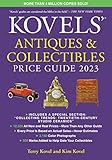
A general printed collectibles price guide can introduce terminology and suggest research steps, especially for a novice. It may not cover your category, current geography or exact variant, and a quoted price may not reflect a recent completed transaction. Use any guide as an orientation tool, then verify the figure against recent sales of the exact object.
The Tool Desk
Outbyte PC Repair FREEClear out junk files and repair common Windows errorsFree Scan →Outbyte Driver Updater FREEScan for outdated or missing drivers - takes under a minuteDriver Scan →12. When to hire a specialist
For insurance, an estate, tax reporting, a donation, litigation or another formal purpose, hire a qualified appraiser whose assignment matches that use. A general online guide or a seller’s estimate is not a formal appraisal.
For a valuable or disputed object, a specialist auction house may be able to review photographs, request additional information, provide an estimate or direct you to the relevant department. Ask what the estimate covers, whether an in-person examination is required, what fees apply and whether the specialist is evaluating the exact variant. Keep estimate services separate from an independent appraisal when you need an impartial value for a formal purpose.
Common mistakes that produce an inflated price
- Using the seller’s asking price as evidence that buyers have paid that amount.
- Comparing a unique original with an editioned print or reproduction.
- Assuming a low edition number is automatically more valuable.
- Ignoring damage, restoration, missing packaging or incomplete accessories.
- Accepting a certificate, signature or story of ownership without checking whether it relates to the exact object.
- Using an auction estimate as a guaranteed sale price.
- Comparing hammer prices without adding buyer’s premium, shipping, taxes or VAT.
- Letting an exciting auction or scarcity claim push the bid above a pre-set ceiling.
The most reliable answer to “Is it worth the asking price?” is therefore conditional: it is worth paying when the exact object is identified, its condition and authenticity are adequately supported, comparable completed sales justify the range, and the all-in cost stays within the value you have set before emotion enters the transaction.
Quick Recap
Product prices and availability are accurate as of the date/time indicated and are subject to change. Any price and availability information displayed on Amazon at the time of purchase will apply.

