Recommended Free Tools
There is no single at-home check that proves a Yu-Gi-Oh! card is genuine. Start by identifying the exact printing, compare clear images with official card information and a known copy when available, and assess the seller and transaction. Treat any mismatch as a reason to investigate—not a verdict. Konami’s official database and NEURON help identify cards and check text, but Konami does not describe them as counterfeit detectors.
What you can—and cannot—confirm at home
Konami defines counterfeit cards as third-party fakes that resemble official releases. Its Yu-Gi-Oh! TCG Tournament Policy v2.2, under “Counterfeit Cards,” says they cannot be used in a sanctioned or official tournament. Owning an authentic copy of the same card does not make a counterfeit copy legal in a deck.


As an Amazon Associate I earn from qualifying purchases.
A card lookup can confirm that a card identity and its published text exist; it cannot certify that the physical card in a listing is genuine. Konami’s Card Database and NEURON search and camera features are useful reference tools, not authentication services. Konami’s official materials do not set out a comprehensive visual test for buyers, so no single visual clue should be treated as conclusive.
PC Slower Than It Used to Be?
A free scan shows the junk files, broken settings and background clutter dragging Windows down - then fixes them in one click.Free scan · Windows 10 & 11Crashes, No Sound, or Screen Glitches?
Random freezes, missing sound and display glitches usually trace back to one bad driver. Find and replace yours safely.Free scan · under a minuteIdentify the exact card before comparing it
First establish what the seller claims to be selling. A card’s language, market, edition, rarity, set code, condition and printing can affect its appearance and tournament eligibility. Compare like with like: a different version of the same card may have different artwork treatment, text, rarity or finish.
#1 Best Overall
- Record the card name, set code or card number, language, edition, rarity and stated condition from the listing.
- Search the name or number in the official Card Database. Use NEURON’s search or camera feature as another way to look up a card.
- Check that the reference matches the claimed printing, rather than just matching the card name.
- If possible, compare the listing with a known genuine copy of that same printing. Differences are leads for more checking, not automatic proof of a fake.
Ask for photos that let you inspect the physical card
Request clear, well-lit, unedited images of the card’s front and back. Ask for close-ups of the name, text, foil, corners and edges if the listing does not show them. These are practical buyer precautions, not an official Konami authentication standard. If the seller will not provide basic images or identify the printing, pause rather than relying on a partial or blurry picture.
- Compare visible details with the exact printing you identified, not a different rarity or language.
- Look for inconsistencies across the card, including the name, set code, text and overall finish.
- Do not treat a single apparent flaw as decisive. Image quality, condition and printing differences can complicate visual comparison.
Check the card’s market and tournament eligibility separately
A card can be a genuine Yu-Gi-Oh! card and still be ineligible for a particular tournament. Konami’s European Card Legality guidance says cards are generally legal once officially released in a TCG product, while noting that release timing can vary by region. It also says Japanese, Korean, Chinese and Asian-English OCG-market cards are not legal for TCG tournament play in European territories.
Rank #2

- 1 pack of Legend of Blue-Eyes White Dragon, 1 pack of Metal Raiders, 1 pack of Spell Ruler, 1 pack of Pharaoh’s Servant
- 1 pack of Dark Crisis, 1 pack of Invasion of Chaos, 1 Ultra Rare Obelisk the Tormentor card, 1 Ultra Rare Slifer the Sky
- Dragon card, 1 Ultra Rare The Winged Dragon of Ra card, 1 Ultra Rare Blue-Eyes White Dragon card, 1 Ultra Rare Dark
- Magician card, 1 Ultra Rare Red-Eyes Black Dragon card, and 1 Quarter Century Secret Rare version of 1 of the 6 a forementioned cards (random
For TCG tournament use, Konami’s 2026 WCQ FAQ identifies the TCG logo at the bottom right of the card back as the marker distinguishing TCG cards from Japanese OCG and Asian-English cards. That is a market and eligibility check—not proof that a card is authentic. Foreign-language cards printed for the TCG market may be used under the stated conditions, including access to an official translation when requested. Check the rules for your region and event before buying for tournament play.
Free tools Windows power users keep installed
One-click scans. No signup required.
Investigate text or printing differences before deciding
A discrepancy is not automatically evidence of counterfeiting. Konami’s policy points players to the official database or NEURON Card Search/Camera Search to establish correct card text. Check for an official correction notice that matches the card’s name, language, printing and region before drawing a conclusion.
Rank #3
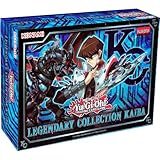
- 2025 Reprint 3 Packs included Mega Packs contains 4 Secret Rares and 6 Ultra Rares for a total of 10 foil cards per pack (that’s 30 cards per box)
For example, Konami’s notice dated 25 June 2026 described an incorrect name on certain English Secret Rare and Ultra Rare extended-art versions of “The Chaotic Phantasmal Sacred Beasts” from Chaos Origins in Europe, the Middle East, Africa and Oceania, and outlined an exchange process for affected copies. That notice concerns those specified versions and regions; it does not establish that unrelated errors or altered features are genuine.
Independent reader supportYour contribution helps us test, update, and keep practical guides available for everyone.Evaluate the seller and transaction, not just the card
Before paying, read the full listing and check the seller’s history, how specifically the item is described, the return terms and what payment recourse is available. A price far below comparable copies, pressure to act quickly or refusal to provide more photos are reasons to be cautious, but none proves that a card is fake. These are general marketplace precautions; Konami’s cited guidance does not endorse a marketplace or guarantee buyer protection.
Rank #4
For a high-value card, do not rely on a database match or a seller’s assurances as authentication. Pause the purchase and seek an experienced independent card specialist or a reputable grading or authentication service. No particular service is endorsed here.
What’s actually slowing this PC down?
Pick the symptom - the matching free tool is one click away.
Quick Recap
Best Value
A practical pre-purchase checklist
- Identify: Confirm the name, set code or number, language, edition, rarity and claimed condition.
- Look up: Use Konami’s Card Database or NEURON to check identity and text, remembering that a match does not authenticate the copy.
- Inspect: Obtain clear front, back and detail images; compare against the same printing when possible.
- Separate legality from authenticity: Check the card-back logo, product release and regional event rules if tournament eligibility matters.
- Check exceptions: Look for an official correction notice if the card has an unusual name or text discrepancy.
- Assess the deal: Review seller history, listing detail, return terms and payment recourse; treat pressure or missing information as caution signs.
- Escalate high-value purchases: Pause and seek independent expertise if uncertainty remains.
Product prices and availability are accurate as of the date/time indicated and are subject to change. Any price and availability information displayed on Amazon at the time of purchase will apply.

