Timing and physical clues usually provide the best explanation. An event is more consistent with sleep paralysis when it happens as you fall asleep or wake, you remain aware but briefly cannot move or speak, and it ends within seconds or a few minutes. A misperception is more likely when an ordinary object, sound, reflection, shadow, or vibration changes after you alter the light, distance, angle, or other physical conditions. An environmental or medical cause deserves priority when headache, dizziness, nausea, confusion, weakness, breathing trouble, illness in several people, or symptoms tied to one building are present. No validated test can establish a supernatural cause from a subjective experience alone.
Start with a safety-first comparison
Use the pattern of the event rather than how convincing it felt. Sleep-related hallucinations and misperceptions can be vivid and frightening without being evidence of an outside entity.
As an Amazon Associate I earn from qualifying purchases.
| Pattern | Clues that support it | What to do next |
|---|---|---|
| Sleep paralysis | Occurs while falling asleep or waking; awareness is preserved; movement, speech, or opening the eyes is briefly impossible; a presence, figure, chest pressure, or sounds may be perceived; it resolves on its own or after touch or movement. | Record the timing and duration, improve sleep regularity, and contact a clinician if episodes recur, cause fear or sleep loss, or produce daytime sleepiness. |
| Misperception | An observable stimulus is present, such as a coat, pet, reflection, curtain, plumbing noise, electrical sound, or vibration; the perception changes when lighting, viewing angle, distance, or the stimulus changes. | When everyone is safe, document the scene and recreate the conditions while fully awake. Treat the observation as unresolved until the physical stimulus is checked. |
| Environmental exposure | Headache, dizziness, weakness, nausea, vomiting, chest pain, confusion, or symptoms shared by others; symptoms occur in one building or improve outdoors. | Leave for fresh air immediately and seek urgent medical help. For possible carbon monoxide, do not re-enter until authorities or qualified professionals say it is safe. |
| Medical or neurologic condition | Hallucinations occur while fully awake, persist, or accompany confusion, fever, severe headache, weakness, seizure-like activity, intoxication, or a new psychiatric or neurologic symptom. | Arrange prompt medical assessment; use emergency services for severe or rapidly developing symptoms. |
What sleep paralysis feels like and why it can seem paranormal
MedlinePlus defines sleep paralysis as being unable to move or speak while falling asleep or waking while remaining aware. Episodes commonly last seconds to one or two minutes and usually end without treatment or after touch or a small movement. Dream-like sensations or hallucinations can occur during the episode.
The mechanism is a normal REM-sleep feature called muscle atonia. During REM sleep, the brain suppresses most voluntary muscle movement so dreams are not acted out. In sleep paralysis, awareness returns before that suppression has fully ended. You can therefore feel awake while the body is temporarily unresponsive. A sleep specialist summarized the experience as consciously waking while the protective paralysis of REM sleep has not yet subsided.
#1 Best Overall

- Electrochemical sensor technology detects CO gas
- Easy installation, no wiring needed, detects during a power failure by operating on 2-AA batteries (included); Install on a wall of your home or place on a tabletop
- Green LED indicates power to the carbon monoxide detector, while an 85-decibel alarm & a red LED indicates the presence of carbon monoxide
- Event Memory records the last time carbon monoxide was detected or when the unit was last tested
Common sleep-paralysis experiences
- Being unable to move, speak, or open the eyes despite knowing where you are.
- Sensing a person or threatening presence in the room.
- Feeling pushed down, pressure on the chest, or suffocation; this is sometimes called an incubus experience.
- Seeing a figure, hearing sounds, or feeling touch that resembles a dream.
- Feeling intense fear that disappears when normal movement returns.
The NHS describes being awake but unable to move or speak, sensing someone in the room, and feeling pushed down as typical features. It associates episodes with insufficient or irregular sleep, insomnia, narcolepsy, post-traumatic stress disorder, anxiety, panic disorder, and family history.
Why the figure may be a ghost, demon, or intruder
The basic neurophysiology is broadly similar across people, but expectations and culture influence the content and meaning of the hallucination. The same sleep-wake event may be described as a demon, ghost, alien, intruder, or another culturally familiar figure. The interpretation can feel certain because the brain is combining partial wakefulness, REM imagery, fear, and the actual bedroom.
A study of isolated sleep-paralysis episodes reported vivid hallucinations of people and non-human entities. In that study sample, 24.32% of participants who hallucinated reported non-human beings, 10.27% reported clinically significant distress, and 7.57% reported impairment. These percentages describe that sample, not a universal rate for everyone who experiences sleep paralysis.
Features that make sleep paralysis more likely
- The event began as you were falling asleep, during a nap, or immediately after waking.
- You could think clearly enough to recognize the bedroom but could not move or speak normally.
- The episode lasted seconds or a few minutes rather than continuing for hours.
- The figure or sensation disappeared as soon as movement returned, the light changed, or you became fully awake.
- You have had irregular or insufficient sleep, substantial stress, insomnia, anxiety, trauma-related symptoms, or marked daytime sleepiness.
Sleep paralysis does not explain every frightening perception. Hallucinations while fully awake, repeated episodes with injury, or symptoms suggesting narcolepsy or another neurologic condition require medical evaluation.
How to test a possible misperception without dismissing yourself
A misperception is a real perception of an ambiguous or misunderstood stimulus, not a deliberate invention. Dim light, sleep inertia, reflections, peripheral vision, moving fabric, and unfamiliar sounds can make an ordinary object seem like a person or presence.
Rank #2

- Keep your family safe with this easy to use plug in carbon monoxide alarm; It works with any standard outlet and also has a battery backup for continuous monitoring of Carbon Monoxide levels, even if there's a power failure
- Features an advanced electrochemical carbon monoxide sensor that accurately detects carbon monoxide levels, no matter where the detector is placed in the room
- Simple to use, with a single test/silence button; a loud 85 decibel alarm sounds when Carbon Monoxide levels reach dangerous levels. Low battery signal mute, quiets low battery signal for upto 8 hours
- To ensure complete protection make sure to place one on each level of your home and in each bedroom
- 7 year limited warranty; Equipped with end of life signal chirp, so you know when it’s time to replace the unit for safety
Inspect the physical scene
- Make the room safe first. Turn on lights, leave the area if you feel threatened, and check for fire, gas, intruders, electrical hazards, or anyone needing help.
- Record what you noticed. Write down the exact location, apparent size, movement, color, sound, duration, your body position, and whether you were falling asleep or waking. If safe, take a photograph or audio recording before moving anything.
- Identify ordinary candidates. Check coats, hanging clothes, pets, mirrors, windows, curtains, moving fans, plumbing, appliances, electrical sounds, vibrations, and another person in the room or nearby.
- Recreate the lighting and angle while fully awake. Stand or lie where you were, use the same lamp or street light, and compare what the object looks like from that position. Do not recreate conditions if doing so could expose you to smoke, gas, unsafe wiring, or another hazard.
- Change one physical condition at a time. Turn on a light, move several feet, close a curtain, stop a fan, or remove the object. If the perception changes in a predictable way, an external stimulus is a stronger explanation.
- Ask an independent observer. A calm person who did not hear your description first can inspect the room and report what is physically present. Their agreement does not prove a paranormal cause, and disagreement does not prove that you imagined the event.
This process gathers evidence; it does not imply that the experience was fabricated. If nothing identifiable remains, the event is unexplained, not automatically supernatural.
When a hallucination may have a medical cause
Hallucinations can arise from sleep disorders, neurologic illness, psychiatric conditions, medicines, substances, fever, severe sleep deprivation, or other medical problems. MedlinePlus notes causes such as narcolepsy and epilepsy and explains that evaluation starts with medical history and physical examination.
Arrange prompt medical assessment when
- Perceptions occur while you are fully awake rather than only at sleep onset or awakening.
- They persist, become more frequent, or interfere with work, school, relationships, or sleep.
- You have marked daytime sleepiness, sudden loss of muscle control, or other possible narcolepsy symptoms.
- You develop confusion, fever, severe headache, weakness, numbness, new speech trouble, intoxication, or medication-related changes.
- You are injuring yourself, repeatedly falling, or avoiding sleep because of the episodes.
Seek emergency help for fainting, a seizure, severe breathing difficulty, chest pain, sudden confusion, rapidly worsening neurologic symptoms, or suspected poisoning. Do not drive yourself if you are confused, weak, faint, or potentially exposed to a toxic gas.
Carbon monoxide and other environmental causes come first in a shared setting
Carbon monoxide (CO) is an odorless, colorless gas that can cause sudden illness and death if inhaled. Common symptoms listed by the Centers for Disease Control and Prevention include headache, dizziness, weakness, upset stomach, vomiting, chest pain, and confusion. More than 400 Americans die each year from unintentional, non-fire CO poisoning; more than 100,000 visit an emergency department and more than 14,000 are hospitalized, according to CDC figures for 2026.
Signs that point toward an environmental exposure
- Two or more people or pets become ill at approximately the same time.
- Symptoms occur only in one house, apartment, vehicle, workplace, or other enclosed location.
- You feel better after leaving the building and worse after returning.
- Headache, dizziness, nausea, weakness, chest pain, or confusion accompany the unusual perception.
- A fuel-burning heater, furnace, fireplace, stove, water heater, generator, vehicle, or other combustion source is present.
What to do if CO is possible
- Leave immediately. Move everyone and pets to fresh air. Do not stay inside to investigate, silence an alarm, or collect belongings.
- Call emergency services or your local poison center from outside. Tell clinicians that CO exposure is suspected, even if symptoms begin to improve outdoors.
- Do not re-enter. Wait until fire officials, utility personnel, or another qualified authority says the building is safe.
- Have the source inspected. Fuel-burning appliances, chimneys, vents, and attached garages need professional assessment before use.
- Do not create CO indoors. Never run a generator, charcoal grill, or fuel-burning camp stove inside a home, tent, vehicle, or attached garage.
The EPA likewise advises getting fresh air immediately, seeking medical attention, leaving the building, and not returning until qualified authorities declare it safe. Symptoms improving outdoors do not identify the exact source; they increase the urgency of treating the building as potentially hazardous.
Rank #3

- DETECTS CARBON MONOXIDE: With backlit display that shows CO levels & sounds a loud 85 dB alarm when CO is detected to signal evacuation; sleep peacefully with no nighttime chirps; LED warning light indicates hazard; Test/Hush button for quick checks
- PLUG-IN POWER WITH BATTERY BACKUP: CO detector plug-in operates on 120V AC with 2 AA backup batteries (included) for detection during outages; rotating plug fits vertical or horizontal outlets; includes power surge immunity to help maintain performance
- TRAVEL-READY DESIGN*: Compact carbon monoxide detector is suitable for use at home or for travel; lightweight design allows you to take it on the go to use in hotels or vacation rentals when detection is needed away from home
- TESTED & TRUSTED: This carbon monoxide alarm is rigorously tested to meet UL 2034 5th Edition standards, and is ETL Listed; includes a 10-year limited warranty on alarm
- BUILT FOR EVERY HOUSEHOLD: Designed to help provide dependable carbon monoxide monitoring for everyday residential use; supports renters, homeowners, and pet owners seeking added awareness and protection from CO hazards in the home
Use a detector as a safety check, not a paranormal instrument
Install a carbon-monoxide alarm near every sleeping area, preferably a battery-operated or battery-backup model certified for your jurisdiction. Follow the manufacturer’s placement, testing, battery, and replacement instructions, and service fuel-burning appliances as recommended. An alarm can warn about a dangerous environmental condition; a silent alarm cannot prove that CO was absent at every moment and cannot establish or refute a paranormal explanation.
Do these 3 things before closing this tab:
1Scan for outdated or missing drivers - takes under a minute2Repair Windows errors before they cause bigger problems3Fix the driver behind crashes, sound loss and screen glitchesCompare the explanations systematically
When an episode is confusing, score each possibility against the same observable questions instead of relying on certainty or fear. First ask about timing: did it happen while falling asleep, waking, or fully alert in the middle of the day? Next ask about your motor state: were you unable to move or speak, or could you walk, reach for a phone, and investigate normally? Then identify a possible sensory trigger: was there a coat, reflection, pet, vibration, appliance noise, or moving curtain that another person could inspect?
Record physical symptoms separately from the perception. Headache, dizziness, nausea, weakness, confusion, chest pain, or illness in other occupants shifts the priority toward medical or environmental explanations. Check repeatability by changing one variable at a time: light, viewing angle, distance, ventilation, location, or the suspected object. Finally consider functional impact. Recurrent fear, lost sleep, injury, missed work or school, and daytime impairment are reasons to seek professional help even if the cause remains uncertain.
A step-by-step response after a frightening episode
- Check immediate danger. Look for fire, smoke, gas, an intruder, unsafe wiring, severe illness, or someone who cannot breathe or respond. Leave and call for help when any is present.
- Check for CO symptoms and shared illness. If anyone has headache, dizziness, weakness, nausea, chest pain, vomiting, or confusion, get everyone outside and seek urgent medical care.
- Note the sleep-wake state. Record whether you were falling asleep, waking, napping, or fully alert; whether you could move and speak; and how long the event lasted.
- Document the environment. Write down lighting, weather, sounds, objects, appliance status, body position, and who else was present. Preserve photos or recordings made safely.
- Test ordinary explanations. Recreate the view when awake, change one condition at a time, and inspect likely objects or sound sources.
- Look for a pattern. Track sleep duration, irregular schedules, stress, medicines, substances, location, symptoms, and recurrence. A diary can help a clinician distinguish sleep paralysis from another disorder.
- Choose the appropriate help. Use emergency services for poisoning or severe symptoms; contact a clinician for recurrent paralysis, daytime sleepiness, persistent hallucinations, injury, or major distress; improve the room’s physical safety for an isolated misperception.
Reducing recurrent sleep paralysis
The NHS recommends maintaining regular sleep, avoiding sleep deprivation, and seeking medical review when episodes are frequent, frightening, or followed by persistent tiredness. Practical measures include keeping a consistent sleep and wake time, allowing enough time for sleep, and addressing insomnia, anxiety, trauma symptoms, or panic with a qualified professional.
Medical review is especially important when episodes occur with irresistible daytime sleepiness, sudden muscle weakness, repeated injuries, or other symptoms that could indicate narcolepsy or a neurologic condition. A clinician can review medicines and substances, examine you, and decide whether sleep testing or another evaluation is needed.
PC Slower Than It Used to Be?
A free scan shows the junk files, broken settings and background clutter dragging Windows down - then fixes them in one click.Free scan · Windows 10 & 11Crashes, No Sound, or Screen Glitches?
Random freezes, missing sound and display glitches usually trace back to one bad driver. Find and replace yours safely.Free scan · under a minuteRank #4

- DETECTS CARBON MONOXIDE: Model COB monitors CO and sounds a loud 85 dB alarm to signal evacuation to fresh air; LED warning light indicates hazard; Test/Hush button allows quick checks or temporary silencing
- AA BATTERY POWERED: This CO detector is battery-powered, installs without wiring, mount it on the wall or set it on a table, and operates during outages using two included AA batteries
- TRAVEL-READY DESIGN*: Compact carbon monoxide detector is suitable for use at home or for travel; lightweight design allows you to take it on the go to use in hotels or vacation rentals when detection is needed away from home
- TESTED & TRUSTED: This carbon monoxide alarm is rigorously tested to meet UL 2034 5th Edition standards, and is ETL Listed; includes a 10-year limited warranty on alarm
- BUILT FOR EVERY HOUSEHOLD: Designed to help provide dependable carbon monoxide monitoring for everyday residential use; supports renters, homeowners, and pet owners seeking added awareness and protection from CO hazards in the home
Questions to ask yourself and a clinician
Write down whether the event occurred at sleep onset or awakening, how long it lasted, whether awareness was preserved, and whether movement returned suddenly or gradually. Note any chest pressure, sensed presence, sounds, figures, headache, dizziness, nausea, confusion, fever, weakness, or breathing trouble. Also record sleep quantity, recent schedule changes, stress, trauma symptoms, medicines, alcohol or other substances, and whether anyone else or any pet felt ill.
Bring the log to a clinician if episodes recur or interfere with life. Ask whether the pattern fits isolated sleep paralysis, narcolepsy, a medication or substance effect, seizure activity, another neurologic condition, or a mental-health condition. A clinician may begin with history and examination and then decide whether additional testing is appropriate. Do not stop prescribed medicine or deliberately deprive yourself of sleep to reproduce an episode.
How to interpret an event that remains unexplained
Some experiences will not yield a clear answer. Memory is less reliable during abrupt awakening, fear, darkness, illness, and sleep deprivation, and an object or sound may no longer be present when you investigate. “Unexplained” is the accurate conclusion when ordinary causes have not been identified; it is not proof of paranormal agency.
Use the strongest available clues: sleep-transition timing, preserved awareness with temporary paralysis, a changing physical stimulus, symptoms shared by others, and improvement outdoors. Prioritize health and building safety before assigning a supernatural meaning, and seek professional help whenever the event is recurrent, impairing, medically concerning, or dangerous.
The Tool Desk
Outbyte PC Repair FREERepair Windows errors before they cause bigger problemsFix Now →Outbyte Driver Updater FREEScan for outdated or missing drivers - takes under a minuteDriver Scan →Frequently Asked Questions
Was it a ghost or sleep paralysis?
It is more consistent with sleep paralysis if it happened while falling asleep or waking, you remained aware but could not move or speak, and it ended within seconds or a few minutes. A sensed intruder, figure, voice, chest pressure, or suffocation can occur during sleep paralysis. No validated test can confirm a supernatural cause from that experience alone.
Best Value
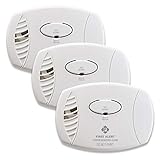
- Keep your family safe from carbon monoxide in multiple rooms with this convenient plug in carbon monoxide alarm 3 pack; The alarms work with any standard outlet and also have a battery backup for continuous monitoring of CO levels, even if there's a power failure
- Features an advanced electrochemical carbon monoxide sensor that accurately detects carbon monoxide levels, no matter where the detector is placed in the room
- Simple to use, with a single test/silence button; A loud 85 decibel alarm sounds when Carbon Monoxide levels reach dangerous levels
- To ensure complete protection make sure to place 1 on each level of your home and in each bedroom
- 7 year limited warranty; Equipped with end of life signal chirp, so you know when it’s time to replace the unit for safety
Why could I not move when I woke up?
REM sleep normally suppresses most voluntary movement. In sleep paralysis, awareness returns before that muscle suppression has ended, so you may recognize the room yet be unable to move, speak, or open your eyes. Episodes commonly end on their own or after touch or a small movement.
How can I tell whether I was hallucinating?
Check timing and the physical scene. A sleep-related hallucination occurs at sleep onset or awakening and may accompany temporary paralysis. A misperception is more likely when an observable object or sound changes after you alter light, distance, angle, or another condition. Perceptions while fully awake that persist or recur need medical assessment.
Could carbon monoxide make me see or feel something strange?
CO exposure can cause headache, dizziness, weakness, nausea, vomiting, chest pain, and confusion, which can make an experience frightening or disorienting. It is odorless and colorless. If symptoms affect several people, occur in one building, or improve outdoors, leave immediately, get fresh air, and seek urgent medical help.
Recommended Free Tools
What should I check in the room or house?
After making sure there is no immediate danger, inspect coats, pets, mirrors, windows, curtains, fans, plumbing, appliances, electrical sounds, vibrations, and nearby people. Recreate the lighting and viewing angle only when safe, and change one condition at a time. Never investigate indoors if smoke, gas, unsafe wiring, or possible CO is present.
Do I need a carbon-monoxide detector?
A properly installed CO alarm near every sleeping area is a sensible safety product. Choose a model certified for your jurisdiction, follow placement and testing instructions, maintain batteries, and replace it as directed. An alarm tests for a hazardous environmental condition; it cannot prove or disprove a paranormal explanation.
When should I see a doctor about these experiences?
Arrange prompt assessment for repeated episodes, fear of sleeping, substantial sleep loss, daytime sleepiness, sudden muscle weakness, hallucinations while fully awake, injury, confusion, fever, severe headache, weakness, medication or substance changes, or other new neurologic or psychiatric symptoms. Seek emergency help for fainting, seizures, severe breathing difficulty, chest pain, sudden confusion, rapidly worsening symptoms, or suspected poisoning.
What if I cannot find an ordinary explanation?
Keep the conclusion precise: the event is unexplained. Document what happened, what conditions you checked, and whether it recurs. An unexplained event is not automatically evidence of paranormal agency. Continue to prioritize sleep health, medical evaluation, and building safety.
What’s actually slowing this PC down?
Pick the symptom - the matching free tool is one click away.
The Bottom Line
Bottom line: Sleep-transition timing plus preserved awareness and brief paralysis strongly favors sleep paralysis; a perception that changes with light, distance, angle, or an identifiable object favors misperception. Headache, dizziness, confusion, breathing trouble, or illness in several occupants makes carbon monoxide or another medical/environmental cause the urgent priority. Leave a potentially contaminated building, seek care for serious or recurrent symptoms, and label an unresolved event “unexplained” rather than treating it as proof of the paranormal.
Quick Recap
Product prices and availability are accurate as of the date/time indicated and are subject to change. Any price and availability information displayed on Amazon at the time of purchase will apply.

