What’s actually slowing this PC down?
Pick the symptom - the matching free tool is one click away.
You cannot tame an adult Fire, Lightning, Poison or Ice Wyvern by knocking it out and feeding it. The only standard method is to steal a fertilized egg from a wild nest, escape the adults, hatch the egg and raise the baby on Wyvern Milk until it becomes an adult.
Godlike.Host offers hosted ARK: Survival Evolved servers with its own game panel, SFTP access and free DDoS protection, if you would rather not host it yourself.
The egg type determines the wyvern’s elemental type. Incubation, food consumption and maturation all depend on temperature control and your map’s or server’s multipliers, so the safest plan is to secure an escape route and a milk supply before taking an egg.
| # | Preview | Product | Price | |
|---|---|---|---|---|
| 1 |

|
ARK: Survival Evolved (PS4) | $19.49 | Buy on Amazon |
| 2 |
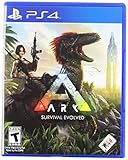
|
ARK: Survival Evolved - PlayStation 4 | $12.20 | Buy on Amazon |
| 3 |

|
ARK: Survival Evolved (PS4) | $28.50 | Buy on Amazon |
| 4 |

|
Ark Survival Evolved Playstation 4 PS4 PS5 Dinosaurs Hunting - Free Shipping! | $39.00 | Buy on Amazon |
| 5 |

|
The unofficial ARK Guide incl. Add-ons up to Genesis Part1: (B&W) | $19.99 | Buy on Amazon |
As an Amazon Associate I earn from qualifying purchases.
The Tool Desk
Outbyte PC Repair FREEClear out junk files and repair common Windows errorsFree Scan →Outbyte Driver Updater FREEScan for outdated or missing drivers - takes under a minuteDriver Scan →What “taming a wyvern” actually means
Adult standard wyverns are not directly tameable. A wild Fire, Lightning, Poison or Ice Wyvern cannot be knocked unconscious and converted with food. Your tame begins with a fertilized egg taken from a nest. You then incubate that egg, protect the hatchling and keep it supplied with Wyvern Milk until it reaches adulthood.
This distinction matters because the dangerous part happens before you own a wyvern. Wild adults around a nest become hostile when an egg is removed and can pursue the thief. Helena’s explorer notes describe the species as too resilient to domesticate after adulthood and warn that mother wyverns pursue egg thieves “with a vengeance.” Treat every egg run as a raid and extraction, not as a normal knockout tame.
#1 Best Overall
- Use cunning strategy and tactics to tame, train, ride and breed the 100+ dinosaurs and other primeval creatures roaming the dynamic, persistent ecosystems across land, sea, air, and even underground Build your character's strengths and gain items, skills, and pet creatures using in-depth role-playing systems
- Start a tribe with hundreds of other players to survive and dominate competing tribes...and ultimately discover ARK's true purpose
- Build a fire or shelter, then craft customizable clothing & armors to help protect against damage and extreme temperatures on your way to unlocking advanced technologies and equipment
- Chop down trees and mine metal and other precious resources to build massive multi-leveled structures composed of complex snap-linked parts
The complete egg-to-adult workflow
- Prepare an extraction kit. Bring a fast, expendable flying mount, food and water for yourself, healing supplies and only the gear you are willing to risk. Decide where you will flee before entering the nest area.
- Locate a nest containing a fertilized egg. Standard eggs are Fire, Lightning, Poison and Ice. The egg you take determines the elemental type of the wyvern that hatches.
- Steal the egg and leave immediately. Removing it alerts nearby adults. Do not linger to search for a better egg once the pursuit begins.
- Break the pursuit. Use your mount’s speed and your preplanned route. A prepared trap can help, but its construction and reliability depend on the map, server settings and the resources available to you.
- Incubate the egg. Maintain the required temperature with your available temperature-control method or use an Egg Incubator. With perfect temperature stability, the official wiki gives an incubation time of about five hours in an Egg Incubator.
- Collect Wyvern Milk before the baby needs it. Hatchlings do not eat Raw Meat. They consume Wyvern Milk and can also request milk during imprinting.
- Monitor food and imprint timers. Feed milk before the baby’s food reaches zero and answer imprint requests whenever the timing allows. Both intervals change with maturation multipliers.
- Raise the baby to adulthood. Once mature, it no longer depends on baby milk. You can then use adults for travel, combat or same-type breeding.
Choosing an egg type
There are four standard egg variants. The type is not cosmetic: it determines the elemental type of the wyvern that hatches. Choose according to the role you want, the nest danger you can handle and the milk and incubation schedule you can support.
| Egg | Resulting wyvern type | What is established |
|---|---|---|
| Fire | Fire Wyvern | Standard elemental egg; obtained from a wild wyvern nest. |
| Lightning | Lightning Wyvern | Standard elemental egg; one cited egg page uses this type for a roughly three-day-20-hour maturation example under its referenced settings. |
| Poison | Poison Wyvern | Standard elemental egg; obtained from a wild wyvern nest. |
| Ice | Ice Wyvern | Standard elemental egg; obtained from a wild wyvern nest where that variant is available. |
The available nest locations and the relative danger differ by map and server configuration. The facts above identify the standard egg types, not a universal map route or a guarantee that every map contains every variant.
Do these 3 things before closing this tab:
1Clear out junk files and repair common Windows errors2Scan for outdated or missing drivers - takes under a minute3Repair Windows errors before they cause bigger problemsHow to prepare for an egg theft
Use an expendable, fast flying mount
Your mount is an extraction tool, not a trophy. The official guidance emphasizes speed and minimal carried gear because adults may chase you after the theft. A mount that is quick enough to create distance and replaceable enough that its loss will not end your progression is safer than bringing your best asset.
Carry only what keeps you alive
- Food and water: enough for the approach, the theft and the return trip.
- Healing supplies: useful if you take damage while leaving the nest or during an attempted escape.
- Minimal valuables: store irreplaceable items before the run. Losing a mount is bad; losing your entire progression is worse.
- A planned destination: decide where you will go after the grab, including a location where pursuing wyverns can be separated, trapped or otherwise abandoned.
Scout the escape before touching an egg
Observe the route, nearby terrain and any prepared containment area first. The nest is not the place to improvise. Identify where you can gain distance and where a pursuit could be redirected. Because maps, server settings and player resources vary, no single trap blueprint is universally reliable; use a design you understand and have tested for your environment.
Finding and stealing a fertilized egg
Identify a real nest
Wyvern eggs come from nests of wild wyverns. The nest’s inhabitants are the immediate threat, so approach with the same caution you would use for an aggressive creature group. The egg’s elemental type is visible through the variant you find, and that choice carries through to the adult.
Rank #2
- Capture and Tame Dinosaurs: Discover over 100 different dinosaurs and prehistoric creatures on the island, finding ways to tame them into useful additions for your tribe's dino herd
- Survive Above All: Hunger, thirst, basic safety, and protecting yourself from the weather are all part of the game
- Harvest, Hunt and Build: Cut down trees and turn them into a basic home, which you can quickly expand into a Jurassic estate. Hunt for meat, scavenge for plants (or start your own garden!)
- Customize Everything: An extensive crafting system invites you to mix and match materials scavenged from the island, while also modifying the colors, textures, shapes, and styles
- Explore the Island: Solve the mystery of The ARK as you explore this massive island, discovering Explorer's Notebooks (filled with clues!) throughout
Take the egg decisively
Once you have chosen an egg, take it and leave the trench or nest area immediately. Searching nearby nests while adults are reacting increases the time you spend exposed. If you are making multiple attempts, treat each run as a separate extraction rather than assuming one theft will be enough.
Expect an active pursuit
Nearby adults can become hostile and follow an egg thief. The official wiki specifically characterizes the theft as difficult and recommends a fast mount and minimal gear. Your goal is not to defeat every pursuing wyvern; it is to survive long enough to break contact and return with the egg.
Escaping the nest and using a trap
Speed is the universal part of the plan. A trap is optional support, not a guaranteed solution. Its effectiveness changes with construction, map geometry, server settings and the resources you can spend. If you prepare one, place it along the route you intend to use and make sure you can reach it without slowing down during the initial grab.
Do not assume that a design shown for one map or rates configuration will work unchanged elsewhere. A trap that is too small, poorly positioned or unable to withstand the pursuing adults can turn an escape into a second fight. Keep your mount’s stamina and your own healing options in mind, and abandon the egg if the extraction has become unrecoverable; replacing an egg attempt is cheaper than losing all of your equipment and your only mount.
Incubating the egg
Temperature control
The egg must be kept within its incubation temperature range. You can use a suitable temperature-control setup or an Egg Incubator. The incubation clock is conditional: temperature swings, interruptions and server multipliers change the time you see in play.
Rank #3
- UK IMPORT VERSION , REGION FREE WORKS IN USA , UK PSN ACCOUNT REQUIRED FOR GAME DLC ADD ON'S TO WORK
How long hatching takes
Under perfect temperature stability, the official wiki gives an Egg Incubator incubation time of about five hours. That is a best-condition reference, not a promise for every server. If your temperature is unstable or your rates differ from the referenced settings, the displayed timer is the one to follow.
Before the hatch
- Confirm that the egg is in the incubating state rather than merely stored.
- Keep the area secure so the hatchling is not exposed to nearby threats.
- Have Wyvern Milk available before the hatch completes; the baby cannot substitute Raw Meat.
- Make sure you can check the baby at the intervals required by your maturation settings.
Wyvern Milk: the baby’s food and an imprint item
Where milk comes from
Wyvern Milk is obtained from a knocked-out wild female wyvern. An Alpha Wyvern can provide 50 milk when killed. These are the two sources identified for raising babies; breeding your own adults does not create a self-sufficient milk supply.
Why Raw Meat does not work
Baby wyverns do not eat Raw Meat before adulthood. They consume Wyvern Milk, and an imprint request may also ask for milk. Plan for both ordinary feeding and the possibility that an imprint interaction will consume part of your reserve.
Food values and the practical interval
The official figures list one milk as providing 1,200 food and an approximate consumption rate of one food every 10 seconds, or 360 food per hour. At that baseline, one milk covers about three hours and 20 minutes (1,200 divided by 360) if the baby can use the full value and no other setting changes the rate.
Recommended Free Tools
Lower-level babies can have an effective food capacity below 1,200. In that case, the baby may not be able to hold an entire milk’s food value at once and may need milk force-fed. Do not use the three-hour-20-minute calculation as a universal alarm: watch the baby’s actual food value and the server’s maturation and consumption behavior.
Build a milk reserve
Secure milk before the egg hatches whenever possible. A single Alpha Wyvern yield is 50 milk, but the amount you actually need depends on the baby’s level, maturation multiplier, feeding rate and the number of imprint requests. The available evidence does not establish one universal total for every wyvern, map or server, so track consumption in your own settings instead of relying on a fixed number.
Independent reader supportYour contribution helps us test, update, and keep practical guides available for everyone.Imprinting while the wyvern grows
Baby wyverns can request Wyvern Milk as part of imprinting. When a request appears, interact with the baby if you can satisfy it; successful imprint actions improve the relationship represented by the imprint system. The exact request schedule and the amount of imprint progress depend on maturation multipliers, so a schedule from another server may not match yours.
Keep milk available for both the ordinary food bar and these requests. If you spend the entire reserve on routine feeding, an imprint request can arrive with no milk left. Conversely, do not delay basic feeding while waiting for an imprint timer: starvation is the immediate failure condition.
Quick wins for a faster PC:
Repair Windows errors before they cause bigger problemsFix Now →Fix the driver behind crashes, sound loss and screen glitchesFind Drivers →Clear out junk files and repair common Windows errorsFree Scan →How long until adulthood?
Maturation time is controlled by server settings and multipliers. A Lightning Wyvern Egg page on the official wiki cites around three days and 20 hours to adulthood under its referenced settings. That number is an example tied to those conditions, not a universal timer for every egg type or server.
Use the in-game maturation display for your actual timetable. Before starting, decide who will monitor the baby during the full growth period, including any periods when an imprint request could appear. On an accelerated server the same growth may finish much sooner; on a slower configuration it may require substantially more milk and more scheduled checks.
Breeding adults and raising later generations
Once you have adults, breed only wyverns of the same elemental type. Different wyvern types cannot interbreed. A Fire Wyvern must be paired with another Fire Wyvern, and the same rule applies to Lightning, Poison and Ice.
Breeding does not remove the milk requirement. Every baby from a later generation still needs Wyvern Milk from wild females or from Alpha Wyverns. Keep the milk operation in your breeding plan rather than assuming your adult pair will feed the offspring.
Common failure points and how to recover
“I knocked out the adult, but there is no tame option.”
That is expected for standard adult wyverns. Return to the egg workflow: locate a fertilized egg, steal it, incubate it and raise the hatchling.
“The egg is not hatching after five hours.”
Five hours applies to perfect temperature stability in an Egg Incubator under the cited conditions. Check the egg’s temperature state and the timer shown in your game, then account for your server’s settings rather than treating five hours as a fixed deadline.
“The baby is losing food too quickly.”
Check the baby’s actual food value and your server’s rates. The reference baseline is 1,200 food per milk and about 360 food consumed per hour, but lower-level babies may have an effective capacity below 1,200 and may require force-feeding. Supply milk before the food bar reaches zero.
“The baby wants milk for imprinting, but I have none.”
Imprinting can request milk, so reserve milk for those interactions as well as normal feeding. Obtain additional milk from a knocked-out wild female or an Alpha Wyvern if your reserve is insufficient.
Free tools Windows power users keep installed
One-click scans. No signup required.
“The wyverns killed my mount during the egg run.”
That is a normal risk of the theft. Rework the extraction: carry less gear, use a faster expendable mount, scout the route first and prepare a trap only if it suits your map and resources. Do not repeat the same route with your best mount without changing the plan.
“Can I breed a Lightning Wyvern with a Fire Wyvern?”
No. Different elemental types cannot interbreed. Use two adults of the same type, and plan another milk supply for their baby.
Quick Recap
A practical checklist
- Fast, expendable flying mount ready.
- Food, water and healing supplies packed.
- Valuable gear stored safely.
- Escape route scouted before entering the nest area.
- Optional trap prepared and tested for your map and settings.
- Egg type selected: Fire, Lightning, Poison or Ice.
- Temperature-control method or Egg Incubator available.
- Wyvern Milk source identified before the hatch.
- Milk reserved for both food and imprint requests.
- Baby-monitoring schedule matched to your maturation multiplier.
Product prices and availability are accurate as of the date/time indicated and are subject to change. Any price and availability information displayed on Amazon at the time of purchase will apply.

