Recommended Free Tools
Yes, but only as an experiment. The documented streamer-ds homebrew application can send repeated, compressed screenshots of a PC desktop to a Nintendo DS-family handheld over Wi‑Fi. The PC still runs the game; the DSi displays the captured desktop. Reported transfer times are about 0.6 seconds per 256-pixel frame or 0.3 seconds per 128-pixel frame, and the project describes input capture as too slow for practical control. Treat this as a remote desktop demonstration or slideshow, not a playable replacement for modern game streaming.
What this setup actually does
A Nintendo DSi cannot install or execute ordinary Windows PC games. In this arrangement, the game runs on the computer and streamer-ds repeatedly captures what is on the computer screen, compresses that image, and sends it to the handheld. The DSi then displays each received bitmap.
As an Amazon Associate I earn from qualifying purchases.
That distinction matters. A normal game-streaming system tries to deliver a continuous video stream with low latency and sends controller input back immediately. The documented DS project instead follows a capture–compress–transmit–acknowledge loop. Its own reported timing is roughly one frame every 0.6 seconds at the larger 256-pixel setting, or one frame every 0.3 seconds at 128 pixels. That is approximately 1.7 or 3.3 frames per second before considering input delay, so fast games are not realistically controllable.
The Tool Desk
Outbyte Driver Updater FREEScan for outdated or missing drivers - takes under a minuteDriver Scan →Outbyte PC Repair FREERepair Windows errors before they cause bigger problemsFix Now →The project page lists dbeef as the author and identifies the application as version 2018. GameBrew records an application-metadata update of 2018-07-30 and a page modification date of 2024-08-21. Those dates do not establish that the software has been tested with current DSi firmware, modern access points, or every DSi model.
#1 Best Overall
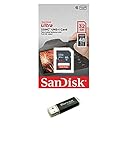
- 32GB SD SDHC Flash Memory Card FOR NINTENDO 3DS N3DS 2DS XL DS DSI & Wii Media Kit. (Not compatible with New 3DS)
- Also compatible with Nikon SLR Coolpix Digital Camera, Kodak Easyshare, Canon Powershot, Canon EOS
- Speed performance rating: Class 10
- Bonus SD/TF USB Card Reader to facilitate easy transfer between devices
- High quality and reliability backed by a 5-year limited manufacturer warranty
What you need before attempting it
- A Nintendo DS-family handheld capable of running homebrew. The documentation describes a DS-family target, but it does not confirm current firmware compatibility for a specific DSi, DSi XL, or system-menu version.
- A way to launch the supplied
.ndshomebrew application on the handheld. The overview does not specify a current flashcard model, launcher, storage capacity, or exact installation path, so verify those details against the hardware and homebrew loader you already use. - A PC running the project’s Python desktop client, named
desktop_client.py. - A temporary Wi‑Fi hotspot made by the laptop or another nearby computer. The documented flow has the DS connect directly to that hotspot rather than relying on an internet service.
- The
streamer.ndsfile copied to whatever homebrew storage arrangement your handheld supports.
Keep expectations narrow. The available guide does not document a required SD-card format or capacity for streamer-ds, and it does not provide a current compatibility matrix. Do not buy a particular card or assume that a given firmware revision will work solely because another DS-family system did.
How streamer-ds moves a desktop image
The documented pipeline explains both the appeal and the limitations:
- The PC captures a screenshot of its desktop.
- The image is scaled to either 256 pixels or 128 pixels. The guide presents these as the practical size choices.
- The client converts the image to 16-bit raw bitmap data and applies LZ77 compression.
- The compressed bitmap is sent over the Wi‑Fi connection to the DS.
- The handheld acknowledges receipt, after which the client captures and sends the next frame.
At 256 pixels, the project reports average compressed frames of about 10–20 kB and a transfer time of approximately 0.6 seconds per frame. At 128 pixels, it reports about 5–10 kB per frame and approximately 0.3 seconds per frame. An uncompressed attempt used around 80 kB per frame and was slower because the DS Wi‑Fi link became the bottleneck. These are figures reported by the project documentation, not independent laboratory measurements.
The smaller setting is the sensible first test because it reduces both image size and transfer time. It also removes detail, making text and game interfaces harder to read. Neither setting is documented as a guaranteed resolution for every title or DSi model.
Documented setup procedure
The guide’s basic sequence is short, but several current hardware details remain unspecified. Follow the order below and stop if your homebrew loader or network equipment requires a different, documented configuration.
1. Create an isolated laptop hotspot
Use the laptop that will run the desktop client to create a temporary hotspot. The older guide gives Ubuntu-specific hotspot instructions and says the DS-side networking procedure supports WEP. That is historical project guidance, not a recommendation for a permanent network: WEP is obsolete and insecure.
If you must reproduce the documented arrangement, use a temporary, isolated hotspot with no access to private devices or accounts, avoid sharing an internet connection, and turn it off as soon as the test ends. Do not leave a WEP network broadcasting. Your operating system may no longer expose WEP hotspot options, in which case the project overview does not provide a modern replacement or guarantee that another security mode will work.
2. Start the homebrew application
Launch the supplied .nds file on the handheld through your existing homebrew method. The application opens a server on port 8080. The overview does not state whether a particular DSi firmware, flashcard, or storage layout is required, so an error at this stage should be treated as an installation or compatibility issue rather than a streaming failure.
3. Join the hotspot from the DS application
Use the application’s connection screen to select the temporary hotspot and connect. The guide describes connecting through the app itself. Keep the PC and handheld close to the hotspot while testing; the reported transfer figures assume a short local Wi‑Fi path, and the documentation does not establish performance over a household router or a congested wireless channel.
Rank #2

- Brand: Sandisk
4. Run the desktop client
On the PC, open a terminal in the directory containing desktop_client.py and run the script with the Python environment expected by the project. The overview names the script but does not state a current Python version or dependency list, so consult the application’s own files for those requirements rather than assuming that any modern interpreter will work.
The script connects to the DS application’s port 8080. If it asks for an address, use the handheld’s address on the temporary hotspot network. The available overview does not publish a fixed address or command-line syntax, so do not invent flags; use the help text or README shipped with the copy you have.
Free tools Windows power users keep installed
One-click scans. No signup required.
5. Select the lower scale first
Choose the 128-pixel mode for the first transfer. Confirm that a desktop image appears, then try 256 pixels only if the connection remains stable. A visible image confirms that the screenshot path works; it does not indicate that a game will respond quickly enough to play.
6. Shut down safely
Stop the Python client, exit the homebrew application, and disable the hotspot. This is especially important if the test used the guide’s WEP arrangement. Remove the temporary network from saved connections if your operating system or handheld stores it automatically.
What performance to expect
| Mode | Project-reported compressed frame size | Project-reported frame interval | Practical implication |
|---|---|---|---|
| 256-pixel image | About 10–20 kB | About 0.6 seconds per frame | More detail, but roughly 1.7 frames per second and visibly slideshow-like motion |
| 128-pixel image | About 5–10 kB | About 0.3 seconds per frame | Less detail, roughly 3.3 frames per second, and still far below responsive game streaming |
| Uncompressed bitmap attempt | Around 80 kB | Slower than the compressed method | The project reports that DS Wi‑Fi became the limiting factor |
These values describe the project’s own observations. They are not a promise for a particular game, display mode, access point, or DSi revision. Desktop animations, changing backgrounds, and scenes with little visual repetition can also change the amount of compressed data sent per frame.
For testing, use a mostly static desktop first. A still window lets you determine whether the connection and scaling work without confusing a network problem with the inherent low frame rate. Once the image is stable, open a game and observe the result as a visual demonstration only.
Why controls are the bigger problem
The project documentation describes an alternative input-capturing build that sampled input once per frame, approximately every 0.3 seconds in that version. The author considered that impractical. A button press can therefore arrive late or be missed entirely, even before the display delay is added.
The page points to pc-controller-ds for input capture without video. That project can be useful if your goal is to send DS controls to a PC while viewing the PC locally on a monitor, but it does not turn streamer-ds into a low-latency game-streaming client. No compatibility testing is reported for a particular PC game, controller layout, or emulator.
Do not use this setup for games that require timing-sensitive input, camera control, rapid menus, or continuous feedback. A turn-based title may be easier to observe than an action game, but the available documentation does not claim that any specific game is playable.
Rank #3

- Cards include security feature for protection of copyrighted data
- This is NOT a micro SD card
- SD cards are fully compatible with all SD-compliant devices
- Speed performance rating: Class 4 (based on SD 2.0 Specification)
- Writeable label for easy identification and organization
Troubleshooting the documented path
The DS cannot see the hotspot
- Confirm that the hotspot is active before starting the DS application.
- Keep the hotspot and handheld nearby and remove other devices from the temporary network.
- Check whether your operating system still offers the security mode expected by the older guide. The guide’s WEP instructions are historical and insecure; do not expose a WEP network beyond this isolated test.
- Because current firmware and wireless compatibility are not established, a failure may be a platform limitation rather than a wrong password.
The application starts but the PC client cannot connect
- Verify that the DS application is still running and listening on port
8080. - Make sure the PC script is targeting the handheld’s address on the hotspot, not a previous home-network address.
- Temporarily check local firewall rules on the PC for Python or port
8080, then restore a restrictive firewall policy after testing. - Use the command syntax and dependency requirements shipped with your copy of
desktop_client.py; the overview does not specify a universal Python version or launch command.
An image appears, but updates are extremely slow
Slow updates are expected. Start at 128 pixels, reduce other wireless traffic, and keep the devices close together. Sending an uncompressed bitmap will generally make the bottleneck worse; the project reports around 80 kB per uncompressed frame and slower transfers.
Do these 3 things before closing this tab:
1Repair Windows errors before they cause bigger problems2Fix the driver behind crashes, sound loss and screen glitches3Clear out junk files and repair common Windows errorsThe picture is visible but controls do not work
This is a documented limitation, not necessarily a setup mistake. Input was sampled only once per frame in the described build, about every 0.3 seconds, and was judged impractical. Treat the program as desktop viewing unless you have separately verified an input build for your hardware.
The homebrew file will not launch
The available overview does not confirm a current DSi firmware range, storage medium, flashcard, or card capacity. Verify those prerequisites with the homebrew loader documentation you use. Do not assume that a file failing to boot proves the streaming code itself is broken.
How this compares with other ways to use a DSi screen
| Route | What it provides | Main limitation |
|---|---|---|
| streamer-ds | Experimental desktop screenshots sent over local Wi‑Fi | Reported frame intervals of about 0.3–0.6 seconds; input is not responsive enough for practical game control |
| Moonlight on a supported client | Purpose-built PC game streaming on the client platforms listed by the project; the project recommends Sunshine as the host | The official client list names platforms such as PC, mobile, PlayStation Vita, Nintendo Switch, and Wii U, but not Nintendo DSi |
| Pre-converted local video | Homebrew playback from compatible files stored on supported SD media | It is prerecorded playback, not interactive live streaming |
Moonlight support for other Nintendo hardware should not be interpreted as DSi support. Community ports for the Vita, Switch, and Wii U do not provide a DSi client. If responsive PC game streaming is the priority, use a client that the Moonlight project actually lists rather than trying to adapt the DSi application.
Using the DSi for prepared video instead
If your objective is simply to watch PC game footage on the handheld, convert the recording first and copy the result to compatible SD storage. DS-Homebrew’s player listings provide a useful benchmark for prerecorded content, while explicitly warning that actual maximum frame rate depends on the video’s content and length.
What’s actually slowing this PC down?
Pick the symptom - the matching free tool is one click away.
| Player | File format and codec listed | Listed maximum |
|---|---|---|
| FastVideoDS | .fv |
Up to 60 fps in DSi mode |
| Rocket Video Player | .rvid |
Up to 72 fps |
| Moonshell | .dpg, MPEG‑1 |
Up to 24 fps |
| tuna-viDS | .avi, Xvid |
Up to 15 fps |
| MPEG4Player | .mp4, MPEG‑4 |
Up to 24 fps |
Those entries describe player capabilities for local files. They do not mean that streamer-ds can transmit any of those codecs or achieve those frame rates. A prepared video can look smooth because the conversion and storage happen before playback; it does not solve live capture, network transfer, or input latency.
Important limits that remain unresolved
- The current installation route for a DSi, including the required launcher and exact storage arrangement, is not established by the available overview.
- Compatibility with present DSi and DSi XL firmware versions is not confirmed.
- No maintenance status, modern Python dependency set, or current operating-system support is documented in the supplied project summary.
- No independent latency test or game-by-game compatibility list is reported.
- The documented networking section is based on an older WEP hotspot procedure and should not be treated as current wireless-security guidance.
These gaps are reasons to test cautiously, not reasons to expect a hidden performance mode. The measured behavior described by the project already places the method outside normal interactive streaming.
Bottom line
streamer-ds is the documented way to put a PC desktop image on a DS-family handheld, and a DSi owner can try it with a temporary hotspot, the .nds application, and desktop_client.py. It does not put PC games on the DSi or make them run locally. With approximately 0.3–0.6 seconds between reported frames and impractical input sampling, the result is best understood as a homebrew proof of concept. Choose the 128-pixel mode for an initial experiment, isolate and disable the hotspot afterward, and use a supported modern streaming client—or prerecorded video playback—if your real goal is smooth viewing or playable controls.
Quick Recap
Product prices and availability are accurate as of the date/time indicated and are subject to change. Any price and availability information displayed on Amazon at the time of purchase will apply.
Quick wins for a faster PC:
Clear out junk files and repair common Windows errorsFree Scan →Fix the driver behind crashes, sound loss and screen glitchesFind Drivers →
