Free tools Windows power users keep installed
One-click scans. No signup required.
There is no dependable listening test that proves a song or voice recording was made by AI. Odd pronunciation, unnaturally smooth vocals, repeated musical phrases, or a strangely consistent performance can justify a closer look, but each can also occur in human-made audio or result from compression and editing.
The reliable approach is to establish the recording’s source and context, then check for a provenance signal that matches the tool or service said to have created it. Treat a detected signal as evidence of that specific signal—not as proof of ownership, an untouched file, or every detail of the recording—and treat a missing signal as inconclusive.
As an Amazon Associate I earn from qualifying purchases.
First, use the right label: AI-generated or AI-assisted?
“AI-generated” and “AI-assisted” are not interchangeable. The International Federation of the Phonographic Industry (IFPI) distinguishes a recording in which generative AI creates the entirety or primary portion of the creative elements from a recording where AI helps with part of the work. A vocalist might use an AI tool for cleanup, a producer might generate a short texture, or a songwriter might use a system for ideas while humans create the final performance. Those examples do not automatically make the finished track wholly AI-generated.
Use the artist’s, label’s, distributor’s, or platform’s exact disclosure when one exists. If no disclosure exists, describe what is established rather than assigning a stronger label: for example, “the recording carries a supported provenance signal” or “the creator says AI was used in vocal production.” Do not turn evidence of limited assistance into a claim that an entire song or performance was generated.
#1 Best Overall

- 【PCM Recording and Automatic Noise Reduction】:This digital voice recorder is equipped with advanced dual noise reduction microphones and supports 1536 kbps PCM HD audio recording, ensuring crystal-clear sound capture in any environment. Recorder device with automatic noise reduction and voice-activated recording, the recorder only picks up the sound when there’s speech, reducing background noise,Excellent sound quality can meet the needs of students, journalists, music lovers and more people
- 【136GB Memory and Long Battery Life】Voice Recorder with Playback with 8GB built-in storage and includes a complimentary 128GB TF card, this digital voice recorder can hold up to 9775 hours of recordings in MP3 format or WAV format;Recorder for lectures with a built-in 1100mAh rechargeable lithium battery, this voice recorder can continuously record for up to 68 hours on a single charge, making it perfect for back-to-back meetings, interviews, or extended classroom sessions
- 【One Click Record and Save】: Our voice recorder supports one click recording and saving functions. Even when the product is in a powered-off state, simply push up the side recording button to immediately enter recording mode, and push down the recording button to save the recording. This allows for capturing as much information as possible.Easily transfer your recordings to your computer using the USB-C connection, allowing for fast and secure file management
- 【Easy-to-Use】This portable voice recorder is designed with a simple, user-friendly interface featuring a large, easy-to-read LCD screen. The voice-activated recording (VOR) feature makes hands-free operation a breeze. With one-touch recording, users can start or stop recording instantly, even during busy moments. A-B repeat function and password protection ensure that important segments are easily accessible and secure
- 【Portable and Durable Design】Designed with portability in mind, this lightweight screen recorder fits comfortably in your pocket or bag, weighing only 97 grams. Its sleek and durable metal casing ensures longevity and protection from everyday wear and tear. Whether you’re traveling, in the office, or attending a lecture, this compact recorder is always ready to capture clear, high-quality audio
Why your ears cannot settle the question
Audio-generation systems change quickly, and playback conditions hide or create artifacts. A phone speaker, streaming codec, room echo, pitch correction, deliberate vocal stylization, or an edited excerpt can make human audio sound synthetic. Conversely, a generated recording may be mixed, mastered, or performed in a way that sounds ordinary.
A 2026 European Commission study of audio marking and detection reviews current capabilities, evaluation criteria, technical gaps, and standardization needs. Its overall implication is that the field is not a settled, universal detection problem. No audible cue in the available official guidance is strong enough to establish origin on its own.
Audible clues are prompts for investigation, not verdicts
- Pronunciation and timing: a voice may place stress oddly, blur consonants, or pronounce names inconsistently. Human speakers also make these mistakes, and edits can create similar joins.
- Breath and dynamics: an unusually even volume, missing breaths, or perfectly sustained notes can be worth checking. Heavy compression, tuning, or deliberate singing technique can produce the same impression.
- Texture and articulation: smeared consonants, metallic sibilance, unstable vibrato, or a vowel that changes shape may indicate a synthesis artifact, but lossy encoding and reverb can mimic them.
- Arrangement and repetition: a loop that returns with identical micro-details or lyrics that repeat without a plausible musical reason may prompt source checking. Repetition is also common in human genres and sample-based production.
- Edits and transitions: abrupt changes in room tone, accent, microphone character, or background noise can indicate splicing. They do not identify whether either segment was generated.
These observations can help you decide what to verify next. They cannot identify the model, establish that humans did no work, or prove that a recording is synthetic.
The Tool Desk
Outbyte Driver Updater FREEScan for outdated or missing drivers - takes under a minuteDriver Scan →Outbyte PC Repair FREERepair Windows errors before they cause bigger problemsFix Now →A defensible verification workflow
Use the following order. It keeps the strongest contextual evidence ahead of subjective impressions and prevents a single inconclusive result from becoming a public accusation.
Rank #2

- 【One Click Record and Save】This voice recorder features instant one-click recording and saving. Even when powered off, simply push up the side button to start recording and push down to save. Designed with ergonomic controls, this digital voice recorder ensures fast operation so you never miss important moments—perfect as a voice recorder with playback, mini recorder device, or portable recorder for interviews, lectures, and field work
- 【64GB Memory & High-Capacity Battery】Equipped with a built-in 64GB TF card, this recorder device stores up to 4,600 hours of recordings. Its 600mAh battery supports up to 48 hours of continuous use (MP3 at 32kbps). Ideal for students, journalists, and professionals, this tape recorder portable mini excels in lectures, meetings, interviews, and even for paranormal sound research
- 【PCM Recording & Automatic Noise Reduction】Capture audio in WAV format with up to 1536kbps PCM quality. Advanced noise reduction minimizes background sounds, delivering crystal-clear playback on headphones or professional gear. This makes it an excellent audio recorder, digital audio recorder, or sound recorder for music creation, interviews, and high-detail sound archiving
- 【Voice-Activated Recorder, Big Screen & Password Protection】The voice activated recorder automatically starts/stops when sound reaches your set level, helping save storage and battery. A large 1.44-inch screen offers easy navigation, while password protection safeguards your files—perfect for storing personal memos and important audio files when using it as a dictaphone voice recorder or recording device for professional use
- 【Multi-Function Recorder】This versatile digital recorder supports internal and external recording, file segmentation, scheduled recording, A-B loop playback, MP3 music, and bookmarking. Functions as a USB storage drive and MP3 player with quick transfer via USB cable. Great as a pocket recorder, lecture recorder, mini voice recorder, or recording devices for travel and daily use
- Find the original source and context. Locate the first upload or official release rather than relying on a repost, short clip, reaction video, or detached audio. Check the artist or publisher’s statement, release notes, platform labels, and corroborating information such as the date and account that published it. A repost can remove the context needed to understand how the recording was made.
- Identify the claimed origin. Before selecting a verifier, determine whether the creator claims use of an OpenAI tool, a Google AI tool, another service, or no AI at all. A tool that checks one provider’s signal cannot answer a question about every provider.
- Run a provenance check that matches that claim. OpenAI describes a verifier for supported provenance signals, including supported SynthID cases and trusted C2PA manifests associated with OpenAI. Google DeepMind describes SynthID verification for audio marked by supported Google AI tools. Use the provider’s own checker when the claimed origin and supported signal align.
- Submit the best available file. OpenAI recommends the original exported audio when possible. Its guidance says clips between 10 and 60 seconds generally produce the best results for its verification tool. Upload one supported file at a time and avoid starting with a screen recording, a social-media download, or a clip that has been repeatedly converted.
- Interpret the output narrowly and document it. Record the exact result, the file used, and where the file came from. A positive result supports the presence of the provider’s supported signal. It does not, by itself, establish who owns the work, whether the file was edited after generation, or whether the surrounding claim is true. A negative or “not detected” result does not establish human origin.
- Seek confirmation before making a consequential claim. If the recording affects a news report, moderation decision, contract, or accusation, ask the publisher or platform for clarification and explain what remains uncertain. Use “the verifier detected a supported signal” rather than “the verifier proved this was made entirely by AI.”
What the main verification approaches actually cover
| Approach | Coverage | Input and robustness | What a result means |
|---|---|---|---|
| OpenAI provenance verifier | Supported OpenAI provenance signals, including supported watermark or trusted C2PA cases described by OpenAI | Original export preferred; OpenAI says 10–60 seconds generally work best. Compression, cropping, noise, edits, format conversion, short clips, and significant modification can degrade a signal. | A detected supported signal is evidence that the signal is present. It is not a universal detector and does not identify content made by every other model. |
| Google SynthID detector | Audio carrying SynthID from supported Google AI tools, including audio generated or published through the Lyria music-generation model or NotebookLM podcast-generation feature | The signal can be unavailable or altered in a file that has been edited, converted, or taken from an unsupported workflow. | A match supports a claim about SynthID. No match cannot rule out another generator or audio whose signal is missing or unavailable. |
| Source and context review | Any recording, regardless of generator | Requires the original upload, creator or publisher statements, release information, and corroborating context. Reposts and excerpts reduce what can be established. | Can establish what a publisher claims and how a file travelled, but it is not a technical authenticity test. |
| Listening for artifacts | Any audio | Works under no fixed technical conditions and is affected by playback, mixing, codecs, and editing. | Useful for deciding what to investigate; never conclusive by itself. |
How to use OpenAI’s provenance guidance without overclaiming
OpenAI states: “They are not designed to detect content generated by other AI models, and they may also not detect OpenAI-generated content if the relevant signal is missing, unsupported, or degraded.” That limitation should appear in any serious explanation of a negative result.
Watermark information can be damaged by compression, cropping, noise, edits, format conversion, or other transformations. A clip may also be too short or substantially modified. Use the original export whenever possible, keep the test file within the recommended 10–60-second range, and retain the unaltered source separately from any excerpt you publish.
A positive result is still narrower than a claim that the whole recording is synthetic. It indicates that the supported provenance signal was found in the submitted material. The signal does not independently prove the creator’s identity, ownership, release permissions, editing history, or the truth of a caption attached to the file.
How SynthID changes the question
Google DeepMind describes SynthID as a watermark embedded in audio generated or published through supported Google AI workflows. Its examples include the Lyria music-generation model and NotebookLM’s podcast-generation feature. The detector is therefore a way to ask, “Does this audio carry SynthID?”—not, “Was this audio made by any AI system?”
Rank #3
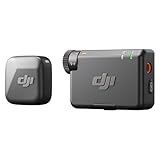
- Small but Mighty - The DJI Mic Mini lavalier microphone transmitter is small and ultralight, weighing only 10 g, [1] making it comfortable to wear, discreet, and aesthetically pleasing on-camera.
- Detail-Rich Sound - Mic Mini wireless lavalier microphones delivers high-quality audio. A 400m max transmission range [2] ensures stable recording, even in bustling outdoor environments like a busy street. 48kHz sampling & 120 dB SPL for rich, distortion-free audio, approx. 10h battery life [5].
- Record Longer - A transmitter and a receiver offer a maximum operating time of 10 hours, [5] respectively. That's enough time for high-usage scenarios like interviews.
- DJI Ecosystem Direct Connection - With DJI OsmoAudio, a transmitter can connect to Osmo Nano, Osmo 360, Osmo Mobile 7P, Osmo Action 5 Pro, Osmo Action 4, or Osmo Pocket 3 without a receiver, delivering premium audio.
- Powerful Noise Cancelling - 2 noise cancellation levels are available—Basic is ideal for quiet indoor settings, while Strong excels in noisy environments to give you clear vocals. [8]
A successful match can support a carefully worded statement about that watermark. A failure to match can mean that the file came from another system, that the workflow was not supported, that the signal is unavailable, or that processing damaged it. Do not use a no-match result to certify a recording as human-made.
Music: checks that add context without pretending to identify a model
Start with the release trail
Compare the recording with the earliest official upload or release. Look for a creator statement, label or distributor note, and the platform’s own AI disclosure. Preserve the version you checked because a later remaster, radio edit, or social-media transcode may not contain the same provenance information.
Separate the song from the production process
A track can contain human-written lyrics, a human performance, and AI-assisted mixing, or it can contain an AI-generated instrumental beneath a human vocal. Ask which element the disclosure covers. “AI used in production” is less specific than “the lead vocal was generated,” and neither statement automatically describes every stem in the final master.
What’s actually slowing this PC down?
Pick the symptom - the matching free tool is one click away.
Do not treat scale claims as proof
IFPI has discussed the rapid increase of AI-generated material delivered to music platforms, including a Deezer estimate that 44% of new music delivered to its platform in an April represented AI-generated tracks. The year of that April is not established in the available wording, so do not present the figure as a fully dated statistic. In any event, a platform-wide estimate cannot authenticate an individual recording.
Rank #4
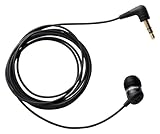
- Note : If the size of the earbud tips does not match the size of your ear canals or the headset is not worn properly in your ears, you may not obtain the correct sound qualities or call performance. Change the earbud tips to ones that fit more snugly in your ear
- Economical, sensitive microphone for recording phone conversation
- Works great with landlines and cell phones
- Records directly to voice recorder, Recording Device
- Includes all necessary adapters
Voice recordings: verify the speaker and the clip’s history
Voice clips are especially vulnerable to context loss. A short excerpt may omit the introduction, room sound, or surrounding conversation that explains who is speaking and how the file was made. Find the full interview, call, stream, or original upload before judging an isolated sentence.
Compare the claimed speaker’s public statement with the source account and publication date, but do not infer identity from vocal similarity alone. An imitation, dubbing, translation, or edited quotation can sound convincing without proving that the named person uttered the words. If a provenance tool reports a supported signal, describe that signal and its scope rather than declaring that the speaker’s entire message was generated.
Independent reader supportYour contribution helps us test, update, and keep practical guides available for everyone.Why a “not detected” result is inconclusive
There are several distinct reasons a checker may return no supported signal:
Recommended Free Tools
- The recording was generated by a model outside the verifier’s coverage.
- The claimed tool did not add a watermark or provenance manifest in that workflow.
- The signal was never present in the submitted file.
- Compression, noise, cropping, editing, format conversion, or other processing degraded it.
- The clip is too short or has been significantly modified.
- The checker does not support the file or signal type.
Because these explanations cannot be distinguished from a no-match result alone, “not detected” should be reported as “no supported signal was found in this file,” not as “human-made.”
Best Value

- 【Simple Operation】- switch on your voice recorder, one button for recording. press the "REC", start the recording, press "STOP", end the recording, press “PLAY”, listen what you just recorded, and then Press A-B, select your important section to repeat. Easy to playback with inner powerful speaker, support external sound speaker playback, let you enjoy superior recording quality.
- 【Clear Voice Record】- high quality recording with noise redution, you will get super clear recorded voice, the sensitive microphone help you to catch speaker's words in an interview, lectures, meetings.
- 【Voice Activated Recording】- automatic voice reduction function, it starts recording when sound is detected or turn to standby state, saving recording time and reduce power consumption.
- 【 Player Function】- this voice recorder can be used as an music player, you could enjoy the music after your tired study, meeting and so on. Also can function as a detachable data storage device.you can take along your favorite pictures and documents whenever you go.Simply cut-and-paste or drag-and -drop files to or from it via USB connection, the player will appear as a removeable drive in Windows.
- 【High quality and long time】 uses DSP noise reduction technology to filter out environmental noise, has high-quality recording, 【1536kbps】to restore the real scene. It can continuously record for more than 30 hours and play for 7 hours.
Common mistakes and safer alternatives
| Mistake | Why it fails | Safer alternative |
|---|---|---|
| Calling a strange vowel or perfect rhythm proof of AI | Human technique, tuning, codecs, and mixing can create the same impression. | Use the clue to locate the original source and check provenance. |
| Running a provider-specific verifier on every clip | The tool may not cover the generator or signal involved. | Match the verifier to the claimed origin and state its coverage. |
| Testing a downloaded social-media excerpt first | Transcoding and edits may have degraded or removed the signal. | Request the original export and retain the excerpt only for comparison. |
| Equating “AI-assisted” with “AI-generated” | Assistance can affect one production step rather than the entire creative work. | Use the creator’s precise label and identify which element was assisted. |
| Publishing an accusation after one clue or one negative test | Neither subjective artifacts nor a missing signal establishes origin. | Seek a second source, ask the publisher for clarification, and state uncertainty. |
A decision framework for editors, moderators, and researchers
If you have only a repost or short clip
Do not assign an origin. Label it as an unverified excerpt, find the earliest available upload, and ask the account that posted it for the original file and context.
If the creator claims a supported tool
Use that tool’s provenance verifier on an original export. Report the exact signal result and the transformations the file underwent. A positive signal supports the narrow provenance claim; a negative result leaves the origin unresolved.
If the creator claims no AI use
Do not treat an absence of artifacts as confirmation. Check available provenance information and corroborating source material, then describe the evidence and its limits. A tool’s no-match result cannot certify human origin.
If the stakes are high
For a legal dispute, fraud allegation, employment decision, or major news claim, preserve the original file, record its chain of custody, obtain the publisher’s response, and seek qualified audio-forensics advice. Consumer provenance checks are not a substitute for a formal examination of authenticity, editing, and ownership.
Quick checklist
- Have you found the earliest or official upload?
- Do you know whether the claim concerns a whole recording, one stem, or one production step?
- Does the verifier you selected support the claimed generator or signal?
- Are you using an original export rather than a repost or screen recording?
- For an OpenAI check, is the clip preferably between 10 and 60 seconds?
- Could compression, cropping, noise, editing, or format conversion have altered the signal?
- Are you reporting “supported signal detected” rather than claiming universal AI detection?
- Are you treating “not detected” as inconclusive?
- Have you separated AI-generated from AI-assisted in your wording?
- Before publishing a damaging claim, have you asked the creator or platform for confirmation?
What you can responsibly say
Strong wording matches the evidence: “The file contains a supported SynthID signal,” “OpenAI’s verifier found a supported provenance signal in the submitted clip,” or “No supported signal was detected in this version.” Weak wording jumps beyond the evidence: “This proves the entire song was made by AI,” “The speaker definitely did not say this,” or “No watermark means a human made it.”
The practical standard is simple: source and context first, provider-specific provenance second, and cautious interpretation throughout. Listening can tell you when to investigate; it cannot, by itself, tell you what happened.
Quick Recap
Product prices and availability are accurate as of the date/time indicated and are subject to change. Any price and availability information displayed on Amazon at the time of purchase will apply.

