A reliable local game night starts with the game, not the console. Confirm the exact title’s local-player limit and controller rules, decide whether everyone will share one console and screen, then connect the display and test every controller before guests arrive. A console’s advertised capability does not guarantee that each game supports the same number of local players.
For a larger group, use a documented multi-system mode only when the specific game supports it. Otherwise, plan a one-console session with the supported number of controllers, a screen everyone can see, and a short pre-event test.
| # | Preview | Product | Price | |
|---|---|---|---|---|
| 1 |
|
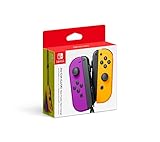
Nintendo Neon Purple/Neon Orange Joy-Con (L-R) - Switch | $87.95 | Buy on Amazon |
| 2 |

|
Nintendo Joy-Con (L/R) - Neon Red/Neon Blue (Renewed) | $60.00 | Buy on Amazon |
| 3 |

|
Nintendo Blue/Neon Yellow Joy-Con (L-R) - Switch | $79.99 | Buy on Amazon |
| 4 |

|
Nintendo Joy-Con (L)/(R) - Pastel Purple/Pastel Green | $87.00 | Buy on Amazon |
As an Amazon Associate I earn from qualifying purchases.
Choose the game-night format first
There are two fundamentally different ways to play together in one room. In a one-console setup, every player uses the same game session on one console and one shared TV or monitor. In a multi-system setup, two or more consoles run linked copies or a supported local mode. The second arrangement can accommodate more people in some games, but it requires game-specific networking support and additional hardware.
Quick wins for a faster PC:
Clear out junk files and repair common Windows errorsFree Scan →Fix the driver behind crashes, sound loss and screen glitchesFind Drivers →Repair Windows errors before they cause bigger problemsFix Now →| Format | What players share | What you must verify | Typical room needs |
|---|---|---|---|
| One console, one screen | One game session and one display | The title’s local-player limit, controller count and controller types | One visible TV or monitor, seating within comfortable viewing distance, and enough controller space |
| Multiple linked systems | A local multiplayer session across consoles; screens may be shared or separate | That exact game’s multi-system mode, supported number of systems, copies or editions required, and connection procedure | More consoles, controllers, power outlets and usually more than one display |
Use one screen by default when everyone is playing on one console. Add systems and displays only when the title’s instructions call for them or when the one-console player limit is too low for your group.
#1 Best Overall
- Two Joy Con can be used independently in each hand, or together as 1 game controller when attached to the Joy Con grip
- They can also attach to the main console for use in handheld mode, or be shared with friends to enjoy two player action in supported games
- Each Joy Con has a full set of buttons and can act as a standalone controller, and each includes an accelerometer and gyro sensor, making independent left and right motion control possible
Confirm the game’s real local-player support
Why the console alone is not enough
Console capability and game capability are separate. A platform may accept several controllers while a particular title supports fewer local players, reserves some modes for online play, or requires a specific controller arrangement. Check the current support page or in-game instructions for the exact title, console generation and mode you intend to use.
Do not treat an “online multiplayer” label as proof of couch multiplayer. Look specifically for wording such as local play, same-console multiplayer, local wireless or a local battle mode. Also check whether the player limit changes between the main game, a tournament, a practice mode and a special event mode.
Concrete Nintendo examples
Nintendo’s support instructions illustrate why title-by-title checking matters:
Free tools Windows power users keep installed
One-click scans. No signup required.
| Game or mode | Documented local arrangement | Important qualification |
|---|---|---|
| Mario Kart 8 Deluxe | Up to four local players on one Nintendo Switch or Nintendo Switch 2 | The figure applies to that game and one-console setup, not to every Switch game or every mode. |
| Super Smash Bros. Ultimate | Two to eight players for the local battle option described by Nintendo Support | This is the specific local battle guidance, not a platform-wide limit for all Smash modes or all Switch titles. |
| Mario Party Superstars | The host sets the player count and connects a controller for each player | Follow the game’s own setup prompts and verify the supported count for the edition and console in use. |
| Compatible Switch and Switch 2 games using local multi-system play | Up to eight Switch-family systems can link in one room | Nintendo describes this as a capability for compatible games; it does not mean eight players can use one console. |
These examples are useful planning references, not universal rules. A title update, a different edition or a different console can change the required controllers or available modes, so recheck the current official instructions before the event.
Count players and controllers accurately
Make a player-and-controller list
Write down the maximum number of people who will play at the same time, then map one compatible controller to each player. Include the controller type, not just the quantity. Some games accept a pair of Joy-Con used together, while others allow a single detached Joy-Con or a different controller configuration. The game’s setup screen is the authority.
- Number of simultaneous players, including anyone who may join late.
- Controller type permitted for the chosen game and mode.
- Whether a controller is shared between rounds or must remain assigned.
- Charged batteries or a charging plan for every controller.
- A spare compatible controller if losing one would stop the session.
Nintendo’s Mario Kart 8 Deluxe instructions make controller selection part of starting local play. Players select a player count and controller type; the prompts may ask them to detach Joy-Con or connect additional controllers. Follow those prompts instead of assuming that a paired controller will automatically be assigned.
Prepare controllers before guests arrive
- Charge or replace batteries in every intended controller.
- Turn on the console and confirm that each controller appears in the console’s controller-management screen.
- Label or remember the order in which controllers are assigned if the game displays player colors or numbers.
- Keep charging cables and any required straps or grips where players can reach them without crossing the play area.
- Put the spare controller within reach but outside the main seating path.
For an extra controller, buy only a model explicitly compatible with the console and the selected game. No single controller type works for every title, and availability and pricing vary by country and date.
Set up the screen and room
Use one shared display for one-console play
A TV or monitor is core equipment for a shared-console session. Place it where every player has a clear, unobstructed view and avoid seating that forces people to turn away from the screen. The equipment guidance for community gaming identifies a TV or monitor as the essential display but does not establish a universal screen size, resolution or cable model, so choose from the equipment you already have and the room’s viewing distance.
- Position the display above or beside the console so cables are not stretched across walkways.
- Leave enough space for controllers and hands without blocking the screen.
- Reduce glare from windows and lamps before the first match.
- Keep drinks and food on a separate surface to protect electronics and controllers.
- Provide a clear route to power switches and the console’s ventilation openings.
Plan displays for multi-system sessions
When several consoles are linked, each system may need its own display, depending on the game’s instructions. Some groups can arrange one shared display for spectators while players use separate screens; others can use a single display only if the title explicitly supports that arrangement. Confirm the visual layout before inviting a larger group, because “up to eight systems” describes linked hardware, not a promise that one television can show every player.
Connect the console and display
Use the connection method supported by your console and display. The exact cable and menu labels vary by platform, so do not substitute a cable or adapter that the manufacturer does not support.
- Place the console on a stable, ventilated surface near the display and a suitable power outlet.
- Connect the console to power according to its manufacturer’s instructions.
- Connect the console’s supported video output to the TV or monitor.
- Turn on the display, then select the input associated with that connection.
- Power on the console and wait for its home screen or startup image.
- Start the selected game and open its local multiplayer option rather than an online-only menu.
- Connect or assign controllers in the order requested by the game.
If the home screen appears but the game does not, the problem is probably in the game’s mode selection or controller assignment rather than the display connection. If no console image appears at all, use the display troubleshooting branch below before changing game settings.
Do these 3 things before closing this tab:
1Repair Windows errors before they cause bigger problems2Fix the driver behind crashes, sound loss and screen glitches3Clear out junk files and repair common Windows errorsConfigure the game for local play
Follow the title’s player-count screen
Most local sessions are configured inside the game. Select the number of players first when prompted, then choose the controller type or press the requested button on each controller. Watch for a confirmation that every player has joined before launching a race, match or party board.
Rank #3
- Two Joy Con can be used independently in each hand, or together as 1 game controller when attached to the Joy Con grip
- They can also attach to the main console for use in handheld mode, or be shared with friends to enjoy 2 player action in supported games
- Each Joy Con has a full set of buttons and can act as a standalone controller, and each includes an accelerometer and gyro sensor, making independent left and right motion control possible
In Mario Kart 8 Deluxe, the documented one-console process includes selecting a player count and controller type, with prompts for detached Joy-Con or additional controllers where needed. In Mario Party Superstars, the host sets the player count and connects a controller for each player. Super Smash Bros. Ultimate has its own local multiplayer guidance and mode-specific limits. These are separate instructions; success in one title does not establish the setup for another.
Check edition and console combinations
Record the exact game edition and console family before the event. A Switch title running on a Switch 2, a revised edition, downloadable content and a physical copy can present different compatibility questions. If guests bring their own systems for local wireless play, verify whether each system needs the same game, a compatible version or a particular update.
Run a pre-event test
Reserve a few minutes before guests arrive for a complete dry run. The goal is not to play a full match; it is to expose connection, input and seating problems while you still have time to fix them.
- Turn on the display and select the correct input.
- Confirm that the console home screen is visible and that sound comes from the intended speakers or headphones.
- Launch the exact game and open its local mode.
- Select the intended player count.
- Connect or assign every controller, including any detached Joy-Con configuration.
- Start a short practice round and press several buttons on each controller.
- Check that every player can see the screen and reach the controls comfortably.
- Exit the practice round cleanly and leave the console at the game’s ready screen.
Allow extra time for a game update, controller pairing or a restart. If you are using linked systems, test the complete group of consoles together rather than assuming that a connection that worked separately will work in the shared session.
Choose between one console and multiple systems
Use the following decision points instead of choosing based on the console brand or the number printed on a controller package.
| Question | Choose one-console play when… | Consider linked systems when… |
|---|---|---|
| How many people must play simultaneously? | The title’s one-console limit covers the group. | The group exceeds that limit and the exact title documents a local multi-system mode. |
| How many controllers are available? | You can provide the required compatible controller for every player. | Adding controllers is less practical than adding systems, and the game supports that arrangement. |
| How many screens are available? | Everyone can comfortably see one TV or monitor. | The game and room support multiple displays or a documented shared-screen arrangement. |
| How much setup time is available? | You want the simplest configuration and a short pre-event test. | You can test every console, display, game copy and local connection before guests arrive. |
| What does the game’s official guidance say? | It lists same-console local play for your player count. | It explicitly lists local wireless or linked-system play for the edition and systems you own. |
When any answer is uncertain, choose the smaller, one-console plan and limit the active player count to what the game documents. Rotate players between rounds rather than improvising an unsupported configuration.
Rank #4
- Expand your collection with these colorful pastel Joy-Con controllers.
Troubleshoot the common failure points
The display says “no signal”
- Confirm the TV or monitor is powered on.
- Select the input that matches the console’s video connection.
- Check that both ends of the supported video cable are firmly connected.
- Restart the display and console in the order recommended by the console maker.
- Try the console’s supported alternate display connection only if the manufacturer documents it.
If the console home screen never appears after these checks, solve the display connection before troubleshooting the game.
What’s actually slowing this PC down?
Pick the symptom - the matching free tool is one click away.
A controller is not recognized
- Open the console’s controller-management screen and verify that the controller is paired or connected.
- Charge the controller or replace its batteries.
- Reconnect it using the game’s requested order and controller type.
- For Joy-Con, check whether the game expects one detached unit or a paired set.
- Remove an unused controller if the game has reached its supported player count.
Do not add controllers indefinitely. If the title supports fewer local players than the number of connected controllers, remove the extras and set the documented player count.
The game shows fewer players than expected
Return to the game’s local-mode instructions and verify the exact mode, edition and console. A platform’s controller capacity does not override a title’s local-player limit. For the Nintendo examples above, use the documented figures for the named game and mode rather than borrowing a limit from another title.
There is picture but no sound
- Check the display’s volume and mute state.
- Confirm that sound is routed to the intended TV, monitor or audio device.
- Inspect the console’s audio settings and the game’s volume setting.
- Disconnect an audio accessory temporarily if it is redirecting sound away from the room.
Linked systems cannot join
- Confirm that the game actually supports local multi-system play.
- Check that every console is running the required game edition and compatible software version.
- Restart the local session from the game’s documented multiplayer menu.
- Reduce the number of systems to the title’s stated limit and add them one at a time.
- Keep the consoles in the same room and follow the game’s instructions for local wireless or linked play.
Nintendo’s statement that compatible Switch and Switch 2 games can link up to eight systems is conditional on compatibility. It is not a troubleshooting target for a game that does not document that mode.
Make the event easy to run
Use a simple host workflow
- Welcome guests and assign seats or controller numbers.
- Explain the game’s supported player count and how players join or rotate.
- Run one short practice round so everyone can test movement, buttons and viewing angles.
- Start the first full round only after every active controller is confirmed.
- Keep the game’s local setup screen available between rounds so a replacement player can join without changing unrelated settings.
For a group larger than the active player limit, make rotation explicit: set a round length, keep a visible queue, and swap players at the same menu point. This avoids repeated controller reassignment in the middle of a match.
The Tool Desk
Outbyte Driver Updater FREEFix the driver behind crashes, sound loss and screen glitchesFind Drivers →Outbyte PC Repair FREEClear out junk files and repair common Windows errorsFree Scan →Account for comfort and access
- Leave enough knee and elbow room for every player.
- Offer a chair position with a clear view rather than requiring someone to stand behind the group.
- Keep controller instructions visible for guests unfamiliar with the layout.
- Reduce glare and excessive volume so players can see and hear prompts.
- Provide breaks during long sessions, especially when several rounds use rapid button input.
What to buy—and what not to assume
The most defensible addition to an existing setup is an extra compatible controller for the selected console and game. Nintendo’s Mario Kart 8 Deluxe instructions explicitly describe connecting additional controllers when needed. Check the exact console, game and controller configuration before purchasing; no price, retailer, model or stock level is established here.
A larger television, a particular resolution, a specific cable length or a named console cannot be recommended from the topic alone. Those choices depend on your room, budget, country, existing equipment and the game’s requirements. Start with the equipment you own, then spend only to satisfy a verified player, controller, display or connection requirement.
Final pre-launch checklist
- The game’s current local-player count is confirmed for the exact edition and console.
- The chosen mode is local, not online-only.
- One compatible controller is ready for each simultaneous player.
- Controllers are charged, paired and assigned in the game.
- The TV or monitor is positioned for the whole group.
- The console’s supported video connection is secure.
- The display is on the correct input and produces picture and sound.
- A short practice round has verified every controller.
- Any multi-system setup has been tested with all consoles together.
- A rotation plan is ready if more people are attending than the active player limit.
With those checks complete, the host’s job is mostly to keep players within the game’s documented limits and make controller changes at the menu between rounds. The exact title—not the console’s headline specification—determines how many people can play and which hardware the night needs.
Quick Recap
Product prices and availability are accurate as of the date/time indicated and are subject to change. Any price and availability information displayed on Amazon at the time of purchase will apply.

