What’s actually slowing this PC down?
Pick the symptom - the matching free tool is one click away.
There is no documented, universal Samsung router menu for splitting 2.4 GHz and 5 GHz Wi‑Fi into separate network names. The steps depend on the router’s exact model, firmware, and whether your internet provider manages it. Find the model first, then follow its manual or your provider’s instructions; don’t rely on a guessed admin address or menu label.
What separating the bands means
A dual-band router can use both 2.4 GHz and 5 GHz while showing one shared Wi‑Fi name. Separating the bands means giving each its own network name, also called an SSID, so you can choose which one a device joins. Whether that option is available—and what it is called—depends on the router and its firmware.
As an Amazon Associate I earn from qualifying purchases.
Samsung’s SmartThings Wifi setup guidance covers setting up the hub, not a universal procedure for separating band names. Samsung directs users who need router configuration help to the router manual or internet provider. A separate name is useful when a device needs a particular band; the Samsung support information cited here does not establish that splitting names by itself makes a connection faster or better.
Before changing the Wi‑Fi settings
- Identify the router. Check its label, your provider’s app, or the router’s device information for the brand and exact model.
- Find out who manages it. If the provider supplied or controls the router, some settings may be unavailable to you; contact the provider for its instructions.
- Check the device’s requirements. Samsung says network requirements vary by device. Some appliances cannot connect to 5 GHz, but that does not mean every Samsung appliance or TV has the same limitation. Consult the manual for the exact product.
- Decide whether you need separate names. If a device only needs 2.4 GHz enabled, a separate SSID may not be necessary. The router or device instructions determine what to change.
How to make separate Wi‑Fi names
- Look up the router’s exact model. Use the model number from the router label or the information shown in your provider’s app.
- Open the correct instructions. Check the router manual or your provider’s support site for “Wi‑Fi,” “wireless,” “network name,” “SSID,” “2.4 GHz,” “5 GHz,” or “Smart Connect” or “band steering.” Samsung likewise advises referring to the router manual or provider for configuring both bands in its appliance registration guidance.
- Check whether separate SSIDs are supported. If the router has separate network-name controls for each band, assign each a distinct name and save the change as the model’s instructions specify. You choose the names; Samsung does not mandate a naming convention.
- Reconnect the device. Select the network compatible with the device. For a 2.4 GHz-only appliance, choose the 2.4 GHz network.
- If you cannot find the control, ask who manages the router. The provider may control its settings, or the router may use a combined name without offering a separate-band option. Ask the provider or router manufacturer rather than trying an unverified login address or password.
If a Samsung device will not connect
For a SmartThings appliance
Start with that appliance’s model-specific requirements and registration instructions. Samsung’s US support page says, “Network requirements vary between devices,” and its troubleshooting examples include appliances that cannot use 5 GHz. The AirDresser instructions for model DF60R8200DG, for example, say that this model cannot connect to 5 GHz; that limitation should not be generalized to other Samsung products.
#1 Best Overall

- Corner to corner Wi-Fi coverage for homes up to 1,500 square feet and up to 866 Mbps at 5 GHz + 400 Mbps at 2.4 GHz (AC1300) Actual coverage will vary based on home construction and layout
- A smarter router with Smart Home hub functionality that easily connects compatible cameras, lights, voice assistants and more
- Set-Up in minutes, and keeps your Wi-Fi network safe and secure.
- Product not supported outside the U.S.
Samsung’s South Africa appliance-registration guidance says that if the router is configured to 5 GHz, “you cannot use a 2.4GHz connection.” Treat that statement as regional appliance-registration troubleshooting context, not as a universal rule for every router or device. Check the product manual and router instructions for your setup.
For SmartThings device discovery
If the issue is that SmartThings cannot find a device—not that you need to choose a network name—Samsung’s Korea support guidance recommends checking that 2.4 GHz is enabled when the access point is 5 GHz-only, and checking whether the access point name is hidden. See Samsung’s SmartThings device-discovery troubleshooting.
Rank #2
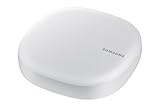
- Corner to corner Wi-Fi coverage for homes up to 1,500 square feet and up to 866 Mbps at 5 GHz + 400 Mbps at 2.4 GHz (AC1300) Actual coverage will vary based on home construction and layout
- A smarter router with Smart Home hub functionality that easily connects compatible cameras, lights, voice assistants and more
- Set-Up in minutes, and keeps your Wi-Fi network safe and secure. Product not supported outside the U.S.
If the phone and appliance use different bands
Do not assume that your Samsung phone must itself join a separately named 2.4 GHz network. The support guidance establishes device-specific compatibility needs, not a universal phone setup requirement. Follow the instructions for the appliance and router you have.
Recommended Free Tools
Which option fits your setup?
| Router situation | What to do | When separate names help |
|---|---|---|
| The model offers separate SSID controls | Use that model’s manual to set a distinct name for each band. | When you need to select a band explicitly for a device. |
| The control is missing or the provider manages the router | Ask the provider or router manufacturer which settings are available. | When the provider confirms separate names can be enabled or configured. |
What Samsung’s guidance does—and does not—establish
Samsung’s US SmartThings Wifi page explains hub setup; it does not document one Samsung-wide SSID-splitting path. Samsung’s appliance pages address particular registration and compatibility issues, and requirements can vary by device and region. The reliable route is therefore to match the instructions to the router model and the device you are connecting, rather than assume every product labeled Samsung uses the same network procedure.
Rank #3

- 𝐅𝐮𝐭𝐮𝐫𝐞-𝐑𝐞𝐚𝐝𝐲 𝐖𝐢-𝐅𝐢 𝟕 - Designed with the latest Wi-Fi 7 technology, featuring Multi-Link Operation (MLO), Multi-RUs, and 4K-QAM. Achieve optimized performance on latest WiFi 7 laptops and devices, like the iPhone 16 Pro, and Samsung Galaxy S24 Ultra.
- 𝟔-𝐒𝐭𝐫𝐞𝐚𝐦, 𝐃𝐮𝐚𝐥-𝐁𝐚𝐧𝐝 𝐖𝐢-𝐅𝐢 𝐰𝐢𝐭𝐡 𝟔.𝟓 𝐆𝐛𝐩𝐬 𝐓𝐨𝐭𝐚𝐥 𝐁𝐚𝐧𝐝𝐰𝐢𝐝𝐭𝐡 - Achieve full speeds of up to 5764 Mbps on the 5GHz band and 688 Mbps on the 2.4 GHz band with 6 streams. Enjoy seamless 4K/8K streaming, AR/VR gaming, and incredibly fast downloads/uploads.
- 𝐖𝐢𝐝𝐞 𝐂𝐨𝐯𝐞𝐫𝐚𝐠𝐞 𝐰𝐢𝐭𝐡 𝐒𝐭𝐫𝐨𝐧𝐠 𝐂𝐨𝐧𝐧𝐞𝐜𝐭𝐢𝐨𝐧 - Get up to 2,400 sq. ft. max coverage for up to 90 devices at a time. 6x high performance antennas and Beamforming technology, ensures reliable connections for remote workers, gamers, students, and more.
- 𝐔𝐥𝐭𝐫𝐚-𝐅𝐚𝐬𝐭 𝟐.𝟓 𝐆𝐛𝐩𝐬 𝐖𝐢𝐫𝐞𝐝 𝐏𝐞𝐫𝐟𝐨𝐫𝐦𝐚𝐧𝐜𝐞 - 1x 2.5 Gbps WAN/LAN port, 1x 2.5 Gbps LAN port and 3x 1 Gbps LAN ports offer high-speed data transmissions.³ Integrate with a multi-gig modem for gigplus internet.
- 𝐎𝐮𝐫 𝐂𝐲𝐛𝐞𝐫𝐬𝐞𝐜𝐮𝐫𝐢𝐭𝐲 𝐂𝐨𝐦𝐦𝐢𝐭𝐦𝐞𝐧𝐭 - TP-Link is a signatory of the U.S. Cybersecurity and Infrastructure Security Agency’s (CISA) Secure-by-Design pledge. This device is designed, built, and maintained, with advanced security as a core requirement.
For general SmartThings appliance connection guidance, see Samsung’s “Cannot connect a home appliance to SmartThings” page. Samsung Italy also provides regional troubleshooting steps for registering a SmartThings device; use the instructions applicable to your product and region.
Quick Recap
Best Value
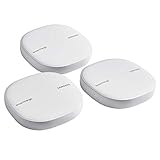
- Two-In-One Smart Home Solution: Samsung ET-WV525KWEGUS performs as a mesh router and SmartThings Hub; Connect and control 100+ compatible devices, including cameras, lights, speakers, doorbells, and more
- Whole-Home Coverage: Pack of 3 mesh routers provides up to 4,500 square feet of secure, stable WiFi for larger-sized homes; Add up to 32 routers if additional coverage is needed; SmartThings Wifi uses multiple access points
- AI-Based Home WiFi: Powered by Plume, SmartThings WiFi learns and adapts to your environment, optimizing performance for a powerful, reliable WiFi experience
- One App controls it all: See what’s connected, prioritize devices, create network access for guests, set up parental controls, set schedules, and more, all from your smartphone
- Content & Security: Use content filtering to manage what kids and teens can access; Turn on Secure and Protect for added security
Rank #4

- DUAL-BAND WIFI 6 ROUTER: Wi-Fi 6(802.11ax) technology achieves faster speeds, greater capacity and reduced network congestion compared to the previous gen. All WiFi routers require a separate modem. Dual-Band WiFi routers do not support the 6 GHz band.
- AX1800: Enjoy smoother and more stable streaming, gaming, downloading with 1.8 Gbps total bandwidth (up to 1200 Mbps on 5 GHz and up to 574 Mbps on 2.4 GHz). Performance varies by conditions, distance to devices, and obstacles such as walls.
- CONNECT MORE DEVICES: Wi-Fi 6 technology communicates more data to more devices simultaneously using revolutionary OFDMA technology
- EXTENSIVE COVERAGE: Achieve the strong, reliable WiFi coverage with Archer AX1800 as it focuses signal strength to your devices far away using Beamforming technology, 4 high-gain antennas and an advanced front-end module (FEM) chipset
- OUR CYBERSECURITY COMMITMENT: TP-Link is a signatory of the U.S. Cybersecurity and Infrastructure Security Agency’s (CISA) Secure-by-Design pledge. This device is designed, built, and maintained, with advanced security as a core requirement.
Product prices and availability are accurate as of the date/time indicated and are subject to change. Any price and availability information displayed on Amazon at the time of purchase will apply.

