You can run a pre-recorded YouTube livestream from an Intel NUC by keeping encoder software running on the NUC, feeding it a continuous playlist or looping video source, and sending the output to a YouTube Live event. The NUC must stay powered on and connected to the internet. Exact loop and restart settings depend on your operating system and encoder, so test those behaviors before leaving the stream unattended.
Before you start
- Confirm YouTube Live access. Your channel must be verified and must not have had live-streaming restrictions in the past 90 days. First-time live-streaming activation can take up to 24 hours, so enable it well before launch. See YouTube’s live-streaming eligibility guidance.
- Identify your exact NUC model. Check its product code against its official technical specifications. Processor generation, system configuration, and enabled processor graphics affect available codec and hardware-acceleration support; “Intel NUC” alone does not establish what resolution or codec your unit can handle. Intel Quick Sync uses processor graphics for hardware-assisted encoding and decoding, so the relevant graphics support must be available and enabled.
- Prepare a stable connection. Check upload bandwidth, not only download speed. YouTube recommends leaving 20% spare upload capacity above the total bitrate you send. Ethernet and a UPS can be useful for a fixed always-on setup, but neither is a YouTube requirement.
- Plan to monitor it. A stream that runs all day still needs a way to detect a stalled source, encoder failure, or network outage—and a plan for restarting or reconnecting.
Set up the NUC and continuous video source
- Install and update the operating system and encoder. Choose software compatible with your NUC and operating system. The encoder may be software or hardware; YouTube’s overview explains the role of an encoder and how to connect it to a live event: YouTube encoder setup.
- Prepare the video files. Store the prerecorded files where the NUC can read them continuously. Check that the files have the intended aspect ratio and audio, and that their formats work in your chosen encoder.
- Configure a continuous source. In the encoder, set up the selected playlist or other media source to repeat or advance through files. The exact controls vary by encoder and operating system; there is no single NUC-specific loop setting. Test what happens when a file ends, when the playlist reaches its end, and when the encoder restarts. Confirm that transitions and audio remain continuous enough for your use.
- Check the NUC’s load during a trial run. Verify that it can encode the chosen output while playing the source without dropped frames or interruptions. Hardware acceleration may help where the model and configuration support it, but do not assume that every NUC exposes the same Quick Sync capabilities.
Create a YouTube Live event and connect the encoder
- Open YouTube Live Control Room and create or schedule a stream.
- Copy the event’s server URL and stream key into the corresponding fields in your encoder. Do not share the key or expose it in screenshots or public configuration files: anyone who has it may be able to send content to your stream.
- Use RTMPS where available. YouTube describes RTMPS as RTMP secured with TLS/SSL and provides instructions for retrieving its URL and key: Encrypt your stream using RTMPS.
- Start the encoder output and wait for the incoming feed to appear in YouTube’s Live Control Room preview. Check the event’s access and watch page before sharing it with viewers.
Choose output settings and test the stream
Use YouTube’s current live-encoder recommendations and bitrate table rather than assuming one setting fits every NUC, resolution, or connection: YouTube live encoder settings. The key guidance includes:
As an Amazon Associate I earn from qualifying purchases.
- Rate control: Use constant bitrate (CBR).
- Keyframes: Set a two-second interval if the encoder exposes this setting; do not exceed four seconds.
- Video codec: YouTube lists H.264, H.265, and AV1 options, subject to protocol and device support. Use only a codec your encoder and NUC can produce for the selected ingest method.
- Audio codec: For RTMP(S), YouTube supports AAC or MP3.
- Resolution and bitrate: Select values from YouTube’s current table and confirm the NUC can sustain them. Do not infer a supported resolution from the NUC brand alone.
Before relying on the stream, run a test long enough to exercise the playlist, file transitions, and audio. YouTube recommends testing, previewing the incoming feed, checking event access through the channel or watch page, and monitoring audio and video quality. For unattended operation, also test how the encoder behaves after a network interruption or restart, and decide who or what will notice an outage. YouTube’s operational guidance is in its streaming tips.
Recommended Free Tools
Account for long-stream recording limits
YouTube automatically archives streams under 12 hours. Streams longer than 12 hours may not be captured, so do not rely on YouTube for a complete archive of a 24/7 broadcast. If you need a full recording, arrange a separate recording workflow and verify that it works; account for storage capacity and the growth of large, continuous files. See YouTube’s live-stream archive guidance.
#1 Best Overall

- [Powerful Processor & Built-in OS] The Intel NUC 13 (NUC13ANHi5), also known as Arena Canyon, is equipped with a robust Intel Core i5-1340P CPU. With 12 cores, 12 threads, and a turbo frequency up to 4.6GHz, it can handle everything from complex spreadsheets to high-end gaming without breaking a sweat. Plus, it comes with Windows 11 Pro pre-installed, offering a seamless, secure, and productive operating experience right out of the box.
- [Superior Memory & Storage] This compact powerhouse boasts 16GB of dual-channel RAM, ensuring smooth multitasking across various applications. It also features a speedy 512GB SSD for quick file access and boot times. Plus, with support for up to 64GB of memory and an additional 2.5-inch HDD/SSD slot, it offers ample room for all your storage needs.
- [Stunning Display Capabilities] With support for 8K resolution, the ASUS/Intel NUC 13 delivers breathtakingly detailed visuals that bring your favorite movies and games to life. Furthermore, it can power up to four displays simultaneously, making it an ideal choice for multi-taskers, graphic designers, and anyone who values a comprehensive visual workspace.
- [Connectivity Excellence] The device offers dual-band WiFi (2.4GHz and 5GHz) for reliable, high-speed internet connectivity. It also incorporates Bluetooth 5.3for quick and easy pairing with a range of devices. A Gigabit Ethernet port ensures stable, high-speed wired connections for those critical moments when WiFi just won't cut it.
- [Versatile Ports & Compact Design] Despite its compact size (4.61 x 4.41 x 2.01 inches), the Intel NUC 13 is packed with a multitude of ports. It features two Thunderbolt 4 ports, three USB ports, a 3.5mm audio jack, an HDMI port, a mini DP port, and a side-mounted SD card slot. Whether you're connecting a second monitor, external storage, or a set of speakers, this device has got you covered.
Other ways to keep prerecorded video live
- StreamNeo — cloud-based, always-on YouTube streaming from uploaded videos, at one flat price per slot for any quality up to 4K 60fps, with the first day free. It loops uploaded videos or playlists in the cloud, so your NUC or another home computer does not have to stay on. Each slot includes 10 GB of storage (pooled across active slots), 24/7 looping and playlists, automatic recovery if YouTube drops the stream, and team support. The same features apply on every plan; only the billing duration changes. See StreamNeo for details.
- Intel NUC with encoder software: A flexible do-it-yourself route, but the NUC, encoder, source playback, internet connection, monitoring, and recovery all remain your responsibility. Check the exact model’s specifications and test your chosen software rather than assuming universal NUC capabilities.
- AJA HELO Plus: YouTube’s encoder list identifies its PlayToStream functionality as a way to schedule prerecorded media directly to YouTube Live without a computer. Compare purchase and operating costs, setup and scheduling needs, local control, and how you will monitor and recover the stream. The cited YouTube listing establishes that function, not comparative reliability or current pricing: YouTube’s encoder list.
Troubleshoot common problems
- You cannot start a live event: Check that the channel is verified, has no live-streaming restriction in the past 90 days, and has completed live-streaming activation. First-time activation may take up to 24 hours.
- YouTube does not receive the encoder feed: Confirm that you copied the correct server URL and stream key for the event, that the key has not been changed, and that the encoder is actually sending. Prefer RTMPS where available. If the key may have been exposed, replace it in YouTube and update the encoder.
- The stream drops or becomes unstable: Check outbound capacity against the total stream bitrate and leave YouTube’s recommended 20% spare upload bandwidth. Investigate network disruptions, then test the encoder’s reconnect behavior instead of assuming it will recover unattended.
- The playlist stops or has a gap: Review the encoder’s loop or scheduling behavior and test what happens at the end of each file and at the end of the playlist. Verify transitions and restart behavior in a trial run.
- Video stutters or the NUC struggles: Recheck the chosen codec, resolution, bitrate, and NUC-specific graphics or Quick Sync support. Reduce the output demands or use supported hardware acceleration if appropriate; Intel’s capability documentation and the exact model’s technical specifications are the relevant references.
- The archive is incomplete: A 24/7 YouTube stream exceeds the duration for which YouTube says automatic archiving is assured. Use and check a separate recording workflow if preserving the full broadcast matters.
Or let it run in the cloud
With StreamNeo, upload your recording or build a playlist, add your YouTube stream key, and go live. Nothing has to stay powered on at home; it streams your upload as made, up to 4K 60fps, at one price per slot, and can automatically recover if YouTube drops the stream. The first day is free with no card. Monthly: $9.99 per month. UPI and cards are available in India; card checkout is available worldwide. Start your free StreamNeo day.
Quick Recap
Best Value

- GMKtec M2 Pro S mini computer is equipped with 11th generation Intel Core i7-1185G7 processor, main frequency up to 4.8 GHz, 4 cores, 8 threads, 12MB cache, running much faster than i7-10810U, i5-12450H and i5-8259U, Windows PC series The power is only 35W, supporting your daily work with less power consumption, without delaying daily tasks
- 16GB DDR4 and 1TB NVME SSD: Desktop computer Comes with 16GB SODIMM, dual-channel DDR4 supports expansion up to 64GB. 1TB SSD M.2 2280 NVMe (PCIe3.0), supports expansion to 2TB, in addition, M.2 2242 SATA can be expanded to 2TB
- 4K UHD & 3 Screens Support: Mini PC with Intel Iris Xe Graphics G7 96EU GPU delivers high-quality graphics for the most demanding applications, 2 x HDMI (4K @ 60Hz) and 1 x USB Type-C (4K @ 60Hz) output terminals, allowing you to independently display 4K screens on 3 displays at the same time
- 2.5Gbps LAN & WiFi6 + BT5.2: GMKtec mini PC dual band WiFi 2.4G+5G networking and Giga (RJ45 speed up to 2500M), Loading web, video, or other networked operations is faster and more stable, Bluetooth 5.2 connect faster Speed, Farther Coverage, it is also a big feature that you can transfer files over LAN at high speed
- Package Included: 1x GMKtec Nucbox M2 Pro, 1x DC Power Plug, 1x HDMI Cable. 1 x VESA Mount with Screws, 1x User Manual
Rank #4

- 【High-Performance】Powered by 13th Gen Intel Core i5-13420H processor with boost speeds up to 4.6GHz, delivering smooth multitasking performance for business applications, productivity workflows, and everyday computing.
- 【Flexible Memory & Storage Options】Supports expandable DDR4 memory from 8GB up to 64GB and PCIe NVMe SSD storage from 128GB up to 8TB, allowing users to configure performance and capacity based on their needs.
- 【 Multi-Display Support】Features 2× HDMI 2.1 and 2× Thunderbolt ports, enabling flexible multi-monitor setups and high-resolution display output ideal for office, trading, and creative environments.
- 【Connectivity】Built-in Wi-Fi 6E, Bluetooth 5.3, and high-speed networking support provide stable wireless performance and seamless connectivity for modern peripherals and accessories.
- 【Compact, Quiet & Business-Ready】Slim mini PC design with quiet operation, space-saving form factor, and Windows 11 Pro preinstalled—perfect for offices, conference rooms, and professional desktop setups.
Rank #3
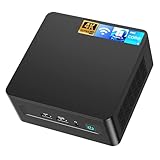
- 𝟭𝟯𝘁𝗵 𝗚𝗲𝗻 𝗜𝗻𝘁𝗲𝗹 𝗶𝟱-𝟭𝟯𝟰𝟮𝟬𝗛 𝗣𝗼𝘄𝗲𝗿𝗳𝘂𝗹 𝗣𝗲𝗿𝗳𝗼𝗿𝗺𝗮𝗻𝗰𝗲 : Powered by 13th Gen Intel Core i5-13420H processor (8 Cores-4P+4E, 12 Threads, up to 4.6GHz, 12MB L3 Cache), this ASUS NUC 13 Pro, Intel nuc 13 pro Arena Canyon mini PC delivers incredible responsive performance. Built with a 35W smart TDP and hybrid architecture, it easily handles daily office work, web browsing, multitasking, photo editing, light design and home entertainment, bringing full desktop-level efficiency in a tiny body.
- 𝟭𝟲𝗚𝗕 𝗥𝗔𝗠 + 𝟱𝟭𝟮𝗚𝗕 𝗦𝗦𝗗 & 𝗟𝗮𝗿𝗴𝗲 𝗘𝘅𝗽𝗮𝗻𝗱𝗮𝗯𝗹𝗲 𝗦𝘁𝗼𝗿𝗮𝗴𝗲 : Comes equipped with 16GB high-speed DDR4 RAM and 512GB M.2 NVMe SSD for ultra-fast boot-up, software loading and smooth multi-tab multitasking. It supports extra storage expansion up to 2TB via 2.5-inch SATA/PCIe Gen4 SSD (not included), allowing you to store massive files, videos and design resources freely and build a secure personal data center.
- 𝟰𝗞/𝟴𝗞 𝗠𝘂𝗹𝘁𝗶-𝗗𝗶𝘀𝗽𝗹𝗮𝘆 & 𝗜𝗻𝘁𝗲𝗹 𝗨𝗛𝗗 𝗚𝗿𝗮𝗽𝗵𝗶𝗰𝘀 : This ASUS NUC 13 Pro, Intel nuc 13 pro Arena Canyon mini PC featured with Intel UHD Graphics and rich video output ports (HDMI 2.1, DP 2.1, Thunderbolt 4), this mini computer supports 4K@60Hz high-definition display and up to 4 simultaneous 4K extended monitors or single 8K display. It perfectly handles 3D modeling, CAD drawing, video rendering and image processing, greatly improving work efficiency for designers and office workers.
- 𝗟𝗮𝘁𝗲𝘀𝘁 𝗪𝗶𝗿𝗲𝗹𝗲𝘀𝘀 & 𝗙𝘂𝗹𝗹-𝗙𝗲𝗮𝘁𝘂𝗿𝗲𝗱 𝗖𝗼𝗻𝗻𝗲𝗰𝘁𝗶𝘃𝗶𝘁𝘆 : Built-in Intel WiFi 6E AX211 and Bluetooth 5.3 provides lower latency, wider bandwidth and more stable wireless connection for online meetings, streaming and gaming. Equipped with 2.5G RJ45 Ethernet, TPM 2.0 security chip, multiple USB 3.2 Gen2 ports, 3.5mm audio jack and Thunderbolt 4, it supports all kinds of office peripherals, monitors, projectors and monitoring devices.
- 𝗨𝗹𝘁𝗿𝗮 𝗖𝗼𝗺𝗽𝗮𝗰𝘁 𝗗𝗲𝘀𝗶𝗴𝗻 & 𝗣𝗿𝗲-𝗶𝗻𝘀𝘁𝗮𝗹𝗹𝗲𝗱 𝗢𝗦 𝟭𝟭 𝗣𝗿𝗼 : Measuring only 4.6×4.4×2.1 inches and supporting VESA wall mounting, this mini PC saves huge desktop space for a clean and tidy workspace. Pre-installed OS 11 Pro offers stronger system security, complete office tools and full software compatibility, ideal for home, office, business, education and light creative work.
Rank #2
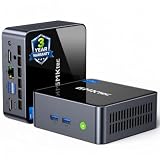
- 【Powerful Performance】GMKtec M2 Pro S mini computer is equipped with 11th generation Intel Core i7-1185G7 processor, main frequency up to 4.8 GHz, 4 cores, 8 threads, 12MB cache, running much faster than i7-10810U, i5-12450H and i5-8259U, Wins PC series The power is only 35W, supporting your daily work with less power consumption, without delaying daily tasks
- GMKtec M2 Pro S Mini PC with Intel Iris Xe Graphics G7 96EU GPU — Powered by Intel Iris Xe Graphics G7 with 96 Execution Units, delivering up to 5× higher graphics performance than entry-level integrated GPUs. Enjoy smoother multi-monitor output, faster media processing, and playable casual gaming. Designed for users who need real GPU performance for productivity, creative tasks, and immersive visuals — not just basic display output.
- 【Storage Capacity】16GB DDR4 and 512GB NVME SSD Desktop computer Comes with 16GB SODIMM, dual-channel DDR4 supports expansion up to 64GB. 512GB SSD M.2 2280 NVMe (PCIe3.0), supports expansion to 2TB, in addition, M.2 2242 SATA can be expanded to 2TB
- 【Wide Connectivity】The GMKtec M2 Pro S mini computer supports a range of connectivity options, including WiFi 6, USB4.0, BT 5.2, DP, HDMI, and RJ45 2.5G, allowing you to connect to multiple devices and peripherals from a single device.
- 【4K UHD & 3 Screens Support】Mini PC with Intel Iris Xe Graphics G7 96EU GPU delivers high-quality graphics for the most demanding applications, 2 x HDMI (4K @ 60Hz) and 1 x USB Type-C (4K @ 60Hz) output terminals, allowing you to independently display 4K screens on 3 displays at the same time
Product prices and availability are accurate as of the date/time indicated and are subject to change. Any price and availability information displayed on Amazon at the time of purchase will apply.

