PC Slower Than It Used to Be?
A free scan shows the junk files, broken settings and background clutter dragging Windows down - then fixes them in one click.Free scan · Windows 10 & 11Crashes, No Sound, or Screen Glitches?
Random freezes, missing sound and display glitches usually trace back to one bad driver. Find and replace yours safely.Free scan · under a minuteIf you witness suspected illegal fishing in a marine protected area (MPA), keep away from the vessel, record what you can safely observe, and report it promptly to the agency that manages the area. Capture the date, time, precise location, vessel identity, gear, catch and activity. Use an emergency coast-guard or rescue channel only when people or vessels are in immediate danger; use a fisheries-enforcement hotline, online form or email for suspected regulatory violations.
First determine what kind of report you need to make
An MPA is not automatically a no-entry or no-fishing zone. Each area has its own rules. Some prohibit all extraction, while others allow specified fishing methods, seasonal activity, anchoring or vessel transit. A vessel merely passing through an MPA is not proof that a law has been broken. Scottish Marine Directorate guidance specifically notes that vessels may transit MPAs legally.
As an Amazon Associate I earn from qualifying purchases.
Before calling, identify the MPA and its managing authority if you can do so without delaying an urgent safety response. The responsible body may be a national fisheries agency, a state or provincial department, a sanctuary or park service, or a local authority. If you cannot identify it, report the observation to the national fisheries-enforcement service or the emergency service appropriate to your location; the receiving operator can redirect it.
| What is happening? | Use | Information to provide |
|---|---|---|
| Someone is in immediate danger, a vessel is sinking, or violence is occurring | Coast guard, marine rescue or the local emergency service; mariners can use the applicable emergency VHF channel, commonly Channel 16 in U.S. waters | Vessel position, nature of danger, people at risk and your own position |
| You observe suspected fishing, gear deployment or catch inside a restricted area | The MPA manager or fisheries-enforcement hotline, form or email | Time, location, vessel and activity details, plus photographs or video obtained safely |
| You are unsure whether the conduct is prohibited | Submit a factual observation to the competent fisheries or MPA authority | Describe what happened without declaring that the people are guilty |
Protect yourself before collecting evidence
Keep your distance
Do not approach, hail, signal, follow or argue with a suspected violator. Fisheries and Oceans Canada tells observers not to approach the individuals involved. A confrontation can escalate, cause a collision or prompt someone to destroy evidence. Stay on your own vessel, at a safe shore position or in another place where you can leave quickly.
#1 Best Overall

- Uniden's Marine Radios protect you from what lies ahead, as well as getting you out of dicey waters, by informing you the moment a storm starts brewing and transmitting your location should you need help.
- With triple watch features, DSC capabilities, a range of international marine channels and S. A. M. E Weather Alert—the UM385 brings everything you’ll need on the water into one compact design.
- The UM385 rugged handheld mic allows you to transmit easily from the wheel while keeping your focus on the waters ahead.
- Waterproof Radio – Complies with IPX4 waterproof standards, which means the radio is resistant to damage from rain or splashing water.
- DSC (Digital Selective Calling) - Includes Distress Button, Position Send and Request. Gives you the ability to press one button to call for help during an emergency. Full Class D DSC capability. High performance transceiver ensures clear communication and
Separate safety emergencies from enforcement reports
If the crew appears threatened, a vessel is adrift, a collision has occurred or a weapon is involved, make the emergency call first. Give rescue operators your location and the facts needed to send help. A fisheries hotline is not a substitute for emergency response. Once everyone is safe, you can make a separate regulatory report with the fuller details.
Do not put other people at risk
- Do not enter a closed area solely to get a closer photograph.
- Do not retrieve, move or cut fishing gear.
- Do not publish identifying images or accusations on social media while an investigation is pending.
- Do not use a drone, spotlight or radio transmission in a way that could reveal or endanger your position or interfere with enforcement operations.
Record the details that make a report actionable
Write notes as soon as practical. Exact coordinates are best, but a charted landmark, buoy number, reef name, distance from shore or bearing can help investigators locate the event. Record local time and time zone, not just “this morning.” If your navigation device stores a track, preserve the original file.
| Detail | What to capture | Why it matters |
|---|---|---|
| Date and time | Start and end times, including time zone | Allows authorities to match patrol logs, vessel tracking and tides |
| Location | Latitude and longitude, plus a landmark or MPA zone name | Shows whether the activity was inside a particular closure or boundary |
| Vessel identity | Name, registration or call sign; hull colour, length, type and distinctive markings | Helps distinguish the vessel from similar boats |
| People aboard | Approximate number and general description only when safely visible | Supports identification without requiring a dangerous close approach |
| Gear and catch | Net, pot, longline, spear, rod, trap or other gear; species, quantity and whether catch was retained | Connects the observation to the rule that may apply |
| Observed action | Deploying or retrieving gear, diving, landing catch, transferring fish, discarding gear or entering a marked closure | Separates an observable event from an assumption about intent |
| Witnesses | Names and contact details only with their consent | Gives investigators another source who can clarify timing or location |
Photographs and video
Take images only from a safe position and only when doing so does not require pursuit or confrontation. Wide shots can establish the vessel’s relationship to a buoy, shoreline or MPA marker; closer shots may show a registration number or gear if your equipment can capture it from a distance. Keep the original files, including their metadata. Do not crop, enhance or export over the originals. If you make a copy for a report, retain the untouched originals in a separate folder.
Rank #2

- Uniden's Marine Radios protect you from what lies ahead, as well as getting you out of dicey waters, by informing you the moment a storm starts brewing and transmitting your location should you need help.
- With triple watch features, DSC capabilities, a range of international marine channels and S. A. M. E Weather Alert—the UM385BK brings everything you’ll need on the water into one compact design.
- The UM385BK rugged handheld mic allows you to transmit easily from the wheel while keeping your focus on the waters ahead.
- Waterproof Radio – Complies with IPX4 waterproof standards, which means the radio is resistant to damage from rain or splashing water.
- DSC (Digital Selective Calling) - Includes Distress Button, Position Send and Request. Gives you the ability to press one button to call for help during an emergency. Full Class D DSC capability. High performance transceiver ensures clear communication and
A photograph does not need to show every legal element of an offense. A blurry registration number, a partial view of gear or a short clip showing the vessel crossing a boundary can still help investigators when combined with your notes. Describe what the camera can actually show rather than claiming that an image proves an offense.
Follow this reporting workflow
1. Make the scene safe
Move away from the suspected vessel and confirm that you and your passengers are not in danger. If there is an emergency, contact the coast guard, marine rescue service or local emergency number immediately. Do not wait to gather photographs.
2. Check the rule when it is practical
Look at the MPA’s posted signs, chart information or official rule summary only if you can do so without losing situational awareness. Note the relevant zone, seasonal date or prohibited method. If you cannot verify the rule, report the observed conduct and say that you are uncertain about the restriction. Authorities can determine whether an exemption, permit or transit right applies.
Rank #3

- High Visibility Floating Core - The perfect compact VHF radio for marine use on any size vessel, designed with a high-visibility orange floating core for buoyancy and easy retrieval if dropped overboard
- 6 Watt VHF Power – Switchable between 1/3/6 Watts of power for range demands and battery optimization, use only the amount of power you need for vessels/stations near and far
- Day/Night Display - Day/Night selectable LCD display for easy viewing and high visibility at any time of day or night, regardless of weather conditions
- Tri-Watch Mode - Instantly access Channels 9, 16, and any user-specified channel with Tri-Watch, allowing you to monitor multiple channels at once in busy waterways for safety
- NOAA Weather Alerts - 12 weather channels and National Oceanic and Atmospheric Administration emergency broadcast channel access to stay informed and safe on the water
3. Make contemporaneous notes
Write the time, position, weather and visibility, your distance from the vessel and a chronological description. For example: “At 14:20 UTC, approximately 0.3 nautical miles east of the red-and-white boundary buoy, I saw a blue-and-white cabin boat stop, deploy three pots and retrieve them at 14:32.” This is more useful than “a poacher was fishing.”
Do these 3 things before closing this tab:
1Fix the driver behind crashes, sound loss and screen glitches2Clear out junk files and repair common Windows errors3Scan for outdated or missing drivers - takes under a minute4. Select the competent channel
Use the MPA or fisheries-enforcement service for a suspected rule violation. A sanctuary or state page may list a local number in addition to a national hotline. Use an emergency marine channel only for an immediate threat to life, vessel or security. In some jurisdictions you can report by phone, email or an online form; choose the method that lets you provide the most accurate location and supporting files.
5. Submit a concise, factual account
Start with the essential facts: where, when, what vessel, what activity and why you believe the location may be restricted. State how you obtained the information and whether you have photographs, video, navigation data or witnesses. Avoid guessing the vessel’s ownership, the crew’s motive or the exact species when you cannot identify it.
Rank #4

- High Visibility Floating Core - The perfect compact VHF radio for marine use on any size vessel, designed with a high-visibility orange floating core for buoyancy and easy retrieval if dropped overboard
- 6 Watt VHF Power – Switchable between 1/3/6 Watts of power for range demands and battery optimization, use only the amount of power you need for vessels/stations near and far
- Day/Night Display - Day/Night selectable LCD display for easy viewing and high visibility at any time of day or night, regardless of weather conditions
- Tri-Watch Mode - Instantly access Channels 9, 16, and any user-specified channel with Tri-Watch, allowing you to monitor multiple channels at once in busy waterways for safety
- NOAA Weather Alerts - 12 weather channels and National Oceanic and Atmospheric Administration emergency broadcast channel access to stay informed and safe on the water
Date and time: {{date_time_and_time_zone}}
Location: {{coordinates_or_landmark}}
MPA or zone: {{area_name_if_known}}
Vessel: {{name_registration_colour_type}}
People aboard: {{approximate_number}}
Observed activity: {{chronological_description}}
Gear or catch: {{details_and_uncertainties}}
Evidence available: {{original_photos_video_track_files}}
Witnesses: {{contact_details_with_consent}}
Your contact preference: {{callback_email_or_anonymous_if_allowed}}
6. Keep the submission record
Write down the time you called or submitted the form, the agency, the operator’s name if provided and any incident or reference number. Save confirmation emails and copies of every file you sent. Keep your notes and original media even if an officer says the information has been forwarded.
7. Respond to follow-up safely
An investigator may ask you to clarify a coordinate, identify a vessel from a photograph or provide the original file. Answer only what you know. Do not contact the suspected crew or announce that you made a report. If you no longer have a file or are unsure about a detail, say so rather than reconstructing it from memory.
The Tool Desk
Outbyte PC Repair FREEClear out junk files and repair common Windows errorsFree Scan →Outbyte Driver Updater FREEFix the driver behind crashes, sound loss and screen glitchesFind Drivers →Where to report: jurisdiction examples
Numbers and services below apply to the jurisdictions identified by the relevant agencies. A local MPA may publish an additional contact, and a different country, state or territory may use another authority.
Best Value
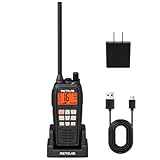
- IP68 waterproof marine radio; the RM15 VHF radio marine resists saltwater corrosion; rated for water immersion up to 1.5 meters for 30 minutes; corrosion-resistant charging contacts; perfect for offshore fishing, bass fishing, and fishing tournaments
- Floating design; the RM15 vhf radio marine stays on the water’s surface if dropped overboard; a water activated emergency strobe light indicates its location; suitable for marine activities such as boating fishing or kayaking; RM15 complies with PART 80
- Dual-way noise reduction system; the RM15 VHF marine radio reduces noise on both transmit and receive audio for clearer two-way communication; a powerful 1000mW (1W) speaker delivers loud, crisp sound even in noisy marine environments
- 16km long range communication;6W vhf marine radio;designed for open water marine activities;whether racing sailboats or navigating choppy seas during fishing trips;helps you stay connected in demanding offshore environments
- Long battery life; the RM15 VHF marine radio features a 2000mAh battery, USB-C ports on both the radio body and charger, and a included cable for 5V/2A or 5V/1A adapter charging. Enjoy over 10 hours of operation and up to 100 hours standby.
| Jurisdiction or area | Reporting route | Important qualification |
|---|---|---|
| United States | NOAA Fisheries Enforcement Hotline: 800-853-1964. During business hours, the nearest NOAA Office of Law Enforcement field office may also be contacted. | Use for possible violations of federal marine-resource laws. For immediate vessel danger or security emergencies, use the U.S. Coast Guard route. |
| U.S. national marine sanctuaries, including the Chumash Heritage National Marine Sanctuary | Sanctuary guidance lists CalTIP at 888-334-2258 for California poaching or pollution reports; it also identifies Coast Guard contacts for vessel emergencies, the National Response Center for spills and NOAA Fisheries for federal marine-resource violations. | Choose the line that matches the incident. A spill and a fishing violation may require different agencies. |
| Canada (Pacific-region guidance) | Fisheries and Oceans Canada Observe, Record and Report: 1-800-465-4336 or [email protected]. | The cited service is Pacific-region guidance; check the local DFO region for other waters. |
| Australia | Australian Fisheries Management Authority CRIMFISH: 1800 274 634, email or online form. | The 24-hour service allows anonymous reports. |
| England | Environment Agency online incident service or its 24-hour incident hotline: 0800 80 70 60. | The form asks where the activity occurred and why you believe it is illegal. |
Choose the reporting method that fits the situation
| Method | Best use | Strengths | Limitations |
|---|---|---|---|
| Emergency marine radio | Immediate danger at sea | Reaches maritime responders quickly and lets them coordinate a rescue | Not intended for routine fisheries complaints; radio traffic may be public |
| Telephone hotline | Time-sensitive enforcement intelligence or a detailed live report | An operator can ask follow-up questions and correct a misunderstood coordinate | You may need to wait, repeat information or provide contact details |
| Online form | Post-event reports with photographs or documents | Creates a written record and can accept attachments | May not be monitored continuously; do not use it for an emergency |
| Non-urgent reports when a form is unavailable | Allows a narrative and file attachments | Delivery or response may be slower, and ordinary email may not be secure | |
| Anonymous submission | Observers who fear retaliation and where the service permits anonymity | Removes the need to disclose a name | Investigators cannot easily clarify uncertain details or request original evidence |
Describe observations, not verdicts
Enforcement agencies must establish whether a rule applied, whether an exemption existed and whether the evidence is reliable. Your role is to preserve an accurate account. Use phrases such as “appeared to retrieve pots inside the marked closure” or “I could not read the registration number.” Avoid “the crew was definitely poaching” unless an authority has made that finding.
Official Scottish guidance warns that reports can contain inaccurate locations or vessel identifications and are not proof of wrongdoing until investigated. That caution protects both the public and legitimate fishers. A mistaken report can result from a drifting boundary marker, a vessel legally transiting, a permit you cannot see or a misread registration. Report in good faith, correct errors promptly and do not embellish a description to make it sound more certain.
What happens after a report
The receiving agency may log the information, compare it with patrol or vessel-tracking data, request clarification, refer it to another authority or decide that no violation can be established. You may not receive details about an investigation because of privacy, operational security or evidentiary rules. Lack of a follow-up call does not necessarily mean the report was ignored.
What’s actually slowing this PC down?
Pick the symptom - the matching free tool is one click away.
Keep your own record until the authority confirms that no further information is needed. If you later notice the same vessel or activity, make a new report and reference the earlier incident number rather than assuming the original report remains current. Do not attempt surveillance or enforcement yourself.
Optional equipment for boaters
A properly installed marine VHF radio can provide a fast way to reach the Coast Guard on Channel 16 where that channel is applicable. Check licensing, local operating rules, radio watch requirements and the coverage limitations of your waters. A radio is an emergency communication tool, not a replacement for the designated fisheries hotline, online form or email used for suspected regulatory violations.
Quick Recap
Practical checklist
- Move to a safe distance and avoid contact with the suspected vessel.
- Call the emergency marine service immediately if anyone is in danger.
- Identify the MPA and its managing authority if possible.
- Record date, time, time zone, coordinates or a clear landmark.
- Note vessel name, registration, colour, type, size and distinctive marks.
- Describe people, gear, catch and actions you actually observed.
- Take photographs or video only from a safe position; preserve originals and metadata.
- Use the fisheries or MPA reporting channel for a suspected rule violation.
- State uncertainty and avoid conclusions about guilt.
- Save the submission time, reference number, notes and original files.
Product prices and availability are accurate as of the date/time indicated and are subject to change. Any price and availability information displayed on Amazon at the time of purchase will apply.

