Start with the exact model number and its owner’s manual. A top-load washer that appears to have no lint trap may use a removable screen, a self-cleaning pump-and-basket design, or a filter that consumers are not meant to access. The correct cleaning point, chemical and cycle therefore depend on the model. Do not pry off a sealed panel or pull an agitator until the manual explicitly says that part is user-removable.
For most models, the safe approach is to power the washer down, remove lint from accessible surfaces with a cloth or soft nylon brush, clean any approved screen or housing, and run the manufacturer’s Tub Clean or equivalent empty cycle with the specified washer cleaner. If lint keeps returning, the washer will not drain, or debris is trapped behind a sealed component, stop disassembly and contact the manufacturer or an authorized appliance technician.
As an Amazon Associate I earn from qualifying purchases.
Why a top-load washer may not have a removable lint trap
“No lint trap” does not automatically mean a part is missing. Washer designs differ substantially, even within one brand. Samsung’s support guidance warns that not every top-load washing machine has a lint filter. Electrolux explains that some newer high-efficiency machines use self-cleaning systems instead of removable filters. GE documents top-load systems in which the pump has no consumer maintenance access.
The machine may capture fibers in a screen near the agitator or basket, flush them through the drain during specific portions of the cycle, or rely on the pump and basket geometry to keep debris moving out. A filter can also be behind a service panel intended only for trained technicians. Treat the manual for your model as the authority rather than assuming that a procedure shown for another washer is safe.
#1 Best Overall

- NO. 1 WASHING MACHINE CLEANER TABLET*
- TIME-RELEASE DEEP CLEAN. Affresh tablets are scientifically designed to deliver extended cleaning action throughout the wash cycle, helping power away bacteria, grime and soap scum deep inside the washing machine’s pump, drum and filter to help optimize performance.
- STINKY PET ODOR? Affresh washing machine cleaner helps remove residues that can trap odors from pets, sweat and mildew that can transfer onto clothes and sheets.
- ONE TABLET, ONCE A MONTH. Avoid the twice-monthly cleaning cycles of other appliance cleaners and cut your machine cleaning maintenance time in half.
- TRUSTED BY APPLIANCE EXPERTS. Backed by over 100 years of appliance innovation, affresh is the washing machine cleaner brand recommended by Whirlpool, Maytag, and Amana.**
Find the model number before touching anything
Look for the model and serial label under the lid, on the rear console, around the lid opening, or on the cabinet’s rear panel. Enter the complete model number in the manufacturer’s support site and open the owner’s manual or maintenance guide. Similar-looking washers can place a screen in different locations, use different cleaners, or prohibit access to the pump entirely.
Use the manual to answer five questions:
- Does this model have a user-removable lint filter?
- Where is the approved access point: agitator, basket rim, dispenser, drain hose or another location?
- Is the filter cleaned after every use, periodically, or not at all by the consumer?
- Does the washer provide a Tub Clean cycle, and which cleaner, amount and temperature are approved?
- Which panels, pumps, impellers and interlocks must never be opened by the owner?
Three common filter architectures
| Design | What you may see | Safe consumer action | What not to assume |
|---|---|---|---|
| Removable lint screen or trap | A labeled screen, cup or housing near the agitator, basket rim or drain path | Remove it only as the manual shows, clear fibers, rinse if permitted, brush the attachment area and reinstall it fully | Do not substitute a screen from another model or run the washer with the filter loose |
| Self-cleaning flow system | No obvious removable screen; the manual describes lint being carried out with wash and drain water | Wipe accessible residue, keep the basket and dispenser clean, and run the approved empty cleaning cycle | Do not drill, pry or add an aftermarket trap to the pump path |
| No consumer-accessible filter | The manual or support page says the pump/filter requires no owner maintenance or is service-only | Clean visible areas and use the normal or Tub Clean cycle; call support for persistent debris or drainage faults | Do not remove sealed panels, defeat lid interlocks or dismantle the pump |
Safety steps before cleaning
- Stop the cycle and empty the basket. Remove all clothing, coins, tissues and other objects. If the washer is running, use the normal stop or cancel control and wait until the lid unlocks.
- Disconnect power when the manual requires hands-on work. Unplug the washer or switch off its dedicated breaker before reaching into the basket, removing an approved screen or brushing a housing. Keep hands dry and never work on a powered machine.
- Close water supplies if you will move hoses. Most lint cleaning does not require hose removal. If the manual directs you to inspect a hose, close both supply valves first and protect the floor from residual water.
- Do not defeat safety devices. Never bypass the lid lock, run the washer with a cover or filter removed, or reach into a moving basket.
- Use only permitted chemistry. A washer cleaner, chlorine bleach or another product is acceptable only when the manual permits it and specifies the amount. Never mix bleach with vinegar, ammonia or other cleaners.
Step-by-step method for accessible lint and residue
1. Remove loose debris from the basket and rim
With the washer empty and powered down, inspect the perforated basket, the top rim, the underside of the lid and the area around the agitator or impeller. Lift visible lint with a dry microfiber cloth or a soft nylon appliance brush. Work around the holes rather than pushing fibers deeper into them. Pick out buttons, hair ties, labels and tissue fragments by hand or with a cloth; do not use a sharp metal tool that can scratch the finish or damage a seal.
2. Clean the agitator or impeller only where the manual permits
Many Maytag instructions direct owners to check the agitator and the top rim for lint. Wipe the agitator fins, cap and surrounding basket if those surfaces are exposed. Some agitators have a removable cap or filter; others are fixed. Remove a cap only with the exact release method in the manual. If resistance is greater than described, stop. Pulling a fixed agitator can damage the drive components or create a leak.
What’s actually slowing this PC down?
Pick the symptom - the matching free tool is one click away.
For an impeller-style washer, brush the spaces between the low-profile vanes and the basket floor. Do not insert a brush into a drain opening or force debris through a slot.
3. Inspect and clean a documented filter screen
If your manual identifies a removable screen, take a photo of its installed orientation before removing it. Release the latch or twist the housing in the stated direction. Lift fibers away, rinse under running water only if the manual allows rinsing, and use a soft nylon brush on residue. Also brush the place where the filter attaches; LG specifically advises cleaning both the lint filter and the attachment area.
Rank #2

- Works With All Washers - Perfect For High Efficiency Or Standard Toploader, Front Loading Compatible With GE, LG, Samsung, Whirlpool, Maytag, Electrolux, Etc. (Not For Dryer)
- Eco-Friendly Tabs - Natural Effervescent Foaming Tablets Are Septic Safe And Made With Less Packaging . Compare To Liquid Descaler And Wipes That Create Unnecessary Waste
- Instant Cleaning Power - Active Self Wash Tablet Cleans So You Don't Have To Brush And Wipe Your Washing Machines. When Exposed To Water, They Break Down Into Deep Scrubbing Powder Cleaners That Breaks Down Grime And Hard Water Build Up
- Bulk 24 Kit - Each Package Includes 1 Year Supply (24 Pods) Vs. Competitor 5 or 6 Tablet Packs Or Liquid Treatments Which Run Out Quickly
- Odor Eliminator- No More Smelly Washer. Descaler Will Freshen Your Laundry Machine Basket, Rubber Gasket, And Internal Parts So Your Clothes Will Come Out Clean And Smelling Fresh.
Check the screen for tears, distortion, a missing gasket or a cracked latch. A damaged screen should be replaced with the part specified for the model. Reinstall it until the latch or locking mark is fully engaged. A filter that is only partly seated can let lint circulate or leak water.
4. Clean dispensers and detergent residue
Remove detergent, fabric-softener and bleach dispensers according to the manual. Rinse removable cups in warm water and brush the openings with nylon bristles. Wipe the dispenser cavity and the underside of the lid. Hardened detergent can trap fibers and later release them onto clothing. Do not pour concentrated chemicals into an empty dispenser unless the manual specifically directs that method.
Quick wins for a faster PC:
Repair Windows errors before they cause bigger problemsFix Now →Fix the driver behind crashes, sound loss and screen glitchesFind Drivers →Clear out junk files and repair common Windows errorsFree Scan →5. Run the approved Tub Clean cycle
Return all removable parts, close the lid and leave the basket empty. Select Tub Clean, Clean Washer or the equivalent cycle named in your manual. LG’s support guidance recommends a manufacturer-approved washing-machine cleaner when laundry comes out with lint attached or the washer has a moldy odor. Add only the product and quantity stated for your model; do not improvise a stronger dose.
If the washer has no Tub Clean program, the manual may specify an empty hot cycle or another cleaning sequence. Follow its water-temperature, fill-level and pause instructions. Do not add clothing, detergent or fabric softener during this cycle unless the manufacturer says to do so.
6. Wipe the remaining moisture and residue
When the cycle ends, wait for the lid to unlock. Wipe the basket, lid underside, rim and dispenser area with a clean cloth. Leave the lid open so the interior can dry. If the cycle leaves visible flakes, repeat only as often as the manual permits rather than immediately adding more chemical.
Rank #3
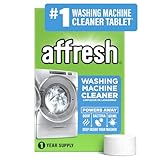
- NO. 1 WASHING MACHINE CLEANER TABLET*
- TIME-RELEASE DEEP CLEAN. Affresh tablets are scientifically designed to deliver extended cleaning action throughout the wash cycle, helping power away bacteria, grime and soap scum deep inside the washing machine’s pump, drum and filter to help optimize performance.
- STINKY PET ODOR? Affresh washing machine cleaner helps remove residues that can trap odors from pets, sweat and mildew that can transfer onto clothes and sheets.
- ONE TABLET, ONCE A MONTH. Avoid the twice-monthly cleaning cycles of other appliance cleaners and cut your machine cleaning maintenance time in half.
- TRUSTED BY APPLIANCE EXPERTS. Backed by over 100 years of appliance innovation, affresh is the washing machine cleaner brand recommended by Whirlpool, Maytag, and Amana.**
7. Verify the result with a controlled load
Run a small load of light-colored towels or other items that can tolerate normal washing. Check the fabric and the empty basket afterward. If lint is gone, resume normal use while following the recommended maintenance interval. If lint reappears immediately, use the troubleshooting section below instead of repeatedly running cleaner cycles.
Instructions by washer design
When the washer has a removable screen
Clean the screen at the interval specified by the manual. Panasonic’s maintenance guidance gives one manufacturer example: clean the lint filter after each use. That is a model-specific recommendation, not a universal rule. A screen that clogs quickly may indicate excessive shedding from the load, overloading, a damaged filter or a drainage restriction.
After cleaning, verify that the screen is dry or installed exactly as directed. Some designs require a wet filter during operation; others require it to be fully dry. The manual’s instruction takes precedence.
When the washer is self-cleaning
A self-cleaning system still benefits from removing lint that is visible on the rim, basket, agitator, lid and dispenser. It does not mean that every internal passage is open for brushing. Allow the pump and drain path to perform their intended job, and use Tub Clean or the equivalent empty cycle for accumulated residue.
Do not attach a homemade mesh bag to a hose or insert cloth into the drain. Such additions can restrict flow, detach during a cycle or create a new blockage. If a self-cleaning model leaves heavy lint repeatedly, document the model number and symptoms for support.
Rank #4

- Deep Cleaning Descaler for Every Washer - Powerful foaming tablets penetrate your washer’s drum, tub, gasket, and internal components to break down grime, residue, soap scum, and hard-water buildup that cause odors and reduce performance.
- Easy Drop-In Use — No Measuring or Mess - Simply place one tablet in an empty washer, run a hot or self-clean cycle, and let the active foaming action do the work. Cleans hard-to-reach areas without scrubbing, wiping, or dismantling your machine.
- Compatible With All Washer Types - Safe and effective for HE, front-load, and top-load washing machines. Works with major brands including GE, LG, Samsung, Whirlpool, Maytag, Electrolux, and more.
- Ultimate Deodorizer & Keeps Laundry Fresh - Refreshes your washer by clearing away built-up residues and wash cycle odors, helping your machine stay clean and operate at its best. Supports consistently fresh laundry results with every load.
- 24 Tablets = Full 12-Month Supply - Bulk pack includes 24 easy-use tablets for a complete year of routine washer maintenance. Outperforms smaller 5- or 6-count packs and helps extend the life of your machine.
When there is no consumer access to the pump or filter
GE states for certain top-load systems that there is no maintenance required and no way for the owner to access the pump for cleaning or maintenance. In that situation, the absence of a door or screen is intentional. Clean only the accessible surfaces and run the approved washer-cleaning cycle. Do not remove cabinet panels or the pump cover to search for a trap.
Why clean clothes can still come out covered in lint
Lint-producing fabrics in the same load
Towels, fleece, terry cloth, blankets and worn cottons release more fibers than tightly woven synthetics. Separate high-shedding items from dark or smooth garments. Check pockets for tissues and paper, which break apart into white flakes that resemble lint.
Overloading and poor water movement
An overloaded basket cannot tumble or agitate freely. Fibers remain suspended against clothing and may not reach the intended drain path. Use the load-size guidance in the manual, leave the recommended space above the clothes and select a cycle suited to the fabric.
Excess detergent or incompatible additives
Too much detergent can leave a sticky film that captures lint. Fabric softener buildup can do the same and may clog dispenser passages. Measure detergent for the washer’s water level and soil setting, and never exceed the dispenser’s marked maximum. A high-efficiency washer requires the detergent type stated in its manual.
PC Slower Than It Used to Be?
A free scan shows the junk files, broken settings and background clutter dragging Windows down - then fixes them in one click.Free scan · Windows 10 & 11Outdated Drivers Are Slowing You Down
One free scan finds every outdated or missing driver and matches the right update for your exact hardware.Free scan · exact hardware matchDirty basket, lid or dispenser
Old residue and mildew can break loose during agitation. A Tub Clean cycle addresses internal film and odor, while wiping accessible surfaces removes the material that a cycle may otherwise redistribute.
Drainage or pump trouble
A slow drain, standing water, unusual pump noise or lint that appears after every load can indicate restricted drainage. Do not assume that repeated Tub Clean cycles will clear a mechanical obstruction. Check only the hose and user-accessible areas named in the manual; escalate sealed components to service.
Best Value

- Powerful Cleaning: The Bastion Washing Machine Cleaner Tablets effectively eliminate dirt, grime, and limescale from your washing machine, ensuring a thorough clean every time.
- One-Year Supply: With 24 tablets in each pack, our one-year supply ensures you have enough tablets for bi-monthly use, keeping your washing machine fresh and efficient all year long.
- Easy to Use: Simply drop one tablet into the drum, run a hot cycle without any laundry, and let the tablet dissolve to release a cleansing foam that reaches every corner of your machine.
- Extends Machine Lifespan: Regular use of these cleaner tablets prevents residue buildup, optimizing your washing machine's performance and extending its lifespan.
- Versatile Compatibility: Suitable for all types of washing machines, including front-loading, top-loading, and high-efficiency models. Tested and approved for GE, LG, Samsung, Whirlpool, Maytag, Electrolux machines & More.
Maintenance schedule that adapts to your use
Manufacturers publish different schedules because filter architecture, water quality, load mix and usage vary. Panasonic lists lint-filter cleaning after each use and tub cleaning monthly in one maintenance guide. LG likewise describes periodic or monthly tub cleaning in its support guidance. These are maintenance recommendations, not measured performance guarantees.
| Task | Typical trigger | What to do | Qualification |
|---|---|---|---|
| Visible lint removal | After a shedding load or whenever fibers are visible | Wipe the basket, rim, lid, agitator or impeller with cloth or soft nylon brush | Safe for accessible surfaces; follow the model manual |
| Removable-screen cleaning | After each use on models whose manual says so | Remove, clear, rinse or brush and reinstall the documented filter | Panasonic gives after-each-use guidance as one example |
| Dispenser cleaning | When residue, softener film or mold is visible | Remove cups if permitted, rinse and brush openings | Do not force a fixed dispenser |
| Tub Clean | Monthly or the interval in the manual; sooner for odor or visible film | Run the empty approved cycle with the specified cleaner | LG and Panasonic publish monthly examples; model instructions control |
| Service inspection | Persistent lint, poor draining, leaks or inaccessible debris | Contact manufacturer support or an authorized technician | Especially important for sealed pump systems |
Increase attention when washing pet bedding, new towels, fleece, work clothing covered in soil or loads containing tissues. Reduce the interval if your manual allows more frequent cleaning; never shorten it by using extra chemical or opening sealed parts.
Free tools Windows power users keep installed
One-click scans. No signup required.
Choosing tools and cleaning products
- Soft microfiber cloth: lifts loose lint from smooth plastic, the lid and the basket rim without scratching.
- Soft nylon appliance brush: reaches approved screens, filter housings, dispenser openings and impeller gaps. Avoid wire brushes.
- Washer-specific cleaner: tablets or liquid products may be used only when the manual approves them and states the dose. A product suitable for one washer is not automatically suitable for another.
- Protective gloves: useful when handling damp residue or an approved cleaner, provided the product label and manual permit the combination.
- Absorbent towels and a shallow pan: helpful if the manual directs a hose inspection and residual water may spill.
Do not mix cleaning agents. In particular, never combine chlorine bleach with vinegar, ammonia, descaler or another acid. Keep products away from children and pets, and ventilate the room during a chemical cleaning cycle if the product instructions require it.
Troubleshooting persistent lint
If lint returns after one cleaning cycle
- Confirm that the model actually has a user-cleanable filter and that it was reinstalled correctly.
- Inspect the basket, rim, agitator or impeller and dispenser again for a remaining layer of residue.
- Wash a small, low-shedding load separately and compare the result.
- Check that the drain hose is not kinked and that the manual does not identify a user-accessible screen that remains clogged.
- If the problem persists, stop adding cleaner and contact support with the model number, cycle used, load type and photos of the lint.
If the washer will not drain
Stop the cycle and keep the lid closed until the basket is stationary. Follow only the emergency-drain or hose procedure in the manual. Do not reach into standing water or open a pump cover that the manual marks as service-only. A drainage fault can leave lint and detergent suspended in the tub and may require a technician.
If there is a moldy odor
Remove laundry promptly, wipe accessible moisture and run the manufacturer-approved Tub Clean cycle with the specified cleaner. Leave the lid open afterward. If odor returns quickly despite the documented cleaning routine, ask support whether a gasket, hose or internal service procedure applies to that model.
If debris is visible behind a sealed panel
Do not pry the panel, cut a hose or defeat an interlock. Photograph the location, note whether the washer is leaking or draining slowly, and arrange manufacturer or authorized service. A sealed design may be operating normally, while forced access can cause an electrical hazard, water leak or warranty issue.
Recommended Free Tools
When professional service is the right answer
Arrange service when lint continues after the model-specific cleaning procedure, the washer drains slowly or not at all, the pump makes grinding or rattling sounds, water leaks from the cabinet, a filter housing will not latch, or debris is trapped in an area the manual does not expose. Tell the technician the complete model number, the cycle and cleaner used, whether the basket was empty, and what the lint looks like. Those details help distinguish fabric shedding from a drain or pump fault.
Never remove sealed components merely because an online video shows a different washer being dismantled. GE’s documentation illustrates why: some systems are designed with no maintenance access to the pump. Samsung and Maytag likewise direct owners to model-specific instructions because filter presence and location vary. The safest repair is the one the manufacturer explicitly authorizes for your machine.
Quick Recap
A practical checklist
- Record the full model number and open its current owner’s manual.
- Identify whether the washer uses a removable screen, self-cleaning flow or no consumer-accessible filter.
- Stop the cycle, empty the basket and disconnect power before hands-on cleaning.
- Remove lint from the basket, rim, lid, agitator or impeller and dispenser with a cloth or soft nylon brush.
- Clean and reseat a documented filter; never force a fixed part.
- Run Tub Clean or the manual’s equivalent empty cycle with the approved cleaner and dose.
- Leave the lid open to dry and test with a small, low-shedding load.
- Use the model’s maintenance interval; published examples include filter cleaning after each use and tub cleaning monthly.
- Escalate recurring lint, drainage trouble, leaks, noise or inaccessible debris to manufacturer support or authorized service.
Product prices and availability are accurate as of the date/time indicated and are subject to change. Any price and availability information displayed on Amazon at the time of purchase will apply.

