Use dry heat when a crisp coating or browned surface matters. An air fryer or preheated oven/toaster oven is the best starting point for Korean corn dogs; a lightly oiled skillet is the most direct way to re-crisp pan-fried mandu; and hotteok can be warmed in a skillet, air fryer, oven, or toaster. A microwave is fastest but usually softens crisp food.
There is no single reliable time that works for every leftover. Size, filling, wrapper thickness, appliance strength, and whether the food is refrigerated, thawed, or frozen all change the result. Treat the directions below as texture-first methods: check the center early, continue in short increments, and give branded frozen products priority when their package specifies a method.
As an Amazon Associate I earn from qualifying purchases.
Choose the method by food and original preparation
“Mandu” covers fried, steamed, and boiled dumplings, so the right reheating method depends on the texture you want to recover. A pan-fried dumpling benefits from direct skillet contact, while a steamed dumpling may be best gently warmed so its wrapper stays soft. Korean corn dogs and hotteok generally have browned or fried exteriors that become soggy when reheated with trapped steam.
| Food and starting state | Best first method | What to watch |
|---|---|---|
| Korean corn dog, refrigerated or thawed | Air fryer or preheated oven/toaster oven | No authoritative universal leftover timing was established; check the center as the crust re-crisps. |
| Korean corn dog, frozen packaged product | Follow the package first; use dry heat if no conflicting direction is given | Cheese, sausage, batter thickness, and frozen mass heat at different rates. |
| Previously pan-fried mandu | Lightly oiled skillet | Turn as needed and avoid crowding so moisture can escape. |
| Previously steamed or boiled mandu | Gentle steaming or covered warming for a soft wrapper; skillet for a crisp wrapper | There is no universal timing for every filling and wrapper. |
| Hotteok | Skillet or oven/toaster; air fryer when the product instructions specify it | Published directions differ by product and recipe, and the syrupy filling can become extremely hot. |
| Microwave-ready mandu | Use the maker’s exact microwave directions | Those instructions apply to that product, not to all mandu or leftovers. |
Why dry heat prevents a soggy result
Crisp food loses its texture when surface moisture softens the crust. A microwave heats water inside the food quickly, creating steam that can migrate into a batter, wrapper, or browned dough. Covering the food traps even more vapor. That makes a microwave useful for speed, but it does not by itself restore crunch.
#1 Best Overall

- 𝘼𝙞𝙧 𝙁𝙧𝙮𝙚𝙧 𝙐𝙥𝙜𝙧𝙖𝙙𝙚: Innovative TurboBlaze Technology delivers a powerful 3600 rpm fan speed and temperatures up to 450℉, achieving crispy, juicy results every time
- 𝙃𝙚𝙖𝙩𝙞𝙣𝙜 𝙐𝙥𝙜𝙧𝙖𝙙𝙚: Cosori's unique 5-fan speed system and precise 90°– 450°F temperature control deliver evenly cooked dishes with perfect texture in every bite
- 𝙋𝙁𝘼𝙎-𝙁𝙧𝙚𝙚 𝘾𝙚𝙧𝙖𝙢𝙞𝙘 𝙐𝙥𝙜𝙧𝙖𝙙𝙚: The basket and crisper tray feature a PFAS-free, nonstick ceramic coating for enhanced durability, heat resistance, and a healthier cooking experience.
- 𝙏𝙞𝙢𝙚 𝙐𝙥𝙜𝙧𝙖𝙙𝙚: Innovative TurboBlaze Technology helps speed up cooking and save time to deliver perfectly crispy family meals, even on busy days
- 𝘾𝙖𝙥𝙖𝙘𝙞𝙩𝙮 𝙐𝙥𝙜𝙧𝙖𝙙𝙚: The 6-quart square basket offers a wide, deep design, great for the entire family meals while saving you space on your kitchen counter or cabinet
An air fryer surrounds food with moving hot air, while an oven or toaster oven supplies steady dry heat without enclosing the item in steam. A skillet adds direct contact with a hot surface and lets you control browning visibly. None of these methods guarantees an identical result for every appliance; the practical advantage is that you can stop as soon as the outside is crisp and the center is hot.
- Use a single layer whenever possible. Overlapping pieces hold moisture against one another.
- Leave room around each item in an air fryer basket or on a tray so hot air can circulate.
- Use only a thin film of oil when a pan method calls for it. Excess oil can make a wrapper greasy rather than crisp.
- If the outside browns before the center warms, lower the heat and continue briefly instead of increasing the temperature.
How to reheat Korean corn dogs
An air fryer or preheated oven/toaster oven is the most sensible crispness-first approach for a leftover Korean corn dog. Available guidance for air frying breaded pork cutlet supports the general dry-heat principle, but it is adjacent evidence rather than a verified test of Korean corn dogs. No authoritative, universal leftover timing was located for Korean corn dogs, so do not treat a fixed number of minutes as dependable across different products.
Rank #2

- FAST AND EASY: This compact air fryer handles any culinary challenge. Customize cooking time and temperature with the digital touch screen display or use one of four preset functions for quick, one-touch meals. Perfect for serving 2-4 people
- 450°F HI-FRY TECHNOLOGY: Achieve the perfect finishing crunch on your air-fried favorites. Increase the heat to 450°F during the final two minutes of cooking: perfect for extra crispy chicken tenders and French fries.
- STYLISH AND COMPACT: The sleek, narrow design of this air fryers maximizes its 4-quart capacity while minimizing its countertop footprint. Its compact size makes it a great space saver, fitting perfectly on your counter or in your cabinets
- HEALTHY COOKING: Enjoy delicious meals with little-to-no oil. This Chefman small air fryer lets you cook healthier, low-fat meals that still taste amazing
- SHAKE NOTIFICATIONS: Get notified with an audible alarm halfway through cooking, reminding you to shake your food for the crispiest results possible
Air-fryer method
- Identify the starting state. A refrigerated corn dog needs less heating than a frozen one. If it is a packaged frozen product, read its label before starting; the manufacturer’s temperature and time take precedence.
- Preheat if your appliance calls for it. Use a moderate setting rather than the highest heat. A very aggressive setting can darken batter or sugar before the filling is hot.
- Arrange in one layer. Keep pieces separated. Remove any loose packaging, paper, or decorative stick covering that the product label does not say is oven-safe.
- Check early. Look for a dry, crisp exterior and test the center carefully. Thickness, cheese versus sausage filling, and appliance power can produce very different results.
- Correct an uneven result. If the crust is browned but the center is still cool, reduce the heat and continue in short increments, checking again each time. This protects the coating better than simply turning the appliance hotter.
- Rest briefly before biting. Melted cheese and other fillings can be much hotter than the batter.
Oven or toaster-oven method
- Heat the oven or toaster oven before placing the corn dogs inside if the appliance normally requires preheating.
- Set the corn dogs on a rack or tray with space between them. A rack allows air to reach more of the lower surface; a tray is easier to clean if cheese leaks.
- Use a moderate heat and begin checking before you assume they are done. There is no single validated leftover time for all Korean corn dogs.
- Turn only if one side is clearly browning faster. Continue until the center is hot, then remove promptly to avoid drying the batter.
When a skillet is the fallback
A lightly oiled pan can crisp a corn dog if you do not have an air fryer or oven. Keep the heat moderate and rotate the corn dog so the curved surface browns rather than burns in one spot. Direct contact can color the batter quickly, so use the same correction as above: if the outside is ready while the center is cool, lower the heat and continue gently.
Common corn-dog problems
- Soggy coating: The basket or tray was crowded, or the corn dog was covered while hot. Reheat uncovered in a single layer and allow air to circulate.
- Burned outside, cold center: The setting was too high for the thickness or frozen filling. Lower the heat and extend the process in short checks.
- Leaking cheese: Remove the piece when the exterior is crisp and the center is warm; continuing to chase a darker crust can cause more filling loss.
- Dry, tough batter: It was heated too long after the center was already hot. Stop as soon as the texture is acceptable rather than aiming for a particular clock time.
How to reheat mandu without flattening its texture
First decide whether you want to preserve the original texture or add crispness. Fried mandu can be re-browned in a skillet. Steamed or boiled mandu can be warmed gently to keep a soft wrapper, then briefly pan-fried if you prefer a browned surface. Wrapper thickness and filling moisture vary widely, so check the center before serving.
Rank #3

- AIR CRISP TECHNOLOGY: 400℉ superheated air surrounds food for hot, crispy results with little to no oil.
- 4-IN-1 FUNCTIONALITY: Features 4 customizable cooking functions—Air Fry, Roast, Reheat, and Dehydrate for maximum versatility. A powerful1750-watt air fryer that’s built for everyday use.
- LARGE CAPACITY: The 5-QT nonstick basket and crisper plate fit up to 4 lbs of French fries or 5 lbs of chicken wings.
- GUILT-FREE FRIED FOODS: Up to 75% less fat than traditional air frying methods. Tested against hand-cut, deep-fried French fries.
- FROZEN TO CRISPY: Cook frozen foods in just minutes for an extra-crispy finish.
Pan-fried mandu: skillet re-crisping
Maangchi’s mandu preparation describes frying until browned and crunchy. That is a cooking-method basis, not a measured leftover reheating test, but it explains why a skillet is effective for leftovers.
- Choose a skillet large enough to hold the mandu without crowding. Crowding traps steam and prevents even browning.
- Add a small amount of oil and warm the pan over moderate heat. You need enough oil to contact the wrapper, not enough to submerge the dumplings.
- Place the mandu in a single layer. Let the contacting side regain color before turning; moving them constantly can tear a softened wrapper.
- Turn with tongs or a spatula so several sides warm and brown. If the wrapper is browning too quickly, reduce the heat.
- Check one dumpling at its thickest point. Serve when the center is hot and the outside has the texture you want.
Steamed or boiled mandu: keep them soft
- Put the dumplings in a steamer or use another gentle, covered warming method that does not expose the wrapper to intense direct heat.
- Warm in short stages and check the center. Excessive steaming can make the wrapper gummy or cause it to split.
- Remove the cover carefully so condensed water does not drip onto the dumplings.
If you decide that a crisp surface is more important than preserving the original softness, transfer the warmed mandu to a lightly oiled skillet and brown it briefly. This two-stage approach gives you more control than trying to crisp a cold, wet wrapper over high heat.
Rank #4

- SMART FINISH & MATCH COOK: DualZone Technology allows you to choose between the Smart Finish feature, which unlocks cooking 2 foods 2 ways that finish at the same time, and the and a Match Cook button to easily copy settings across zones for full 8-qt capacity.
- 6-IN-1 FUNCTIONALITY: Includes 6 versatile cooking programs: Air Fry, Air Broil, Roast, Bake, Reheat, and Dehydrate. The baskets can be washed in the dishwasher or by hand.
- XL CAPACITY: The 8-quart air fryer capacity lets you fit mains and sides at the same time for making quick family meals, or up to 4 lbs. of French fries or chicken wings.
- SEPARATE HEATING ZONES: 2 independent 4-quart zones have their own cooking baskets, cyclonic fans, and rapid heaters.
- EASY CLEANING: Easy-to-clean baskets and dishwasher-safe crisper plates.
Microwave-ready mandu: the product-specific exception
Some products are designed to be heated from frozen in a microwave without wrapping. Ajinomoto’s microwave-ready mandu instructions use model-specific power and time directions and warn that unnecessary heating can reduce quality. Follow those exact directions if you have that product. Do not generalize them to restaurant leftovers, homemade mandu, or another frozen brand.
Free tools Windows power users keep installed
One-click scans. No signup required.
Mandu troubleshooting
- Wrapper is rubbery: It was overheated or dried out. Use gentler heat and stop sooner.
- Bottom is soggy: Moisture collected under the dumplings. Use a single layer, uncover them, and finish briefly in a skillet.
- Outside is crisp but filling is cool: Lower the heat and continue in short increments. A hotter pan will usually worsen the imbalance.
- Dumplings stick: Let the browned surface release naturally before turning; forcing it early can tear the wrapper.
How to reheat hotteok
Hotteok can be sweet or savory and may be griddle-fried or deep-fried. Thickness and filling therefore affect reheating. A skillet or oven/toaster can warm it while restoring some exterior texture. Use package directions when you have a packaged product, because published instructions are not identical.
Best Value
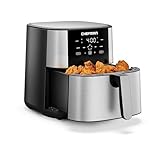
- FRY UP YOUR FAVORITES: Enjoy faster, healthier cooking for popular deep fryer foods like French fries, corn dogs, chicken wings, Brussels sprouts, and more! This stainless steel air fryer produces extra-crispy meals with a fraction of the calories compared to oily, messy deep fryers.
- FOUR-IN-ONE COOKING: This touchscreen air fryer features four functions, including Air Fry, Bake, and Reheat. Our new Frozen function defrosts and then crisps for an added crunch on fries or mozzarella sticks.
- INTUITIVE CONTROLS: Set up your cooking with the easy-to-use touch control UI. TurboFry air fryers let you program your perfect cooking time and temperature up to an impressive 400°F.
- BRING THE HEAT: The Chefman air fryer cranks up the temperature to 450°F for the final two minutes of cooking. Our HI-FRY button puts a beautiful golden-brown crisp on air fried potatoes and chicken.
- SHAKE NOTIFICATIONS: Get automatic alerts halfway through cooking to shake the air fryer basket, guaranteeing evenly crisped French fries without having to set an extra timer.
Product-specific air-fryer and pan directions
One product sheet directs users to heat a thawed hotteok at 180°C for 3–4 minutes in an air fryer, or in a pan with some oil for 2–3 minutes. Those numbers belong to that product and its thawed starting state; they are not universal instructions for every hotteok.
- Confirm whether the hotteok is thawed, refrigerated, or frozen. Do not silently apply a thawed-product direction to a frozen piece.
- For the air fryer, arrange the hotteok without overlap and monitor the surface near the end of the stated range.
- For the pan, use a little oil and moderate heat. Turn once the first side has regained color, then warm the second side.
- Let it rest briefly before eating. Melted sugar, syrup, cheese, or savory filling can remain dangerously hot after the dough feels merely warm.
Oven or toaster method
King Arthur Baking recommends warming hotteok in a 350°F oven for about 10 minutes, until heated through, and notes that a toaster can also work. This is a separate recipe instruction, not a replacement for the product sheet’s air-fryer or pan directions. Use the source that matches your food and appliance, and check earlier if your piece is small or already thawed.
- Preheat the oven or toaster oven to the stated setting when using the King Arthur method.
- Place the hotteok on a tray or rack with space around it.
- Check for a warmed center and a lightly restored exterior before removing it.
- Rest before cutting or biting so the filling can settle and you can avoid a hot spill.
Hotteok problems and fixes
- Filling leaks: The center became pressurized or the dough was heated too aggressively. Lower the heat and stop once the center is warm.
- Outside is dark, inside is cool: Use a lower setting and a longer, gentler warm-up.
- Surface is soft: Reheat uncovered and avoid stacking pieces. A short skillet finish can restore contact browning.
- Center is scorching: The sugary or savory filling holds heat. Rest longer and test carefully rather than reheating again immediately.
Air fryer, oven, skillet, or microwave: which should you use?
The best appliance depends on whether you value crispness, even heating, speed, or control. The distinctions below are practical characteristics, not results from a controlled comparison test.
Do these 3 things before closing this tab:
1Repair Windows errors before they cause bigger problems2Scan for outdated or missing drivers - takes under a minute3Clear out junk files and repair common Windows errors| Method | Surface crispness | Center heating | Attention required | Best use |
|---|---|---|---|---|
| Air fryer | Strong for breaded or fried surfaces | Surrounding heat can be even, but thick or frozen centers may lag | Low to moderate; check early | Corn dogs, hotteok when the product permits it, and other foods where airflow matters |
| Oven/toaster oven | Good, especially with a rack and uncovered food | Gentle and relatively even, though slower than a microwave | Low; visual checks still matter | Several pieces at once or foods that need gradual warming |
| Skillet | Excellent direct browning and precise control | Depends on turning and heat level | Moderate to high | Pan-fried mandu and hotteok; corn dogs when no oven is available |
| Microwave | Usually softens crisp surfaces | Fast but can be uneven, with very hot filling pockets | Low, but short intervals are important | Speed-first warming or a product explicitly designed for microwave heating |
A practical workflow for mixed leftovers
If you are reheating corn dogs, mandu, and hotteok at the same time, do not put everything through one appliance setting. Sort by texture goal and starting state.
- Read labels first. Packaged frozen foods may have directions that override general methods, especially for microwave-ready items.
- Separate soft-wrapper mandu. Warm steamed or boiled mandu gently if you want to preserve softness; keep it away from the dry-heat batch.
- Start the slowest or thickest items. Oven-style dry heat allows gradual warming while you prepare the skillet for mandu or hotteok.
- Use the skillet for direct finishing. Re-crisp pan-fried mandu or hotteok in a single layer rather than crowding them into a covered pan.
- Check centers, not just color. A browned crust is not proof that the filling is hot.
- Serve crisp items promptly. Holding them in a sealed container allows steam to soften the surface you just restored.
Food-safety checks after storage
Texture and safety are separate decisions. Songpa-gu Public Health Center advises reheating stored cooked food to at least 70°C for at least 3 minutes. That is guidance from a local Korean public-health authority, not a universal product instruction for every country or food. Follow the food-safety guidance applicable where you live and any package label.
Quick Recap
- Do not use a crisp exterior as a safety test; a center can remain cool even when the coating is brown.
- Use a food thermometer when you need to verify the center, placing it in the thickest portion without touching a pan or bone-like skewer.
- For leftovers of uncertain storage history, reheating cannot reliably correct every risk. When in doubt about how long food was kept or whether it was chilled promptly, discard it rather than trying to rescue it with extra heat.
- Allow steam to escape during crisping, but do not leave food sitting out while you are waiting for texture to improve.
Quick decision checklist
- Want a crisp Korean corn dog? Choose an air fryer or oven/toaster, use moderate heat, and check the center early.
- Have pan-fried mandu? Use a lightly oiled skillet, avoid crowding, and turn for even browning.
- Have steamed or boiled mandu? Warm gently for a soft wrapper, or pan-fry briefly if you want crispness.
- Have hotteok? Follow the package first. A cited product sheet gives 180°C for 3–4 minutes in an air fryer or 2–3 minutes in a lightly oiled pan for thawed pieces; King Arthur Baking gives 350°F for about 10 minutes in an oven.
- Considering the microwave? Use it for speed only unless the product is specifically microwave-ready and supplies its own directions.
- Is the outside done before the inside? Lower the heat and continue briefly; do not simply turn the appliance hotter.
Product prices and availability are accurate as of the date/time indicated and are subject to change. Any price and availability information displayed on Amazon at the time of purchase will apply.

