What’s actually slowing this PC down?
Pick the symptom - the matching free tool is one click away.
The fastest way to protect your bill is to cut the largest electricity loads, move flexible use to cheaper hours, and improve the building before buying new equipment. Wholesale gas matters because gas-fired generators often set the marginal electricity price. However, a retail bill is not a one-for-one pass-through of gas: it also includes networks, policy charges, taxes, supplier operating costs, and standing charges. Suppliers may have bought power weeks or months earlier, so your tariff can rise later than the wholesale market—or remain high after it falls.
This guide gives a location-neutral plan. Tariffs, assistance, taxes, meter rules and equipment standards differ by country, state and utility, so verify current terms locally before signing a contract or starting major work.
As an Amazon Associate I earn from qualifying purchases.
Why a rise in wholesale gas can raise an electricity bill
Most power markets dispatch generators in order of operating cost. Wind, solar, nuclear, hydro and other low-marginal-cost sources are used when available; gas plants are often called on to meet the remaining demand. The last generator needed to balance the system can set the market-clearing price for all dispatched electricity. When gas fuel becomes more expensive, that marginal offer can rise, lifting wholesale power prices even when your electricity is not generated by gas.
PC Slower Than It Used to Be?
A free scan shows the junk files, broken settings and background clutter dragging Windows down - then fixes them in one click.Free scan · Windows 10 & 11Outdated Drivers Are Slowing You Down
One free scan finds every outdated or missing driver and matches the right update for your exact hardware.Free scan · exact hardware matchThe pass-through is not one-for-one. The European Commission reported that the electricity-energy component averaged nearly 49% of European household electricity bills in 2024, while the remainder covered other costs. A UK House of Commons Library breakdown of the April–June 2025 Great Britain price-cap bill attributed 45% to wholesale energy, 20% to networks, 15% to operating, debt and industry costs, 11% to policy, 5% to VAT, 4% to supplier margin and 1% to other items. Those percentages describe that bill and period, not every country or tariff.
#1 Best Overall

- Save up to 23% every year on heating and cooling costs, adjusts to your set schedule to save energy when you’re gone and optimize comfort when you’re home. Compared to a hold of 72
- Compatible with 85% of systems, check your system’s compatibility with our online ecobee Compatibility Checker on the ecobee support page
- Change your temperature by easily tapping the color touchscreen or using the ecobee app. Plus, free software upgrades ensure you get the best out of your Smart Thermostat Essential, for years to come
- Automatically adjusts to your set schedule to save energy when you’re gone and optimize comfort when you’re home. Keep track of your energy consumption when you're on the go on the ecobee app
- Easy DIY install. No C Wire, no problem. Get the ecobee Power Extender Kit (PEK) for homes without a C-Wire and keep your walls looking nice with our trim kit – both sold separately
Suppliers also hedge and purchase electricity at different times. A fixed contract may lock in an earlier wholesale cost; a variable tariff may update on a regulator’s schedule; a dynamic tariff may follow short-term market prices. Your bill therefore reflects the contract, tariff design, taxes and local network charges as well as gas prices.
First, separate charges you can change from charges you cannot
Read the latest bill and record the information below. A lower consumption figure reduces usage charges, but it does not remove a standing charge or other fixed fee.
| Bill item | What it means | How your actions affect it |
|---|---|---|
| Consumption charge | Price per kilowatt-hour multiplied by the energy you used. | Lower kWh directly lowers this portion; shifting kWh may lower it further on a time-based tariff. |
| Standing or daily charge | A recurring amount for connection and supply, regardless of usage. | Usually unchanged by turning appliances off. Compare it when changing tariffs. |
| Network charges | Payment for transmission and distribution infrastructure. | Normally set by regulation or the supplier; some tariffs embed them in rates. |
| Policy, tax and industry charges | Government programs, levies, VAT or similar items. | Depends on jurisdiction and policy, not household behavior alone. |
| Supplier costs and margin | Billing, service, bad-debt, hedging and operating costs. | Can differ between suppliers and contracts. |
Note the unit rate, standing charge, tariff type, contract end date, exit fee, billing period and recent kWh. If you have a smart meter, download half-hourly or hourly data. A simple spreadsheet showing daily kWh and the corresponding price period is enough to reveal whether your biggest use occurs during expensive hours.
Choose a tariff that matches how your household actually uses power
A cheaper advertised unit rate is not automatically a cheaper bill. Compare the full schedule, fixed charges, taxes, contract conditions and any early-termination fee against your measured consumption.
Flat or single-rate tariffs
You pay one consumption rate at all times. This is easiest to understand and suits homes whose use is difficult to move or whose off-peak savings would be small. It also limits exposure to sudden hourly price spikes.
Rank #2

- An Alexa thermostat - Amazon Smart Thermostat is an easy way to switch from a traditional thermostats for homes and help reduce energy usage.
- Create comfort zones throughout your home by connecting to select Alexa devices to automatically adjust heating and cooling based on temperature readings or presence detection.
- Save money and energy - After purchase, Amazon will send you an email with details about home thermostat rebates that may be available from energy providers in your area.
- Save energy - According to EPA estimates, ENERGY STAR certified thermostats save an average of $90 on yearly energy bills.
- Programmable thermostat and automatic control - Create your own home, away and sleep schedules, or have Alexa automatically control the temperature with Alexa+ advanced features.
Time-of-use tariffs
The rate changes by defined peak, shoulder and off-peak periods. They can reduce costs when you can move substantial loads—such as vehicle charging, water heating, laundry or dishwashing—without creating a new peak elsewhere. Check the exact clock times, weekends, seasonal changes and whether your meter supports the tariff.
Dynamic or market-linked tariffs
Prices can change daily or hourly, sometimes with short notice. They offer the greatest opportunity for automated flexibility but also the greatest volatility. A household that cannot monitor prices or control major loads may pay more during a gas-driven spike. Set a spending limit, retain a fallback tariff if available, and understand how negative or very high market prices are passed through.
Fixed contracts and regulated caps
A fixed contract provides a known unit rate for its term but may include a higher standing charge or exit fee. In Great Britain, Ofgem price-cap protection applies to standard-variable tariffs, not fixed contracts, business contracts, heat networks or heating-oil users. Other jurisdictions use different protections, so check your regulator’s definition before assuming a cap applies.
Target the largest loads before small plug-in savings
Heating and cooling, hot water, refrigeration and other major appliances usually dominate household electricity use. Australian Government guidance recommends identifying energy “hot spots” and addressing the largest sources first. A watt meter or smart plug can confirm a suspected load, but do not spend time measuring every small charger while an inefficient heater runs for hours.
| Priority | Typical action | Why it comes first |
|---|---|---|
| 1 | Reduce heating and cooling demand with insulation, draught control and correct settings. | These systems run for long periods and respond to both efficiency and scheduling. |
| 2 | Improve hot-water efficiency and move heating to off-peak periods where safe. | Water heating is a substantial, predictable load. |
| 3 | Shift EV charging, laundry, dishwashing and other flexible use. | Shifting can lower the price paid without reducing the task. |
| 4 | Replace frequently used lamps and control standby equipment. | Low-cost and easy, but usually smaller than space conditioning. |
Make the building envelope more efficient
Before replacing a heater or installing a larger heat pump, inspect the loft or attic, walls, floors, windows, doors, ducts and ventilation paths. Seal uncontrolled draughts where appropriate, add insulation to safe levels and repair duct leaks. The U.S. Department of Energy describes this as an “envelope-first” strategy: reducing the heating and cooling load can be among the lowest-cost routes to savings and leaves a home better prepared for efficient electrification.
Rank #3

- PRIVACY PROTECTION*: Sensi won’t sell your personal information to third parties
- EASY DIY INSTALLATION: Use the built-in level and step-by-step app instructions for a quick installation. Works with HVAC equipment found in most homes. Common wire (c-wire) is not required in most applications
- SAVE ABOUT 23% ON HVAC ENERGY*: The ENERGY STAR-certified Sensi smart thermostat can help you save energy with features like flexible scheduling, remote access and usage reports
- SIMPLE CONFIGURATION: Looks and feels like a thermostat. Has buttons and fits the same space as a traditional thermostat so you don’t have to patch and paint your walls
- SMART MAINTENANCE: Sensi can help monitor the performance and efficiency of your HVAC system by delivering valuable usage reports, alerts about your equipment, and maintenance reminders like filter replacement
Use a sensible order of work
- Find losses. Look for visible gaps around doors and windows, uninsulated attic areas, hot or cold rooms, and damaged ductwork. An official home-energy assessment can identify problems that a visual check misses.
- Air-seal safely. Seal suitable cracks and penetrations, but do not block required combustion-air openings or ventilation. Have fuel-burning appliances checked by a qualified professional after major sealing work.
- Insulate the appropriate surfaces. Follow local moisture, fire and electrical-clearance rules. In damp or mixed climates, an incorrect assembly can trap moisture and cause damage.
- Recommission equipment. Clean filters, verify airflow and correct thermostat operation. An efficient appliance cannot perform well if airflow is restricted.
Rebates and tax credits may change the payback calculation. Check an official government or utility assessment and incentive tool before ordering insulation, a heat pump or a major appliance. Eligibility can depend on location, income, property type, existing equipment, installer credentials and the current funding round.
Control heating and cooling without sacrificing comfort
Heating and cooling consume more energy than any other appliance category in the home, according to ENERGY STAR. A compatible smart thermostat can learn or follow a schedule and reduce heating or cooling while occupants are asleep or away. ENERGY STAR’s certification includes independent field-data verification, but compatibility still depends on your wiring, HVAC system and local setup.
- Confirm that the thermostat supports your system, including heat pumps, multi-stage equipment, electric resistance heat or hydronic controls.
- Install it according to the manufacturer’s wiring instructions or use a qualified installer where required.
- Program occupied, sleep and away periods rather than making constant manual changes.
- Use weather-appropriate set points and avoid conditioning empty rooms. Keep required freeze protection, humidity control and heat-pump balance settings enabled.
- After installation, compare weather-adjusted kWh with the previous period. A thermostat cannot compensate for poor insulation, blocked filters or an incorrectly sized system.
Do not assume a large setback is always best. Some heat pumps use backup resistance heat when recovering quickly, which can erase savings. Follow the equipment maker’s guidance and monitor the result.
Shift flexible electricity to lower-price periods
On a time-of-use or dynamic tariff, schedule tasks for the cheapest safe window. Smart functionality can respond automatically to price signals, but automation must respect comfort, battery, hygiene and fire-safety limits.
Loads that are often flexible
- Electric-vehicle charging, with a minimum departure state of charge and a manual override for urgent trips.
- Hot-water heating, provided the tank reaches the required temperature and any anti-legionella cycle remains enabled.
- Laundry and dishwashing, using delay-start controls when the appliance manufacturer permits unattended operation.
- Heat-pump operation, using pre-heating or pre-cooling only within comfortable and efficient limits.
- Battery charging or other controllable equipment, subject to warranty and safety requirements.
Never run an appliance unattended if its instructions prohibit it, and do not overload sockets or extension leads with high-power equipment. Check whether your supplier charges a separate export or demand fee when using solar, batteries or high-power devices.
Recommended Free Tools
Rank #4

- EASY DIY INSTALLATION: Do it yourself fast with a built-in level and simple step-by-step instructions. Works with the HVAC equipment found in most homes
- COMMON WIRE REQUIREMENTS: Common wire(C-Wire) required for heat pump and heat/cool only systems. C-wire not required on most systems
- SAVE ABOUT 23% ON HVAC ENERGY: ENERGY STAR-certified and packed with features that help you save money, including flexible scheduling, geofencing, remote access and usage reports
- PRIVACY PROTECTION: Sensi won’t sell your personal information to third parties or leverage your thermostat activity data for targeting or advertising purposes
- CONTROL FROM ANYWHERE: The top-rated mobile app for Android and iOS devices makes it easy to control your comfort from a smartphone or tablet
What modeled savings do—and do not—tell you
UK Department for Energy Security and Net Zero consultation modeling estimated savings of over £200 per year for some households avoiding peak periods on a market-linked tariff, more than £250 for some flexible heat-pump households, and around £330 per year for typical EV drivers using smart charging. These are modeled examples under stated UK assumptions, not guarantees for every home. Your result depends on the tariff spread, the amount of load you can move, weather, driving patterns and automation performance.
Use efficient products as supporting measures
LED lighting
Replace incandescent or halogen lamps that are used frequently with certified LED equivalents. ENERGY STAR says certified LEDs use up to 90% less energy and last up to 15 times longer than standard bulbs. Match the base, brightness, color temperature, dimmer compatibility and enclosed-fixture rating; an incompatible dimmer can cause flicker or premature failure.
Smart plugs and power strips
A smart plug can measure an appliance’s consumption and schedule or disconnect standby loads such as entertainment equipment, printers and computer peripherals. Use products rated for the load, keep high-power heating appliances on suitable circuits, and never use a smart plug to defeat a manufacturer’s safety control. Measure first: a device that consumes almost nothing in standby will not justify an expensive control.
Refrigeration and major appliances
Keep refrigerator coils and ventilation clear, replace damaged door seals and use efficient temperature settings. When replacing an appliance, compare the standardized annual-energy figure for your region rather than relying on a marketing label alone. The cheapest purchase price may not be the lowest lifetime cost, especially during prolonged high electricity prices.
Quick wins for a faster PC:
Clear out junk files and repair common Windows errorsFree Scan →Scan for outdated or missing drivers - takes under a minuteDriver Scan →Repair Windows errors before they cause bigger problemsFix Now →Check assistance before paying upfront
Government, utility and weatherization programs can reduce the cost of insulation, efficient heating, controls or appliances. Programs vary by country, state, utility, income, property ownership, technology and funding round. Use an official energy-assessment or rebate portal and confirm:
Best Value
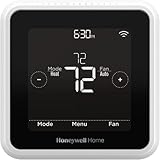
- High use of the scheduling feature of the T5 thermostat saved customers between 8 and 16% on heating and cooling bills. Dollar savings range based on nationwide average annual single-family detached home's heat and cooling bills; actual savings varies based on consumption.
- Save Energy and Get Rewarded. Check with your energy provider about available energy savings rebates to save on your purchase. Plus, eligible customers can enroll in their local Utility's "DEMAND RESPONSE PROGRAM" which can reward you for allowing the utility to slightly adjust your AC or furnace temperature settings when there is high energy demand.
- 7-Day Flexible Scheduling or Location Based Temperature Control. It’s your choice. 7-day scheduling programs your thermostat. Geofence technology helps make you comfortable by using your smartphone’s location to know when you’re away and when you return.
- Auto Home and Away Mode. Enjoy ideal temperatures at home, then save when away.
- ENERGY STAR certified. Help save energy, track your heating and cooling with monthly energy reports and get personalized tips on reducing energy use.
- whether a pre-approval, audit or approved installer is required;
- the eligible model, efficiency rating and installation date;
- income, tenancy or property requirements;
- whether the incentive is an instant discount, reimbursement, tax credit or loan;
- what documents, invoices and commissioning records must be retained; and
- whether combining incentives is allowed.
Do not assume a rebate advertised by an installer is still open or applies in your service territory. Confirm it with the administering government or utility before signing a non-refundable contract.
A practical 30-day action plan
- Days 1–3: establish a baseline. Record the bill’s kWh, rates, standing charge and tariff terms. Download smart-meter data if available.
- Days 4–7: identify hot spots. List heating, cooling, hot water, refrigeration, EV charging and other long-running loads. Use a meter on uncertain plug-in equipment.
- Week 2: apply no-cost controls. Correct thermostat schedules, clean filters, close obvious draughts where safe, turn off unnecessary equipment and enable delay-start functions.
- Week 3: compare tariffs. Model your actual hourly or daily pattern against flat, time-of-use and dynamic offers, including standing charges, taxes, exit fees and volatility.
- Week 4: choose one measured upgrade. Obtain an official assessment or quotes for the largest confirmed loss—often insulation, air sealing, hot water or HVAC control—and check assistance before committing.
Recheck kWh after several weeks and adjust for weather, occupancy and travel. A lower bill caused by a mild month is not proof that an upgrade worked; compare similar weather and operating conditions.
Common mistakes and how to correct them
Chasing a headline discount
A temporary unit-rate discount can be outweighed by a higher standing charge, exit fee or expensive peak window. Recalculate the full annual cost using your own kWh profile.
Moving every appliance to the same off-peak hour
This can create a new demand spike or overload a circuit. Stagger high-power devices and verify the tariff’s actual low-price windows.
Ignoring comfort and equipment limits
Extreme thermostat setbacks, disabling hot-water safety cycles or forcing a heat pump into inefficient recovery can increase energy use or create health and warranty risks. Use manufacturer and installer limits.
Expecting plug-load changes to solve a heating problem
Turning off chargers is useful, but it will not offset an uninsulated home or inefficient electric heater. Work down the priority list from the largest measured loads.
Assuming gas prices explain the entire bill
Wholesale energy is only one component. Network, policy, tax, operating and supplier costs can move independently, and standing charges remain even at zero consumption.
The Tool Desk
Outbyte PC Repair FREEClear out junk files and repair common Windows errorsFree Scan →Outbyte Driver Updater FREEScan for outdated or missing drivers - takes under a minuteDriver Scan →How to decide what to do first
| Option | Reduces kWh | Shifts timing | Upfront cost | Main qualification |
|---|---|---|---|---|
| Air sealing and insulation | Often substantial for heating or cooling loads | No | Moderate to high, potentially aided | Must suit local moisture, ventilation and building rules. |
| Thermostat controls | Can reduce conditioning during vacant periods | Yes, within comfort limits | Low to moderate | Requires system and wiring compatibility. |
| Time-of-use tariff | No inherent reduction | Yes | Usually low | Worthwhile only if meaningful use can move. |
| Dynamic tariff | No inherent reduction | Yes, with greater volatility | Low, but may require automation | Needs monitoring, controls and tolerance for price spikes. |
| LED lamps | Reduces lighting kWh | No | Low | Largest benefit where lamps run often. |
| Smart plugs or strips | Reduces standby use | Yes | Low | Use only within electrical ratings and safety instructions. |
Bottom line for a gas-price spike
Start with your meter data and the biggest loads, not with a gadget or a headline tariff. Reduce the home’s heating and cooling demand, control equipment intelligently, move flexible consumption when the price schedule rewards it, and use LEDs or standby controls for secondary savings. Treat modeled savings as examples, include every fixed charge in tariff comparisons, and verify local rebates and safety requirements before major purchases.
Quick Recap
Product prices and availability are accurate as of the date/time indicated and are subject to change. Any price and availability information displayed on Amazon at the time of purchase will apply.

