Outdated Drivers Are Slowing You Down
One free scan finds every outdated or missing driver and matches the right update for your exact hardware.Free scan · exact hardware matchWindows Errors? Fix Them Before They Spread
Repair common Windows errors and clear accumulated junk for a smoother, more stable PC - no reinstall needed.Free scan · no reinstallStart with your water utility’s current drought rules, then measure your normal use and fix leaks before buying equipment. After that, cut avoidable indoor demand and adjust outdoor watering only when local authorities permit it. This order protects essential needs, avoids fines, and focuses effort where your household is actually losing water.
1. Check local drought rules before changing anything
Drought restrictions are set by states, counties, cities, and water utilities, not by one nationwide schedule. A utility may limit outdoor watering to particular days or times, require a permit, or prohibit irrigation, car washing, pool filling, and other nonessential uses at a higher restriction stage. Rules can change quickly as supply conditions change.
As an Amazon Associate I earn from qualifying purchases.
Use your latest bill or your utility’s website and look for the current drought stage, mandatory restrictions, conservation requests, enforcement details, exemptions, and available rebates. Follow the utility’s instructions even when a water-saving device would normally be sensible. The U.S. Environmental Protection Agency’s guidance is explicit: “Always observe state and local restrictions on water use during a drought.”
- Record whether outdoor watering is allowed at all.
- Note permitted days, time windows, watering methods, and exemptions for trees or newly planted vegetation.
- Check whether washing vehicles, topping up pools, filling fountains, or using potable water for cleaning is restricted.
- Save the utility’s drought-stage page or sign up for alerts so you notice updates.
- Check for rebates before replacing a toilet, faucet, showerhead, irrigation controller, or leak-monitoring device.
If a local rule conflicts with general conservation advice, the local rule takes priority. Do not install or operate irrigation equipment in a way that violates it.
#1 Best Overall

- High Pressure Shower Head with 5 Different Shower Modes: HOPOPRO keeps upgrading showerheads to be more water-saving without making compromise to high water pressure shower experience, which makes this high pressure shower head with 5 different shower modes become one of U.S. Most-Loved Showerheads and recommended by The Washington Post, NBC News, Today TV show, etc
- Superior Material and Exclusive Water Pressurized Design: This high flow rain showerhead is constructed of premium ABS plastic, which makes it lightweight, durable and rust-proof. 4.1 inch panel with 66 easy-to-clean shower nozzles jets out high-pressure rain of hot water and ensures steady shower coverage, high water pressure stream and SPA experience
- Widely Compatible with Different Bathroom Styles: Modern product appearance equipped with universal G1/2" thread makes this fixed showerhead easily connected to standard or universal shower arms. 360¡ã adjustable brass ball connection joint design brings more flexibility for more shower angles or heights
- 1-Minute Tool-free Quick Installation: Installation is about as easy as it gets. No plumber needed, as the package includes all the practical accessories for installation, even a roll of anti-leaking plumbers tape and a small wrench to ensure a snug fit. An ideal bathroom replacement option to upgrade your older showerhead
- Brand Professionalism and Advantage: HOPOPRO is a brand tested by Consumer Reports and recommended by Consumer Reports, The Washington Post, NBC News, Today TV show as its premium product quality and fabulous shower experience. We're specialized in providing comfortable shower solutions and bringing luxury shower experience
2. Establish a household water baseline
Before trying to cut usage, find out how much water your household uses and when. EPA’s drought-awareness checklist asks: “Do you know how much water your household uses every month?” Pull at least 12 months of bills if possible. Comparing winter and summer use helps separate indoor demand from seasonal irrigation, pool filling, and other outdoor activities.
Read the units on your bill
Utilities commonly bill in gallons or in CCF (hundred cubic feet). EPA WaterSense states that 1 CCF equals 748 gallons. Write down the unit and convert consistently when comparing months; otherwise a change in billing units can look like a sudden change in consumption.
| Bill information | What to record | Why it matters |
|---|---|---|
| Billing period | Start and end dates | Months are not always the same length. |
| Total use | Gallons or CCF | Provides the comparable baseline. |
| Rate structure | Tier, seasonal, or drought surcharge | Shows how restrictions and costs may change. |
| Utility alerts | Leak or high-use notifications | Can reveal a problem between bills. |
Also identify your drinking-water source if your utility provides that information. A drought can affect a reservoir, river, groundwater basin, or imported supply even when conditions around your home look normal.
What’s actually slowing this PC down?
Pick the symptom - the matching free tool is one click away.
Use a meter check for unexplained use
- Turn off faucets, appliances that use water, irrigation, ice makers, and any other intentional flow.
- Read the home’s water meter, or note the leak indicator if the meter has one.
- Wait long enough to detect a small flow, then read it again. Do not use water during the test.
- If the reading changes, repeat the test and contact the utility if you cannot identify the source.
A meter that moves while the home is supposed to be idle does not prove which fixture is responsible, but it establishes that water is flowing. Photographing the meter and recording the time makes follow-up easier.
3. Find and repair leaks before buying upgrades
Leaks waste water continuously, so repairing them usually has a clearer benefit than replacing a fixture that is working normally. Inspect toilets, faucets, showerheads, exposed pipes, hose connections, sprinkler heads, irrigation valves, and any equipment connected to the supply line.
Toilet dye test
- Remove the tank lid and add a few drops of food coloring or toilet-dye tablets to the tank.
- Do not flush for about 10 to 15 minutes.
- Look in the bowl. Colored water indicates that water is escaping through the flapper or another tank component.
- Replace the failed part or have a plumber repair it, then repeat the test.
Do not leave dye in the tank for extended periods, because some dyes can stain components. A toilet that runs intermittently may be silent between episodes, so test more than once if the meter suggests a problem.
Rank #2
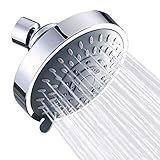
- Powerful Functions - High pressure shower head form rhythmic water pulse, which relieve your body stress and ache, let you enjoy the natural SPA at home
- Advanced Material- High quality ABS plastic body polished chrome shower head, more durability and beautiful. On the 4.1 Inch panel, self cleaning nozzles increase water impact force to form high pressure
- Easy Installation - Easily installs fixed shower head with G 1/2 connection thread interface to any standard shower arm in minutes, without plumbers or tools
- Upgraded 5 Functions: By swinging the lever, you can switch to the mode you like: Power Mist Mode, Power Rain Mode, Pulsating Mode, Rain Massage Mode, Rain Mist Mode
- 360 Rotating: The adjustable metal ball joint with effortless 360 degree rotation allows this rain shower head to be flexible to any angle or direction for a more comfortable shower experience
Other leak checks
- Look for drops, mineral deposits, or dampness around faucet aerators, shower connections, supply hoses, and shutoff valves.
- Inspect exposed pipes under sinks, in basements, and near water heaters for wet insulation, corrosion, or standing water.
- Check outdoor hose bibs and hose washers; a small drip can continue whenever the valve is open.
- Run each irrigation zone only when local rules permit it and watch for broken heads, misting, pooling, or water spraying onto pavement.
- Compare the meter reading after a period with no use. If it changes and the source is not visible, ask the utility about a professional leak investigation.
EPA reports that household leaks waste nearly 1 trillion gallons nationwide each year. Its Fix a Leak Week page also estimates that leaks in the average household can waste more than 9,300 gallons per year, and that 9% of homes have leaks wasting at least 50 gallons per day. Those are nationwide EPA estimates, not a measurement of every home.
Recommended Free Tools
For homes with no winter outdoor water use, EPA’s Home Maintenance guidance says a family of four using more than 12,000 gallons (16 CCF) per month in winter likely has a serious leak. Treat that as a screening signal for those specific circumstances, not as a universal limit for every household.
4. Cut avoidable indoor water use
Once leaks are controlled, target routines that use water without adding value. Small changes repeated every day can lower the baseline that appears on your next bill.
Laundry
- Run the clothes washer only with a full load, while staying within the manufacturer’s load guidance.
- Skip extra rinse cycles when they are not needed for the detergent or fabric being washed.
- Use the washer’s load-size or water-level setting only when a full load is not practical; an undersized load on a high-water setting wastes capacity.
Fixtures
When a replacement is necessary, look for the WaterSense label on toilets, faucets, and showerheads. The label identifies products certified to meet EPA efficiency and performance criteria. Confirm that the fixture fits your plumbing and that the local utility does not require a particular model for a rebate. Do not replace a sound fixture solely on an assumed savings figure; your bill and usage pattern are better evidence of where money will be saved.
Daily habits
- Repair dripping faucets and running toilets promptly instead of waiting for the next billing cycle.
- Turn off the tap while brushing teeth, shaving, or scrubbing dishes; use a filled basin or bowl when that suits the task.
- Run the dishwasher with a full load and use its normal cycle unless a different setting is required.
- Keep a pitcher of drinking water in the refrigerator rather than running the tap until it is cold.
- Capture water while a shower warms only if local health guidance and your plumbing setup make that safe, then use it for an allowed nonpotable purpose such as watering plants.
Do not compromise handwashing, food safety, medical care, or sanitation. Conservation should remove waste, not essential hygiene.
5. Manage outdoor water only when rules allow it
Outdoor use is often the largest seasonal source of household demand, but it is also the area most likely to be restricted. If your utility prohibits irrigation, stop there. If watering is allowed under specific conditions, design every action around those conditions.
Rank #3

- LIFETIME LIMITED WARRANTY: You can install with confidence, knowing this Delta shower head is backed by Delta Faucet's Lifetime Limited Warranty
- INTENSELY POWERFUL: Immerse yourself in the steady, intensely powerful full body spray with forceful streams of water to satisfy all of your showering needs
- 2 CONVENIENT SPRAY OPTIONS: Shower head spray options include full body spray and pause
- PAUSE FEATURE: Pause feature reduces water to a trickle, giving you space for shaving, lathering and other shower tasks while maintaining your temperature settings
- DURABLE: This Delta shower head is made of durable, all-metal construction
Water plants efficiently
- Water early in the morning or in the evening, when cooler air reduces evaporation.
- Use drip hoses or another efficient delivery method for valuable plants where such equipment is permitted.
- Direct water to the root zone rather than pavement, driveways, sidewalks, or bare areas.
- Check sprinkler heads for leaks and adjust their aim so spray does not hit hard surfaces.
- Apply mulch around beds and trees to reduce evaporation and moderate soil temperature, keeping mulch away from trunks and stems.
- Choose native or drought-tolerant plants suited to the local climate and soil rather than assuming a plant labeled “low water” will thrive everywhere.
Let lawns go dormant when appropriate
EPA notes that grass can become less green during drought and recover when rain returns. If local rules allow limited lawn watering, water only enough to protect the grass and its root system; do not try to maintain a summer-green appearance at the expense of the community supply. Avoid fertilizer applications that encourage thirsty new growth during severe heat or restrictions.
Eliminate nonessential hose use
Sweep sidewalks and driveways with a broom instead of rinsing them with a hose. Do not wash a car, fill a pool, operate a decorative fountain, or perform another nonessential outdoor task with potable water when your utility prohibits it. Where an activity is allowed, follow the permitted day, time, shutoff, and runoff requirements.
6. Compare conservation options before spending money
There is no single upgrade that fits every household. Use the following decision test before purchasing equipment or changing a system.
Do these 3 things before closing this tab:
1Fix the driver behind crashes, sound loss and screen glitches2Repair Windows errors before they cause bigger problems3Scan for outdated or missing drivers - takes under a minute| Option | Best fit | Checks before purchase | Limits |
|---|---|---|---|
| Repair or replace a leaking part | A meter, dye test, or inspection identifies ongoing flow. | Confirm the failed component, shutoff location, and whether a licensed plumber is needed. | Does not reduce normal use if no leak exists. |
| WaterSense-labeled fixture | An old or failed toilet, faucet, or showerhead is due for replacement. | Verify label, plumbing compatibility, performance, installation requirements, and utility rebate terms. | Actual reduction depends on how often the fixture is used. |
| Drip hose or efficient irrigation | Outdoor watering is legal and valuable plants need targeted water. | Check drought-stage rules, schedule limits, pressure, filters, and placement. | Cannot be used during a prohibition; clogged emitters need maintenance. |
| Leak detector or flow monitor | You want alerts for irregular flow or possible moisture. | Check sensor location, internet or power needs, valve compatibility, alert settings, and privacy terms. | It alerts or shuts off water; it does not repair the underlying leak. |
For every option, ask six questions: Is it permitted locally? Does it target your largest measured source of use? What evidence shows it will reduce your household’s demand? What are the upfront and maintenance costs after any rebate? Will it fit your plumbing or landscape? If it is a labeled fixture, is the certification current?
7. Follow a practical seven-day reduction plan
- Day 1—Rules and records: Check the drought stage, restrictions, exemptions, alerts, and rebates. Photograph or download your latest bill and write down the unit and total use.
- Day 2—Baseline: Gather several months of bills, mark winter and summer totals, and identify unusual spikes.
- Day 3—Meter test: Perform an overnight or several-hour no-use meter check. If the meter moves, begin leak isolation.
- Day 4—Fixtures: Test the toilet, inspect faucets and hoses, and repair the simplest confirmed leak. Arrange qualified help for hidden or pressurized leaks.
- Day 5—Indoor routines: Set full-load laundry and dishwasher rules, remove unnecessary rinse cycles, and address dripping fixtures.
- Day 6—Outdoor inspection: Only if watering is allowed, inspect sprinkler coverage, hoses, mulch, and plant condition. Adjust or stop watering according to the utility schedule.
- Day 7—Measurement: Record the meter or bill portal reading, note which changes were actually followed, and set a date to compare the next bill with the baseline.
8. Measure results and troubleshoot surprises
Review your utility portal or monthly bill after the changes. Compare similar billing periods rather than judging a short interval that includes guests, weather changes, or a different number of billing days. Keep notes on irrigation days, laundry frequency, visitors, and repairs so you can explain a change.
If use remains high
- Repeat the no-use meter test, including a time when irrigation controllers and water-softener regeneration cannot run.
- Check toilets one at a time with dye and listen for intermittent refilling.
- Inspect irrigation valves and underground areas for unusually wet soil, sinkholes, or plants growing much more vigorously than surrounding vegetation.
- Ask the utility whether its meter reading, billing period, or leak-alert data shows an anomaly.
- Have a plumber investigate hidden pipe leaks if the meter moves with all fixtures isolated.
If use drops unexpectedly
Confirm that essential uses still receive enough water and that a fixture has not been unintentionally shut off. A lower bill can reflect fewer billing days, a vacant period, cooler weather, or a temporary restriction rather than a permanent efficiency gain.
Rank #4

- STEADY PRESSURE: Our Niagara Conservation fixed shower head provides high performance at most water pressures. You get a steady spray thanks to our patented pressure-compensation technology.
- CONSERVES WATER: Our California Compliant water saving shower head gives you significant annual savings in water and heating costs while you get the feel and function of a luxury bathroom accessory.
- DURABLE SHOWERHEAD: Enjoy years of reliable use from this bathroom essential. Our adjustable shower heads are mounted on sturdy ball joints that swivel 360 degrees and can direct a luxurious downward spray where you need it.
- CORROSION RESISTANT: High impact-resistant polycarbonate thermoplastic is also used in the construction of our bathroom shower heads. This gives you added toughness and helps fight corrosion.
- WATERSENSE COMPLIANT: Our efficient and cost-saving showerhead is ANSI certified, NSF certified, ASME listed, CSA listed, and Watersense compliant in EPA criteria in water efficiency.
If an alert keeps triggering
Review the monitor’s thresholds and schedule for legitimate events such as irrigation, water-softener cycles, ice makers, or toilet refills. Do not disable alerts until you have identified the pattern. A monitoring device can help detect unintended moisture or activate a shutoff valve, but it cannot replace repairing the failed pipe, valve, or fixture.
9. Protect health, tenants, and shared supplies
Keep drinking water, cooking, handwashing, bathing, cleaning, and medically necessary uses reliable. If you rent, report leaks in writing to the landlord or property manager and keep a copy; do not make permanent plumbing changes without permission. In apartments or shared buildings, a high bill may reflect a common-area leak or a shared meter rather than one unit’s behavior, so involve building management and the utility.
Households with older adults, infants, disabilities, or medical equipment may need a different conservation plan. Ask the utility about exemptions or assistance rather than reducing a necessary use unsafely. During a severe restriction, community instructions can include emergency water-quality or supply guidance; follow those notices over generic household tips.
Frequently Asked Questions
“Have you checked for where you might be wasting water – indoors and outdoors?”
Use your bill and meter to establish a baseline, then inspect toilets, faucets, exposed pipes, hoses, sprinkler heads, and irrigation equipment. A dye test and a no-use meter check can reveal leaks that are not obvious.
“Are you following the directions provided by your utility?”
Check the current drought stage and restrictions before watering, washing a vehicle, filling a pool, or using any outdoor equipment. Local instructions control the days, times, methods, and activities permitted.
How can I tell whether a lower bill reflects real conservation?
Compare the same type of billing period across months or years, account for the number of billing days and weather, and record changes such as fewer laundry loads, repaired leaks, or reduced irrigation. A single unusually low bill is not proof of a permanent reduction.
Should I buy a leak-monitoring system?
It can be useful if you want alerts for irregular flow, moisture, or an automatic shutoff, especially when the home is vacant. It is optional, requires compatible installation and maintenance, and does not fix the leak it detects.
Quick Recap
Product prices and availability are accurate as of the date/time indicated and are subject to change. Any price and availability information displayed on Amazon at the time of purchase will apply.

