What’s actually slowing this PC down?
Pick the symptom - the matching free tool is one click away.
To reduce blooming on an RGB LED or Mini LED TV, test the same dark scene and lower the Local Dimming, Local Contrast or similarly named control by one step. This usually shrinks halos around subtitles and bright objects, but can make blacks look lighter and reduce the punch of highlights. Then set Backlight, Screen Brightness or Peak Luminance for the room, rather than using the Contrast control to make the picture brighter or darker.
There is no universal “best” value. Zone size, zone count, dimming software, picture mode, firmware and viewing conditions all affect the result. The goal is a repeatable compromise: the smallest distracting halo while retaining shadow detail and highlight brightness.
As an Amazon Associate I earn from qualifying purchases.
What blooming is and why RGB LED TVs show it
An LCD television does not emit light at each individual pixel. LEDs behind the LCD panel provide the illumination, while the LCD layer controls which pixels appear bright or dark. Local dimming divides that backlight into zones. The television lowers the light behind dark parts of a scene and keeps or raises it behind bright objects.
Outdated Drivers Are Slowing You Down
One free scan finds every outdated or missing driver and matches the right update for your exact hardware.Free scan · exact hardware matchWindows Errors? Fix Them Before They Spread
Repair common Windows errors and clear accumulated junk for a smoother, more stable PC - no reinstall needed.Free scan · no reinstallRoku Support describes the arrangement this way: “The backlight structure behind the front LCD screen on your TV is divided into numerous zones of tiny lights, or LEDs.” Each zone serves many LCD pixels. A white subtitle, star or street lamp can therefore share a zone with surrounding pixels that should be black. Light intended for the bright object spills across the rest of the zone and appears as a gray or colored halo. That halo is blooming.
#1 Best Overall
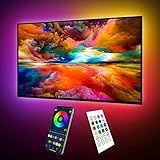
- Upgraded ICRGB TV Backlight Effects: Maylit ICRGB TV lights can display multiple colors on a line at a time, compared with traditional RGB TV lights. More vibrant and dynamic to light up the TV, improve your TV watching experience.
- Music Sync & USB Powered: Built in a high sensitive mic, colors of the TV LED backlight sync to TV music and sound, helping you create the ambiance you need. Maylit TV LED lights are powered by the 5V TV USB interface, can be turned on/off synchronously with most TV models. Memory function avaliable, LED TV lights automatically selects the brightness level and color you chose before when turn on.
- Multiple Funtions: Manage your LED lights for TV with remote or app easily. Function of the 24 keys IR remote: ON/OFF, 10 level brightness, 10 basic colors, 1/2 hour timer off, multiple dynamic modes, dynamic modes speed +/-, night mode and 4 music modes. Download App to explore more features like 16 million colors(NO PURE WHITE!), 213 dynamic modes, music mode, mic modes and achedule on/off.
- Relieve the Eye Strain: TV lights behind lighting up every side of your TV, reducing the eyestrain caused by differences in picture brightness, illuminate your TV and improve image clarity when watching TV or playing games.
- Easy to Install & Use: 1 roll of 18ft TV LED strip lights are easier to install. Double-sided tape and fixing buckles, double protection against falling. Powered by DC 5V TV USB interface, easy to use. You can also use the power bank to light it up, then you can use it easily outdoors.(Non-waterproof)
More zones can make the zones smaller, but zone count alone does not determine performance. The dimming algorithm decides how aggressively a zone reacts, how quickly it changes, and how it handles objects that cross zone boundaries. A television with fewer zones but better control can look cleaner than one with a higher advertised count. Moving highlights may reveal delayed transitions, pumping or flicker in addition to static halos.
RGB Mini LED backlights use red, green and blue LED emitters and can offer useful color and brightness advantages. They still illuminate groups of LCD pixels, however, so RGB Mini LED does not provide per-pixel control. Blooming and other local-dimming artifacts remain possible.
Prepare a fair test before changing settings
Settings judged from random scenes are easy to misread. Use a repeatable test so you can tell whether a change actually helped.
Free tools Windows power users keep installed
One-click scans. No signup required.
- Choose difficult content. Use a dark film or show with a bright object, white subtitles or a small light against a dark background. A paused frame is useful for static halos; replay the same few seconds to check motion behavior.
- Keep the viewing conditions fixed. Sit in your normal position, leave the room lighting unchanged and disable any automatic picture mode that changes brightness between comparisons.
- Check black detail as well as halo size. A setting that removes a halo by crushing shadow detail is not an improvement. Look for texture in dark clothing, hair, walls and night scenes.
- Do not use a blank black screen as your only test. Some televisions change their backlight behavior or switch zones off when no image content is present. A real scene gives a more representative result.
- Change one control at a time. Record the original value, make one adjustment, and compare the same frame before changing anything else.
Adjustment sequence that works on most models
1. Lower local dimming or local contrast by one step
Open the picture settings for the mode you actually use and look for Local Dimming, Local Contrast, Auto Local Dimming, Micro Contrast or a similar label. If the control is set to High, test Medium; if it is already Medium, test Low. Some sets offer only Off, Low and High.
High intensity generally produces deeper blacks and brighter highlights, but it can make a bright subtitle illuminate its entire zone. Lowering the setting gives the algorithm more latitude to keep neighboring areas from becoming visibly bright. Compare the halo, black level and highlight impact together. If blacks become obviously gray or the image loses its intended contrast, restore the previous value or use the intermediate setting.
Rank #2
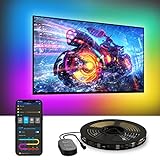
- A Symphony of RGBIC Lighting: Govee RGBIC technology realizes the color segmentation display of the TV lights behind, creating more dynamic and gorgeous lighting effects. Experience more vibrant colors in your TV lights and upgrade your visuals.
- App & Voice Control: Manage the LED TV lights via app or smart voice control with Alexa & Google Assistant. ( Please note that it won't capture colors automatically and support 2.4G only.)
- Multiple Preset Scenes: Govee Home App offers 99+ preset scene modes and 11 music modes, from which you can choose the lighting effects that suit your mood or the atmosphere around you to enhance your viewing.
- Music Sync: Govee TV LED Backlight includes a built-in mic, making the color and brightness sync with the music. Experience breathtaking lighting effects that dance with any audio as though you're at a concert.
- Flexible Installation: The 12.5ft TV backlight can easily cover 4 sides of any 55-65 inch TV. It is recommended to use the cable clips to secure the TV LED strip lights to make them snugly fit your TVs.
A general RTINGS calibration guide uses Medium or High as a broad starting range, not as a universal prescription. Its advice for viewers distracted by halos is to reduce local-dimming intensity. The useful point is the direction of the adjustment, not a number that applies to every television.
2. Set backlight or screen brightness for the room
Use Backlight, Panel Brightness, Screen Brightness, Peak Luminance or the equivalent control to match the room. A bright room may require more output to overcome reflections. In a dark room, a lower level is usually more comfortable and can make raised blacks less noticeable.
This changes the overall light output; it cannot change the physical size of the backlight zones. Room lighting, screen reflectance, picture settings, the television’s capabilities and the video itself all affect the picture you perceive. LG expresses the same principle in its support guidance: “In addition to the TV’s capabilities, room lighting, screen reflectance, picture settings and the video content all affect the actual picture you see on screen.”
3. Leave Contrast out of the brightness adjustment
The Contrast control adjusts the signal range used for brighter portions of the image. Sony explains that lowering Contrast darkens white levels and narrows the difference between light and dark. It is not a substitute for the backlight control.
If Contrast is set too low, clouds, white subtitles and specular highlights lose intensity. If it is set too high, bright detail can clip. Set it near the picture mode’s accurate default, then use Backlight or Screen Brightness for room matching. Make small changes and inspect a scene containing both near-white detail and dark shadows.
Rank #3
- Upgraded ICRGB TV Backlight Effects: Maylit ICRGB TV lights can display multiple colors on a line at a time, compared with traditional RGB TV lights. More vibrant and dynamic to light up the TV, improve your TV watching experience.
- Music Sync & USB Powered: Built in a high sensitive mic, colors of the TV LED backlight sync to TV music and sound, helping you create the ambiance you need. Maylit TV LED lights are powered by the 5V TV USB interface, can be turned on/off synchronously with most TV models. Memory function avaliable, LED TV lights automatically selects the brightness level and color you chose before when turn on.
- Multiple Funtions: Manage your LED lights for TV with remote or app easily. Function of the 24 keys IR remote: ON/OFF, 10 level brightness, 10 basic colors, 1/2 hour timer off, multiple dynamic modes, dynamic modes speed +/-, night mode and 4 music modes. Download App to explore more features like 16 million colors(NO PURE WHITE!), 213 dynamic modes, music mode, mic modes and achedule on/off.
- Relieve the Eye Strain: TV lights behind lighting up every side of your TV, reducing the eyestrain caused by differences in picture brightness, illuminate your TV and improve image clarity when watching TV or playing games.
- Easy to Install & Use: 1 roll of 16.4ft TV LED strip lights are easier to install. Double-sided tape and fixing buckles, double protection against falling. Powered by DC 5V TV USB interface, easy to use. You can also use the power bank to light it up, then you can use it easily outdoors.(Non-waterproof)
4. Check black level, gamma and tone mapping separately
Black Level changes where the video signal’s darkest values sit. Gamma changes the brightness of midtones and shadows. HDR Tone Mapping or a similar HDR control determines how very bright content is fitted to the panel’s capabilities. These controls can alter perceived contrast without reducing the halo produced by a large backlight zone.
Change them only when you can identify a specific problem. Raising black level to make shadow detail visible can make the entire image gray. Lowering gamma can hide shadow information. Altering HDR tone mapping can preserve highlight detail at the cost of overall brightness. Return to the original value if the scene loses detail.
5. Treat dynamic processing as its own choice
Dynamic Contrast, Black Enhancer, Dynamic Black and related features analyze each scene and change brightness as content changes. They may make a static frame look punchier while causing pumping, crushed shadows or changing halo intensity during playback.
Control interactions are model-specific. Roku states that its Dynamic contrast control is disabled automatically when its local-dimming feature is enabled. Other televisions may allow both controls, combine them or place them in different menus. Test dynamic processing only after local dimming and room brightness are set, and compare the same moving scene rather than a single paused frame.
6. Add a small amount of ambient light if the room is very dark
Black-uniformity problems stand out most in a completely dark room. A modest lamp or a neutral bias light behind the television can reduce the apparent difference between a black screen and a slightly raised area. It does not change the zones, stop light spill or remove blooming from the panel.
Do these 3 things before closing this tab:
1Fix the driver behind crashes, sound loss and screen glitches2Repair Windows errors before they cause bigger problems3Scan for outdated or missing drivers - takes under a minuteRank #4

- Custom TV Lighting: LED strip lights are 21 feet long to cover 4 sides of 85-95 inch TVs for ambient lighting.
- Easy Installation: W-shaped LED light strip bends to fit corners and attaches easily behind TVs, sofas, desks, and more.
- Colorful Lighting: LED lights with RF remote offer 17 colors, 10 dynamic modes, and 10 speed settings for custom gaming room and home theater lighting.
- Sync Lighting with TV: This TV light strip syncs on/off with most TVs automatically and has a built-in memory function to store previous settings.
- Quality Materials: Hamlite uses metal housing and LED lights with 5000K color temperature for vibrant, energy-efficient lighting.
Keep the light dim and neutral enough that it does not wash out the picture or tint your eyes’ adaptation. Treat this as a viewing-comfort measure, not a repair.
What the common picture controls actually do
| Control label | Main effect | Use when | Risk if pushed too far |
|---|---|---|---|
| Local Dimming / Local Contrast | Changes how strongly backlight zones react to dark and bright content | Halos, raised blacks or weak contrast need balancing | High can enlarge visible halos; Low or Off can raise blacks and reduce contrast |
| Backlight / Screen Brightness | Changes overall panel light output | The room is brighter or darker than the current setting assumes | Too high can cause eye strain and make blooming easier to notice; too low can look dull |
| Contrast | Sets the intensity and range of brighter signal values | Calibrating white levels or correcting clipping | Too low dulls whites; too high can clip highlight detail |
| Black Level | Positions the signal’s darkest values | Correcting a black-level mismatch from a source device | Too high makes blacks gray; too low crushes shadow detail |
| Gamma | Changes midtone and shadow brightness | Matching the picture to room light or a known calibration target | Can hide shadow texture or flatten the image |
| Dynamic Contrast / Black Enhancer | Applies scene-by-scene brightness processing | A deliberate preference for a more dramatic, processed look | May cause pumping, crushed blacks or inconsistent brightness |
| HDR Tone Mapping / Peak Luminance | Maps HDR highlights to the panel’s available output | Balancing HDR highlight detail and overall brightness | Can reduce highlight brightness or clip detail if misadjusted |
Why menu names and useful levels differ
Manufacturers expose different controls, and the available choices can change by model, firmware and picture mode. One television may call the feature Local Dimming; another may use Local Contrast, Auto Local Dimming, Peak Luminance or Micro Contrast. Some options disappear in Game, Dolby Vision or other specialized modes.
Use the manual for the exact model and check that you are editing the active input and picture mode. A setting changed under “Cinema” may not affect “Standard” or a console input. If a menu item is missing, the television may have disabled it because another processing feature or signal format is active.
Manufacturers’ definitions describe their own products. Sony, TCL and Roku document different labels and interactions, so instructions copied from one brand may not map directly to another. Firmware updates can also alter menu locations or processing behavior.
Recommended Free Tools
RGB Mini LED example: why a model-specific setting is not a rule
RTINGS’ settings page for the tested Sony BRAVIA 9 II, an RGB Mini LED television, uses Auto Local Dimming: Medium and Backlight Lighting Mode: Color for that reviewed unit. The same page reports that High can keep the RGB mode active more often and may produce color leaking in some combinations of saturated colors and white.
Best Value
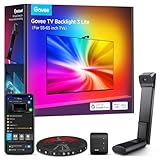
- Upgraded Govee Envisual Technology: The upgraded chip provides stronger performance with a fish-eye correction function, expanding the effective range to provide more accurate color-matching along the edges.
- 4-in-1 Lamp Bead: RGBICW TV lights add an extra warm white chip into the color mix, a purer white tone and the improved pixel density make the lighting effect more vivid and natural, which helps enhance immersive movie watching and gaming.
- Gravitational Hanging Design for Camera: Simplify installation and adapt for ultra-thin TVs. You can use the adhesive to stabilize it without wobble, when installing the camera.
- Govee DreamView Syncing: The function realized the linkage of Govee lights. Add up to 7 sub-devices to sync the lighting effects of the 3 Lite, create a 360° immersive view experience, and enrich the light mapping effects within the home environment.
- Full Compatibility for Any TV Content: The 3 Lite can instantly capture the color of any TV screen for color matching without compatibility issues. Use the TV lights while streaming content, watching online videos, gaming, etc.
Those observations describe that tested model and its calibration, not every RGB LED television. White-balance values are also unit-dependent; copying another set’s calibrated numbers can make your television less accurate. Use the example to understand the trade-off between dimming strength and color artifacts, then evaluate your own set with the repeatable scene test.
Troubleshoot by symptom
| What you see | Likely cause | What to try |
|---|---|---|
| Large gray halo around subtitles | Local dimming is driving a zone containing both text and dark background | Lower Local Dimming or Local Contrast one step and compare subtitle readability and black level |
| Black bars or corners look gray | Weak local dimming, high overall backlight, room reflections or panel uniformity limits | Check the same scene in a darker room, lower overall backlight if comfortable, then test a stronger dimming level |
| Dark detail disappears after a contrast tweak | Contrast, Black Level or gamma is crushing low-end information | Restore the last control changed and inspect textured shadows, not a blank black screen |
| Brightness pulses when objects move | Dimming algorithm transitions between zones or dynamic processing | Compare Local Dimming levels and disable Dynamic Contrast or Black Enhancer if available |
| Colored fringe around white objects | RGB backlight behavior or color-zone leakage in a particular mode | Try a lower dimming level or a different backlight-lighting mode; check the model’s manual for supported combinations |
| Blooming appears only in one app or input | Different HDR format, picture mode or source range | Match settings for that input and verify the source’s black-level or range setting |
| Changes seem to do nothing | The control is unavailable in the current mode, overridden by another feature or not active on that input | Switch to the intended picture mode, confirm the input, and check the model-specific menu description |
If you are choosing a different television
Advertised zone count is only one specification. Ask how the set handles the scenes that bother you: white subtitles on black, stars, end credits and moving headlights. Reviews that include photographs or measurements of these scenes can reveal behavior that a zone-count number cannot.
| Evaluation point | Why it matters |
|---|---|
| Zone count and zone size | Smaller zones can limit how much dark area shares light with a bright object, although count alone does not guarantee clean results. |
| Dimming algorithm | Controls how aggressively zones react and how smoothly they transition. Algorithm quality can outweigh the advertised number of zones. |
| Subtitle and highlight halos | Shows whether the television’s compromises are visible in ordinary viewing, not just in a laboratory pattern. |
| Motion transitions and flicker | Reveals delayed zone changes, pumping or instability around moving bright objects. |
| Black uniformity | Separates blooming from broader panel variation such as cloudy corners or uneven dark fields. |
| Room performance | Reflective screens and high ambient light can change perceived blacks and the brightness needed for comfortable viewing. |
OLED displays use self-emitting pixels rather than a shared LCD backlight, so they do not have this particular backlight-zone limitation. They are a different display technology with their own trade-offs; changing settings on an RGB LED television cannot make it behave like an OLED panel.
What settings cannot fix
No menu adjustment can give an LCD television per-pixel backlighting. If a bright object is much smaller than a zone, some light sharing is inherent. A lower dimming setting can make the artifact less conspicuous, but it may also reduce black depth. A higher setting can deepen blacks while making the halo more obvious. That is a hardware-and-algorithm trade-off, not evidence that the panel is misconfigured.
Persistent bright patches, severe clouding, dead pixels or a defect visible in normal content may indicate a panel problem rather than ordinary blooming. Document the behavior with the same scene, check whether it changes with picture mode, and consult the television’s warranty or service guidance before attempting physical repairs. Never open the set to modify its LED array.
Quick Recap
A practical final checklist
- Use a real dark scene with subtitles or a small bright object, not only a blank black test screen.
- Change Local Dimming, Local Contrast or Auto Local Dimming one step at a time.
- Judge halo size, black depth, shadow detail and highlight brightness together.
- Set Backlight or Screen Brightness for the room.
- Do not use Contrast as a replacement for overall brightness.
- Check Black Level, gamma, tone mapping and dynamic processing separately.
- Verify that the setting applies to the active input, HDR format and picture mode.
- Remember that RGB Mini LED can still bloom and that another model’s values are not universal.
- Use modest ambient or bias light only to make the effect less conspicuous; it does not remove the underlying artifact.
Product prices and availability are accurate as of the date/time indicated and are subject to change. Any price and availability information displayed on Amazon at the time of purchase will apply.

