Do these 3 things before closing this tab:
1Fix the driver behind crashes, sound loss and screen glitches2Repair Windows errors before they cause bigger problems3Scan for outdated or missing drivers - takes under a minuteIn India, take every used or end-of-life battery—lithium-ion, lead-acid, nickel, zinc or another chemistry—to the producer’s take-back programme or an authorised collection channel that sends it to a Central Pollution Control Board (CPCB) and State Pollution Control Board (SPCB) or Pollution Control Committee (PCC)-registered refurbisher or recycler. Do not put batteries in household waste, a landfill or an incinerator.
Start by identifying the battery and its condition, contact the manufacturer, importer, dealer or service centre for its collection route, and verify the downstream operator on the CPCB Battery EPR portal. Before handing anything over, confirm that the operator accepts that chemistry, battery format and condition, serves your city and gives the required packaging instructions.
As an Amazon Associate I earn from qualifying purchases.
What India’s battery-waste rules cover
The Battery Waste Management Rules, 2022 apply to producers, importers, dealers, consumers and organisations involved in collecting, segregating, transporting, refurbishing or recycling batteries. They replaced the Batteries (Management and Handling) Rules, 2001. Coverage is deliberately broad: the rules apply to all types of batteries regardless of chemistry, shape, volume, weight, material composition and use.
Recommended Free Tools
| Battery or product | Covered by the 2022 rules? | Typical hand-over route |
|---|---|---|
| Loose lithium-ion cells and rechargeable packs | Yes | Producer, dealer, service centre or registered recycler |
| Phone, tablet and laptop batteries | Yes | Brand service channel or authorised collection point |
| Power-tool, camera and portable-device packs | Yes | Producer take-back or registered battery operator |
| Lead-acid automotive and inverter batteries | Yes | Vehicle, battery or inverter dealer and registered recycler |
| UPS and industrial batteries | Yes | Supplier, facility operator or registered industrial recycler |
| Electric-vehicle traction batteries | Yes | EV maker, authorised service network or registered specialist |
| Nickel, zinc and other chemistries | Yes | Producer take-back or an operator that confirms the chemistry |
A battery pack is a group of cells connected or enclosed in an outer casing to make a complete unit that the end-user is not intended to split or open. The rules define refurbishment as repairing, reconditioning or repurposing a used battery for a second life. Waste battery includes a used or end-of-life battery, an off-specification battery, one past its appropriate-use date and one discarded by its user.
#1 Best Overall

- UN Approved Container for Dry Cell Batteries -- Easily recycle various dry cell batteries such as Alkaline, Nickel Cadmium (NiCad), Zinc-Carbon (Zn), Rechargeable Lithium-ion, Nickel-Metal Hydride, mercury, Silver-Oxide, AA, AAA, C, D and 9 Volts.
- Easy and Convenient Recycling Process -- Our kit offers an easy process. You will receive a container in a box, and a free return label. Just drop your batteries, attach the label, and send for recycling—no stress or extra fees.
- Prevention of Landfill Disposal -- Recycling makes sure that lithium batteries don't end up in landfills. This prevents dangerous materials from getting into the environment and helps keep our ecosystems safe.
- Recycling You Can Trust -- We are certified recycling experts who share our dedication to the environment. Your batteries will be handled responsibly, reducing the negative impact of improper disposal.
- Be a Part of Something Bigger -- Recycling batteries isn't just responsibility – it's a step towards a circular economy. By doing your part, you're helping to conserve valuable resources and lessen the demand for new materials.
Check the battery before you move it
Identify the format and use
Record whether you have a loose cell, a removable pack, a sealed phone or laptop pack, a power-tool cartridge, a UPS or automotive battery, or an EV battery. Note the product maker and model if they are visible. This information lets a collection point decide whether it can accept the item and what packaging is needed.
Treat damaged batteries as a separate case
If a battery is swollen, leaking, unusually hot, smoking, crushed or otherwise damaged, do not open it, test it or attempt to remove cells. Keep people away and contact the product maker, an authorised service channel or the local emergency or waste authority for handling instructions. Tell the operator exactly what you observed; a damaged pack may require a different collection method from an intact one.
Leave sealed packs intact
Do not pry open, drill, cut, crush or dismantle a sealed pack. Processing and cell separation belong at a registered facility. Even when a pack appears empty, its internal cells and protective electronics should be handed over as a complete unit unless an authorised operator gives you different written instructions.
PC Slower Than It Used to Be?
A free scan shows the junk files, broken settings and background clutter dragging Windows down - then fixes them in one click.Free scan · Windows 10 & 11Crashes, No Sound, or Screen Glitches?
Random freezes, missing sound and display glitches usually trace back to one bad driver. Find and replace yours safely.Free scan · under a minuteStep-by-step: the safe consumer route
- Gather basic details. Note the battery chemistry if labelled, the product it came from, its size, whether it is removable and whether it shows damage. Photographing the label can help when you call a service centre, but do not handle a hot, leaking or smoking battery to obtain a photograph.
- Ask the producer or seller first. Contact the manufacturer or importer, the dealer that sold the product, or an authorised service centre. Ask where it accepts end-of-life batteries in your city and whether it accepts your exact battery type. Under extended producer responsibility (EPR), producers must arrange collection and send covered batteries for recycling or refurbishment.
- Obtain acceptance and packing instructions. Confirm opening hours, whether drop-off or pickup is available, quantity limits, and what to do with swollen or damaged packs. Follow the operator’s instructions rather than improvising a container or transport method.
- Verify the downstream operator. Use the CPCB Battery EPR portal to check registered recyclers and refurbishers. CPCB says these entities register through the central portal and with the concerned SPCB or PCC. Ask the collection point which registered facility will receive the battery if that information is not displayed.
- Deliver through the authorised channel. Hand over the battery intact, with any requested product or warranty information. For a business or a large quantity, use the operator’s documented pickup and transport process instead of mixing batteries with ordinary scrap.
- Keep the hand-over record. Retain a receipt, collection acknowledgement or processing confirmation when offered. Businesses should also retain quantities, dates and operator details for their environmental records.
Choosing between producer take-back and an independent operator
Both routes can be lawful. The decisive issue is whether the collection chain reaches a CPCB/SPCB/PCC-registered refurbisher or recycler that accepts your battery and follows the rules.
Rank #2
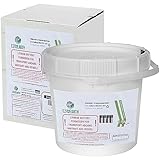
- Container for Wide range of Lithium Batteries -- Easily recycle various lithium batteries from diverse devices, promoting hassle-free disposal and reducing electronic waste. Hold up to 41.8 lbs of Lithium batteries.
- Easy and Convenient Recycling Process -- Our kit offers an easy process. You will receive a container in a box, and a free return label. Just drop your batteries, attach the label, and send for recycling—no stress or extra fees.
- Prevention of Landfill Disposal -- Recycling makes sure that lithium batteries don't end up in landfills. This prevents dangerous materials from getting into the environment and helps keep our ecosystems safe.
- Recycling You Can Trust -- We are certified recycling experts who share our dedication to the environment. Your batteries will be handled responsibly, reducing the negative impact of improper disposal.
- Be a Part of Something Bigger -- Recycling your lithium batteries isn't just responsibility – it's a step towards a circular economy. By doing your part, you're helping to conserve valuable resources and lessen the demand for new materials.
| Decision point | Producer, importer or dealer take-back | Independent registered recycler or refurbisher |
|---|---|---|
| Registration to verify | Ask which registered facility handles collected batteries. | Check the operator’s CPCB portal listing and relevant SPCB/PCC registration. |
| Accepted materials | Usually tied to the producer’s products; confirm chemistry, model and condition. | Confirm every chemistry, format and condition before delivery. |
| Convenience | May use a service centre or dealer network; coverage varies by city. | May offer pickup or a specialist drop-off site; geographic coverage varies. |
| Damaged or swollen packs | Ask the producer’s service channel for a controlled collection procedure. | Ask the registered operator whether it has a specific damaged-battery process. |
| Proof of hand-over | Request a receipt or service record. | Request a receipt and, where applicable, processing confirmation. |
A directory listing alone is not proof that a site accepts every battery. Confirm current registration, the city served, accepted chemistries, quantity limits and the treatment of damaged packs immediately before travelling.
Finding a battery recycling point in your city
Use the CPCB Battery EPR portal as the verification point
The CPCB portal is intended to be a single repository for registration, orders and implementation information under the battery rules. Search its registered recycler and refurbisher information, then compare the listing with the contact details supplied by the collection point. If a site cannot explain its registration or refuses to identify the registered downstream facility, choose another channel.
Ask precise questions by phone or email
- Do you accept this chemistry and format, such as a lithium-ion laptop pack or lead-acid inverter battery?
- Do you accept intact packs only, or can you handle a swollen, leaking or otherwise damaged battery?
- Is drop-off available in my city, and do you offer pickup for larger quantities?
- What packaging, labelling and transport instructions apply?
- Will you issue a receipt or processing acknowledgement?
- Which CPCB, SPCB or PCC registration covers the facility receiving the battery?
When a local shop offers to take a battery
A dealer or repair shop may be a collection point, but it should pass the battery into the registered chain. Ask where it goes and keep the shop’s acknowledgement. Do not assume that a scrap buyer, municipal garbage collector or informal dismantler is authorised simply because it accepts batteries.
The Tool Desk
Outbyte Driver Updater FREEFix the driver behind crashes, sound loss and screen glitchesFind Drivers →Outbyte PC Repair FREERepair Windows errors before they cause bigger problemsFix Now →Special instructions for common battery types
Phones, tablets and laptops
For a removable battery, remove it only if the product design allows normal user removal and the pack is cool and undamaged. For a sealed device, do not open the casing. Take the whole device or pack to the producer’s service channel and state whether the battery is swollen or leaking.
Rank #3

- UN Approved Container for Dry Cell Batteries -- Easily recycle various dry cell batteries such as Alkaline, Nickel Cadmium (NiCad), Zinc-Carbon (Zn), Rechargeable Lithium-ion, Nickel-Metal Hydride, mercury, Silver-Oxide, AA, AAA, C, D and 9 Volts.
- Easy and Convenient Recycling Process -- Our kit offers an easy process. You will receive a container in a box, and a free return label. Just drop your batteries, attach the label, and send for recycling—no stress or extra fees.
- Prevention of Landfill Disposal -- Recycling makes sure that batteries don't end up in landfills. This prevents dangerous materials from getting into the environment and helps keep our ecosystems safe.
- Recycling You Can Trust -- We are certified recycling experts who share our dedication to the environment. Your batteries will be handled responsibly, reducing the negative impact of improper disposal.
- Be a Part of Something Bigger -- Recycling batteries isn't just responsibility – it's a step towards a circular economy. By doing your part, you're helping to conserve valuable resources and lessen the demand for new materials.
Power tools, cameras and other portable packs
Return the cartridge through the tool or battery maker, dealer or an operator that explicitly accepts that pack. Do not combine several incompatible packs in a box or attempt to harvest cells for another project. The receiving operator must determine whether a pack is suitable for refurbishment or requires recycling.
Lead-acid automotive, inverter and UPS batteries
Ask the vehicle, inverter or battery dealer about take-back and confirm that the receiving recycler is registered. Keep the battery upright and follow the operator’s transport instructions; do not drain, break or dismantle it yourself. A commercial or facility-scale quantity should be scheduled as a documented collection rather than left with mixed scrap.
Electric-vehicle batteries
Contact the EV manufacturer or its authorised service network. EV packs are large, high-voltage units and are not consumer-dismantling projects. Do not remove a traction battery from a vehicle, open its enclosure or attempt a cell-level repair unless you are operating through an authorised, properly equipped channel. Ask whether the pack will be assessed for second-life refurbishment or sent directly to a registered recycler.
Free tools Windows power users keep installed
One-click scans. No signup required.
What the rules require from producers and processors
Producer extended responsibility
Producers must meet collection and recycling or refurbishment targets set out in Schedule II and submit the required information through the CPCB system. Rule 4(3) states: “Waste Battery collected by the Producer shall be sent for recycling or refurbishing and shall not be sent for landfilling or incineration.” The obligation follows batteries introduced to the Indian market, including imported products and equipment containing batteries.
Rank #4

- Durable Metal Construction: Made from sturdy metal material for long-lasting use.
- Large Size: Measures 11.5 inches long, 6 inches wide, and 6 inches high for ample storage.
- Multipurpose Use: Ideal for recycling and storing cell phones, batteries, and accessories.
- Easy to Use: Comes with built-in hinges for easy opening and closing.
- Compact Design: Slim profile takes up minimal space in your home or office.
Registered collection, refurbishment and recycling
Entities that collect, segregate or transport waste batteries must send them to registered refurbishers or recyclers for treatment. Registered recyclers issue processing certificates and report quantities and recovery information. This chain is why a consumer should verify the destination rather than handing a battery to an unknown intermediary.
Traceability and enforcement
The CPCB portal provides the registration and reporting framework used to track orders, quantities and implementation. Environmental compensation can be imposed when EPR obligations are not fulfilled, and the rules provide for penal action under the Environment (Protection) Act, 1986. These controls apply to regulated entities; consumers should support compliance by using documented channels and retaining hand-over proof.
Independent reader supportYour contribution helps us test, update, and keep practical guides available for everyone.Recycled content and battery labels
A CPCB notice dated 28 May 2024 clarifies that domestically recycled material may include lithium, cobalt, aluminium, graphite, paper, plastic and carbon. The notice also explains how an EPR registration number may be marked on imported batteries, equipment or packaging. A label or registration number does not replace the need to check whether a collection point is currently authorised to receive your battery.
Quick wins for a faster PC:
Scan for outdated or missing drivers - takes under a minuteDriver Scan →Repair Windows errors before they cause bigger problemsFix Now →Practices to avoid
- Do not place any waste battery in a household dustbin, mixed municipal waste bag or landfill-bound collection.
- Do not send batteries to an incinerator. The rules specifically prohibit landfilling and incineration for collected waste batteries.
- Do not open, crush, puncture, short-circuit or dismantle a sealed pack.
- Do not ship a swollen, leaking, hot or smoking battery through an ordinary parcel service without instructions from the producer or authorised waste operator.
- Do not assume that a site is legal because it advertises battery buying; verify CPCB/SPCB/PCC registration and the accepted chemistry.
- Do not mix an EV or industrial pack with small household batteries or leave it at a general electronics drop-off point that has not confirmed acceptance.
Troubleshooting: which route fits your situation?
The manufacturer has no visible take-back information
Ask the dealer or authorised service centre, then search the CPCB Battery EPR portal for a registered recycler or refurbisher serving your city. Confirm acceptance and packaging instructions in writing before delivery.
Best Value

- Durable and Secure Design: Made from sturdy plastic with secure latch to keep contents safe and secure.
- Compact Size: Measures just 6.5 x 5 x 3.5 inches, perfect for small spaces.
- Easy to Use: Simply place used batteries and cell phones inside for recycling.
- Convenient and Environmentally Friendly: Helps recycle used batteries and cell phones, reducing waste.
- Trusted Brand: Part of the Call2Recycle program, a leader in battery and cell phone recycling.
The nearest listing does not accept your chemistry
Do not substitute an unverified scrap dealer. Contact another registered operator or the producer’s channel and ask specifically for a facility equipped for that chemistry and format.
The battery is swollen, leaking or hot
Stop handling it and do not place it in a box or vehicle unless an authorised contact gives you instructions. Describe the condition to the product maker, service centre or local emergency or waste authority and follow its controlled-collection advice.
You have many batteries from a business, school or repair operation
Prepare an inventory by chemistry, product type, quantity and condition. Arrange a documented pickup with a registered recycler or refurbisher, ask for transport and packaging requirements, and retain the receipt and processing records. Do not add commercial quantities to a public household drop-off point without confirmation.
What’s actually slowing this PC down?
Pick the symptom - the matching free tool is one click away.
A collector refuses to provide a receipt
Ask for written confirmation of the receiving registered facility. If the collector will not identify its downstream operator or registration, use a different producer or registered channel.
Why proper routing matters
The 2022 framework treats batteries as a distinct waste stream because collection, segregation, transport, refurbishment and material recovery must be controlled. Refurbishment can give a used battery a second life, while recycling recovers materials through a registered process. Sending either type to landfill or incineration bypasses the system that records quantities, assigns producer responsibility and documents recovery.
The practical rule is simple: keep the battery intact, keep it out of ordinary rubbish, and transfer it only through a producer take-back route or a collection chain that you have verified leads to a CPCB/SPCB/PCC-registered facility.
Quick Recap
Product prices and availability are accurate as of the date/time indicated and are subject to change. Any price and availability information displayed on Amazon at the time of purchase will apply.

