Clear vocals start with a clean, steady performance captured in a room and microphone position that suit the singer. Processing can then address specific problems—such as rumble, muddiness, uneven peaks, or sharp sibilants—but no single microphone, EQ curve, or compressor setting works for every voice and mix.
Start with the performance and recording space
Before changing gear or adding plugins, listen for the problems already present in the recording. A microphone captures the room as well as the voice, so reflections, background noise, and an inconsistent distance from the mic can all limit clarity. Shure’s vocal recording and mixing guide emphasizes that even a good microphone cannot improve what it hears at the source.
As an Amazon Associate I earn from qualifying purchases.
Choose a quieter, less reflective room
Use the quietest room available and listen for a noticeable echo by clapping or singing. Closing doors and windows and switching off unnecessary noise sources can help. Dense soft furnishings or acoustic panels may reduce reflections, but they do not guarantee sound isolation or turn a room into a studio. Treat the room as a whole rather than assuming a small accessory will solve every reflection.
Recommended Free Tools
Prepare a repeatable performance
Keep the singer’s position and delivery reasonably consistent from phrase to phrase. Large movements toward and away from the microphone change the balance of direct voice and room sound, as well as the recorded level and bass response. If a line varies in volume, first consider whether a more consistent take or volume automation is preferable to heavier compression.
#1 Best Overall
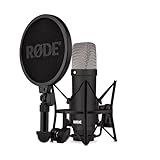
- COMPLETE VOCAL SETUP: shock mount, pop filter and XLR cable included, add an interface and record
- THE SOUND OF HIT RECORDS: the legendary NT1 large-diaphragm condenser voicing trusted in studios for two decades
- WHISPER-QUIET: among the lowest self-noise microphones ever made, nothing between you and the take
- BUILT FOR VOCALS AND STREAMS: tight cardioid pattern focuses on the voice, rejects the room
- IN THE BOX: NT1 Signature (Black), SM6 shock mount with pop filter, XLR cable and dust cover
Set the microphone distance and angle
Use distance recommendations as audition points, not fixed rules. Shure suggests approximately 10–20 cm (4–8 in) for most singers. RØDE’s home vocal recording guide, in its large-diaphragm condenser context, suggests 6–12 inches. The useful distance depends on the singer, microphone, room, and sound you want.
Balance direct voice against room sound
Moving closer generally increases the direct voice relative to the room. With a directional microphone, getting closer can also increase bass through the proximity effect; it can make plosives more troublesome too. Moving farther away may capture more of the room. Record a short test at a few distances and compare it in the actual mix before settling on a position.
Rank #2

- [USB Output] Enables simple setup. USB studio recording microphone kit provides a direct convenient plug-and-play connection to pc and laptop without any additional hardware or drivers for recording vocals, podcasts and Skype. Studio microphone for recording vocals is never been easier to get high-quality sound for your voice and computer-based audio recordings. (Incompatible with Xbox)
- [Excellent Sound Quality] With rugged construction for durable performance, the vocal recording microphone, USB condenser mic for PC,offers a wide frequency response and handles high SPLs with ease. Ideal for project/home-studio applications. The cardioid condenser capsule captures crystal-clear audio from the front and avoid ambient noise when communicating/creating/recording. Comes ready to go with a desktop mic boom arm stand and 8.2ft USB cable, you're guaranteed to get great-sounding results.
- [Durable Arm Set] The podcast microphone bundle with versatile and sturdy broadcast suspension boom scissor arm with 180° up and down rotation, 135° forward and backward extension for optimal adjustment, for capturing your voice in podcast or voiceover. The double pop filter attached on the music recording microphone provides two layers of dissipation, removes the rush of air, minimize the popping sounds or cancel noise that can compromise your recording, great for studio as well as home use.
- [Easy to Attach] The streaming microphone for PC includes adjustable boom studio scissor arm stand that features a heavy-duty combo mount consisting of a sturdy C-clamp and a detachable desktop mount. With 13" fixed horizontal arm and offers a 30" reach, the low-profile, table-hugging design of audio recording microphone allows on-air talent to perform without facial obstruction to record in podcasting or make dubbing sounds for videos, use voice chat in Discord or online conference on Zoom or Skype.
- [The Accessory Package Includes] The studio microphone music recording comes with practical accessories for you to use in most of recording. The scissor arm stand is made out of all steel construction, sturdy and durable, a studio-grade shock mount, a double pop filter, premium 8.2' USB-B to USB-A/C cable, a podcast PC gaming microphone, a user manual and friendly Technical Support.
Reduce breath blasts and sharp consonants at capture
A pop filter and a slight angle between the singer and microphone can help keep bursts of breath from striking the capsule. Aim the microphone according to its design; Shure’s guidance places the axis commonly between nose and mouth, while a slightly off-axis position can soften explosive consonants. RØDE likewise suggests singing at a slight angle. If “s” sounds are unusually prominent, try a slightly lower or off-axis mic position and listen again.
Free tools Windows power users keep installed
One-click scans. No signup required.
Choose a microphone for the voice and room
Microphone price alone does not predict whether it will suit a particular singer. A microphone that emphasizes an unwanted quality in a voice may be a poor fit, and a sensitive condenser can capture room detail as well as vocal detail. Consider the microphone’s directionality and tonal character in the room where it will be used. RØDE names its NT1 Signature Series as one example of a large-diaphragm condenser for home vocals, not as a universal best choice.
Rank #3
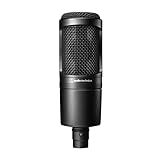
- The price/performance standard in side address studio condenser microphone technology
- Ideal for project/home studio applications
- High SPL handling and wide dynamic range provide unmatched versatility
- Custom engineered low mass diaphragm provides extended frequency response and superior transient response
- Cardioid polar pattern reduces pickup of sounds from the sides and rear, improving isolation of desired sound source.
Use EQ to fix a specific tonal problem
Listen for a problem before reaching for a frequency control. Shure’s suggested settings for a cardioid vocal recording are starting points, not a universal preset. Its guide, published February 6, 2015, suggests a high-pass filter around 100 Hz for low rumble; a cut of a few decibels around 300–600 Hz if the vocal sounds muddy; a small boost around 3–7 kHz if more presence is needed; and a broad lift above 8 kHz for air. Microphone character, the singer, and the production all affect whether any of these moves help.
- Low rumble: Try a high-pass filter only if unwanted low-frequency energy is present; avoid removing useful body from the voice.
- Muddiness: If the vocal sounds congested, audition a modest cut in the low mids rather than applying it automatically.
- Presence: A small upper-mid boost may help a vocal read clearly, but too much can make it harsh.
- Brightness: Add high-frequency lift only if the recording needs it. A naturally bright microphone or voice may not benefit.
RØDE similarly advises removing unwanted low frequencies and using cautious midrange or high-shelf adjustments where they help. Basic EQ is available in standard DAW plugins; the technique does not require expensive software.
Rank #4

- Groundbreaking studio condenser microphone that fuses the classic sound signature of the iconic NT1 with patented next-generation technology
- Connect to an audio interface or mixer via XLR, or plug directly into a computer via USB to record studio-grade sound in any setup – an all-in-one digital recording solution for the home or the studio
- Offers the classic warm, silky character, extremely low self-noise and high SPL handling capability that the original is revered for, perfect for a huge range of applications, from voiceovers and guitars to drums and piano
- Features RØDE’s ultra-low-noise, high-gain Revolution Preamp and high-resolution (up to 192kHz) analog-to-digital conversion for crystal-clear digital recordings
- Body machined from high-grade aluminium with nickel plating and military-grade ceramic coating, ensuring its ready to take on the rigours of recording day in, day out
Control level without flattening the performance
Compression can reduce level swings, but it is optional. Shure offers a mild ratio around 2:1–6:1 as a starting range, with the threshold adjusted so louder peaks are controlled. RØDE recommends lowering the threshold until gain reduction appears, then judging the result by ear. These are starting points rather than guaranteed settings; the vocal and desired style determine how much compression is appropriate.
The Tool Desk
Outbyte Driver Updater FREEScan for outdated or missing drivers - takes under a minuteDriver Scan →Outbyte PC Repair FREERepair Windows errors before they cause bigger problemsFix Now →For a natural sound, compare compression with volume automation or a less processed take. Stronger compression can be an intentional stylistic choice, but heavy processing may bring sibilance forward. Recheck the “s” and “sh” sounds after compression rather than assuming the original balance will remain unchanged.
Best Value

- 【Ready to use Recording Studio Microphone】This studio condenser microphone features a USB output, providing a direct and convenient plug-and-play connection to your PC, smartphone, or laptop. Perfect for podcasting, vocal recording and music production, the DJM5 condenser microphone delivers high-quality sound without the need for additional hardware.
- 【Exceptional Sound Quality 】This condenser microphone uses cardioid polar pattern, 16mm diaphragm, 192kHz/24Bit sampling rate and 30Hz‑16kHz frequency response. It delivers clean sound for podcasting, vocal recording and streaming.
- 【Multifunctional Condenser Mic】This versatile condenser microphone supports 5V voltage and includes features like echo control, volume adjustment (+/-), a 3.5mm monitor headphone jack, and a mute button. Ideal for podcasting, home studio setups, and live broadcasting, the DJM5 is an all-in-one solution for high-quality audio
- 【Foldable Isolation Shield】The microphone isolation shield is made of 5 high-density sound-absorbing panels with a triple acoustic design. Each panel is foldable and adjustable, ensuring optimal noise reduction for podcasting, recording vocals, and music production. The compact design of the DJM5 makes it easy to carry and set up anywhere. This product comes with isolation shields in black, rose gold, and white, allowing you to choose the color that best matches your style
- 【Compact and Lightweight Design】 The DJM5 kit includes a soundproof shield measuring 27.55in x 10.23in, a microphone measuring 6.3in x 1.96in, a tripod stand measuring 8.66in x 7.1in, and a 6in diameter shockproof filter. The entire kit weighs only 4.1lbs (1.86kg), making it easy to carry and set up
Tame sibilance and plosives where they occur
Plosives are bursts of air, often on “p” and “b”; sibilance is the sharp high-frequency energy in sounds such as “s” and “sh.” A pop filter and mic-angle adjustment can reduce plosives during capture. For persistent harsh sibilance, try a de-esser, which uses frequency-sensitive processing to reduce those sounds when they cross a threshold.
Set a de-esser only as strongly as needed. If it makes the singer sound dull or lisping, back it off. Changing microphone height or angle can also help when sibilance is prominent in the raw recording.
Add space without obscuring words
Reverb can suggest a room or add depth; delay can create repetitions. Either can make a vocal less intelligible when it competes with the words, so keep effects proportionate to the arrangement. Shure notes that pre-delay can preserve a more immediate vocal before the reverb is heard. Filtering the reverb return—such as removing unnecessary low frequencies or taming distracting brightness and resonances—can help the effect sit behind the lead rather than mask it.
Do these 3 things before closing this tab:
1Repair Windows errors before they cause bigger problems2Scan for outdated or missing drivers - takes under a minute3Clear out junk files and repair common Windows errorsDouble-tracking can widen or thicken a vocal, particularly in backing parts, but its usefulness depends on genre and arrangement. Treat it as an arrangement choice, not a repair for a recording that lacks clarity.
A practical troubleshooting order
- Listen to the unprocessed take. Identify whether the main issue is room sound, noise, distance changes, tonal balance, uneven level, plosives, sibilance, or effects.
- Fix capture problems first. Try a quieter or less reflective location, a steadier position, a different mic angle, or a pop filter as appropriate.
- Make one processing change at a time. Use EQ, compression, or de-essing only to address an audible issue, then compare with the unprocessed signal.
- Check the vocal in the arrangement. A soloed vocal can sound different from one competing with instruments. Keep reverb, delay, and tonal changes judged in context.
The guidance here concerns sung vocals in home or studio recording and music mixing. It is not a complete live-sound, broadcast-dialogue, or clinical voice-care workflow.
Quick Recap
Product prices and availability are accurate as of the date/time indicated and are subject to change. Any price and availability information displayed on Amazon at the time of purchase will apply.

