The Tool Desk
Outbyte Driver Updater FREEFix the driver behind crashes, sound loss and screen glitchesFind Drivers →Outbyte PC Repair FREERepair Windows errors before they cause bigger problemsFix Now →Protect supermarket refrigeration by treating every controller, supervisory server, engineering workstation and vendor connection as operational technology (OT), not as ordinary office IT. Build an accurate asset and dependency inventory, remove direct internet exposure, isolate refrigeration networks behind firewalls, require controlled and logged remote access with multifactor authentication (MFA) where possible, keep systems supported and patched through operational change control, and maintain an offline recovery plan that protects food safety and equipment.
Why refrigeration security is an operational-continuity issue
Refrigeration controls monitor temperatures, alarms, compressors, condensers, evaporators and other equipment. A cyber incident can therefore affect the systems used to observe and manage store conditions, not merely a back-office computer. Loss of visibility may delay a response to a failing case or cold room; unauthorized commands could interfere with normal operation; and an encrypted supervisory server may prevent operators from using normal dashboards.

As an Amazon Associate I earn from qualifying purchases.
That does not mean every ransomware event reaches a refrigeration controller. It means the control environment deserves the same deliberate protection applied to other industrial control systems (ICS): understand the architecture, constrain pathways, monitor activity and plan for safe operation when digital services are unavailable.
What’s actually slowing this PC down?
Pick the symptom - the matching free tool is one click away.
CISA’s October 2021 BlackMatter advisory reported that, since July 2021, the group had targeted multiple US critical-infrastructure entities, including two Food and Agriculture Sector organizations. The advisory described use of previously compromised credentials and network protocols to discover hosts and remotely encrypt systems and shared drives. Those examples establish food-sector relevance, but they do not show that the victims were supermarkets or that refrigeration controls were affected. CISA’s broader ransomware guidance should likewise be read as general guidance, not as a supermarket-specific incident rate.
#1 Best Overall

- User-friendly NAT functionality simplifies network integration
- Hands-free network access control through automatic whitelisting of locally connected devices
- Integrated security features to ensure device and network safety
- Ultra-compact size and robust industrial design suitable for cabinet installation
- Supports secure boot for checking system integrity
1. Create a complete refrigeration OT inventory
Do not begin by blocking traffic or installing software. First establish what exists, where it is connected and what operation depends on it. CISA’s ransomware and ICS guidance puts critical-asset inventory and dependency mapping at the center of preparation.
Record every control and support asset
- Refrigeration controllers, programmable devices, sensors, gateways and networked meters.
- Supervisory control systems, historian databases, alarm servers and application servers.
- Engineering workstations, technician laptops, local operator panels and maintenance tablets.
- Store, distribution-center and head-office network equipment that carries control traffic.
- Virtual machines, cloud services, managed service providers and vendor portals that exchange data with the system.
- Remote-access appliances, modems, cellular gateways, remote desktop hosts and management agents.
For each item, capture manufacturer and model, firmware or software version, location, owner, support status, purpose, network address, required protocols, authentication method, backup location and maintenance contact. Record whether the device can be safely rebooted, patched or replaced during a trading day.
Map dependencies and data flows
Draw a diagram showing how a store controller reaches a supervisory server, how alarms reach operators, where time synchronization occurs, and which systems provide identity, DNS, backups or remote management. Add every vendor, managed-service and cloud connection. Mark paths that cross from business IT into OT and paths that enter from outside the organization.
Free tools Windows power users keep installed
One-click scans. No signup required.
Keep a protected offline copy of the diagram and configuration records. If an incident makes file shares or documentation portals unavailable, responders still need addresses, cable or port information, controller settings, escalation contacts and restoration order.
Assign ownership before making changes
Name an accountable refrigeration or facilities owner, an IT/OT security owner and an operations contact for each site. A firewall rule that looks harmless to an IT administrator can stop an alarm feed or a compressor-management service. The system owner must approve required communications and the operational test plan.
2. Remove unnecessary internet exposure
CISA’s Internet Exposure Reduction Guidance, published June 4, 2025, calls for eliminating avoidable exposure, changing default credentials, keeping supported systems patched, replacing systems that no longer receive security support, monitoring traffic and using a monitored jump host with MFA when external access must remain. Its warning is direct: “Many organizations unknowingly leave common vulnerabilities and weaknesses exposed to the internet, making them easy targets for exploitation.”
Find exposed services
- Review firewall, router, cellular and cloud configurations for public addresses associated with controllers, supervisory servers, remote desktops, VPN concentrators and management appliances.
- Compare those records with your inventory and ask each vendor or managed-service provider to identify its inbound and outbound requirements.
- Check for port-forwarding rules, direct remote desktop access, default web interfaces and unattended remote-management agents.
- Classify each connection as required, replaceable by a safer path, or unnecessary.
Do not rely on a single scan. A stale modem, a store router installed by a contractor or an overlooked cloud connector can create a separate path into the same environment.
Rank #2

- Great Variety of Sizes: 32 Pcs of the most commonly used 15 sizes assorted rubber grommet assortment kit.With retractable box cutter and velcro straps
- High Quality: Rubber washers are made of flexible and durable rubber material, they are of good electric resistance capability.
- Easy To Use: Wire grommets are quicker and easier to install since they can be placed on one side only.
- Wide Range of Applications: Very useful for auto and other projects where wiring cable needs to be run through metal or plastic openings.
- Packaging Includes:2-3/8''Drill Hole(2 Pcs),2''Drill Hole(2 Pcs)(2 Pcs),1-9/16''Drill Hole(2 Pcs),1-3/8''Drill Hole(2 Pcs),1-3/16''Drill Hole(2 Pcs),1''Drill Hole(2 Pcs),7/8''Drill Hole(2 Pcs),2-3/8''Drill Hole(2 Pcs),2''Drill Hole(2 Pcs),1-9/16''Drill Hole(2 Pcs),1-3/8''Drill Hole(2 Pcs),1-3/16''Drill Hole(2 Pcs),1''Drill Hole(2 Pcs),7/8''Drill Hole(2 Pcs),13/16''Drill Hole(2 Pcs).With retractable box cutter and velcro straps
Close or redesign the path
- Remove direct public access to control devices wherever possible.
- Place unavoidable external access behind a monitored jump host or equivalent controlled gateway.
- Require MFA for the gateway and vendor accounts whenever the product supports it.
- Use unique credentials; replace factory or shared passwords and store secrets in an approved password-management system.
- Restrict access by source, destination, service and schedule rather than allowing an unrestricted tunnel.
- Monitor both ingress and egress traffic and alert on unexpected destinations, protocols or volumes.
When an old controller or gateway cannot receive security fixes, plan a supported replacement. Compensating controls such as isolation and strict allow-lists reduce risk but do not restore vendor support.
3. Segment refrigeration OT from business IT
Segmentation limits the damage if an office account, laptop or server is compromised. CISA’s StopRansomware Guide calls for maintaining separation between IT and OT, and its Johnson Controls Metasys advisory repeats the firewall and isolation baseline. The objective is not merely to create VLANs; it is to enforce boundaries and permit only documented communications.
Use zones and conduits
A practical design separates store or plant control networks, supervisory servers, engineering workstations, vendor-access infrastructure and corporate services. A firewall boundary should mediate traffic between zones. If a business application needs temperature data, publish only the required data flow through a controlled intermediary instead of giving that application broad access to controllers.
Build an allow-list from operational requirements
- List each required source, destination, protocol, port, direction and business purpose.
- Confirm the list with the refrigeration controls owner and the equipment manufacturer.
- Block everything else at the boundary, including unused management services.
- Enable logging for permitted and denied connections and send logs to a monitored system outside the protected zone.
- Test alarms, schedules, remote supervision, failover and local manual controls after each change.
Before blocking traffic, perform an impact analysis and risk assessment. CISA’s ICS material emphasizes planning and testing because an unreviewed change can interrupt refrigeration just as surely as an attack.
Keep safety and local control available
Network isolation should not remove the ability to operate equipment safely during a communications outage. Verify that local panels, mechanical safeties, temperature protections and manual procedures continue to work if the supervisory server or wide-area link is unavailable. Document which functions are autonomous and which require a central service.
4. Control vendor and technician remote access
Threat actors frequently obtain initial access through poorly secured remote services and then use remote desktop or legitimate remote-management tools for lateral movement. Vendor access is often necessary for maintenance, but it must be a governed process rather than a permanent, invisible tunnel.
Use one approved access path
Route supplier and contractor sessions through an organization-controlled gateway or jump host positioned outside the refrigeration control zone. Do not permit a vendor laptop to connect directly to a controller from the public internet. If a supplier requires a proprietary client, run it from the approved gateway and record the session or its connection metadata where technically and legally appropriate.
Apply least privilege and time limits
- Create an individual account for each person; never issue a shared technician login.
- Grant only the sites, systems and functions needed for the approved work.
- Require a ticket, named approver and start and end time for elevated access.
- Automatically disable or expire temporary accounts after the maintenance window.
- Use separate administrative credentials instead of giving routine accounts full control.
Authenticate and monitor
Require MFA at the access gateway where possible. Log successful and failed authentication, source address, account, destination, commands or administrative actions when available, and session start and stop times. Review the logs for access outside approved windows, unusual locations, repeated failures, unexpected tools and connections to unrelated stores.
Quick wins for a faster PC:
Fix the driver behind crashes, sound loss and screen glitchesFind Drivers →Repair Windows errors before they cause bigger problemsFix Now →Scan for outdated or missing drivers - takes under a minuteDriver Scan →Audit remote tools
Maintain a list of authorized remote desktop and remote-management products, versions, owners and approved users. Remove dormant agents and disable unused services. Detect and block unapproved tools; legitimate software can still be abused after an attacker obtains credentials or local administrator rights.
5. Keep systems supported and patched safely
Patch management for OT is different from indiscriminate desktop updating. A refrigeration controller may have narrow maintenance windows, vendor-certified firmware and dependencies that require operational testing. CISA’s ICS resources include dedicated patch-management guidance, but they do not justify unreviewed patching of live controls.
Use a risk-informed maintenance process
- Track vendor advisories, end-of-support dates and known vulnerabilities for every inventoried component.
- Rank updates by exploitability, exposure, consequence and the availability of compensating controls.
- Obtain the manufacturer’s installation instructions and confirm backup and rollback procedures.
- Test the update on representative equipment or a laboratory environment when feasible.
- Schedule the work with facilities and store operations, keeping a technician available for abnormal temperatures or alarms.
- Verify control logic, alarm delivery, historian data, remote access and failover after installation.
- Record the result, firmware version, configuration changes and any remaining exception.
Replace products that no longer receive security support when practical. If replacement must wait, isolate the device, restrict communications, remove internet exposure, monitor activity and document the risk acceptance and target date.
6. Detect suspicious activity early
Prevention reduces exposure; monitoring helps reveal misuse before an incident becomes an outage. Centralize firewall, VPN, jump-host, identity, endpoint and control-system logs where the security team can review them. Retain enough history to investigate a slow-moving compromise, subject to your organization’s retention and privacy requirements.
PC Slower Than It Used to Be?
A free scan shows the junk files, broken settings and background clutter dragging Windows down - then fixes them in one click.Free scan · Windows 10 & 11Crashes, No Sound, or Screen Glitches?
Random freezes, missing sound and display glitches usually trace back to one bad driver. Find and replace yours safely.Free scan · under a minuteUseful alert conditions
- A new internet-facing rule or a change to a port-forwarding configuration.
- Authentication to a vendor account outside its approved schedule or from an unfamiliar source.
- Repeated login failures followed by a successful session.
- Remote desktop or management-tool use between systems that normally do not communicate.
- Large or unusual file-encryption activity on supervisory servers or shared drives.
- Unexpected changes to controller programs, set points, user roles or alarm destinations.
- Loss of telemetry, simultaneous alarm failures or a supervisory server that becomes unreachable.
Alerting should reach a person who understands both security and refrigeration operations. A technically accurate alert is not useful if nobody knows whether a temperature-data interruption is a network problem, a maintenance event or an active attack.
7. Prepare an OT-aware ransomware response
A standard IT incident plan is not enough. The response must protect people, equipment, product and safe operating conditions while preserving evidence.
Rank #4

- MOXA EDR-810-2GSFP Industrial Secure Router Switch with 8 10/100BaseT(X) ports, 2 1000BaseSFP slots, 1 WAN, Firewall/NAT, -10to60C -- NO VPN --
Define the first decisions
- Confirm the signal and notify the incident lead, facilities or refrigeration manager, IT/OT security and the affected vendor.
- Determine whether controllers are still regulating equipment locally and whether temperatures and alarms remain trustworthy.
- Isolate compromised servers, workstations or network segments in a way that does not create an unsafe refrigeration condition.
- Stop unauthorized remote sessions, disable affected accounts and preserve relevant logs and images for investigation.
- Move to documented local or manual operating procedures if supervisory functions are unavailable.
- Contact legal, insurance, law-enforcement or specialist responders according to the organization’s plan.
Do not simply power-cycle every controller or erase systems before responders capture evidence and operations staff confirm the safety impact.
Prioritize restoration
Document which capabilities return first: local control and safety functions, temperature visibility and alarms, supervisory applications, historical data, reporting and then convenience integrations. Restore into a clean, segmented environment, reset credentials, verify backups and test communications before reconnecting vendor or corporate paths.
Recommended Free Tools
Maintain offline recovery material
Keep offline or otherwise isolated copies of controller programs, configurations, network diagrams, license information, contact lists, operating procedures and essential backups. Test that backups can be restored and that the restored system contains usable data; a backup that was never tested is only an assumption.
Remote-access designs compared
Use the following criteria when selecting or reviewing an access design: public-internet exposure, authentication strength, use of a monitored gateway, privilege and time limits, logging and review, and separation from refrigeration traffic.
| Design | Exposure | Authentication and control | Monitoring | Operational assessment |
|---|---|---|---|---|
| Direct controller or server exposure | High; the device is reachable from the internet | Often dependent on device credentials; MFA and least privilege may be unavailable | Usually limited to device or router logs | Avoid. Remove the exposure and redesign the path. |
| Permanent site-to-site vendor tunnel | Reduced public exposure, but a persistent route remains | Requires individual accounts, strict routes, MFA where supported and contractual controls | Must include tunnel, authentication and destination logging | Use only for documented requirements; review continuously. |
| Monitored jump host with time-limited access | Gateway is the only external entry point | MFA, named users, least privilege, approval and automatic expiry | Central session and network logs support review | Preferred pattern when external maintenance is necessary. |
| On-site technician connection | No standing external path, but the laptop and removable media become risks | Verify technician identity, scan media, use an individual account and restrict privileges | Record arrival, system access and changes | Useful for exceptional work; enforce the same change and logging discipline. |
Labels such as “VPN” or “zero trust” do not by themselves prove that a design is safe. Examine the actual route, permissions, MFA, expiry, logs and segmentation.
Independent reader supportYour contribution helps us test, update, and keep practical guides available for everyone.Implementation sequence for a supermarket organization
- Establish the baseline. Build the asset inventory, dependency map, account list, vendor list and current firewall and remote-access diagrams.
- Find exposure. Identify public addresses, port forwards, direct remote desktop, unattended agents and unsupported gateways.
- Remove unnecessary access. Close unused services, change default credentials and disable dormant accounts and tools.
- Design the boundary. Place refrigeration OT and remote devices behind firewalls, separate them from business IT and document required flows.
- Implement controlled maintenance access. Deploy a monitored jump host or equivalent gateway, enforce MFA where possible, issue named accounts and use approval-based time limits.
- Validate operations. Test alarms, temperature visibility, schedules, local control, failover and vendor workflows with the refrigeration owner before and after each change.
- Address lifecycle risk. Patch supported systems through change control and schedule replacement of unsupported components.
- Turn on monitoring. Collect boundary, identity, remote-session and control-system logs; assign review responsibility and escalation thresholds.
- Exercise recovery. Walk through a ransomware scenario, verify offline records and backups, rehearse vendor contacts and confirm restoration priorities.
Common mistakes and their corrections
Assuming a small store is too insignificant to matter
Attackers can use a lightly protected store, contractor account or shared service as a route to other systems. Apply the same inventory, segmentation and access standards at every location, adjusting only for documented risk and capability.
Blocking traffic without understanding the controls
An abrupt rule can suppress alarms or disconnect supervisory services. Map dependencies, obtain owner approval, stage the change, monitor results and keep a tested rollback.
Best Value
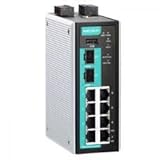
- 8+2G all-in-one firewall/NAT --- NO VPN-------/router/switch
- Build up secure remote access tunnel / Protect critical assets by stateful firewall
- Inspect industrial protocol with PacketGuard technology / Easy network setup with network address translation (NAT)
- RSTP/Turbo Ring redundant protocol enhances network redundancy / -40 to 75°C operating temperature range
- Security features based on IEC 62443 / NERC CIP / Check firewall settings with intelligent SettingCheck feature
Allowing a vendor account to remain active indefinitely
Permanent access increases the time available for misuse. Use named accounts, MFA, approvals, narrow permissions, session logging and automatic expiry.
Installing patches immediately on live equipment
Unplanned firmware or software changes can create an operational outage. Follow manufacturer guidance, test, schedule and verify before returning the system to normal service.
Keeping backups online and connected
Ransomware can encrypt reachable backups. Maintain offline or isolated copies, protect credentials separately and test restoration on a schedule.
Measuring success only by whether ransomware was detected
A resilient program also demonstrates that unauthorized paths are closed, remote activity is attributable, alarms remain available during a network failure and essential configurations can be restored without internet access.
What the available guidance does and does not establish
CISA’s StopRansomware, ICS security and exposure-reduction materials provide broadly applicable controls for industrial and enterprise environments. The BlackMatter advisory supplies historical food-sector context, while the Metasys advisory illustrates the importance of firewalling and isolation for a control-system product. None of these materials verifies a named supermarket refrigeration attack, a model-specific weakness, a universal firewall choice or a supermarket-wide prevalence statistic. Recheck current advisories, firmware status and vendor support before implementation.
For equipment selection, “industrial firewall” is the relevant category, not a guarantee that any particular product will work at every site. Evaluate protocol compatibility, traffic capacity, management and logging, update lifecycle, vendor support and the operational team’s ability to maintain the device. An OT/ICS cybersecurity assessment or incident-response specialist can help with architecture review and exercises, but the service should be selected through normal qualification and procurement procedures.
The operating standard to adopt
Every refrigeration connection should have an owner, a documented purpose, a least-privilege route and a way to detect its use. Every critical configuration should have a protected recovery copy. Every change should be assessed with facilities and tested against real operating scenarios. This combination—inventory, exposure reduction, segmentation, controlled access, supported technology, monitoring and practiced recovery—turns ransomware defense from a collection of IT settings into an operational discipline that protects refrigeration continuity.
Quick Recap
Product prices and availability are accurate as of the date/time indicated and are subject to change. Any price and availability information displayed on Amazon at the time of purchase will apply.

