Use your EV’s battery-care settings and owner’s manual as the authority: precondition while plugged in before cold-weather trips, use battery conditioning before a DC fast-charge stop if your car supports it, and avoid leaving the battery near empty or full for long periods when your model’s manual advises against it. Routine AC charging is a sensible default when convenient; fast charging remains useful for trips.
What actually affects EV battery life?
Temperature is one factor, not the whole story. Battery chemistry and design, driving and charging patterns, and the vehicle’s thermal-management system also matter. The U.S. Department of Energy explains that high-power charging creates heat-management challenges, while cold can reduce available performance and charging power. The Alternative Fuels Data Center attributes climate-related lifespan estimates to predictive modeling by the National Laboratory of the Rockies: 12 to 15 years in moderate climates and 8 to 12 years in extreme climates. These are model estimates, not a warranty or a prediction for any individual car; the page does not state the estimate’s publication year.
As an Amazon Associate I earn from qualifying purchases.
There is no single ideal battery temperature, daily charge percentage, or safe fast-charging frequency established for every EV. Chemistry, model, thermal controls, and the manufacturer’s guidance differ, so use your vehicle’s charge-limit setting and manual rather than applying another brand’s number.
Free tools Windows power users keep installed
One-click scans. No signup required.
How should you charge in ordinary use?
Use AC charging when it fits your routine
When charging time allows, routine AC charging is a reasonable default. Hyundai’s 2026 model-year U.S. English manual says using AC charging as much as possible can help keep the high-voltage battery in optimal condition, and warns that frequent DC charging may affect battery life. That is Hyundai guidance for its vehicles, not a universal prohibition on fast charging. See Hyundai’s 2026 high-voltage battery precautions.
#1 Best Overall

- High Quality Materials: EcoBrisa Battery insulation kit made from high-quality fire-withstand and insulating materials, ensuring it can endure extreme heat up to 2,000°F. It also possesses the ability to capture and neutralize harmful battery acids without being corroded so in case of leaks,insulated battery box won’t corrode.
- Universal Size: The package contains two 40x7 inch battery blankets roll and two 39-inch long aluminum foil tape. Designed for standard batteries, it can be easily trimmed to fit non-standard battery sizes or shapes. The included edge-sealing tape ensures quick and tidy installation.
- Car Battery Preserve: EcoBrisa car battery insulation kit is specifically designed to protect your car battery during extreme cold or hot temperatures. Car batteries are highly susceptible to extreme heat and cold weather, as well as engine vibrations, which can lead to premature failure and hazardous leaks. Our car battery blanket is 30% material thicker than comparable so you will have better protection against heat and vibration.
- Simple Installation: EcoBrisa car battery heat shield is designed for standard batteries so you only need towrap battery preserve material around the battery to determine the necessary length, allowing for an overlap of approximately 0.5"-1" when measuring; Secure the overlapping edges of the battery protection blanket with the attached aluminum foil tape.the entire process, from trimming to sealing the edges, takes just a few minutes.
- Powerful Functionality: Crafted from wear-resistant, heat-resistant, and high-vibration-resistant performance materials, this automotive battery blanket ensures optimal protection. Its exceptional conformability allows complete, snug wrapping. The insulation layer actively suppresses and neutralizes battery acid, preventing corrosion of the insulated battery compartment even during leaks.
Charge to the range you need
Set a charge limit suited to your next drive and the instructions for your model. Some manuals advise against leaving a battery near empty or full for extended periods. For example, the cited Tesla Model Y India-market manual advises avoiding long periods near 0% or 100%; that instruction should not be assumed to apply identically to every EV or market. Consult your own manual: Tesla Model Y Owner’s Manual PDF.
What to do in hot weather
- When practical, park in shade or covered parking, and avoid prolonged exposure to extreme heat. The AFDC notes that storage at temperatures that are too hot or cold may affect battery performance; its page on electric vehicles for fleets also discusses temperature limits for some vehicles and charging equipment.
- If you own a Tesla Model Y and must park outside in the sun, its Australia English manual recommends using a sunshade. This is a cabin-shading suggestion, not evidence that a sunshade directly cools the traction battery or prevents degradation across all EVs. An ordinary windshield shade may improve cabin comfort, but it should not be treated as battery protection. See Tesla’s Model Y hot-weather guidance.
- Let the vehicle manage battery temperature when its system is designed to do so. Tesla says a Model Y prepares the battery for charging when navigating to a Supercharger; in extreme heat, it may condition the battery without showing the usual message. These behaviors are specific to that model and manual.
What to do in cold weather
Precondition before departure
If your EV supports it, schedule cabin and battery preconditioning while the car is still plugged in. The U.S. Department of Energy says many EVs can heat the cabin and battery before driving; doing this while connected can preserve more stored energy for the trip. Availability and operation vary by vehicle. See DOE’s winter EV guidance, published January 30, 2024.
Rank #2

- Package Include: You will receive 1pc small insulated car battery blanket, measures about 36x7inch (LxW) suitable for Group 24, Group 25 etc small battery types. WARNING: Anti-conductive battery insulation blanket contains a small amount of fiberglass inside, try to avoid direct contact with the skin as much as possible
- Extreme Weather Protection: This car battery wrap blanket is specifically designed to protect your car battery during extreme cold or hot temperatures. Whether it is keeping the battery warm in the cold winter or providing heat dissipation protection in the hot summer, The battery insulation sleeve kit help prevent battery overcold or overheating by maintaining optimal temperature levels
- Quality Materials: Car battery insulation kit crafted from high temperature resistant silica gel cloth and pre-oxygenated flame retardant felt with aluminum foil, which wear-resistant, heat-insulating, flame-retardant, and radiation-proof. It can maximize protection against extreme temperatures, moisture and corrosion, thereby extending the service life of the battery
- Easy to Install: This battery thermal wrap & cover protector with strong self-adhesive backing design, no need cut, just adjust hook-and-loop closure according to your battery size, easy to install
- Fit for Most Vehicles: This car battery insulation blanket is compatible with most car battery models, simply adjust hook-and-loop closure to match your battery size for a snug fit. 2 Sizes to choose, suitable for small vehicle, large car, truck, RV SUV Batteries etc
Condition the battery before a fast-charge stop
Use your car’s navigation or battery-conditioning feature when available, particularly in cold weather. Hyundai says its equipped battery-conditioning system can maintain DC charging performance in hot or cold conditions, depending on equipment and battery conditions. It is not available or operated the same way on every Hyundai; check Hyundai’s 2026 EV specialized-functions guidance.
Plan for the actual trip, not a fixed percentage
Cold weather and longer journeys may call for more charge than a short daily commute. DOE notes that 80% may meet immediate needs in many circumstances, while colder temperatures or longer trips may require more range. Treat 80% as an example, not a universal maximum or daily target.
Rank #3
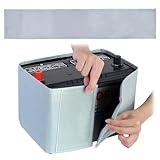
- Package Include: You will receive 1pc large insulated car battery blanket, measures about 40x7inch (LxW) suitable for most large vehicle battery types, such as Truck, Tractor, 4WD, SUV, RV Battrries etc. WARNING: Anti-conductive battery insulation blanket contains a small amount of fiberglass inside, try to avoid direct contact with the skin as much as possible
- Extreme Weather Protection: This car battery wrap blanket is specifically designed to protect your car battery during extreme cold or hot temperatures. Whether it is keeping the battery warm in the cold winter or providing heat dissipation protection in the hot summer, The battery insulation sleeve kit help prevent battery overcold or overheating by maintaining optimal temperature levels
- Quality Materials: Car battery insulation kit crafted from high temperature resistant silica gel cloth and pre-oxygenated flame retardant felt with aluminum foil, which wear-resistant, heat-insulating, flame-retardant, and radiation-proof. It can maximize protection against extreme temperatures, moisture and corrosion, thereby extending the service life of the battery
- Easy to Install: This battery thermal wrap & cover protector with strong self-adhesive backing design, no need cut, just adjust hook-and-loop closure according to your battery size, easy to install
- Fit for Most Vehicles: This car battery insulation blanket is compatible with most car battery models, simply adjust hook-and-loop closure to match your battery size for a snug fit. 2 Sizes to choose, suitable for small vehicle, large car, truck, RV SUV Batteries etc
Does fast charging wear out an EV battery?
DC fast charging is a useful trip tool, but frequent use can have trade-offs. Hyundai’s 2026 manual says frequent DC charging may impact battery life; DOE describes heat generation as a technical challenge for high-power charging. Neither statement establishes that an occasional fast charge will harm a particular car, or sets a universal safe frequency. Follow your vehicle’s charging guidance and use its thermal-conditioning features where provided. DOE’s background on the heat challenge is in its extreme-fast-charging explainer, published January 6, 2017.
Expect charging power to taper as the battery fills. DOE says most batteries reduce charging power during the 80%–100% range when fast charging, so the last portion can take disproportionately longer. Unless your route or manual calls for a fuller battery, stop when you have enough range for the next leg.
Rank #4

- High-Quality Material: You get 2 adhesive-backed battery blankets (7"x59"/18x150cm). Made of 5mm high-density heat-resistant material (60% thicker than standard 3mm versions), this car battery insulation offers strong tear resistance and heat protection up to 1832°F (1000°C)
- Easy Installation: Each battery wrap features a strong self-adhesive backing. Simply peel off the film and press onto the battery surface - no complicated steps needed for quick setup
- Insulation for Safety: This battery blanket uses quality insulating material to block current conduction, reducing the risk of short circuits and adding a layer of safety to your battery
- Trimmable Fit: The car battery insulation can be easily trimmed along the edges to match your battery size, fitting most car battery models for a snug fit
- Extends Battery Life: This battery warmer resists extreme temperatures and engine vibrations, while helping prevent acid leaks, providing protective benefits for your battery
How should you store an EV for a long time?
Storage instructions are model-specific; do not combine one manufacturer’s advice with another’s. Hyundai’s 2026 U.S. English manual says to charge at least once every three months during extended non-use, avoid storing the vehicle at low charge for a long time, and warns that very hot or cold storage may degrade battery performance. Tesla’s cited Model Y India-market manual instead includes guidance to leave the vehicle plugged in during extended parking. Check the manual for your exact model and market before parking an EV for weeks or months.
Quick wins for a faster PC:
Clear out junk files and repair common Windows errorsFree Scan →Fix the driver behind crashes, sound loss and screen glitchesFind Drivers →Which recommendations transfer between EVs?
| Situation | Practical approach | Scope |
|---|---|---|
| Routine charging | Prefer AC when convenient; set the charge limit for your actual use and manual guidance. | Hyundai’s advice to use AC as much as possible is for its 2026 models; charge-limit recommendations vary. |
| Cold-weather departure | Precondition while plugged in if equipped. | DOE says many EVs offer preconditioning; exact availability and operation vary. |
| DC fast-charge stop | Use navigation or battery conditioning when your vehicle offers it; allow for charging-power taper near full. | Thermal features are model-specific; DOE says most batteries reduce power from 80% to 100%. |
| Hot or cold long-term storage | Follow the exact manual’s state-of-charge and plug-in instructions. | Hyundai’s 2026 U.S. manual and Tesla’s Model Y India-market manual give different instructions. |
For a closer comparison, check your model year and battery chemistry, whether the car heats or cools its traction battery, whether you are using AC or DC charging, and whether the advice concerns daily driving or long-term storage. Manuals may also differ by market.
Quick Recap
Best Value

- Superior Protection with 5mm Thick Material-Our car battery insulation kit uses upgraded 5mm material—thicker than the common 3mm options on the market. It shields your battery from extreme cold/scorching heat, resists temperature fluctuations, and extends battery life in harsh conditions.Perfect for extreme winter cold—keeps battery working in sub-zero temps
- Premium Materials for All-Round Defense-Made of high-temp resistant silicone cloth, pre-oxidized flame-retardant felt, and aluminum foil. This car battery wrap offers wear, heat, flame, and radiation protection, while blocking moisture and corrosion to keep batteries reliable long-term.Snow/moisture resistant—no corrosion even in heavy snow
- DIY-Friendly & Versatile (2 Minutes to Fit)-Customize easily with just a pair of scissors—cut to the needed size of a car battery blanket in 2 minutes. Compatible with cars, RVs, trucks, and most batteries, for both heat insulation and cold weather protection.Install before the cold hits—no tools, no hassle
- Generous 40"x7" Size for Multiple Uses-Each package includes 1 roll car battery cover (40"x7", 5mm thick). The ample size meets immediate installation needs and allows for future replacements/adjustments, delivering long-term value.Large 40"x7" size—covers big RV/truck batteries, no need to buy extra
- Key Safety Precautions - Before Installation: Wear eye protection and hand gear. Avoid contact between the battery’s anodized film and terminals/cables (prevents short circuits). Winter-safe design—avoids short circuits in low temperatures
Product prices and availability are accurate as of the date/time indicated and are subject to change. Any price and availability information displayed on Amazon at the time of purchase will apply.

