Your router is the security gatekeeper for every device at home. Before a large-scale cyberattack, change both router and Wi-Fi credentials, update the router and every connected device, use WPA3 Personal (or WPA2 Personal), disable unnecessary internet-facing features, and isolate smart-home equipment from computers and work systems. Keep an inventory, remove unsupported products, and prepare an offline recovery plan so you can disconnect or rebuild the network if an attack disrupts it.
Why your router is the first security priority
A home router controls traffic between the internet and your local devices. NIST describes routers as the gatekeepers of home and office networks because they manage that flow of data (NISTIR 8425A, 2024). If an attacker gains administrative control, they may be able to change wireless settings, redirect traffic, expose services, observe connected-device activity, or use the router as a stepping stone toward laptops, phones, storage systems, cameras, and other devices.
As an Amazon Associate I earn from qualifying purchases.
Preparation reduces the number of ways an attacker can enter and limits what a compromised smart device can reach. It cannot guarantee that a household will be unaffected by a major campaign, an unpatched vendor service, an internet-provider outage, or a supply-chain compromise. It does give you stronger defaults, fewer exposed services, better separation, and a known recovery path.
Recommended Free Tools
No authoritative source cited here provides a reliable probability for a future large-scale attack against home routers. The practical response is therefore risk reduction and resilience rather than a prediction about when an attack will occur.
#1 Best Overall

- 𝐍𝐞𝐱𝐭-𝐆𝐞𝐧 𝐖𝐢-𝐅𝐢 𝟕 - Optimize performance on latest WiFi 7 laptops and devices, like the iPhone 16 Pro, Samsung Galaxy S24 Ultra, and PS5 Pro with the latest WiFi 7 technology with Multi-Link Operation, Multi-RUs, 4K-QAM, and up to 320 MHz channels.◇△
- 𝟕-𝐒𝐭𝐫𝐞𝐚𝐦, 𝐁𝐄𝟗𝟕𝟎𝟎 𝐓𝐫𝐢-𝐁𝐚𝐧𝐝 𝐖𝐢-𝐅𝐢 𝟕 𝐒𝐩𝐞𝐞𝐝𝐬 - Delivers smooth 4K/8K streaming, immersive AR/VR gaming, and blazing-fast downloads with speeds up to 5,765 Mbps on the 6 GHz band, 2,882 Mbps on the 5 GHz band, and 1,032 Mbps on the 2.4 GHz band.⌂
- 𝐌𝐚𝐱𝐢𝐦𝐢𝐳𝐞𝐝 𝐂𝐨𝐯𝐞𝐫𝐚𝐠𝐞 - Up to 2,600 sq. ft. coverage for up to 120 devices at a time. 6 optimally positioned antennas and Beamforming technology focus Wi-Fi signals toward hard-to-cover areas for stronger coverage-—ideal for those seeking the best WiFi router for large homes.
- 𝟏𝟎 𝐆𝐛𝐩𝐬 𝐏𝐨𝐫𝐭 𝐟𝐨𝐫 𝐌𝐮𝐥𝐭𝐢-𝐆𝐢𝐠𝐚𝐛𝐢𝐭 𝐂𝐨𝐧𝐧𝐞𝐜𝐭𝐢𝐯𝐢𝐭𝐲 - Features 1x 10 Gbps WAN/LAN port, 1x 2.5 Gbps WAN/LAN port, and 3x 2.5 Gbps LAN ports. Integrate with a multi-gig modem for fast, wired gig+ internet.
- 𝐎𝐮𝐫 𝐂𝐲𝐛𝐞𝐫𝐬𝐞𝐜𝐮𝐫𝐢𝐭𝐲 𝐂𝐨𝐦𝐦𝐢𝐭𝐦𝐞𝐧𝐭 - TP-Link is a signatory of the U.S. Cybersecurity and Infrastructure Security Agency’s (CISA) Secure-by-Design pledge. This device is designed, built, and maintained, with advanced security as a core requirement.
1. Make a complete inventory before changing settings
You cannot secure devices you do not know about. Start with the router’s connected-device, DHCP-client, or network-map view. Export or photograph the list if the interface permits it, then identify each item rather than relying only on a hostname such as android-1234 or unknown.
Record these details for every device
- Manufacturer, model, serial number, and physical location.
- Whether it is a router, mesh node, camera, doorbell, television, speaker, appliance, thermostat, printer, hub, laptop, phone, storage device, or work computer.
- Current firmware or operating-system version and the vendor’s update method.
- The owner account, email address, administrator, and any cloud service used to control it.
- The date of the last update and the vendor’s published end-of-support date, if one exists.
- Whether it needs internet access, local-network access, or only communication with a particular hub or cloud service.
Label devices that are no longer used and remove them from the router. A forgotten camera, old streaming box, or discarded hub that remains powered and authenticated is still part of your attack surface. CISA’s 2025 Internet Exposure Reduction Guidance recommends routine assessment of internet-accessible assets and replacing products that no longer receive security support.
Find devices that do not appear clearly
Check the router’s lease list, mesh-node list, wired-port list, and any companion app. Then inspect each room for equipment connected through a hub or bridge. A smart-light hub may appear as one device even though it controls many bulbs. Also check cellular failover routers, network-attached storage, game consoles, and devices connected to an Ethernet switch.
What’s actually slowing this PC down?
Pick the symptom - the matching free tool is one click away.
For each unknown entry, temporarily pause or block it in the router and see which household function stops. Do this when nobody depends on the device for safety or medical needs. Rename confirmed entries in the router so future reviews are understandable.
2. Harden the router itself
Change administrative and wireless credentials
- Open the router’s local administration page or official management app. Use the documented local address or app rather than a link sent by an unsolicited message.
- Change the default administrator username, if the firmware allows it, and set a long, unique administrator password. Do not reuse that password for Wi-Fi, email, cloud accounts, or any other service.
- Change the Wi-Fi network name and Wi-Fi password. A network name should not reveal your address, apartment number, or router model.
- Store the new credentials in a reputable password manager and keep an offline recovery copy for an outage.
- Sign out other administrative sessions and review the list of users or linked accounts.
Changing only the Wi-Fi password is incomplete. An attacker who knows or guesses the router’s administrative credentials can change the wireless password again, create accounts, alter DNS settings, or open services even after you secure the radio network.
Rank #2

- 𝐁𝐄𝟗𝟕𝟎𝟎 𝐓𝐫𝐢-𝐁𝐚𝐧𝐝 𝐖𝐢-𝐅𝐢 𝟕 𝐒𝐩𝐞𝐞𝐝𝐬: Features up to 320 MHz channels on the 6 GHz band, enabling seamless 8K streaming and high-speed downloads. Optimize performance on latest WiFi 7 laptops and devices, like the iPhone 16 Pro, and Samsung Galaxy S24 Ultra. ⌂◇
- 𝟏𝟎 𝐆𝐛𝐩𝐬 𝐏𝐨𝐫𝐭 𝐟𝐨𝐫 𝐌𝐮𝐥𝐭𝐢-𝐆𝐢𝐠𝐚𝐛𝐢𝐭 𝐂𝐨𝐧𝐧𝐞𝐜𝐭𝐢𝐯𝐢𝐭𝐲 : Features one 10 Gbps WAN port, four 2.5 Gbps LAN ports and one USB 3.0 port for super-fast connections and data transfers, maximizing device performance.§ Integrate with a multi-gig modem for gigplus internet.
- 𝐄𝐱𝐩𝐚𝐧𝐝 𝐖𝐢𝐅𝐢 𝐂𝐨𝐯𝐞𝐫𝐚𝐠𝐞 𝐰𝐢𝐭𝐡 𝐄𝐚𝐬𝐲𝐌𝐞𝐬𝐡: Extend network range even more by adding EasyMesh-compatible routers, extenders, or wireless powerline adapters for a seamless, whole-home connection. Eliminate dead zones, drops, and lag as you move across your home.
- 𝐄𝐚𝐬𝐲 𝐒𝐞𝐭𝐮𝐩 𝐰𝐢𝐭𝐡 𝐓𝐞𝐭𝐡𝐞𝐫 𝐀𝐩𝐩: Set up your Archer BE550 Pro in minutes with the Tether app or web interface. Manage network settings from any Android or iOS device with the Tether app.
- 𝐅𝐚𝐫-𝐑𝐞𝐚𝐜𝐡𝐢𝐧𝐠 𝐖𝐢-𝐅𝐢 𝐂𝐨𝐯𝐞𝐫𝐚𝐠𝐞: 6 optimally positioned antennas and Beamforming technology boost and direct Wi-Fi signals to reach every corner of your home, even hard-to-reach areas. Ensures stable connection for remote workers, gamers, students, and more.
Use current wireless encryption
Choose WPA3 Personal when the router and your important devices support it. If WPA3 is unavailable, use WPA2 Personal with AES. The FTC identifies WPA3 as the newer and best available home-Wi-Fi encryption and says WPA2 is also acceptable; WPA and WEP are outdated.
Check the router’s compatibility mode carefully. A setting such as WPA2/WPA3 transition mode can help older clients connect, but it may preserve weaker compatibility than a WPA3-only network. Put legacy equipment on a separate network if you must keep it, and replace equipment that can use only WEP, WPA, or another obsolete mode. First check whether a firmware update adds WPA2 or WPA3. If it does not, plan replacement rather than treating the old encryption as adequate.
The Tool Desk
Outbyte PC Repair FREEClear out junk files and repair common Windows errorsFree Scan →Outbyte Driver Updater FREEScan for outdated or missing drivers - takes under a minuteDriver Scan →Install router firmware updates
- In the administration interface, open the section labeled Firmware, System update, Administration, or a similar term.
- Confirm the exact hardware revision before installing an image. A file for a different regional or hardware version can make a router unusable.
- Install the latest supported release and wait for the router to restart completely. Do not remove power during the update.
- Afterward, verify that WPA3 or WPA2 settings, administrator credentials, guest-network isolation, firewall rules, and update preferences remain as intended.
- Enable automatic updates when the vendor provides a trustworthy mechanism, but still review release notices and support status periodically.
A router that no longer receives security updates should be treated as an unsupported internet-facing computer. Replacement is safer than relying on an old release indefinitely.
Turn off unnecessary exposure
The FTC specifically advises consumers to disable remote management, Wi-Fi Protected Setup (WPS), and Universal Plug and Play (UPnP) unless there is a documented need.
- Remote management: Disable administration from the internet. Manage the router locally or through a vendor service only when you understand its security controls and can protect the associated account with MFA.
- WPS: Turn it off after enrolling any devices that genuinely require it. A push-button convenience feature is not worth leaving enabled permanently when it is unnecessary.
- UPnP: Disable it unless a specific application requires automatic port mapping. If it must remain enabled, review the mappings it creates.
- Port forwarding: Delete unknown rules and close entries for services you no longer use. Do not expose router administration, cameras, storage consoles, or remote-desktop services directly to the internet without a documented, maintained design.
- DMZ host settings: Remove any household device placed in a broad DMZ unless you have a specific reason and understand the consequences. A DMZ rule can expose many ports at once.
- Firewall and access controls: Keep the router firewall enabled. Use outbound and inbound controls, device blocking, DNS protections, or intrusion-prevention functions when the router supports them and you can maintain the rules.
After making changes, inspect the router’s event or security log for unknown administrator logins, repeated authentication failures, unexpected port mappings, or configuration changes. Logging is useful only if you know where to find it and preserve a copy when an incident occurs.
Rank #3

- 𝐅𝐮𝐭𝐮𝐫𝐞-𝐑𝐞𝐚𝐝𝐲 𝐖𝐢-𝐅𝐢 𝟕 - Designed with the latest Wi-Fi 7 technology, featuring Multi-Link Operation (MLO), Multi-RUs, and 4K-QAM. Achieve optimized performance on latest WiFi 7 laptops and devices, like the iPhone 16 Pro, and Samsung Galaxy S24 Ultra.
- 𝟔-𝐒𝐭𝐫𝐞𝐚𝐦, 𝐃𝐮𝐚𝐥-𝐁𝐚𝐧𝐝 𝐖𝐢-𝐅𝐢 𝐰𝐢𝐭𝐡 𝟔.𝟓 𝐆𝐛𝐩𝐬 𝐓𝐨𝐭𝐚𝐥 𝐁𝐚𝐧𝐝𝐰𝐢𝐝𝐭𝐡 - Achieve full speeds of up to 5764 Mbps on the 5GHz band and 688 Mbps on the 2.4 GHz band with 6 streams. Enjoy seamless 4K/8K streaming, AR/VR gaming, and incredibly fast downloads/uploads.
- 𝐖𝐢𝐝𝐞 𝐂𝐨𝐯𝐞𝐫𝐚𝐠𝐞 𝐰𝐢𝐭𝐡 𝐒𝐭𝐫𝐨𝐧𝐠 𝐂𝐨𝐧𝐧𝐞𝐜𝐭𝐢𝐨𝐧 - Get up to 2,400 sq. ft. max coverage for up to 90 devices at a time. 6x high performance antennas and Beamforming technology, ensures reliable connections for remote workers, gamers, students, and more.
- 𝐔𝐥𝐭𝐫𝐚-𝐅𝐚𝐬𝐭 𝟐.𝟓 𝐆𝐛𝐩𝐬 𝐖𝐢𝐫𝐞𝐝 𝐏𝐞𝐫𝐟𝐨𝐫𝐦𝐚𝐧𝐜𝐞 - 1x 2.5 Gbps WAN/LAN port, 1x 2.5 Gbps LAN port and 3x 1 Gbps LAN ports offer high-speed data transmissions.³ Integrate with a multi-gig modem for gigplus internet.
- 𝐎𝐮𝐫 𝐂𝐲𝐛𝐞𝐫𝐬𝐞𝐜𝐮𝐫𝐢𝐭𝐲 𝐂𝐨𝐦𝐦𝐢𝐭𝐦𝐞𝐧𝐭 - TP-Link is a signatory of the U.S. Cybersecurity and Infrastructure Security Agency’s (CISA) Secure-by-Design pledge. This device is designed, built, and maintained, with advanced security as a core requirement.
3. Put smart-home equipment on its own network
Cameras, plugs, speakers, televisions, appliances, and many hubs need internet access but rarely need to initiate connections to your laptop, phone, work computer, or network-attached storage. Place them on a separate IoT or guest SSID so a compromised device has fewer paths for lateral movement.
Configure an isolated SSID
- Open the router or mesh app and create a guest network or IoT network. Use a distinct name and password; do not reuse the main Wi-Fi password.
- Enable the option named isolate clients, block access to local network, , or an equivalent setting. Labels differ by vendor.
- Connect smart devices to that SSID during setup. Keep laptops, phones used for banking, work systems, printers containing sensitive documents, and storage devices on the trusted network.
- Test from a laptop on the trusted network that it can reach the internet while an IoT client cannot browse shared folders, printer administration pages, router administration, or other local devices.
- Test the functions you need. Some products require temporary local discovery during pairing; allow that only for setup or use a narrowly scoped exception, then restore isolation.
Guest mode is useful only if it actually blocks local-network access. Some routers provide a guest name without isolation, so read the setting description and test it rather than assuming the label is sufficient.
Use least-privilege traffic controls where available
NIST’s MUD practice guide (NIST SP 1800-15, 2021) describes policies that allow a device only the traffic required for its intended operation. A thermostat may need a vendor cloud endpoint and time service; it should not need to reach every computer in the house. If your router supports device-specific policies, allow required destinations and protocols, deny unnecessary local access, and review exceptions after firmware changes.
Do not block traffic blindly. A rule that prevents a smoke alarm, camera, medical device, or security hub from contacting its service can remove a safety function. Document each exception with the device, purpose, destination, and date.
4. Harden every smart device and account
Replace default credentials and reduce accounts
Change the default password on every camera, hub, television, appliance, printer, and voice assistant. Use a unique password for each product or vendor account. If a product supports separate administrator and everyday users, reserve the administrator account for configuration and give family members the least privilege they need.
Rank #4
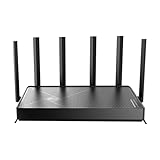
- 𝐅𝐚𝐬𝐭, 𝐫𝐞𝐥𝐢𝐚𝐛𝐥𝐞, 𝐟𝐮𝐭𝐮𝐫𝐞-𝐫𝐞𝐚𝐝𝐲 𝐖𝐢-𝐅𝐢 - Enjoy strong connections throughout your home with 6 high-gain antennas and a 10G WAN/LAN port that stays ahead as your network grows, delivering premium Wi-Fi 7 performance for everyday homes.△§
- 𝐁𝐄𝟏𝟐𝟎𝟎𝟎 𝐭𝐫𝐢-𝐛𝐚𝐧𝐝 𝟖-𝐬𝐭𝐫𝐞𝐚𝐦 𝐖𝐢-𝐅𝐢 𝟕 𝐫𝐨𝐮𝐭𝐞𝐫 - Delivers up to 5,765 Mbps (6 GHz), 5,765 Mbps (5 GHz), and 688 Mbps (2.4 GHz) speeds for 4K/8K streaming, AR/VR gaming and more. Performance varies by conditions, distance to devices, & obstacles such as walls.△◇
- 𝟏𝟎 𝐆𝐛𝐩𝐬 𝐬𝐭𝐚𝐲𝐬 𝐚𝐡𝐞𝐚𝐝 𝐚𝐬 𝐲𝐨𝐮𝐫 𝐢𝐧𝐭𝐞𝐫𝐧𝐞𝐭 𝐠𝐫𝐨𝐰𝐬 - Features a 10 Gbps WAN/LAN port to maximize multi-gig internet plans. A 2.5 Gbps WAN/LAN port, three 1 Gbps LAN ports, and a USB 3.0 port add even more connectivity options.
- 𝐂𝐨𝐯𝐞𝐫𝐚𝐠𝐞 𝐟𝐨𝐫 𝐞𝐯𝐞𝐫𝐲 𝐜𝐨𝐫𝐧𝐞𝐫 - Covers up to 2,600 sq. ft. for up to 128 devices. 6 optimally positioned antennas and beamforming technology focus Wi-Fi signals toward hard-to-reach areas. Seamlessly connect phones, TVs, gaming consoles, and IoT devices without slowdown.
- 𝐒𝐢𝐦𝐩𝐥𝐞 𝐬𝐞𝐭𝐮𝐩 & 𝐞𝐚𝐬𝐲 𝐜𝐨𝐧𝐭𝐫𝐨𝐥 - Quickly setup and manage your Archer BE670 with the free Tether App. Keep your WiFi performing at its best by keeping the firmware updated through the App. All Wi-Fi routers require a separate modem.
Review cloud dashboards for former residents, installers, guests, old phones, API tokens, and integrations you no longer use. Revoke unused sessions and tokens, remove inactive users, and change the cloud password if you find an account you cannot explain.
Turn on stronger account protections
- Enable multi-factor authentication for vendor accounts, router-management accounts, and any service that controls locks, cameras, alarms, or other sensitive devices.
- Use device passcodes and automatic lockout where offered. Set a reasonable lockout threshold rather than allowing unlimited guesses.
- Enable storage encryption, encrypted backups, and secure transport options when the product provides them.
- Turn off unused microphones, cameras, remote viewing, voice assistants, or sharing features.
- Review notification settings so a failed login, new account, firmware change, or camera-access event generates an alert.
Keep firmware current and retire unsupported products
Install updates from the vendor’s official application or administration page. Do not install firmware supplied through an unsolicited email, an unofficial download site, or a support message that asks for remote control of your computer.
If a vendor has ended security support, the product cannot be updated, or the vendor no longer provides a trustworthy account-recovery process, remove it from the network and replace it. A device that performs a useful function but cannot receive security fixes is not a permanent exception; isolate it temporarily only while arranging replacement.
Independent reader supportYour contribution helps us test, update, and keep practical guides available for everyone.5. Prepare for a disruption before one happens
Keep recovery information offline
Print or store on an offline medium the router’s reset and setup instructions, ISP support contact, account number, device serial numbers, network topology, and backup codes for MFA. Keep the document somewhere accessible during an internet or cloud-service outage.
Do these 3 things before closing this tab:
1Repair Windows errors before they cause bigger problems2Fix the driver behind crashes, sound loss and screen glitches3Clear out junk files and repair common Windows errorsIf the router supports configuration export, save an encrypted or otherwise protected backup. Router exports can contain Wi-Fi passwords, administrator secrets, tokens, or other sensitive settings, so do not leave the file in an unprotected public folder or attach it to ordinary email. Record the firmware version associated with the backup.
Best Value

- BE9300 Tri-Band Wi-Fi 7 Speeds: Archer BE550 features Multi-Link Operation, Multi-RUs, 4K-QAM, and 320 MHz channels, providing blazing-fast speeds of 5760 Mbps (6 GHz band), 2880 Mbps (5 GHz band), and 574 Mbps (2.4 GHz band).
- Unmatched Performance for Streaming and Gaming: Ensures seamless 4K/8K streaming, engaging AR/VR gaming, and ultra-fast downloads for an optimal user experience.
- Extend Your Coverage with EasyMesh: Add EasyMesh-compatible routers, range extenders, and wireless powerline adapters to form a seamless whole-home network that eliminates dead zones while reducing signal drops and lag when moving throughout your home.
- Full 2.5G WAN & LAN Ports for Future-Proof Networking: Archer BE550 is equipped with one 2.5G WAN port and four 2.5G LAN ports, enabling peak device performance and offering an ideal solution for future-proofing your home network.
- Enhanced Experience with Premium Components: Our proprietary Wi-Fi optimization technology, combined with six strategically positioned antennas and Beamforming, ensures higher capacity, stronger and more reliable connections, and reduced interference.
Decide how you will isolate a suspicious device
- Pause or block the device in the router app, or move it to a disconnected switch port.
- If blocking is not reliable, unplug the device or disconnect its network cable. For battery-powered equipment, remove or disable the battery only if the manufacturer permits it.
- Do not reset the device immediately if you may need logs or evidence. Photograph indicators, note the time, and preserve relevant router and cloud logs.
- Change credentials from a known-clean device, beginning with the router administrator and the affected vendor account.
- Contact the vendor and your ISP through their published support channels if the device is safety-critical or the router shows unauthorized configuration changes.
Plan a clean rebuild
A factory reset erases settings, including segmentation, port-forwarding rules, and credentials. Before using it, make sure you have the ISP connection details, current firmware, MFA backup codes, and the inventory needed to reconnect devices safely.
- Disconnect or power down IoT devices and any equipment you suspect is compromised.
- Reset the router using the manufacturer’s documented hardware or software procedure.
- Install the latest supported firmware before reconnecting clients.
- Set a new administrator password, Wi-Fi names, Wi-Fi passwords, WPA3 or WPA2 encryption, firewall rules, and isolated IoT network.
- Reconnect trusted computers first, then update and re-enroll devices one at a time. Do not restore an old configuration export until you have reviewed every setting.
6. Decide whether your router should be replaced
Replace the router when it cannot provide WPA2 or WPA3 after available updates, no longer receives security fixes, cannot disable unnecessary exposure, or cannot isolate smart devices in a way that meets your needs. A new model is not automatically safer: support lifetime, update delivery, account security, and usable isolation matter more than a newer wireless-generation label.
Security features to compare
| Comparison point | What to verify before buying |
|---|---|
| Wireless encryption | WPA3 Personal, with a clearly documented WPA2 fallback for older clients; avoid equipment limited to WEP or WPA. |
| Segmentation | A genuinely isolated IoT or guest network that blocks local-network access, not merely a second SSID. |
| Updates and support | Automatic or simple over-the-air updates, a published support process, and a support lifetime long enough for the equipment’s expected use. |
| Administration | MFA for the management account when available, local administration, and a clear way to disable internet-based remote management. |
| Traffic controls | Firewall, access-control rules, device blocking, logging, and intrusion-prevention or DDoS-protection functions where appropriate. |
| Vendor transparency | A vulnerability-reporting process, security advisories, and a stated replacement or end-of-support policy. |
| Total cost | Hardware price plus any recurring security, parental-control, or monitoring subscription. The cost and regional availability of a particular model must be checked at purchase time. |
Examples of documented feature sets
The following examples illustrate what to look for, not a universal ranking. Firmware, regional features, support periods, and subscription terms can change, so verify the exact hardware revision and local documentation.
Quick wins for a faster PC:
Clear out junk files and repair common Windows errorsFree Scan →Fix the driver behind crashes, sound loss and screen glitchesFind Drivers →| Example | Security features documented by the manufacturer | What remains to verify |
|---|---|---|
| TP-Link Archer BE9700 | WPA3, a separate IoT network, guest networks, SPI firewall, access control, intrusion prevention, DDoS prevention, and HomeShield. | Support lifetime, local firmware behavior, administrative MFA, remote-management controls, and any recurring subscription cost. |
| ASUS RT-BE9700 | Guest networks that restrict local-network access, WPA3, firewall and security-scan functions, and automatic firmware updates. | Exact isolation behavior for every client type, support period, MFA availability, regional firmware, and subscription terms. |
| eero systems | WPA3 and over-the-air updates are documented on the technology information page. | Whether the specific model and plan provide the IoT isolation, administrative controls, logging, and other features your household requires. |
Do not replace a secure, supported router solely for a higher wireless speed. Replace it when its security capabilities, update process, or support status cannot meet the requirements above.
7. Recognize warning signs and respond safely
Investigate unexpected administrator-password changes, new router users, altered DNS settings, unknown port-forwarding rules, Wi-Fi names you did not create, repeated login alerts, devices appearing and disappearing from the client list, or smart devices contacting services they do not normally use. A single symptom is not proof of an attack, but unexplained configuration changes deserve prompt attention.
- Disconnect the suspicious device from the network without interacting with it further.
- Use a known-clean device to change router and cloud-account credentials and revoke unknown sessions.
- Capture router logs, timestamps, device identifiers, and screenshots before a reset if investigation may be needed.
- Update the router and affected devices, then rebuild segmentation and access rules.
- Notify your ISP, device vendor, employer, or relevant authorities when the incident involves work systems, fraud, safety equipment, or persistent unauthorized access.
Avoid downloading an alleged cleanup tool from an unsolicited message and avoid granting remote access to an unverified caller. If you cannot establish that the router is trustworthy, isolate it and follow the clean-rebuild plan.
8. Keep the network ready with a maintenance schedule
Every month
- Review connected clients and remove unknown or unused devices.
- Check for router, mesh-node, hub, and IoT firmware updates.
- Review administrator accounts, cloud users, MFA methods, tokens, and port-forwarding rules.
- Confirm that the IoT or guest network still blocks access to trusted devices.
Every three to six months
- Test recovery instructions and confirm that printed contact details and backup codes are current.
- Review the inventory against vendor support notices and end-of-support dates.
- Inspect router logs and notifications for unexplained changes.
- Reassess whether each device still needs internet access, local access, or remote viewing.
After a major firmware update, household move, or account change
- Verify encryption mode, SSID passwords, guest isolation, firewall settings, and remote-management status.
- Remove former residents, installers, guests, and old phones from device and cloud accounts.
- Update the offline inventory and configuration backup.
The practical standard to aim for
A prepared home network has a supported router with WPA3 Personal or WPA2 Personal, unique administrator and Wi-Fi credentials, current firmware, no unnecessary remote management, WPS, UPnP, port forwards, or DMZ exposure, and an isolated IoT or guest network. Every smart device has a unique credential, MFA where available, current firmware, appropriate encryption and lockout controls, and a known support status. The household also has an inventory, offline recovery information, and a rehearsed way to disconnect and rebuild the network.
Free tools Windows power users keep installed
One-click scans. No signup required.
Quick Recap
Product prices and availability are accurate as of the date/time indicated and are subject to change. Any price and availability information displayed on Amazon at the time of purchase will apply.

