Prepare for flooding and drought as two separate hazards with one coordinated plan: learn your local risks, protect people and critical belongings, keep water out or move it safely, repair leaks, obey utility restrictions, and make the yard need less irrigation. A rain garden or other stormwater feature can complement drought-tolerant landscaping when the site, soil, slope and local rules allow it.
The details below are U.S.-focused. Flood maps, building requirements, drought rules and water supplies vary by community, so confirm decisions with your local emergency-management office, building department and water utility.
As an Amazon Associate I earn from qualifying purchases.
How do I prepare my home for flooding and drought?
Begin with a written household plan and a property assessment. Check flood risk and local alerts, ask your water utility how it communicates drought conditions, and identify the people, documents, medications, pets and equipment that must be protected or moved first. Then handle the highest-consequence work: evacuation readiness, leak repairs, clear drainage, protection of utilities and valuables, and water-efficient outdoor practices.
Free tools Windows power users keep installed
One-click scans. No signup required.
Check flood risk, but do not rely on a map alone
Use FEMA’s Floods guidance and the FEMA Flood Map Service Center to see mapped hazards and local information. FEMA’s warning is important: “flooding doesn’t follow lines on a map. Where it can rain it can flood.” A mapped designation is therefore one input, not a guarantee that an unmapped property is safe.
#1 Best Overall

- Outstanding Performance: This sump pump battery backup system delivers 2500W pure sine wave output, supporting dual-pump operation (1 HP main + 1/3 HP backup). Includes a USB port and AC outlet, ideal for emergency use and a home prone to heavy rainfall
- Quick Plug-In Setup: Say goodbye to risky wiring. This sump pump battery backup inverter features a standard 3-prong plug for quick and secure installation. It reduces errors and electrical hazards. Just plug in, and you're ready
- Battery-Friendly Charging: Equipped with 3-stage charging (Bulk, Absorption, Float), this basement protection sump pump inverter automatically optimizes battery performance and service life. Compatible with 12V Lead-acid, AGM, Gel, and LiFePO4 batteries
- Real-Time Display: Stay informed with an LCD screen and LED indicators. This pure sine wave power inverter allows you to monitor voltage, battery level, and working status easily. Control with confidence
- Security Comes First: Designed with security in mind, this back up system for emergency includes built-in protection against overcurrent, overvoltage, short circuit, reverse polarity, and high temp. A circuit breaker adds another layer of safeguards
Find out how drought is managed locally
Ask your water utility where household water comes from, whether restrictions are active, what uses are limited and how emergency updates are delivered. The U.S. Environmental Protection Agency (EPA) explains that utilities may restrict lawn watering and other nonessential uses so water remains available for firefighting and other critical needs. Follow the utility’s current rules before adding irrigation, filling a pool or changing watering schedules. See EPA’s Drought guidance and Drought & WaterSense.
Build a household communication and evacuation plan
Write down two ways to receive warnings, an indoor meeting place, an out-of-area contact and at least one route to higher, safer ground. Include a destination that accepts every household member, including pets. List medication needs, mobility or medical equipment, infant supplies, chargers, identification, insurance information and essential documents. Practice the route and decide who checks on people who may need assistance.
Review insurance before a flood
Ready.gov says standard homeowners insurance does not cover flooding. A flood policy typically takes up to 30 days to become effective, although eligibility and waiting-period exceptions depend on the policy and program. Read the current terms with your insurer and, where applicable, the National Flood Insurance Program before assuming a purchase will cover an approaching storm. The Ready.gov flood guidance is the starting point for this review.
Quick wins for a faster PC:
Fix the driver behind crashes, sound loss and screen glitchesFind Drivers →Clear out junk files and repair common Windows errorsFree Scan →Scan for outdated or missing drivers - takes under a minuteDriver Scan →Flood preparation around the house
Move valuables and records above likely flood levels
Store passports, deeds, medical records, backup drives and other irreplaceable items on an upper floor or another location above the level water is expected to reach. Keep paper originals in a waterproof container and maintain encrypted digital copies in a separate location. Do not leave a single copy in a basement, garage or ground-level cabinet.
Keep water moving away from the structure
Clean gutters, downspouts, yard drains and catch basins before the wet season and after heavy leaf fall. Confirm that downspouts discharge where they will not send concentrated flow toward the foundation or a neighboring property. Clearing a drain does not make a site floodproof, but blocked drainage can turn ordinary rainfall into avoidable pooling.
Rank #2

- System comes preassembled and preplumbed so that installation is simple and quick
- Reliable design with durable ½ HP energy efficient copper-wound Permanent Split Capacitor (PSC) motor for long life and savings on your electric bills
- Includes a WiFi-capable battery backup system that provides 24-hour-a-day monitoring of pump, power and battery conditions; backup controller will sound an alarm, illuminate a warning light and describe what to do for easy maintenance
- Allows for connection to a Basement Watchdog CONNECT Module (BW-WiFi2—a SEPARATE PURCHASE), giving you real-time alerts via text, email, push notification or through the Basement Watchdog free app
- Provides days of intermittent pumping power on a single battery charge and is compatible with both maintenance-free AGM and wet-cell batteries. Connect two batteries in parallel for double the runtime.
Consider a check valve and battery-backed sump pump where they fit
FEMA identifies backflow check valves and a sump pump with a battery as options to consider; details depend on the plumbing and foundation. A battery backup sump pump is most relevant to a home with a sump basin, especially a basement that can take on groundwater. Before installation, verify pump capacity, battery runtime, discharge location, check-valve compatibility, electrical protection and a safe way to test the system. A pump cannot remove water that has no path to the basin, and its discharge must not simply return water against the foundation.
Test the primary and backup pumps, clean the basin and inspect the discharge line according to the manufacturer’s instructions. Arrange a qualified installation when electrical work, a new discharge route or structural changes are involved.
Elevate or relocate critical utilities
FEMA’s flood-hazard information sheet advises elevating critical utilities when appropriate and feasible. The correct elevation is not universal: it depends on local flood-elevation data, the building, fuel type, electrical requirements and code. Ask your building official or a qualified flood-mitigation professional before moving a furnace, water heater, electrical panel, generator or fuel system.
Use barriers only for the conditions they are designed for
FEMA lists sandbags among possible flood barriers, but their effectiveness depends on the depth, speed and duration of water and on correct placement. Sandbags do not make a property floodproof and may be ineffective against fast-moving or deep water. Never block a public drainage route or create a diversion that sends water toward another building.
Get engineering advice for structural work
Do not seal a house against floodwater as a blanket do-it-yourself measure. Water pressure can damage walls and foundations, and site conditions determine whether dry floodproofing is appropriate. For substantial retrofits, foundation work, backflow changes or structural floodproofing, consult the local building department and a qualified professional. FEMA’s inland-flooding mitigation material is a useful starting point, but local design and permitting control the work.
Rank #3

- 【CONTINUOUS POWER】The Cantonape 2000 Watt Sump Pump Backup Battery System is a professional backup system in case of a power outage, featuring pure sine wave output, 2000 watts of powerful power output, LED display and 3 AC outputs, which produces a seamless, grid-like power output that is resistant to interference, can drive any type of load (resistive and inductive loads), has the highest conversion efficiency, and the lowest losses, and is therefore safer for all types of loads.
- 【CHARGING MODE】The 2000W sump pump backup battery system has a built-in 20A battery charger, which supports fast charging. In the event of a power outage, this sump pump battery backup system can quickly auto-switch to battery inverter power, ensuring continuous sump pump operation.
- 【LED DISPLAY】The Cantonape sump pump battery backup system is equipped with LED display, you can instantly monitor vital information such as battery voltage and AC voltage. Enjoy confident and informed decision-making every step of the way!
- 【SAFETY IN USE】The Cantonape sump pump battery backup system has a built-in cooling system and overload protector, as well as multiple protection functions such as overheat protection, short circuit protection, low voltage protection, overcharge protection, etc., which not only improves the safety of use, but also extends the service life of the device.
- 【MULTIPLE APPLICATIONS】Our sump pump battery backup system also works as a power inverter for many applications requiring backup power. You can use it to operate various electric devices, including lights, mobile phones, monitors, and other equipment. This inverter doesn't come with battery, a 12V GEL, AGM/SLA, Flooded/Wet battery is required for backup power operation.
What to do when flooding is imminent or underway
Follow evacuation orders immediately
Leave when officials order an evacuation, using the route in your household plan. Do not wait for water to enter the building. Take medications, identification, phones and chargers, essential documents, food for pets and any mobility equipment that can be carried safely.
The Tool Desk
Outbyte PC Repair FREEClear out junk files and repair common Windows errorsFree Scan →Outbyte Driver Updater FREEScan for outdated or missing drivers - takes under a minuteDriver Scan →Never enter moving or unknown floodwater
Ready.gov says not to walk, swim or drive through floodwater. Water can hide open drains, debris, electrical hazards and washed-out roads; a small depth can move a vehicle. Turn around and use the designated safe route instead.
Assume drinking water may be unsafe after a flood
Floodwater can contaminate private wells, plumbing and municipal systems. Do not drink tap or well water after flooding unless the local health department or water utility says it is safe. Follow boil-water, do-not-drink and well-disinfection instructions exactly. Keep an emergency supply that meets your household’s needs until officials lift the advisory.
Re-enter cautiously
Wait for officials to say the area is safe. Treat damaged wiring, gas appliances, mold and structural movement as professional hazards. Photograph damage for the insurer without touching contaminated water or energizing flooded electrical equipment.
Drought preparation inside the home
Find and repair leaks promptly
Inspect faucets, toilets, supply lines, water heaters, hose connections and irrigation controls. Check for a continuously moving meter when all fixtures are off, and investigate unexplained increases in the bill. EPA notes that leaks waste water and can also cause serious property damage; its Home Maintenance guidance describes routine checks and repairs.
Recommended Free Tools
Rank #4

- Maintenance free - no need to add battery fluid or distilled water
- Up to 40-hour protection (based on a 10% duty cycle) on the Basement Watchdog Big Dog (BWD12-120C+)
- Up to 48-hour protection (based on a 10% duty cycle) on the Basement Watchdog Special + (BWSP+) and Basement Watchdog Big Combination sump pump system (BW4000, CITS-50)
- Up to 80-hour protection (based on a 10% duty cycle) on the Basement Watchdog Emergency (BWE) and Basement Watchdog Combination sump pump system (DFK961, CITE-33)
- Runs various Basement Watchdog sump pump systems intermittently for days
Repair the cause, not just the symptom. A toilet flapper that leaks again after replacement may need a valve or tank adjustment; a damp wall may indicate a concealed pipe and should be assessed before mold or structural damage develops.
Follow restrictions before reducing water elsewhere
During a drought, comply with the utility’s allowed days, times and methods for watering. EPA’s advice is direct: “Follow the rules: Your water utility must ensure water is available to fight fires and meet other critical needs, so help your community by following the rules.” Restrictions can change quickly with reservoir, groundwater or weather conditions, so check the utility’s current notice rather than relying on an old calendar.
Replace fixtures with efficient models when they need replacement
When a showerhead, faucet, toilet or irrigation controller reaches the end of its service life, look for the EPA WaterSense label. WaterSense-labeled products are designed to use less water while meeting performance criteria. Check your utility for rebates, but treat them as possible local programs rather than guaranteed benefits. EPA’s Start Saving page explains the program and household opportunities.
Understand the scale of outdoor use
EPA WaterSense reports that outdoor use accounts for about 30 percent of an estimated 29 billion gallons of household water used each day in the United States; in hot summer months or dry climates, outdoor use can reach 70 percent of household use. These are national estimates, not a prediction for one address, but they show why irrigation changes can matter during a drought.
Make the yard use less water and handle rain better
Choose plants for the local climate
Select native or drought-tolerant plants suited to your soil, sun, winter temperatures and mature size. Group plants with similar water needs so one irrigation zone does not overwater some species to keep others alive. EPA’s Landscaping Tips covers plant selection and maintenance.
Best Value
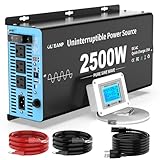
- 【Designed for Basement Flood Protection & Emergency Preparedness】: Protect your home from flooding during hurricanes, heavy rainstorms, and unexpected power outages. This sump pump battery backup system automatically switches from grid power to battery power, ensuring uninterrupted water removal and continuous basement protection. Ideal for homeowners in flood-prone areas and finished basement properties.
- 【Acts as a Reliable Emergency Backup Power Source (Battery Not Included)】: Serves as a dedicated emergency backup solution for primary or secondary sump pump systems. When utility power fails, it instantly transfers to 12V deep cycle battery power (battery required, not included) and automatically recharges when power is restored. Compatible with LiFePO4, AGM, GEL, and Flooded deep-cycle batteries.
- 【Built-in 25A Smart Charger with Multi-Stage Battery Protection】:Features a high-speed 25A charger with selectable charging modes to optimize battery lifespan. Includes overcharge, low voltage, overload, short circuit, and overheat protection. Designed for long-term reliability during storm season and emergency situations.
- 【2500W Pure Sine Wave Output – Safely Powers Sump Pumps & Essential Devices】: Delivers stable pure sine wave power capable of running sump pumps smoothly and efficiently without damaging sensitive equipment. With 3 AC outlets, USB port, and Type-C port, it can also support essential household devices during outages.
- 【LCD Remote Monitoring & Easy Installation】: Includes a remote controller with LCD display to monitor battery voltage, load status, and operating mode in real time. Supports wall mounting or flat placement with simple AC and DC connections — no complicated rewiring required. Trusted by homeowners, property managers, and contractors seeking dependable flood prevention solutions.
Improve soil and use mulch
Healthy soil can hold water longer and reduce runoff. Add organic matter only when appropriate for the soil and plants, and keep mulch several inches away from trunks and building siding. Mulch reduces evaporation and weeds, but thick or misplaced mulch can retain excess moisture against a foundation or hide pests.
Maintain irrigation to prevent waste
Repair broken emitters, clogged heads and leaking valves. Adjust spray patterns so water reaches planted areas rather than sidewalks, streets or walls. Water at the utility-approved time and frequency, and use a properly programmed controller rather than an automatic schedule that ignores rainfall. A WaterSense-labeled controller can help when its sensors, zones and settings match the site.
Use a rain garden only when the site supports it
A rain garden or another stormwater feature can intercept runoff while drought-tolerant planting reduces irrigation demand. It is not suitable for every yard. Check soil infiltration, slope, groundwater, foundation setbacks, underground utilities, mosquito-control needs and local drainage requirements first. Do not direct roof or driveway runoff toward a foundation or neighboring property, and do not assume infiltration is safe without checking local guidance.
Which improvements help with flooding, drought or both?
| Measure | Primary hazard | Site and installation considerations | Maintenance or rules |
|---|---|---|---|
| Clear gutters, downspouts and drains | Flooding | Confirm discharge does not undermine the foundation or affect neighbors. | Inspect before wet seasons and after heavy leaf fall. |
| Check valve and battery-backed sump pump | Flooding | Requires a suitable sump basin, correctly sized pump, safe discharge and appropriate electrical setup. | Test the pump, battery and discharge path regularly. |
| Elevated critical utilities | Flooding | Elevation must follow local flood data, codes and professional advice. | Keep access for inspection and emergency shutoff. |
| Waterproof document storage and digital backups | Flooding | Store copies above likely flood levels and separately from originals. | Update records when policies, medications or household members change. |
| Leak repairs | Drought and property protection | Concealed leaks may require a licensed plumber or leak-detection service. | Monitor fixtures, irrigation and unexplained meter movement. |
| WaterSense-labeled fixtures and controllers | Drought | Choose products compatible with existing plumbing and landscape zones. | Check local rebate eligibility and maintain settings. |
| Native or drought-tolerant planting, healthy soil and mulch | Drought | Match plants to climate, soil, sun and mature size. | Weed, prune and replace failed plants without expanding irrigation. |
| Rain garden or other stormwater feature | Both, when suitable | Verify infiltration, slope, foundation setbacks, utilities and local requirements. | Remove sediment, maintain plants and keep overflow routes clear. |
| Sandbags or temporary barriers | Flooding | Effectiveness varies with water depth, speed and duration; they are not floodproofing. | Deploy only as directed and never block public drainage. |
A practical order of work
- Today: identify the household’s evacuation destination, sign up for local alerts, save utility and health-department contacts, and place documents in waterproof storage.
- Next inspection: check the FEMA map and local hazard information, walk the property for low points and blocked drains, test smoke and carbon-monoxide alarms, and list utilities that could be damaged by water.
- Before the next storm season: clean gutters and drains, confirm sump-pump operation, review insurance waiting periods and exclusions, and ask the building department about any elevation or retrofit project.
- Before the next dry season: repair plumbing and irrigation leaks, program watering within utility rules, replace failed fixtures with efficient models when appropriate, and adjust planting, soil and mulch practices.
- Before adding a rain garden or major drainage change: verify soil, slope, setbacks, underground utilities and permits; obtain professional design help when runoff or structural conditions are uncertain.
- After every major weather event: inspect drainage, pumps, irrigation, trees and visible foundations; document damage; and update the household plan based on what worked or failed.
Seasonal maintenance checklist
- Confirm alert subscriptions, contact numbers, evacuation routes and pet arrangements.
- Check that documents, medication lists and digital backups are current.
- Clear gutters, downspouts, drains and sump-basin debris.
- Test the primary and battery backup sump pumps and inspect discharge points.
- Look for plumbing, toilet, appliance and irrigation leaks.
- Review the water utility’s current drought stage, watering schedule and restrictions.
- Inspect irrigation heads, emitters, valves, controllers and rain sensors.
- Check mulch depth, plant health and any erosion or ponding around the foundation.
- Maintain rain-garden inlets, outlets and overflow paths where a feature exists.
A home prepared for both extremes is not a sealed, risk-free structure. It is a home where people know when to leave, critical items are protected, drainage and utilities are maintained, water is used within local limits, and landscaping is designed for the actual site. Recheck those decisions as maps, codes, utility rules and household needs change.
Quick Recap
Product prices and availability are accurate as of the date/time indicated and are subject to change. Any price and availability information displayed on Amazon at the time of purchase will apply.

