1v1 in 2XKO is one of the fastest ways to learn matchups, test reads, and get real reps without the noise of larger lobbies. The only catch is that the setup path depends heavily on whether you’re doing a local versus duel (two players on one setup) or an online 1v1 against a specific opponent.
This guide walks you through both. You’ll get concrete steps for creating and joining duels, plus the settings and troubleshooting checks that usually fix issues within minutes.
As an Amazon Associate I earn from qualifying purchases.
Prerequisites: hardware, accounts, and settings that affect matchmaking
Before you touch the match menus, confirm your basics. Most “can’t start 1v1” problems come from controller detection, account mismatch, or network permissions.
What’s actually slowing this PC down?
Pick the symptom - the matching free tool is one click away.
Local 1v1 prerequisites
- Two controllers (or two input devices your platform supports). Common examples: Xbox-style, PlayStation-style, or Steam-compatible pads.
- One game installation (same device running 2XKO).
- Local versus / controller mapping support in your current build. If your version doesn’t support true split/controller-vs-two, you may need to use online duels or a training/CPU setup.
Online 1v1 prerequisites
- Two accounts logged into 2XKO on separate devices (or separate sessions).
- Network access for the game client and your system firewall/permissions.
- Match creation ability (private/custom rooms are typically tied to your online account, not your local profile).
Settings that impact duels
- Controller layout: confirm both players can select their fighter/control scheme cleanly.
- Crossplay: if available in your build, ensure both players have compatible platform settings.
- Region / server: some clients let you choose region for better latency. If you see a region selector, pick the closest one both players can reach.
Local 1v1 (same device): how to run a duel with two players
Local versus is the cleanest way to get duels started instantly—especially for offline practice with a friend. The setup usually breaks into three phases: controller detection, match creation, and rule selection.
#1 Best Overall

- Small Form Factor Fight Stick featuring an 8-button layout and 8ft. cable
- Great for both Arcade and Fighting Games
- Compact, lightweight and portable design
- Features Classic 8-Button Layout and HORI’s Original Joystick with V-cut Housing
- Officially Licensed by Sony
What local versus usually requires
Local 1v1 in fighting games usually means the game supports multiple controllers and a “Local Match / Versus” entry. If you only see a single-controller training screen, your build may not support local 1v1 for that mode.
Look for menu terms like Versus, Local, Local Match, or Custom. If you can’t find those anywhere, use the training/CPU or online private-room methods instead.
Set up controllers and confirm input detection
- Connect both controllers to the device.
- Open 2XKO and go to the settings area where input is shown (commonly Options -> Controls or Controller).
- Verify Player 1 and Player 2 are detected. You should see separate controller slots or a second player indicator.
- Test inputs: press buttons on both controllers and confirm the UI responds for each player slot.
If Player 2 never appears, disconnect and reconnect the second controller, then re-open the input/controls page.
Create the local versus match (custom settings)
Menu labels vary by build, but the flow typically looks like this:
- From the main menu, select a Versus or Play category.
- Choose Local or Local Match (sometimes listed under Custom).
- Pick fighters for Player 1 and Player 2.
- Set match rules such as rounds and timer. If the game offers it, enable/disable training-style assists so your duel feels “real.”
- Confirm stage selection (or set it to random rotation if you prefer variety).
- Start the match and verify both players load successfully.
Common local issues and fixes
- Player 2 controls don’t map: revisit the controls screen and reassign if the UI allows per-player mapping.
- Second controller duplicates Player 1: remove the controller and reconnect so the game re-enumerates devices.
- Audio or vibration not matching: it’s usually system-level controller settings. Fix at the OS level, then re-launch 2XKO.
Online 1v1: how to duel a specific opponent
Online 1v1 is about meeting the right person reliably. Ranked is great for fairness, but it’s not guaranteed to be a direct “you vs that exact player” experience. For a true 1v1, you typically want a private/custom room system.
Rank #2
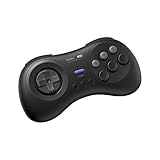
- The redefined 6-button gamepad with wireless connectivity. Perfect for all SEGA’s classic Games.
- Compatible with Switch, Windows 10 or above, Android and Raspberry Pi.
- Turbo Function (unavailable on Switch).
- Bluetooth and rechargeable battery.
- Upgradeable firmware.
Choose the right mode for 1v1
Depending on your 2XKO build, these modes usually cover different needs:
- Ranked: one-on-one experience, but you can’t directly choose your opponent.
- Casual / Unranked: similar to ranked for pairing, but often with different matchmaking rules.
- Private Match / Custom Room: best for “play 1v1 with this person,” because you can invite or share a code/lobby link.
If you specifically want duels against a friend or competitor, start with private/custom.
Create a private/custom room and invite your opponent
Use the private-room flow to make a dedicated 1v1 lobby.
- Open 2XKO and go to the Online or Versus menu.
- Select Private Match or Custom Room.
- Set room options (fighter selection rules, stage, rounds, timer, and any “allow practice” settings your build provides).
- Generate an invite method. Many clients provide an invite code or a lobby ID.
- Invite your opponent using the code/link method.
- Wait at the character select/lobby screen for the second player to join.
Join a private/custom room using an invite code or lobby link
- On the second account, open 2XKO.
- Go to Online -> Private Match / Join Room.
- Enter the invite code or paste the lobby link (whichever your build provides).
- Confirm room settings if the UI asks (some rooms enforce stage/round rules).
- Select your fighter and confirm readiness.
- Both players must be ready before the match launches.
Match settings that matter for fairness and comfort
Even for friendly 1v1, you’ll play better when rules don’t surprise you.
| Setting | What to do | Why it matters |
|---|---|---|
| Rounds / winning condition | Pick a consistent number (commonly 2-5 rounds) | Short sets hide matchup patterns; long sets reduce variance |
| Time limit | Use default unless you and your opponent agree otherwise | Some characters scale differently by clock |
| Stage selection | Choose neutral or agree on a stage pool | Stage layouts change spacing and punish routes |
| Training assists / practice mode options | Turn off “training-only” advantages for real duels | Training toggles can alter how effects display and feel |
Local versus vs online 1v1: what changes in gameplay and setup
The match itself is the same game—but the experience isn’t. Local duels feel immediate; online duels depend on connection quality and how your session is configured.
Rank #3

- Wired Controller optimized for fighting games
- Features a six-button layout, micro Switch Buttons, adjustable d-pad, and a short throw analog stick with 8-way Gate for increased accuracy and execution speed
- Customize and save up to four profiles with the companion app and easily Switch between them with the profile button
- Compatible with Xbox series x|s, Xbox One, and Windows 10
- Officially Licensed by Microsoft
Input latency and controller expectations
Local versus is usually the most consistent for timing and reactions. Even small input lag from wireless controllers, TV processing, or game mode settings can change your execution.
Free tools Windows power users keep installed
One-click scans. No signup required.
If you’re serious about clean reps locally, use wired controllers when possible and set your display to Game Mode.
Netcode realities: ping, rollback, and why settings still matter
Online 1v1 typically uses rollback-style compensation, but you still feel connection differences. Higher ping doesn’t always mean worse play, but jitter (unsteady ping) almost always hurts.
For online duels, prioritize:
- Wired Ethernet over Wi‑Fi when possible.
- Lower background traffic (pause downloads/uploads).
- Close conflicting overlays (recording tools and overlays can cause frame drops).
Troubleshooting: when 1v1 won’t work
When something fails, it’s usually one of four things: input detection, lobby access, readiness state, or network permissions.
Controller not detected
- Reconnect the controller and restart 2XKO.
- Try a different USB port or turn Bluetooth off and back on (if applicable).
- Check the in-game Controls screen for separate Player 2 mapping.
Second player can’t get into the match
This is common when the lobby is “waiting” on readiness or the second player is using the wrong join method.
Rank #4

- Compatible with Switch and Windows.
- Supports ultimate software - customize button mapping and create macros
- Dynamic button layout - button mapping changes with mode functionally and visually
- Ultra-moddable arcade stick - Universal mounting plate supports Sanwa arcade sticks
- Three ways to connect: Bluetooth, 2.4g and wired USB-C. The included 2.4g receiver has a special hidden compartment to store it safely.
- Confirm the invite code/lobby link was copied correctly.
- Have both players stay on the same lobby screen until both are ready.
- If the room has a “password” or “private” toggle, re-check it before retrying.
Private match doesn’t show or invite code fails
- Confirm both accounts are logged in and online (not in an offline mode).
- Try generating a fresh code—some systems invalidate old codes when the host changes settings.
- If the UI has region selection, ensure both players use compatible regions.
- Restart both clients if the lobby state looks stuck.
Connection stutters or disconnects
- Switch to wired if either player is on Wi‑Fi.
- Pause downloads/streaming and test again.
- Check your firewall and allow 2XKO (and the game client it depends on) through Windows Defender Firewall or your OS equivalent.
- Reboot the router if the issue persists across multiple games and devices.
Best practices for a clean 1v1 session
You’ll learn faster when your duel session is predictable and repeatable. That means consistent rules, controlled training time, and clear matchup goals.
Practice before the duel
Run a short warm-up in training/practice mode for 5–10 minutes. Focus on one or two bread-and-butter routes you want to land under pressure.
Then switch into 1v1. The goal isn’t to “show moves”—it’s to test decision-making: your anti-air timing, your whiff punish rules, and your punish conversions.
Use consistent rules (rounds, timer, stage pool)
- Agree on rounds and time so each session has comparable information.
- If you’re learning, use a stage both of you like; if you’re testing, rotate stages so you see more spacing variations.
Record and review if you’re testing matchups
If 2XKO supports replays or match recording, save your best and worst rounds. Review them for patterns like “I jump every time I’m plus” or “I always eat the same counter-hit.”
Do these 3 things before closing this tab:
1Repair Windows errors before they cause bigger problems2Fix the driver behind crashes, sound loss and screen glitches3Clear out junk files and repair common Windows errorsEven quick review after a session improves your next set’s decision speed.
Best Value
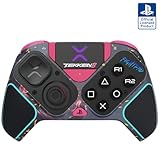
- BUILT FOR GAMING - Engineered to fit your play style and packed with tons of customizable options, the Pro BFG Wireless Controller is the new standard in PlayStation and PC gaming.
- FULLY CUSTOMIZABLE - Map functions to any of the four mappable back buttons to take down ops quickly and efficiently. Use the Profile Button to create three unique button mapping profiles to maximize your efficiency in any game.
- ULTIMATE MODULARITY - Create the ultimate controller for any game using the swappable modules and interchangeable pieces. Includes a reversible left module, standard right module, 6-button fight pad module, 4 interchangeable sticks, 3 different D-pads, and 4 gates.
- PREMIUM BUILT-IN AUDIO - Hear your enemies before you see them with Sony 3D audio on PS5. Plus, low latency audio and different EQ profiles to choose from give you the advantage over the competition.
- Officially licensed by Bandai Namco Entertainment Inc. & a PlayStation Official Licensed Product
FAQs
Can I play true local 1v1 with two controllers?
Usually, yes—if your 2XKO build includes a Local Match or Local Versus option and supports multiple controller slots. If you only see training/CPU or single-player screens, switch to online private match.
Do I need two consoles/PCs to play online 1v1?
For a real online duel, yes. You need two separate accounts on two devices so both clients can connect to the same private/custom room.
Why can’t my friend join my private match?
Common causes are an incorrect invite code, a changed room setting that invalidated the lobby, or account/network restrictions (firewall, offline status, or region mismatch). Generate a fresh code and retry if the join flow fails.
Outdated Drivers Are Slowing You Down
One free scan finds every outdated or missing driver and matches the right update for your exact hardware.Free scan · exact hardware matchWindows Errors? Fix Them Before They Spread
Repair common Windows errors and clear accumulated junk for a smoother, more stable PC - no reinstall needed.Free scan · no reinstallShould we use ranked or private matches for 1v1 practice?
Use private/custom when you want control over rules and opponent. Use ranked when you want matchmaking fairness and the pressure of real ranking conditions.
Is Wi‑Fi okay for online 1v1?
Sometimes, but it’s not ideal. If you get jitter, stutters, or frequent rollbacks, switch to wired Ethernet and retest.
Bottom Line
For local 1v1 in 2XKO, the winning formula is simple: connect both controllers, verify Player 2 detection in controls, then start a Local Match/Versus with agreed round rules. If local versus isn’t available in your build, or you want a specific opponent, use an online private/custom room with an invite code.
Once you’ve got either flow working, keep your settings consistent and run short warm-ups. That’s how you turn duels into real matchup progress instead of random, inconsistent reps.
Quick wins for a faster PC:
Scan for outdated or missing drivers - takes under a minuteDriver Scan →Repair Windows errors before they cause bigger problemsFix Now →Quick Recap
Product prices and availability are accurate as of the date/time indicated and are subject to change. Any price and availability information displayed on Amazon at the time of purchase will apply.

