The most reliable way to get a useful AI-generated image is to decide its job, subject, layout, and visible treatment before you write a prompt. Start with a one-line purpose, then specify the subject and action, scene, framing, viewpoint, placement, aspect ratio, style, lighting, colors, and non-negotiable constraints. Generate from that short visual brief, inspect the result, and change one decision at a time.
This planning step prevents a common failure: a prompt full of mood words that produces an attractive image with the wrong crop, emphasis, or message. It does not guarantee pixel-perfect results—image models still interpret instructions—but it gives you a clear target and a repeatable way to refine it.
As an Amazon Associate I earn from qualifying purchases.
What should you decide before generating an AI image?
Before describing how an image should look, decide what it must communicate and where it will appear. A banner, product listing, editorial illustration, social post, and diagram have different priorities even when they depict the same subject.
What’s actually slowing this PC down?
Pick the symptom - the matching free tool is one click away.
Define the purpose and deliverable
Write the image’s job in one line. Examples include “hero banner for an article,” “isolated product photograph,” “editorial illustration about remote work,” or “diagram explaining a three-step process.” Name the deliverable rather than beginning with adjectives such as “beautiful” or “epic.”
Purpose changes composition. A banner may need an uncluttered area for a headline. A product image needs the object to read immediately and may require a neutral background. An editorial illustration can use symbolism, while a diagram must privilege labels and relationships over atmosphere.
Also identify the audience and destination when they affect the design. An image intended for a mobile feed should remain legible when viewed small; one placed beside body copy may need a different crop from a full-width header. These are planning decisions, not instructions to add after the first generation.
Separate essentials from preferences
Make two lists before prompting:
- Essentials: the subject, action, setting, orientation, objects, text-safe area, or brand-neutral colors that must survive interpretation.
- Preferences: optional details such as a secondary prop, a particular texture, or a subtle background motif.
Keeping these categories separate lets you preserve the important instructions while giving the model room to interpret less critical details.
Recommended Free Tools
#1 Best Overall
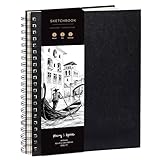
- Elevate your Artwork – Take your art, sketching or drawing to the next level with your new sketchbook. Bring out your inner Matisse.
- An Artist’s Tool – Let your creativity flow on the large and superior quality drawing paper. 200gsm paper is great for charcoal, colored pencils, oil pastels or watercolors too!
- No Bleed Through Paper – You can write or draw freely without worry of ink leak to the next page. It’s a great quality thick paper sketch book and drawing book for kids or artists alike.
- Show Your Skills – Even if it’s the smallest of sketches, it’s important to showcase your talents on the right sketch pad. Our premium sketch books for drawing are made for you to show your flair.
- It’s a Game Changer – Wire binding and sketch book hardcover so you can draw landscape or portrait. Create memories, inspire and have fun!
Build the visual brief in six decisions
1. Name the subject, action, and setting
State who or what is central, what it is doing, and where the action occurs. “A cyclist” is a subject; “a cyclist repairing a touring bicycle beside a mountain road” supplies subject, action, and setting. The additional information gives the generator a relationship to depict instead of a noun to decorate.
Use only setting details that help communicate the idea. If the location is important, specify its visual evidence—such as a workshop bench, road markings, or a window—rather than listing unrelated scenery. If the background is secondary, say so and keep it simple.
For people or animals, include the pose or interaction that carries the message. For objects, describe their state and relationship: a laptop open beside handwritten notes communicates something different from a closed laptop on a shelf. When an action is difficult to render, describe the visible moment you want, such as “hands placing a seedling into soil,” rather than an abstract intention such as “show sustainability.”
2. Choose framing and viewpoint
Composition tells the model where the viewer is and what belongs in the frame. Specify a close-up, medium view, or wide view; the camera or observer’s height; and the angle from which the subject is seen. A low viewpoint can make a subject feel imposing, while an overhead view clarifies arrangement. These are visual instructions, not guaranteed camera geometry.
Decide how much of the subject should be visible. A close crop emphasizes a face, tool, or material. A wider frame establishes context and gives you room for movement or copy. If the image will be used in several placements, plan the most important crop first and identify what may safely be trimmed.
3. Place the subject and reserve usable space
Tell the generator where the focal subject sits relative to the frame: left, right, centered, foreground, or background. If text or another element will be added later, state which area must remain clear and what should not intrude into it. For example, “place the person on the right third and leave clean, low-detail space on the left for a headline.”
Rank #2

- PREMIUM 68LB/100GSM SKETCH PAPER FOR DRY MEDIA: Fuxi's sketch paper pad has 100.8gsm, 155μm-thick paper with a bright white diagonal-tooth surface for erasing, shading and blending. Fuxi sketching paper works with graphite, colored pencils, charcoal, pens, light ink and oil pastels. Fuxi makes sketch paper for kids to use at school or at home; this drawing paper pad supports classwork and practice as sketch paper for drawing. Not for watercolor, alcohol markers, acrylic paint or heavy wet media.
- DIAGONAL-TOOTH TEXTURE & REPEATED-ERASING PERFORMANCE: Fuxi sketchpad 9x12 uses 100.8gsm, 155μm bright white paper. Its diagonal tooth grips graphite, colored pencil and charcoal for clean lines, shading and blending. High-strength surface sizing withstands repeated erasing during figure studies, still-life drawing, landscapes and urban sketches. This sketchpad for kids suits class practice; at home, it works as a sketchpad for drawing, while roomy pages support detailed studies for adults
- TOP SPIRAL BOUND & LAY-FLAT: The Fuxi 9x12 sketchbook has a top coil that flips smoothly and stays above the page, helping reduce wrist contact for left- and right-handed users. The 9x12 spiral sketchbook opens flat for sketching, shading, notes and art class. Pages detach neatly for homework, sharing or display. Fuxi's spiral sketchbook 9x12 is a sketchbook for drawing that combines the roomy workspace expected from an art sketchbook 9x12 with a 9x12 spiral bound sketchbook format.
- THOUGHTFUL DOUBLE-SIDED HARDCOVER DESIGN & TRUE-TO-SIZE 9X12 SHEETS: The Fuxi sketchbook 9x12 measures 13.2 x 9 x 0.7 in; each micro-perforated sheet removes cleanly at a full 9 x 12 in. With 100 sheets (200 usable sides), this perforated sketch book 9x12 features drawing paper 9 x 12 in size for class and home practice. Rigid front and back covers help protect pages in backpacks and give this double sided hardcover sketchbook a firm drawing surface for class, travel or sketching without a desk.
- ACID-FREE 98% BRIGHT WHITE DRAWING PAPER: Made with 100gsm sheets, Fuxi white drawing paper for kids keeps pencil lines, shading and color clear. This drawing paper pad works as a drawing pad for kids at school or home. The drawing book for kids supports doodles and classwork, while the drawing notebook for kids keeps sketches and ideas together. As an art drawing pad, it gives beginners and artists room for dry-media practice. Acid-free pages help reduce yellowing over time.
Placement constraints should be treated as priorities, not as a promise of exact coordinates. If a first result ignores the reserved area, adjust the framing or simplify competing objects before adding more adjectives.
4. Select an aspect ratio for the destination
Choose the output shape before generation: a wide header, portrait panel, square tile, or another format required by the destination. The aspect ratio affects how much environment fits around the subject and whether negative space remains useful. Name the ratio or the destination format in the prompt when the tool accepts it, and check the tool’s current size controls separately because interfaces and model options change.
Free tools Windows power users keep installed
One-click scans. No signup required.
5. Describe style with observable features
Style becomes actionable when it describes what a viewer can see. Begin with the medium or treatment—such as a photorealistic image, watercolor illustration, oil painting, 3D render, or sci-fi concept art—then add a small number of visible attributes.
- Materials and texture: brushed paper grain, matte ceramic, polished metal, visible pencil marks, or smooth digital shading.
- Palette: restrained earth tones, cool blue-green hues, high-contrast black and yellow, or another deliberate color relationship.
- Contrast and detail: soft tonal range, crisp edges, simplified shapes, or finely resolved surface detail.
- Finish: editorial illustration, studio product treatment, hand-painted appearance, or technical diagram.
“Beautiful,” “professional,” and “cinematic” can suggest intent but do not tell the model what to render. Translate each mood word into a visible decision. “Cinematic” might become a wide composition, controlled contrast, and directional light; use only the parts that serve the image’s purpose.
6. Specify lighting and color relationships
Describe the source, direction, and quality of light. “Soft natural light from a window on the left” is more useful than “beautiful lighting” because it tells the generator where highlights and shadows should fall. You can add whether the light is warm or cool, diffused or hard, and whether the background should remain lighter or darker than the subject.
Color instructions should support emphasis. A limited palette can keep a diagram readable; a warmer subject against a cooler background can establish a focal point. Avoid naming many unrelated colors unless the subject genuinely requires them. If a color is essential, connect it to an object or area rather than treating it as a general mood.
Rank #3

- Premium Artist Drawing Paper: Premium drawing pads and sketchbooks with a 9 x 12-inch size are ideal for artists of all skill levels. Each sketchpad contains 100 sheets, for a total of 100 high-quality paper sheets. Good texture for sketching and drawing. A lovely paper book gift for anyone who likes to write, paint, illustrate, sketch, or create art. Graphite pencils, colored pencils, charcoal, pens, soft oil pastels, sketching sticks, and more can all be used with this sketchbook.Graduation gift card,high school graduation gifts. college school supplies, school supplies, back to school.
- Thick Sketching Drawing Book Pad: With a standard weight of 68 pounds/100 grams, this sketchbook paper is pH neutral and acid-free. It is also thick and high quality. For clean artwork, it stops bleeding, smudging, and feathering. Maintain the quality of your artwork for many years to come, Perfect for kids sketching,drawing.
- Travels Anywhere Inspiration Strikes — Backpack, Car, Cafe, Classroom: Lightweight yet durable enough for daily use by kids, teens, and adults. Fits in most school backpacks, art bags, and even large purses. Great for urban sketching, travel journaling, manga drawing, doodling, art homework, and beginner to-professional practice. All kinds of dry media, including pencils, pens, crayons, charcoal, pastels, and sketching sticks, can be used with our acid-free, natural white drawing paper.Important: This is DRY MEDIA paper — for alcohol markers or watercolors, choose our dedicated marker/watercolor pads instead.
- Lays Completely Flat — Perfect for Long Drawing Sessions: Both left-handed and right-handed users will find the top spiral binding to be pleasant and accommodating, since it makes it simple to turn pages and allows the pad to sit flat when opened. It will always preserve the paper in good condition and improve the writing and sketching quality thanks to the sturdy backboard and thick cardstock cover. Because each page is micro-perforated, removing a single page is simple
- The Perfect Gift for Kids, Nieces & Grandkids Who Love to Draw: Whether it's a birthday, back-to-school surprise, this large sketchpad is ideal for creating artwork and honing skills. Ideal gift for graduation gifts, Christmas art supplies, craft painting suppliesor just to spark creativity, this 100-sheet 9x12 sketchbook keeps young artists (ages 3-14) drawing for months. great for fieldtrips, art class, and long car rides.
Turn the decisions into a short prompt
A visual brief is more useful than a pile of disconnected adjectives. Use this adaptable order:
Purpose/deliverable: [what the image is for]. Subject and action: [who or what, doing what]. Scene: [where]. Composition: [framing, viewpoint, placement, aspect ratio]. Visual style: [medium, palette, texture]. Lighting: [source, direction, quality]. Constraints: [what must be included, preserved, or left clear].Write it as natural language, then remove details that do not affect the result. OpenAI Academy states: “A good image prompt does not need to be long. In most cases, 1–3 clear sentences are enough.” The quotation comes from its “Creating images with ChatGPT” guidance, published April 10, 2026. A compact prompt can still contain the decisions above when each phrase earns its place.
For a complex request, grouping information as scene, subject, details, and constraints makes omissions easier to spot. Put the highest-priority requirement early, especially when the image has a strict layout or a reserved text area.
Worked examples of composition and style planning
Editorial article banner
Brief: “Wide editorial illustration for an article about home energy use. A homeowner compares a smart meter reading with handwritten notes at a kitchen table. View from slightly above and from the left; place the person and meter on the right, leaving calm, low-detail space on the left for a headline. Flat digital illustration with muted teal, cream, and charcoal, subtle paper texture, and soft daylight from a window on the left.”
Quick wins for a faster PC:
Scan for outdated or missing drivers - takes under a minuteDriver Scan →Repair Windows errors before they cause bigger problemsFix Now →The purpose determines the empty text area. The subject and action make the topic legible, while the palette and texture establish an editorial treatment without relying on the word “beautiful.”
Product listing image
Brief: “Product photograph of a single insulated travel mug standing upright on a clean studio surface. Three-quarter front view at the product’s height, centered with the full silhouette visible and no competing objects. Photorealistic treatment, matte finish, neutral light-gray background, soft diffused light from the upper left, and a gentle contact shadow.”
Rank #4
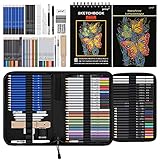
- 【Professional And Complete Drawing Sketching Set】: 76 Pack Art Pencil Set Include 3 White Charcoal Pencils, 7 Black Charcoal Pencils, 2 Colored Charcoal Pencils,12 Watercolor Pencils,12 Oil Based Colored Pencils, 15 Wooden Graphite Sketching Pencils, 12 Metallic Coloring Pencils, 1 Woodless Graphite Pencil 6B, Each pencil is marked with color name and model, Perfect for drawing, sketching, shading, layering, blending, and more
- 【Extra Drawing Sketching Supplies Kit 】: Along with 1 Refillable Water Brush Pen, 1 Vinyl Eraser, 1 Kneaded Eraser, 1 Sandpaper Pencil Pointer, 3 Paper Blending Stumps, 1 Travel Case,1 Paintbrush, All the basics drawing set in a portable zip-up case to ensure all drawing tools in organized and easy carrying. You can find the sketch kit you need at any time without clutter
- 【Premium Drawing Kit with Unique 3-Color Sketch Pad】 6 x 9", SPIRAL BOUND, 100GSM, 50 Pages (30 pages white, 10 pages toned tan, 10 pages black), Different colors of sketch paper are suitable for different styles of drawing, one sketchbook can meet your needs for different colors of sketch paper, no need to spend more money to buy different colors of sketchbooks
- 【Drawing Supplies Pencils kit with 7-step drawing tutorial on “how to draw”】, give you a uniquely comprehensive guide to getting you started with your first steps in the art world, start creating your artwork NOW and taking your art to the next level
- 【High Quality Drawing Set】 Non-toxic and eco-friendly, conform to strict ASTM D-4236 and EN71 standards, art pencils set are made of natural and environmentally friendly material, The special process makes the lead core extra smooth, durable, and break resistant, easy to sharpen and erase, ideal for the graphic designer, draft, and realistic sketches, perfect for details, shading, and layering, you can easily move from thick blending to fine, detailed illustrations to deep shading
Here, clarity and complete edges matter more than a dramatic environment. The constraint against competing objects protects the product’s read at small sizes.
Social post with a human subject
Brief: “Portrait-oriented social illustration of a person planting a seedling in a balcony container. Medium view, eye-level angle, subject in the lower center with leaves extending into the upper frame. Warm watercolor illustration, visible paper grain, greens and terracotta tones, and soft morning light from the right. Keep the background simple enough for a short caption overlay.”
The action supplies the message, while the upward space and simple background accommodate the intended post layout.
Explainer diagram
Brief: “Clean instructional diagram showing three stages of filtering water, arranged left to right with arrows connecting each stage. Straight-on view, consistent spacing, limited blue and dark-gray palette, flat vector-like shapes, high contrast, and an uncluttered area above each stage for labels. No decorative objects that compete with the sequence.”
For a diagram, ordering, spacing, and label clearance are more important than atmospheric lighting. If the generator struggles with exact text, create the visual structure first and add labels in a separate design tool.
Independent reader supportYour contribution helps us test, update, and keep practical guides available for everyone.How to compare two valid directions
There is no universally best composition or visual style. Compare alternatives against the job the image must perform rather than choosing the one that sounds most impressive.
Best Value

- Premium Hardcover Sketchbook: acid free drawing paper can withstand the repeated reworking and erasing, thick cover and heavy backboard help you to make your art paper lay flat even if you're sketching on the go
- 100 Sheets Sketch Paper: measures 9 x 12 inches, each sketchpad contains 100 finely-textured sheets; the sheets, which have a thickness of 68lb/100gsm, are perfect for sketching due to their smooth yet slightly grainy surface
- Sketchpad with Top Spiral Bound: easily flip the pages with double-spiral binding, the spiral is at the top which makes drawing easy with left or right hand comfortably; perfect sketchbook for amateurs and professionals
- Remove the Sheets Easily: art sketchbook with micro-perforated paper, allows you to remove true-to-size sheets easily without accidently tearing your finished artwork; it's a great choice for sketching, writing & drawing
- Good for Dry Media: sketch paper has fine texture which grabs dry media very well, suitable for pencils, pens, charcoals, pastels, crayons and more, not suitable for wet media such as markers, watercolor or acrylic paints
| Decision axis | Questions to ask | Useful evidence in the result |
|---|---|---|
| Purpose and legibility | Can the intended audience identify the subject and message quickly? | The focal subject remains recognizable at the size and placement where it will be used. |
| Framing and placement | Does the crop support the destination and leave room for required copy or controls? | The reserved area is genuinely quiet, and important edges are not cut off. |
| Style and medium | Does the treatment fit the tone and channel? | Materials, texture, and rendering method are visible rather than implied by adjectives. |
| Palette and lighting | Do color and light guide attention to the intended element? | Contrast separates the subject from its surroundings without obscuring detail. |
| Specificity versus flexibility | Are essential constraints explicit while secondary details remain open to interpretation? | The model follows the non-negotiables without producing a crowded or over-directed scene. |
These criteria are practical comparison tools derived from official prompting guidance, not a formal scoring system. You can use a simple pass/fail note for each axis when deciding between two generations.
Generate, inspect, and refine one decision at a time
- Generate from the brief. Keep the first version close to the planned purpose, subject, composition, and style. Do not add every possible variation in the same request.
- Check the purpose first. Ask whether the viewer understands the intended subject and action. If not, revise those elements before polishing texture or color.
- Check the layout. Look at crop, viewpoint, subject placement, aspect ratio, and the area reserved for text or other content. A crowded image usually needs a framing or placement change, not more style terms.
- Check the visible treatment. If the medium is wrong, name it more clearly. If the image feels too cold or too flat, adjust color temperature, contrast, or lighting direction.
- Request a focused variation. Keep the parts that work and change one major decision—such as moving the subject, widening the view, or simplifying the background.
- Record the accepted choices. Once a composition or style works, preserve those phrases and edit only the next problem. This prevents a successful element from disappearing during a wholesale rewrite.
OpenAI guidance describes requesting variations and adjusting composition or size. Clear descriptions are more dependable than clever wording, and a deliberate one-change-at-a-time workflow makes it easier to see which instruction affected the result.
Troubleshoot common failures by symptom
| Symptom | Likely planning issue | Focused revision |
|---|---|---|
| The subject is hard to identify | The purpose, action, or focal subject is vague. | Name one central subject, describe its visible action, and remove secondary objects that compete with it. |
| The image is crowded | The framing is too tight or too many details were treated as essential. | Use a wider view, simplify the setting, or explicitly reserve a low-detail area. |
| The subject appears on the wrong side | Placement was implied rather than stated. | Specify left, right, center, foreground, or background and explain why the open area matters. |
| The crop does not fit the destination | The aspect ratio or deliverable was omitted. | Name the required output shape and restate what must remain inside the frame. |
| The style feels generic | The prompt uses mood words without visible treatment. | State the medium, materials, texture, palette, contrast, and finish you can actually see. |
| Light falls in the wrong direction | The source and direction of light were unspecified. | Identify the source, side, quality, and warm or cool character of the light. |
| A diagram or poster contains unusable text | Exact lettering was treated as part of a generative image task. | Ask for clear space or a visual structure, then add final text in a layout tool when necessary. |
| A revision fixes one area but breaks another | All instructions were rewritten at once. | Restore the accepted prompt and change only the failing decision. |
Constraints, references, and model limits
State constraints positively and concretely: what must be included, what must remain clear, and what should be preserved from a successful version. Avoid relying on a negative list to carry the whole brief; explain the desired arrangement as well. For example, “single mug on a clear studio surface with a soft contact shadow” communicates more than a long list of objects to exclude.
If you provide a reference image, describe the aspect you want to carry over—such as palette, lighting direction, or material treatment—rather than assuming the system will infer which features matter. Keep references aligned with the purpose and avoid asking one image to imitate incompatible treatments.
Windows Errors? Fix Them Before They Spread
Repair common Windows errors and clear accumulated junk for a smoother, more stable PC - no reinstall needed.Free scan · no reinstallOutdated Drivers Are Slowing You Down
One free scan finds every outdated or missing driver and matches the right update for your exact hardware.Free scan · exact hardware matchPrompt structure is guidance, not a guarantee of exact output. Provider documentation explains useful dimensions such as deliverable, composition, aspect ratio, placement, color, and lighting, but it does not establish that a particular template will force precise pixels or a fixed success rate. No relevant published statistic quantifying the effect of pre-planning composition or style was identified in the official guidance discussed here, so claims of a guaranteed percentage improvement or time saving are not supported.
A printable pre-generation checklist
- Purpose and destination are stated in one line.
- The main subject and visible action are unambiguous.
- The setting contains only details that support the idea.
- Framing, viewpoint, and amount of subject visible are chosen.
- Subject placement and any text-safe area are explicit.
- The required aspect ratio or output shape is named.
- Medium, materials, texture, palette, and contrast describe visible treatment.
- Light source, direction, and quality are specified.
- Essential constraints are separated from optional preferences.
- The brief is short enough to scan and organized in a logical order.
- The refinement plan changes one major decision at a time.
Use the checklist to create a brief before opening the generator. The result may still need several variations, but each variation will answer a specific visual question instead of asking the model to guess what “good” means.
Quick Recap
Product prices and availability are accurate as of the date/time indicated and are subject to change. Any price and availability information displayed on Amazon at the time of purchase will apply.

