The most reliable Obsidian research system keeps two things distinct: a source record that preserves what another person published, and a synthesis note that contains your interpretation. Give each meaningful page, transcript, PDF, or media file a traceable source note; retain its URL or original file; then link claims in your notes and drafts back to that record. Web Clipper, templates, attachments, Obsidian links, and (optionally) Sync version history provide the mechanics.
The source-and-synthesis model
Obsidian does not require one official folder structure. For external research, however, a two-layer model prevents the most common failure: losing the origin of a quotation or claim after copying it into a polished note.
As an Amazon Associate I earn from qualifying purchases.
- Source record: the captured web page, transcript, PDF, audio file, image, or other original. Keep the stable URL or local filename, capture date, and enough unchanged text to identify what you saw.
- Synthesis note: your summary, analysis, outline, argument, or draft. Link individual claims or paragraphs to the relevant source records rather than pasting unattributed material.
A source record can contain brief annotations, but visually separate them from the captured material. A horizontal rule, heading such as “My notes,” or a callout makes the boundary obvious months later. If you edit a transcript for readability, preserve the unedited version in the source record and label the edited passage as a summary or excerpt.
The Tool Desk
Outbyte Driver Updater FREEFix the driver behind crashes, sound loss and screen glitchesFind Drivers →Outbyte PC Repair FREERepair Windows errors before they cause bigger problemsFix Now →A practical vault layout
Use names that remain understandable outside the folder tree. One workable arrangement is:
#1 Best Overall

- Crisp writing pages provide plenty of space for personal reflections, sketching, or for recording favorite quotations or poems.
- Premium 120 gsm paper takes pen or pencil beautifully.
- Paper is acid-free and of archival quality.
- Light gray lines subtly guide your writing.
- A ribbon bookmark keeps your place.
Sources/Web/for clipped pagesSources/Transcripts/for transcripts and interview notesSources/Files/for notes that point to PDFs, audio, images, or other attachmentsProjects/orNotes/for synthesis and draftsAttachments/(or another single, predictable attachment folder) for imported originals
You can instead keep all source notes together and classify them with a source_type property. The important design choice is not the folder names; it is that every source has a stable identity and every synthesis note can link back to it.
What to record in every source note
Capture enough provenance to answer “Where did this come from, and when did I save it?” without reopening the page. These fields are a recommended design, not a mandatory Obsidian schema.
| Field | What to store | Why it matters |
|---|---|---|
| Title | The page or recording title, plus a clarifying suffix when needed | Makes links readable in a graph, search result, or draft |
| Source URL | The complete page address, including the path | Lets you revisit the publisher’s current version |
| Author or publisher | Credit shown on the source, when available | Distinguishes similarly titled material and supports attribution |
| Captured date | The date you clipped or imported the item | Shows when your copy was made, which may differ from publication date |
| Source type | Web page, transcript, PDF, audio, image, dataset, or another category | Enables filtering and tells you how to interpret the content |
| Original location | A linked attachment filename or external archive identifier, if applicable | Preserves the path to a non-Markdown original |
| Capture status | For example, complete, excerpt, transcript edited, or needs verification | Prevents a partial clip from being mistaken for the full source |
Add tags or properties for a project, topic, language, or review state only when they answer a question you routinely ask. Excessive tagging creates maintenance work without improving retrieval.
What’s actually slowing this PC down?
Pick the symptom - the matching free tool is one click away.
How to save a web page with Obsidian Web Clipper
Obsidian Web Clipper is a free browser extension that saves web content to a selected vault and folder. Its official guide describes capture as local. The extension can capture page content, highlights, and extracted metadata, but the result depends on what you select and how well the page is structured.
- Install and connect the extension to the intended vault. Confirm the vault and destination folder before your first capture. A separate
Sources/Webfolder prevents clips from mixing with working notes. - Open the page and invoke Web Clipper. Review the title, URL, extracted text, and metadata shown in the preview. The default extraction attempts to identify the main article content; navigation, comments, paywalls, and unusual layouts can cause omissions.
- Choose the capture scope. Keep the whole-page extraction when surrounding context matters, or select a passage or highlight when only a defined section is relevant. A custom template can alter both the fields and the note body.
- Choose the vault and folder. Select the source destination rather than a project folder. If the page belongs to several projects, use links or project properties later instead of making duplicate clips.
- Inspect the preview before saving. Check headings, lists, quotations, tables, images, and the URL. If the article body is missing or badly ordered, cancel and use a selection capture, copy the important text into a clearly marked excerpt, or save the page as an attachment when appropriate.
- Save and perform a provenance check. Open the resulting note, confirm that the URL and capture date are present, and add the author or publisher if extraction did not supply it.
Whole-page versus highlight capture
| Capture choice | Strength | Trade-off | Use it when |
|---|---|---|---|
| Whole-page clip | Retains more headings and surrounding context in one source record | Can include clutter or extraction errors; longer notes are harder to scan | You may need the article’s structure, definitions, or context later |
| Highlight or selection | Creates a focused, readable excerpt with less noise | Can omit qualifications, neighboring paragraphs, or publication context | You are recording a specific claim and have separately retained the URL and attribution |
For high-stakes claims, keep a whole-page record or a local original in addition to a short highlight. A highlight is a useful index, not proof that the surrounding source said nothing else.
Rank #2
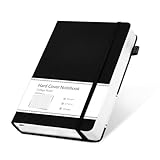
- 320 Pages Journal- Journaling notebooks with 320 pages provides you with enough writing space. A5 journal notebook with 100gsm paper, thicker than normal paper, will not cause bleeding, ghosting or smudging and is suitable for most types of pens.
- Waterproof Hard Cover- Leather journal have a comfortable touch. Durable and waterproof hard cover notebook protects the inside of the pages better than a soft cover and provides a comfortable writing surface.
- Notebook with Pocket- Journal for men comes with a paper pocket and trimmed fabric to make the pockets more durable. Hardcover Notebook has colorful ribbons and elastic bands and a pen insert on the right side of the journal.
- College Ruled- Lined journal is a college ruled notebook on 100 GSM paper, and the writing journal is designed to lay flat with colored tabs. There is a DATE bar at the top of each page. Helps you remember those important dates and find the page.
- Cagie Brand Support- You can purchase our products with full confidence! if you don't love the journal notebook due to any quality issues, simply contact us directly within 1 year and we will send you a hassle-free replacement journals for wroting or full refund.
Build a template that makes provenance automatic
Templates reduce the chance that a busy capture omits the URL, source type, or date. Obsidian’s template features can create a new note or add content to an existing or daily note. Web Clipper templates can be selected by URL or schema.org matching, and variables can populate the filename, location, properties, and note body. The exact variable choices available depend on the template editor and the metadata exposed by the page.
Recommended source-note skeleton
---
title:
author_or_publisher:
source_url:
captured_at:
source_type: web
capture_status: complete
project:
---

## Captured content

## My notes

## Linked claims
Map the title, URL, date, and other values to the corresponding variables offered by Web Clipper. Leave fields blank when the page does not provide reliable information rather than guessing. Keep “Captured content” and “My notes” as separate sections so an edit is never mistaken for the source’s wording.
Use URL and schema matching carefully
A rule that recognizes a publication’s URL can apply a publication-specific template, while schema.org matching can use structured metadata exposed by a page. Create these rules only when the resulting fields are dependable. A rule that fires too broadly can place unrelated pages in the wrong template, so test it with an ordinary article, a page with missing author data, and a page whose content is mostly navigation.
When a template should not run
Do not force a web-article template onto a transcript, a scanned PDF, or a page that contains only a download link. Use a source-type-specific template or create the note manually, then link the original attachment. Templates are consistency aids, not a replacement for checking the captured material.
Organize transcripts without losing the recording
Transcripts need two identities: the transcript text and the recording or event it represents. Create one source note for each interview, lecture, meeting, or episode. Record the original media filename or link, speaker names when known, date, and whether the transcript is verbatim, machine-generated, or edited.
Rank #3

- 【Premium A5 Hardcover Journal】5.5"x8.3" (14x21cm) College-Ruled, Journaling Notebook with 120 Sheets (240 Pages), Featuring Soft-Touch Vegan Leather Cover for Daily Writing Durability.
- 【Built to Last, Your Everyday Companion】 Long last writing across all 240 pages, reinforced to withstand work, daily journaling, note-taking, and Bible study. Versatile for home, school, office, or church use.
- 【180° Lay-Flat Binding】Lay-flat spine design with reinforced thread-binding ensures seamless writing without mid-page gaps.
- 【All-in-One Creative Companion】 Elastic closure strap protects pages from spills in your tote. Bulit-in back pocket holds business cards, receipts, or notes, while the silk ribbon markers project tracking. Easy to carry and ready for ideas anywhere, anytime.
- 【Perfect Gift Choice】 Birthday, Halloween, Thanksgiving, Christmas, or back-to-school gift for family and friends. It also be a great gift for yourself.
A transcript note that remains auditable
- Place a short metadata block at the top with title, participants, date, source type, and original-media link.
- Keep the full transcript under a “Transcript” heading. Mark inaudible words, uncertain speaker changes, and editorial cuts explicitly.
- Put your interpretation under a separate “Analysis” or “My notes” heading, not inline with the speaker’s words.
- When a synthesis note quotes the transcript, link to the transcript note and include a timestamp or section marker if one exists.
If the transcript is too large or the original is audio, store the file as an attachment and keep a searchable index or excerpt in the Markdown source note. This gives you discoverability without pretending that a shortened excerpt is the complete record.
Free tools Windows power users keep installed
One-click scans. No signup required.
Store PDFs, audio, images, and other originals as attachments
Obsidian supports attachments such as images, audio files, and PDFs. You can import or drag a file into the vault, embed it in a note, and link to it from a source record. Use one predictable attachment location and descriptive filenames, for example 2026-10-17_topic-interview.pdf, rather than relying on a download name like document(3).pdf.
- Create or open the source note before importing the file.
- Place the original in the vault’s attachment location.
- Embed or link the file from the source note so the relationship is visible in reading mode and search results.
- Record the external origin, capture date, and any conversion or OCR step in the note.
- Keep an unmodified copy when the original may be needed for legal, editorial, or verification purposes.
Embedded text versus a linked attachment
| Storage method | Searchability | File size and performance | Preservation |
|---|---|---|---|
| Text embedded in a Markdown source note | Easy to search, quote, and link at the note level | Large transcripts or OCR output can make notes unwieldy | Preserves the text you copied, but not necessarily layout, images, or embedded media |
| Original kept as an attachment and linked from a source note | Search depends on the file type and any text index or excerpt you add | Keeps large binaries out of the note body, but consumes vault storage | Best for retaining the original PDF, audio, image, or layout; still keep the source URL or origin identifier |
For a scanned PDF, combine both methods: retain the scan as the authoritative attachment and add a short OCR excerpt or page-level index to the source note. Label OCR as OCR so later readers do not treat recognition errors as the original text.
Connect source records to synthesis and drafts
Once a source is captured, the value comes from using it without breaking the chain back to its origin. In a synthesis note, link the source note next to the claim it supports. If one paragraph draws on several sources, link each one at the point of use or in a compact “Sources for this section” list.
A claim-level pattern
Write the claim in your own words, add a source link, and then record a short qualification when the source is narrow or conditional. For example:
Quick wins for a faster PC:
Repair Windows errors before they cause bigger problemsFix Now →Fix the driver behind crashes, sound loss and screen glitchesFind Drivers →Rank #4

- Unique Aesthetics Design: Enhance Your Note, Taking Experience With The Stylish Hardcover Inspirational Quotes Designs Of Our Notebook Journal, Adding A Unique Touch To Your Writing Enhance.
- Meaningful Gift Option: Our Spiral Notebook Unique Beautiful Journal With A Inspired Quotes. It's A Meaningful Gifts For Women, Families, Men, Friends, Classmates And Workmates On Birthday Christmas Thanksgiving Mothers Day.
- High Quality Paper: Smooth Paper, Well Made, Easy To Write. The Notebooks Can Be Use To Daily Diary, Meditation journal, Work Notetaking, Painting And study .To be A Good Choice For Offices.
- Gold Spiral Bound: The Beautiful Notebook Hardcover And Gold Spiral Binding. The Clever Spiral Binding Ensures Smooth Page Turning And Keeps Pages Attached Reliably, While Still Staying Flat When Opened.
- Easy To Carry: The Size Is 5.8 Inches X 8.3inches X 0.55inch(14.8 Cm X 21cm X 1.4cm), This Notebook Is Better To Use As A Journal, Travel Notebook, Or Diary. It Also Easily Fits In Backpacks Or Briefcases Handbags For On-The-Go Use!
- Claim: [your paraphrase] — [[Source - descriptive title]]
- Evidence type: direct quotation / paraphrase / observation
- Location: page number, heading, speaker, or timestamp
- Qualification: what the source does not establish
This pattern keeps synthesis readable while making fact-checking fast. Do not turn every source note into a duplicate copy of your draft; the source note is the provenance layer, and the draft is where your argument belongs.
Use Obsidian URI for repeatable capture workflows
Obsidian URI can create notes with supplied content, append text to existing notes, and open or search notes. That makes it useful for automation: a browser or transcription workflow can send a new source record to a known folder, append a follow-up observation, or open the matching note for review. Treat URI automation as a convenience, not a trust boundary. Review the resulting note, confirm the URL and encoding, and avoid silently appending unverified text to a finished synthesis.
Independent reader supportYour contribution helps us test, update, and keep practical guides available for everyone.A repeatable workflow for daily research
- Capture once. Save the page, transcript, or file as a source record with URL or original attachment.
- Normalize metadata. Fill title, author or publisher, date, type, and capture status; correct extraction mistakes immediately.
- Annotate separately. Add questions, keywords, and a short summary under your own-notes heading.
- Link to a project. Add a project property or link to the source note instead of making another copy.
- Extract claims. In the synthesis note, write paraphrases or quotations and link each to its source record.
- Review status. Mark incomplete clips, uncertain transcripts, and sources that need a second look.
- Archive deliberately. Keep the source note and attachment together even after a project is finished; future work may depend on the original context.
Recovery, version history, and independent backups
Obsidian Sync documents version history for notes and attachments. Its help documentation states that attachment versions are retained for two weeks, while note-history retention depends on the Sync plan. Because retention details can change and the referenced documentation may be older in search results, check the current Sync help page and your plan before relying on a specific recovery window.
Version history is a way to recover an earlier vault item, not a complete backup strategy. Keep an independent backup of the vault, especially before bulk imports, OCR conversions, or attachment reorganizations. Test that the backup can actually restore a source note and its linked file; a note without its PDF or audio attachment is an incomplete record.
Troubleshooting common capture failures
The clipped note is missing the article body
- Reopen Web Clipper and inspect the preview before saving.
- Switch from automatic whole-page extraction to a deliberate selection.
- Check whether the page uses a paywall, embedded reader, frames, or unusual layout that prevents main-content detection.
- Save the page’s URL and record what was unavailable rather than presenting a partial clip as complete.
The note has the text but no trustworthy provenance
- Add the complete source URL and capture date manually.
- Record the author or publisher from the page, not from an assumption based on the domain.
- Set the capture status to “needs verification” until you have checked the source again.
Attachments are hard to find or links break
- Move new files into one predictable attachment location.
- Use descriptive, stable filenames and avoid repeated generic download names.
- Open the source note after moving a file and repair the link immediately.
- Include the external origin in the source note so a missing local file can be replaced deliberately.
A template fills the wrong fields
- Test URL and schema matching against pages with different metadata quality.
- Use a narrower rule or a separate source-type template.
- Keep a manual review step; automatic variables cannot infer missing authorship or distinguish a complete transcript from an excerpt.
An end-to-end example
Suppose you find a long technical article, download a related PDF, and receive an interview transcript. Clip the article to Sources/Web/ and verify the extracted headings and URL. Create a second source note in Sources/Files/, import the PDF into Attachments/, and link the file from that note. Create a third note in Sources/Transcripts/ with the transcript’s recording link, speaker information, and editing status.
In a project note, write your conclusions in your own words. Place the article source link beside the claim based on the article, the PDF source link beside the figure or definition taken from the document, and the transcript link beside the quotation with its timestamp. If the article’s clip omitted a qualification, mark the claim as needing verification instead of silently filling the gap from memory. Months later, search can find the project note, while each link leads to the exact source record and, where applicable, the preserved original file.
How to keep the system maintainable
- Choose one naming convention and apply it consistently; include a date only when it helps distinguish versions.
- Use properties for stable filters such as source type, project, and review status; reserve free-form tags for concepts you actually browse.
- Do not duplicate a clip for every project. Link one source record to many synthesis notes.
- Review the “needs verification” status before publishing or making a consequential decision.
- Periodically test links and backups, particularly after changing attachment locations.
The result is a vault in which capture is fast but not opaque: every clip has an origin, every attachment has a note, and every important conclusion can be traced back to the material that supports it.
Quick Recap
Product prices and availability are accurate as of the date/time indicated and are subject to change. Any price and availability information displayed on Amazon at the time of purchase will apply.

