Crashes, No Sound, or Screen Glitches?
Random freezes, missing sound and display glitches usually trace back to one bad driver. Find and replace yours safely.Free scan · under a minuteWindows Errors? Fix Them Before They Spread
Repair common Windows errors and clear accumulated junk for a smoother, more stable PC - no reinstall needed.Free scan · no reinstallWindows 11 does not include a general, user-facing screen for checking CPU temperature. To see it while Windows is running, use a hardware-sensor utility such as HWiNFO, Core Temp, or HWMonitor. You can also look in your device’s UEFI firmware, but that reading is usually taken at little or no workload. For temperatures during a game or demanding task, keep a monitoring utility open while that task runs.
Choose a method that matches what you need to see
| Method | Best for | What to keep in mind |
|---|---|---|
| HWiNFO Sensors-only | Detailed sensor readings in Windows | Sensor names and availability vary by hardware. |
| Core Temp | A focused check of CPU temperature | Look for the Temperature Readings section. |
| HWMonitor | CPU temperature alongside other hardware readings | Expand the CPU section and inspect its temperature entries. |
| UEFI/BIOS hardware monitor | A check without opening a Windows utility | Menu locations and available readings differ by device; the CPU is usually at little or no load. |
| Monitor during a workload | Seeing temperatures while gaming or using a demanding application | This is a way to use a sensor utility, not a separate application. |
1. Check CPU temperature with HWiNFO
HWiNFO provides a detailed view of available hardware sensors. Its sensor view can remain open while you use Windows, making it useful for observing readings during a demanding task.
As an Amazon Associate I earn from qualifying purchases.
- Open HWiNFO and choose Sensors-only.
- Start the sensor view and locate the CPU temperature entries.
- Keep the window open while you use the computer, or use its background logging feature if you want a record to inspect afterward.
The exact sensor labels and number of readings depend on the processor, motherboard, and firmware.
Quick wins for a faster PC:
Clear out junk files and repair common Windows errorsFree Scan →Fix the driver behind crashes, sound loss and screen glitchesFind Drivers →Repair Windows errors before they cause bigger problemsFix Now →2. Use Core Temp for a focused CPU reading
Core Temp is a simpler option when your main question is the processor’s temperature rather than a broad set of hardware readings. Open the utility and find its Temperature Readings section. The readings available depend on the hardware.
#1 Best Overall

- Screen Stand Installation Guide: Please ensure that you use the (H) Screws specified in the instruction manual when installing the Screen Stand and the 8.8 Universal Screen. DO NOT use the longer screw “g”.
- Dynamic Control with L-Connect 3: Customize your viewing experience with L-Connect 3 software. Access preset themes and modular information, and upload your own videos and photos to create a personalized display that suits your style.
- USB-Powered Secondary Display: Enjoy plug-and-play connection via a 9-pin port or Type-A USB. This innovative design allows the 8.8" screen to function independently as a secondary monitor, displaying hardware stats, media, or custom visuals without using valuable GPU ports.
- Flexible Mounting Options: Versatile mounting bracket that supports height and tilt adjustments. Mount it securely to fan frames, attach it to case panels, or use adhesive pads for flat surfaces, ensuring optimal visibility from any angle.
- Stunning Diffused ARGB Lighting: Enhance your build's aesthetics with a built-in diffused ARGB lighting strip. Fully customizable through L-Connect 3, the lighting offers a spectrum of colors and effects, allowing synchronization with your entire system for a cohesive look.
3. Use HWMonitor to view CPU and other component sensors
HWMonitor reports system-health sensors, including temperatures, voltages, power, fan speeds, utilization, and clocks. Open the utility, expand the CPU section, and look for temperature entries. This can be useful when you want CPU readings alongside information about other components.
4. Look for a temperature reading in UEFI
Some motherboards and devices show CPU temperature in their UEFI firmware settings, often on a main page or a hardware-monitoring page. The route and available information vary by manufacturer, and not every device exposes the same readings.
Rank #2
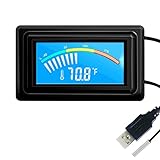
- 【USB Power Supply】This digital thermometers is use usb connector as power supply. Easily to connect to PC, laptop computer, power bank, usb socket or any other usb port.
- 【Accurate and Responsive】Temperature range: -58°F to 230°F /-50°C to 110°C, Input: DC 4~25V, Size: 4.7 x 2.8 x 1.7cm / 1.9" x 1.1" x 0.7", 50 Grams, Sensor cable: 1 meter, Temperature display unit: °C/°F switchable.
- 【NTC 10K sensor waterproof】This digital PC thermometer is responsive and accurate to measure the temperature. Measurement interval: 0.25s, accuracy: ±0.5°C/±0.5°F.
- 【Wide Applications】This thermometer gauge with probe is widely used in managing aquarium, pets, vehicle, air conditioning, refrigerator, freezer, water heater, greenhouses, Incubators, computer chassis temperature detection, DIY, etc.
- 【Color Liquid Crystal Display】This aquarium thermomter digital is equipped with bright backlight, you can clearly check the temperature even in the dark.
- Save your work and restart the computer.
- Enter UEFI/BIOS during startup using the key or method shown by your device manufacturer.
- Look for a CPU temperature on the main screen or under a hardware-monitoring section.
A firmware reading is generally taken before Windows loads, when the CPU is under little or no workload. It can help you check a basic reading, but it will not show how hot the processor gets during a game or application.
The Tool Desk
Outbyte PC Repair FREERepair Windows errors before they cause bigger problemsFix Now →Outbyte Driver Updater FREEFix the driver behind crashes, sound loss and screen glitchesFind Drivers →5. Check temperature during the task that concerns you
To see how temperature changes under load, use a Windows sensor utility while running the game, application, or other task you want to assess. HWiNFO can remain open during gaming and can log readings in the background. Check the utility’s current readings or, if you enabled logging, review the recorded data afterward. A reading taken at idle or in UEFI does not answer the same question as one observed during a demanding workload.
Rank #3
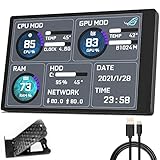
- 【With software in English】 The PC Temperature Display works creat with our English version software. You can use this with our software as a "second monitor" to view computer's Temperature and usage of CPU, GPU ,RAM and HDD Data etc.
- 【Only Use with single USB-C cable】Our Computer Temp Monitor only needs the single USB-C cable so it can be mounted completely internally off a usb header without the need of a port on the GPU which is a huge plus to you. No HDMI required, no power required.
- 【Great Viewing Angles & Accurate Information】 IPS full view. 3.5inch mini screen. Display area: 1.93*2.91". Overall size: 2.17*3.35". Resolution: 320*480. Thickness: 0.31". Shell material: metal
- 【Simple and Feature-rich】Customizable screen layout. Horizontal and vertial screen switching. Visual theme editor: drag the mouse arbitarily to realize your creativity. Energy saving & environmental protection. Turn off the screen automatically and Comfortable eye protection Brightness adjustment.
- 【Great Customer Service】We respect and value each customer's product and service satisfaction. We want to offer you premium products for a Long-Lasting Experience. If any issue, please kindly contact us for a solution.
What counts as a safe CPU temperature?
There is no single safe-temperature number that applies to every processor. Microsoft’s thermal-management documentation describes a system in which firmware defines thermal zones, sensors report temperatures, and Windows can apply mitigation; it does not provide one universal limit for every CPU. For the limit relevant to a particular system, consult documentation from the processor or device manufacturer rather than treating one number as a rule for all PCs. Microsoft’s Windows thermal-management design guide
Quick Recap
Best Value

- 9.16” Wide LCD Screen – Features a crisp 1920×480 resolution display, perfect for showcasing system stats, hardware performance, or personalized visuals inside your gaming PC.
- Real-Time Hardware Monitoring – Easily track CPU/GPU temps, fan speed, memory usage, and more, giving you complete control of your system health at a glance.
- TRCC Software with DIY Options – Includes Thermalright TRCC app with multiple preset themes and DIY customization, so you can design your own unique interface
- Plug & Play USB-C Connection – Simple Type-C interface ensures quick setup and compatibility with most Windows systems, no complicated drivers required.
- Compact & Stylish Build – At only L251 x W68 x H17 mm, this slim display fits seamlessly inside or outside your PC case, adding both function and aesthetic appeal for modders and enthusiasts.
Rank #4

- Parameters: This is a new type of mini computer chassis screen. There is no need to install AIDA64, and only a USB cable is required to detect whether the running parameters are normal. Display area: 49X74 (mm), overall size: 55X85 (mm), resolution: 320X480, thickness: 7~ 8 (mm), viewing angle: IPS full viewing angle, interface: USB-TYPEC, shell material: metal
- FAQ: Unable to download URL and unzip, use tutorial, what system is supported? Please don't worry, we will upload video tutorial in the link, which will be reflected in the video. At the same time, we will have product instructions. Finally, our products are compatible and easy to operate
- Features: Support horizontal and vertical screen switching, 0°and 180°two options, energy saving and environmental protection, automatic screen off after shutdown, eye comfort, stepless brightness adjustment
- Function: Displays various data of CPU, memory, hard disk and other hardware, so that users can grasp the computer operation status in time. Through special customized chips, it supports dynamic wallpaper and other forms, can add visual effects, and only takes up a small amount of CPU resources. Compared with the traditional HDMI secondary screen, it only needs a USB data cable to connect, avoiding various problems such as cable clutter
- Packing list: 1 x 3.5-inch screen; 1 x USB data cable; 1 x adjustable bracket; 1 x product manual; 1x Acrylic double-sided tape;1 x packaging box. If you encounter the above problems or other problems about the product, the information we provide cannot solve them for you. Please contact us. We are online 24 hours a day and will serve you as soon as possible.
Why a temperature reading may be missing or look different
- Sensor support varies: The number and names of CPU readings depend on the hardware and firmware.
- Utilities show different levels of detail: HWiNFO emphasizes extensive sensor coverage, Core Temp focuses on CPU temperature, and HWMonitor includes readings for other components.
- The measurement context matters: UEFI generally shows a low-load reading, while a Windows utility can show readings during the activity you want to check.
- Labels can change: Utility interfaces and sensor names may differ between versions and systems.
Sources
- How-To Geek: How to Check Your CPU Temperature in Windows 11
- CPUID: HWMonitor
- MakeUseOf: How to Check Your CPU Temperature in Windows 11
Product prices and availability are accurate as of the date/time indicated and are subject to change. Any price and availability information displayed on Amazon at the time of purchase will apply.

