Use dry, straight-grained wood and a sharp carving or camp knife. Brace the stake so it cannot roll, mark a short point, and make four shallow, flat push cuts while rotating the stake. Let the grain determine your cutting direction; if fibres start to lift, reverse the cut instead of forcing the blade. Stop when the four faces meet in a sturdy pyramid, then remove fuzz with 120–220 grit sandpaper. Keep the opposite end flat or only lightly chamfered if the stake will be malleted.
What makes a stake point stay sharp
A useful stake point is a compact four-sided pyramid, not a long, thin needle. The pyramid removes enough material to enter soil while leaving supporting wood behind the tip. A long taper can look sharper, but its thin fibres are more likely to bend, break, or split when the stake is dragged across rough ground or struck at an angle.
As an Amazon Associate I earn from qualifying purchases.
Point quality starts with the stock. Choose a dry hardwood stick or stake with grain that runs as straight as possible from end to end. Green wood still contains substantial moisture; as it dries, it can shrink, bend, and split. Softwood is also more vulnerable to crushing and splitting when driven. Straight grain gives the knife a predictable path and reduces the chance that a cut will turn into a long lengthwise fracture.
- Dry stock: less movement after shaping.
- Straight grain: more predictable fibre direction.
- Sound wood: reject pieces with existing cracks, knots at the point, or crushed fibres.
- Enough diameter: retain a substantial core beneath the point rather than reducing the stake to a fragile spike.
Tools and a safe setup
For one stake or a small batch, a sharp carving knife or sturdy camp knife offers the best control with little setup. The knife should cut cleanly with moderate pressure. A dull edge encourages prying and twisting, the movements most likely to lift fibres.
#1 Best Overall

- [Wood Carving Kit Deluxe Edition] Everything you need to start carving: 4 knives, 4 chisels, 7 basswood blocks, spoon blank, polishing compound, leather strop, sharpening stone, gloves, sandpaper, templates, and guide. All stored in a portable PU leather case—perfect for beginners and pros.
- [Premium Walnut Handles & Sharp Blades] Blades are precision-sharpened for effortless cuts. Metal cap prevents blade breakage. Ergonomically rounded walnut handles reduce hand fatigue, ensuring comfortable grip during long carving sessions.
- [Complete Maintenance & Storage Set] The wood whittling kit comes with a portable storage bag, easy to store and carry. Leather strop, polishing compound and sharpening stone prevent the blades from rusting and make them brighter and sharper.
- [Safe Carving for All Skill Levels] This wood carving knife set comes with cut-resistant gloves and cut-resistant bandage, and all knives come with protective sleeves. You can enjoy a safe and enjoyable carving experience with our high quality wood carving knife.
- [Perfect Gift for Creative Minds] Ideal for fathers, mothers, partners, or friends who love DIY crafts. Suitable for beginners and experts. Give the joy of wood carving—a relaxing and rewarding hobby that creates handmade treasures.
Secure the work before cutting. Clamp the stake, hold it in a suitable brace, or press it against a stable stop so it cannot roll. Keep both hands behind the cutting edge. Do not hold the stake across your thigh or make a cut toward a hand, knee, or foot. Remove loose bark and dirt from the area you will cut; grit quickly damages an edge and can make the blade glance.
Have a flat surface for checking the four faces and a piece of 120–220 grit sandpaper for final cleanup. Sandpaper is a finishing tool, not a substitute for removing large amounts of wood with the knife.
How to sharpen the point without splitting the stake
- Inspect and orient the grain. Rotate the stake in your hands and look for the direction in which fibres appear to run and the places where grain rises toward the surface. Put the cleanest, straightest section at the end that will enter the ground. If a knot or visible checking reaches the end, cut back to sound wood before pointing.
- Mark a short taper. Use a pencil or knife mark to establish where the point begins. A short taper is stronger than a long, needle-like one. The exact length depends on the stake’s diameter and the soil, but the faces should meet while substantial wood remains behind them. Marking prevents successive cuts from creeping farther up the shaft.
- Brace the stake. Clamp it or wedge it so it cannot roll. Position the work so the intended push direction carries the knife away from your body and away from the supporting hand.
- Make the first flat push cut. Place the edge on one face at the taper mark and push in a controlled, shallow stroke. Keep the bevel and blade angle consistent across the face. The goal is a flat plane, not a gouge or a deep wedge. Stop before the cut reaches the centreline.
- Read the fibres immediately. Examine the cut edge. If fibres slice cleanly, continue with another light pass. If they begin to rise, curl, or pull out in a long splinter, stop. Reverse the cutting direction or alter the angle so the edge meets the fibres in a slicing direction. Never force a blade through a rising grain line.
- Rotate the stake. Turn it to the next face and repeat the same shallow push cut. Continue until all four sides have a similar flat plane. Rotating the stake, rather than trying to carve around it from one position, keeps the point symmetrical and limits the depth of each cut.
- Bring the faces together gradually. Use light corrective cuts on alternating faces. Check the tip frequently from the side and end. When the four planes meet, stop; further carving only makes the tip thinner. A durable point may have a tiny flat or slightly rounded apex rather than a needle point.
- Refine the surface. Fold 120–220 grit sandpaper around the point and make a few light strokes along the faces. Remove fuzz and small torn fibres without changing the pyramid’s shape. Wipe away dust and inspect for a crack that extends beyond the tip.
- Prepare the driving end. If a mallet or hammer will be used, leave the opposite end flat or give it only a slight chamfer. A sharp shoulder or deeply rounded end can mushroom, split, or deflect under impact.
How to cut with the grain instead of against it
Wood fibres run longitudinally. A knife moving in a direction that wedges fibres upward can start a split that travels well beyond the area you intended to shape. Grain direction can change around knots, run out toward an edge, or appear different on adjacent faces, so a single cutting direction is not always correct for the entire stake.
Do these 3 things before closing this tab:
1Repair Windows errors before they cause bigger problems2Scan for outdated or missing drivers - takes under a minute3Clear out junk files and repair common Windows errorsSigns that the cut is lifting grain
- A thin flap rises ahead of the edge instead of being sliced away.
- The cut surface becomes fuzzy or torn after a pass that felt forceful.
- A crack opens from the new face toward the shaft.
- The blade chatters, catches, or requires levering to advance.
When any of these signs appears, stop the stroke. Try pushing from the opposite end, reduce the depth, or rotate the stake to another face. A short slicing motion with a sharp edge is safer than a long push that follows a rising fibre. If the grain changes direction around a knot, leave more wood in that area and make several tiny cuts rather than trying to flatten it in one pass.
Rank #2

- 👍 【Wood Carving Tools】: Wood Sloyd Carving Knife made of high-carbon steel,whittling cutting edge is very sharp,and is durable to cut hardwoods as well such as oak or walnut. Leather strop and polishing compound allows you to make your tools and knives razor-sharp with minimum effort.
- ✅ 【Carving Knife Ergonomic Handle】: Carving knife handles are made of Black Walnut wood, smooth and comfortable, stable and durable.The ergonomic design of the handle allows having a long period of comfortable wood carving, release your hands from fatigue.
- ✅ 【Enjoy Your Carving Time】: Our wood carving knife can satisfy your wood carving creativity. It's the perfect gift for beginners all the way to advanced whitlers! Personally carve a wood creations for your family or friends and experience the joy of wood carving.Wind down from a busy day by creating your own wood work of art.
- ✅ 【Widely Application for Kids and Adults】 -- It's the perfect gift for beginners, this carving knife tool set can be used for Halloween pumpkin carving, wood carving, DIY cutting, grinding, and so on. They are also applicable to simple and safe talc projects, handicrafts, clay sculptures, wood wall decoration and carving, etc.
- 💯 【Perfect Holiday Gift Idea】 -- Spoil your fellow carver, beginner or a kid with this wood carving tools set, This wood carving tools kit the perfect choice.Not only suitable for children and beginners, but also professionals. Can be used as a gift to mothers, fathers, lovers, and friends, let them experience the fun of wood carving!If you have any questions,we're very happy to either provide a no-questions-asked refund or replacement.
Why a four-sided pyramid resists splitting
Each shallow face removes a controlled amount of material and supports the fibres that remain beneath it. The four-face layout also lets you inspect the developing point from every side. By contrast, carving a single broad bevel or an elongated cone concentrates stress in fewer remaining fibres. A thin cone can snap when the stake is angled or struck against a stone, even if its initial tip looks very sharp.
Do not confuse a durable point with a blunt one. The four faces should meet cleanly enough to enter the intended soil, but the apex does not need to be a sewing-needle point. Slightly rounding or refining a cutting point can help it slice fibres instead of chattering across a cross-grain surface. On a ground stake, that principle means removing splinters and fragile whiskers while preserving a compact tip.
Finishing with sandpaper
Knife work should establish the geometry; abrasive work should only refine it. Start with 120 grit if the knife left pronounced fuzz, then move to 180 or 220 grit for a smoother surface. Sand along the faces and toward the tip rather than aggressively across the grain. A few controlled strokes are normally enough to remove loose fibres that could catch on soil or a guy line.
Stop sanding if the point begins to become noticeably thinner or rounded. Excessive sanding can erase the flat faces and create the same fragile needle shape that careful knife work avoided. If sandpaper exposes a dark line or opens a crack, discard the stake or cut back to sound wood instead of trying to polish over the defect.
Rank #3

- Wood Carving Knife for Multiple Tasks: This whittling knife features a long, narrow blade with a curving point, perfect for roughing, shaping, delicate cuts, and working in tight areas.
- Whittling Knife with Durable Steel Blade: The knife boasts a strong blade made of 1066 high-carbon steel, renowned for its ability to hold a sharp edge and withstand frequent use.
- Wood Carving Knife Easy to Handle: Perfect for beginners and experts, this knife offers an intuitive design for easy handling.
- Sloyd Knife and Leather Sheath Set: Includes a protective cowhide leather sheath to keep the blade safe and prevent accidental cuts when not in use.
- Carving Knife Woodworking for Precision Cuts: Featuring a razor-sharp cutting edge honed to perfection, this knife delivers smooth, accurate cuts every time.
Preventing splits when the stake is driven
Pointing is only part of the stake’s service life. Driving a stake multiplies stress at both ends. Use the pointed end for entry and keep the top end flat or lightly chamfered. Strike squarely with a mallet appropriate to the stake’s size; glancing blows bend the shaft and shock the point.
- Choose soil free of obvious rocks where possible. A point forced against a stone can split regardless of how carefully it was carved.
- Drive in line with the stake rather than at an angle that bends the shaft.
- Stop if the stake begins to buckle, a crack opens, or the top starts to mushroom.
- For a stubborn location, withdraw the stake and clear the obstruction rather than applying harder blows.
Green pegs are especially poor candidates for heavy driving because they can dry crooked and split as they shrink. If a freshly cut stake is your only option, let it dry before final shaping and inspect it again immediately before use; drying can reveal checks that were not visible when the wood was wet.
Troubleshooting common failures
The point splits lengthwise during carving
Stop cutting and examine how far the split runs. If it extends into the shaft, shorten the stake or discard it. For a split confined to the tip, cut back to solid fibres and restart with shallower passes. Change the push direction so the knife slices down the grain instead of prying it up. A clamp that allows the stake to vibrate can worsen the problem, so improve support before trying again.
Free tools Windows power users keep installed
One-click scans. No signup required.
The knife tears a fuzzy surface
Check the edge and the cut depth. A dull knife or a deep pass crushes fibres rather than slicing them. Hone or replace the blade, then take lighter push cuts. Use 120–220 grit paper only after the faces are correctly shaped.
Rank #4
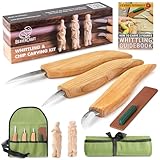
- Wood Carving Kit Essentials: This carving set includes everything you need–a detail knife, chip carving knife, roughing knife, leather strop, polishing compound, canvas tool roll, and a step-by-step guide.
- Wood Carving Knife Handles–Ergonomic and Comfortable: Designed for comfort, these whittling knives let you carve for hours without fatigue.
- Wood Carving Tools Ready to Go: Our wood carving knives are pre-sharpened before packaging and come prepared for immediate use right out of the box.
- Wood Carving Set European Quality: All BeaverCraft tools are crafted in Ukraine, ensuring top-notch quality for all your carving needs, no matter your skill level.
- Carving Knife Woodworking Gift: This wood carving knife set is a perfect gift for your fellow carver, beginner, or even a kid ready to start their carving journey.
The four faces do not meet evenly
Mark the taper again and compare the width of each face. Remove small amounts from the widest or highest face while rotating the stake after every pass. Do not correct an asymmetry with one deep cut; that creates a weak spot and makes grain behavior harder to read.
The tip breaks during use
The point may be too long, too thin, or made from soft or green stock. Cut back to a shorter pyramid and retain more diameter behind the apex. If the stake repeatedly meets hard ground, use a sounder, drier piece of wood rather than making the tip sharper and thinner.
The driving end mushrooms
Stop striking and trim the damaged fibres. Restore a flat end or a small chamfer before continuing. Repeatedly hitting a mushroomed end drives splitting down the shaft.
Hand carving versus machine pointing
Hand carving is usually the safer and more controllable choice for a few stakes. It is slower, but you can respond to grain changes on every cut and stop as soon as the faces meet. The equipment cost and setup burden are low: a sharp knife, a way to brace the work, and finishing abrasive are sufficient.
Best Value

- Versatile Wood Carving Knife Set: This wood carving knife set includes a cutting knife, detail knife, and roughing knife. Each knife contains a blade crafted from quality 1095 high carbon steel.
- Ergonomic Ash Hardwood Handle: Designed for comfort, the ergonomic knife handles provide a firm grip, making this woodcarving tools set ideal for both beginners and professional wood carvers.
- Superior Edge Holding Steel: These wood carving knives are crafted from edge holding steel, ensuring smoother cuts for all your projects. Ideal for a beginner wood carving kit!
- High-Quality Tools: Our woodcarving tools set provides users with excellent sharpness and durability to complete projects without frustration for both beginner wood carvers and professionals.
- Flexcut has been proudly manufacturing quality user-friendly and affordable woodcarving, whittling and printmaking tools in Erie, Pennsylvania since 1992.
Machine pointing can make repeated work faster, but it adds hazards rather than eliminating them. A cross-cut saw should point stakes only with a properly designed jig and adequate support. Improvised fixtures can let a stake roll or pull the operator toward the blade. Pointing also produces sharp off-cuts; remove them regularly and handle them so they cannot become trip or puncture hazards. If you cannot provide a designed jig, stable support, and a method for controlling off-cuts, use hand tools instead.
| Method | Split resistance | Finished-point durability | Speed | Control | Skill and equipment |
|---|---|---|---|---|---|
| Hand knife, four shallow faces | High when grain is read correctly and stock is dry | High with a short pyramid | Slower for many stakes | Fine control and immediate feedback | Sharp carving or camp knife, brace, and sandpaper |
| Cross-cut saw with designed jig | Depends on jig support, blade condition, and stock | Consistent when correctly set up | Faster for repeated work | Less responsive to grain changes | Designed jig, adequate support, blade guarding, and off-cut control |
A repeatable inspection checklist
Use this check before putting a pointed stake into service:
- The wood is dry, sound, and free of a crack running from the point into the shaft.
- The grain is reasonably straight through the pointed section.
- Four flat faces meet in a short, solid pyramid.
- No face contains a lifted splinter or deep tear-out.
- The apex is sharp enough to enter the intended soil but not reduced to a fragile needle.
- The driving end is flat or lightly chamfered and shows no mushrooming.
- The stake remains straight when rolled on a flat surface.
Key decisions at a glance
Choose hand carving when you are making one or a few stakes, when the grain is irregular, or when you need to preserve maximum control. Choose a machine process only for repeated production with a purpose-built jig, adequate support, and a safe way to remove sharp off-cuts. In either case, the durable result comes from the same fundamentals: dry straight-grained stock, shallow cuts, grain-aware direction changes, a short four-sided point, and a protected driving end.
Recommended Free Tools
Quick Recap
Product prices and availability are accurate as of the date/time indicated and are subject to change. Any price and availability information displayed on Amazon at the time of purchase will apply.

