You usually do not need to replace a working enterprise application, PLC, or industrial machine to use AI. The safer pattern is to place an integration layer between the existing system and the AI application: inventory the assets and constraints, collect data through supported interfaces, normalize its meaning, expose it through a controlled broker or API, and keep authority for critical actions with approved people and control systems.
For operational technology (OT), treat an AI connection as a new connected system, not as a plug-in. Segment networks, use an approved DMZ or equivalent boundary, test latency and interoperability, and decide explicitly whether the AI is read-only, advisory, or allowed to participate in a control loop. The final design depends on the equipment, vendor interfaces, timing budget, safety role, and who must retain control when connectivity or the model fails.
As an Amazon Associate I earn from qualifying purchases.
What “integrating AI” should mean
Integration is the controlled movement of data and, where justified, decisions between a legacy system and an AI capability. It is not the same as giving a model direct access to production tables or a machine controller.
The Tool Desk
Outbyte PC Repair FREEClear out junk files and repair common Windows errorsFree Scan →Outbyte Driver Updater FREEScan for outdated or missing drivers - takes under a minuteDriver Scan →A practical architecture has separate paths:
- Read and observe: collect records, sensor values, alarms, work orders, or status information for search, forecasting, anomaly detection, or reporting.
- Advise: return a recommendation, prediction, or ranked alert to an operator or business workflow.
- Act: write a business transaction or influence a control function only after a separately approved safety, security, and change-control decision.
Keep the first two paths distinct from direct control wherever feasible. Preserve the legacy system as the system of record, and make every write explicit, authenticated, authorized, logged, and reversible. An AI client should not issue undocumented updates directly to production database tables or bypass the engineering change process.
#1 Best Overall

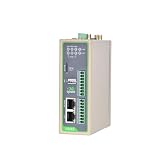
- Multiple Internet access methods is offered: Global frequency LTE 4G/3G & Ethernet port & ADSL.
- Router fucntion is supported: Routing, VPN and firewall.
- Support graphical programming (Node-RED) to quickly develop edge computing functions to meet unique functional requirements.
- Suitable for a variety of industrial IoT scenarios, supporting Modbus RTU/TCP protocol conversion and other popular PLC common protocols.
- Modular design, uses can expand different types of IO modules: DI, DO, AI, AO, IO. Easily slide to achieve quick access to the IO expansion machine, to meet the needs of more scenarios.
Why legacy environments need an integration layer
Older applications and industrial assets often expose proprietary protocols, inconsistent tags, flat files, or database schemas designed for a single operator rather than machine learning. They may have limited CPU, memory, storage, or patching options. The joint guidance from CISA, ASD’s ACSC, NSA AISC, the FBI, and partner agencies states: “OT system design evolution may be necessary to accommodate the secure integration of AI, as many OT environments rely on older equipment that lacks standardized data formats and computing, complicating AI data integration and analysis.”
That problem has several practical consequences:
- Values that look alike may use different units, timestamps, naming conventions, or quality flags.
- A protocol that is reliable inside a cell or plant may be unsuitable for a northbound enterprise connection.
- Sampling too slowly can hide a fault; sampling too quickly can overload a controller, network, or historian.
- Adding a connector can alter device-management, account, firewall, or maintenance procedures.
- An AI service may depend on external connectivity, while the process must remain safe during an outage.
An adapter, gateway, historian, message broker, or API service absorbs these differences. It can translate protocols, enforce identity and authorization, filter fields, attach quality metadata, buffer during outages, and present a stable contract to AI applications even when the underlying asset changes.
Start with an asset and data inventory
Do not select a gateway or model before documenting what you already have. The inventory is the design input for protocol support, data modeling, security boundaries, and testing.
What’s actually slowing this PC down?
Pick the symptom - the matching free tool is one click away.
Record each system and owner
- Application, PLC, HMI, historian, sensor network, or database name and physical location.
- Business, engineering, and operations owners; the person authorized to approve changes.
- Vendor, model, firmware or software version, support status, and expected replacement date.
- Safety role, process consequence of failure, and whether the asset is safety-instrumented or part of a protective function.
- Maintenance windows, reboot restrictions, and any prohibition on installing agents.
Map interfaces and data behavior
- Supported protocols, APIs, database interfaces, file exports, and authentication methods.
- Tag or field names, units, data types, scaling, quality codes, and timestamp source.
- Update rate, burst behavior, retention period, and maximum acceptable latency.
- Direction of flow: read-only, command-capable, or both.
- Data sensitivity, personal information, intellectual property, and contractual restrictions.
Write down operational constraints
Ask what must happen if the broker, model, network link, or cloud service is unavailable. Define the allowed state, manual fallback, alarm behavior, and recovery owner before connecting anything. A model that only recommends maintenance can usually tolerate more delay than one that is part of a fast feedback loop; do not infer suitability from the model’s accuracy alone.
Choose the integration pattern
Enterprise API or database integration
When a legacy business application has a supported API, read replica, reporting database, or documented export, use that interface rather than reverse-engineering its internal tables. An integration service can authenticate to the source, select only required records, convert the schema, validate fields, handle retries, and log each request.
For writes, prefer the application’s documented transaction API. If only a database interface exists, use a controlled service account and a stored procedure or queue approved by the application owner. Separate read credentials from write credentials, restrict write scope, and require a human approval step for material actions such as changing a production order, invoice, or customer record.
Industrial protocol adapter or edge gateway
A connector can read a PLC or other device through its native protocol and publish a northbound representation. The OPC Foundation’s 2025 Cloud Initiative Reference Architecture notes that legacy assets using non-OPC UA protocols may need connectivity software to translate their interfaces to OPC UA. It recommends OPC UA Companion Specifications where a suitable model exists, while recognizing that the right adapter and semantic model remain asset-specific.
Quick wins for a faster PC:
Repair Windows errors before they cause bigger problemsFix Now →Fix the driver behind crashes, sound loss and screen glitchesFind Drivers →Clear out junk files and repair common Windows errorsFree Scan →Siemens Industrial Edge documentation, version v26.09 (September 2026 edition), describes one implementation: an OPC UA Connector reads PLC data, translates it to MQTT, a Databus brokers the messages, and an Industrial Information Hub component exposes a machine representation through a REST API. The same documentation describes connectors translating OPC UA, Ethernet/IP, or S7 into MQTT. This is an example of an architecture and its stated interfaces, not a guarantee of compatibility with every device.
Broker, historian, and DMZ boundary
For OT-to-IT exchange, use a governed boundary instead of allowing an analytics server to connect directly to controllers. UK NCSC OT connectivity guidance recommends a DMZ, secure standardized protocols such as OPC UA over TLS, MQTT over TLS, or HTTPS, and a historian in the DMZ that IT systems query through a secure HTTP API with strong authentication.
The exact zones and firewall rules must follow your organization’s architecture and risk assessment. The principle is to minimize paths, terminate and inspect connections at an approved boundary, and expose only the data and operations required for the use case. A broker or historian can also buffer data, enforce topic or field permissions, and provide an auditable point for revocation.
Local, edge, or cloud inference
Placement is a trade-off, not a security label. Local or edge inference can reduce dependence on an external link and keep raw data near equipment. Cloud services can provide centralized computing, fleet management, and model operations. Either can be appropriate if the design preserves availability, controls data handling, and keeps authority over critical functions with the organization.
Outdated Drivers Are Slowing You Down
One free scan finds every outdated or missing driver and matches the right update for your exact hardware.Free scan · exact hardware matchWindows Errors? Fix Them Before They Spread
Repair common Windows errors and clear accumulated junk for a smoother, more stable PC - no reinstall needed.Free scan · no reinstallRank #2
- Reliable North America LTE Cat 1: Specifically designed for North American carriers (Verizon, AT&T, T-Mobile). LTE Cat 1 provides a cost-effective and highly stable connection for IoT applications, featuring Band 2/4/5/12/13/25/26 for extensive coverage and carrier-grade reliability.
- Edge Computing & Python Programmable: Powered by a high-performance ARM Cortex-A8 processor. Supports Python secondary development, allowing you to perform data pre-processing, filtering, and local logic control at the edge, reducing cloud bandwidth costs and latency.
- Rich Industrial I/O & Interfaces: Equipped with 1x RS232 and 1x RS485 serial ports, plus 4x Digital Inputs (DI) and 4x Digital Outputs (DO). It offers a versatile solution to bridge the gap between legacy serial equipment and modern sensors for comprehensive data acquisition.
- Extensive Protocols & Cloud Ready: Supports industrial protocols including Modbus RTU/TCP, MQTT, OPC UA, and HTTP. Seamlessly integrates with major cloud platforms like AWS IoT Core and Azure IoT Hub, as well as InHand’s DeviceManager for centralized remote management.
- Industrial-Grade Durability & Security: Built with a rugged metal housing and designed for harsh environments with a wide operating temperature range (-20°C to 70°C). Features multi-level security with IPsec/OpenVPN and hardware watchdog for 24/7 unattended operation.
The joint CISA guidance advises owners and operators to prioritize organizational control over critical functions when hosting AI locally or in the cloud. Compare the options on latency, offline behavior, update and monitoring paths, external connections, vendor transparency, data residency, incident response, and who can disable or change the model.
Normalize data before giving it to a model
Protocol translation only makes bytes reachable; it does not make them meaningful. Define a documented data contract between the integration layer and the AI application.
Define semantic fields
- Stable asset identifier and hierarchy, such as site, line, cell, machine, and component.
- Signal name, engineering unit, scale, allowable range, and whether the value is measured, calculated, or commanded.
- Timestamp semantics: source time, gateway receipt time, timezone, clock quality, and ordering rules.
- Quality state, stale-data threshold, maintenance mode, and sensor-fault indicators.
- Event and alarm severity, acknowledgement state, and link to the originating record.
Handle missing and contradictory data
Do not silently replace a missing sensor value with zero. Preserve a null or quality flag, record the reason, and define how the model treats it. Detect clock drift, duplicate messages, out-of-order events, unit changes, and counter resets. Keep the raw value available for audit while storing the normalized value used by the model.
Control retention and access
Set retention by purpose and regulation. Limit high-resolution streams to the period needed for diagnosis or training, and aggregate older data when appropriate. Apply field-level permissions so an AI service receives only what its task needs. Treat model features, prompts, embeddings, and generated recommendations as governed data when they can reveal production details or personal information.
A reference flow for an OT use case
A representative read-only path looks like this:
- Asset: a PLC exposes approved tags through its supported interface.
- Connector: an edge component reads the tags without changing the controller program.
- Translation: the connector maps native values to a documented model and publishes MQTT messages or another approved northbound format.
- Broker or historian: a controlled service in the OT DMZ authenticates the publisher, validates messages, buffers outages, and stores the required history.
- API: an IT or AI service queries the broker or historian through an authenticated API rather than opening a direct controller connection.
- AI application: the model detects an anomaly or predicts a maintenance condition and returns an explanation, confidence, data freshness, and recommended next step.
- Human or approved workflow: an operator reviews the recommendation and follows the existing operating and change-control procedure.
Keep a clear record of where each value originated, which transformations occurred, and which person or system approved any resulting action.
Step-by-step implementation plan
1. Define a bounded use case
Start with one measurable outcome, such as searching maintenance records, detecting a known failure signature, or prioritizing inspection work. State what the AI may read, what it may produce, and what it is never allowed to do. Choose a use case that can run in shadow mode before it affects operations.
2. Classify consequence and timing
Document the worst credible consequence of a wrong recommendation, delayed message, stale data, or unauthorized command. Set a latency and availability budget from the process, not from the model vendor. If the use case cannot tolerate a network round trip or cloud outage, design local or edge behavior and a deterministic fallback.
3. Select a supported interface
Use the vendor’s documented API, export, database interface, or protocol. Confirm read/write behavior, maximum polling or subscription rates, licensing, firmware requirements, and whether installation is permitted on the asset. If an adapter is required, test it against the exact make, model, firmware, and network configuration.
4. Design the boundary
Place connectors in the zone appropriate to their trust level. Route OT-to-IT traffic through the approved DMZ or equivalent segmentation, use encrypted and authenticated protocols where supported, and deny unused routes. Keep management access separate from data paths and record firewall, certificate, and account ownership.
5. Build the data contract
Define schemas, units, timestamps, quality flags, retention, and versioning. Reject malformed or unexpected values at the broker. Version changes so a model cannot silently consume a renamed tag or altered unit.
6. Test without control authority
Replay historical or simulated data first. Then run the model in shadow mode against live read-only data while operators compare its output with existing alarms and procedures. Measure false positives, missed events, data freshness, resource consumption, and behavior during connector, broker, model, and network failures.
Rank #3
- Multiple Internet access methods is offered: Global frequency LTE 4G/3G & Ethernet port & ADSL.
- Router fucntion is supported: Routing, VPN and firewall.
- Super Powerful Edge Computing Capabilities
- Support graphical programming (Node-RED) to quickly develop edge computing functions to meet unique functional requirements.
- Suitable for a variety of industrial IoT scenarios, supporting Modbus RTU/TCP protocol conversion and other popular PLC common protocols.
7. Validate safety, security, and operations
The joint CISA guidance specifically calls for assessing latency and interoperability and checking the new system against existing device-management policy. Conduct threat modeling, access review, vulnerability management, backup and restore tests, certificate rotation tests, and incident exercises. Have safety and operations personnel approve the result, not only the data science team.
Recommended Free Tools
8. Release in stages
Use a controlled change window and a rollback plan. Begin with dashboards or notifications, then consider workflow integration. Any write or control capability requires a separate hazard analysis, authorization model, independent limits, and a tested manual fallback. Do not let a model bypass an interlock, safety instrumented function, or emergency procedure.
9. Monitor continuously
Monitor connector health, message rates, queue depth, latency, clock quality, certificate expiry, model input drift, output confidence, operator overrides, and stale-data conditions. Validate the model after software, firmware, process, sensor, or recipe changes. The joint guidance treats monitoring and validation as ongoing responsibilities rather than a one-time deployment task.
Independent reader supportYour contribution helps us test, update, and keep practical guides available for everyone.How to compare gateways and integration services
There is no universal gateway. Score each candidate against the actual site and use case.
| Evaluation area | Questions to answer |
|---|---|
| Protocol and device compatibility | Does it support the exact PLC, application, firmware, and required read or write operations? Can it subscribe without exceeding device limits? |
| Security boundary | Can it run in the approved zone, use certificates or strong credentials, restrict identities and topics, and produce audit logs? |
| Data semantics | Can it preserve units, timestamps, quality flags, asset hierarchy, and a versioned model? Does it support suitable OPC UA Companion Specifications where relevant? |
| Latency and availability | What buffering, retry, offline, and recovery behavior exists? Is timing predictable enough for the intended advisory or control role? |
| Deployment location | Can it run on the required edge hardware, plant server, or approved cloud environment? How are updates and remote support controlled? |
| Authority model | Is the connection read-only by default? If writes are possible, can they be separately authorized, rate-limited, approved, and revoked? |
| Lifecycle and transparency | How long are versions supported? How are vulnerabilities, external connections, telemetry, model updates, and subcontractors disclosed? |
| Change and test fit | Can the site test it in a non-production environment and manage it under existing maintenance, backup, and change-control procedures? |
Physical edge hardware can be useful when a PLC protocol is unavailable northbound, but match the make and model, interface, environmental rating, supported protocol, data direction, security controls, and support lifecycle before purchase. A product category is not a substitute for compatibility testing.
Security and safety controls that should be explicit
- Least privilege: give connectors, brokers, APIs, and models only the fields and operations required.
- Segmentation: keep control networks, supervisory systems, DMZ services, and enterprise or cloud services in approved zones.
- Secure transport: use authenticated and encrypted protocols appropriate to the design, such as OPC UA over TLS, MQTT over TLS, or HTTPS.
- Identity lifecycle: assign owners for service accounts, certificates, keys, rotation, revocation, and emergency disablement.
- Change control: treat connector configuration, schemas, prompts, model versions, and feature changes as controlled changes.
- Fallback: define manual operation, safe-state behavior, and who can suspend the AI path.
- Auditability: retain source identifiers, timestamps, transformations, model version, recommendation, reviewer, and resulting action.
- Vendor review: assess transparency about external connections, update behavior, support access, data retention, and changes to engineering workflows.
- Detection and response: include AI-connected components in access monitoring, intrusion detection, vulnerability management, backup, and incident response.
These controls complement, rather than replace, the site’s established OT safety lifecycle and cybersecurity program.
Common failure modes and remedies
The model sees data but cannot explain it
Cause: tags lack units, quality, asset context, or trustworthy timestamps.
Remedy: add a data contract, preserve source metadata, reject ambiguous values, and require the application to display freshness and provenance.
A connector overloads a controller or network
Cause: aggressive polling, too many subscriptions, or burst retries.
Free tools Windows power users keep installed
One-click scans. No signup required.
Remedy: use device-approved rates, event or change-based collection where supported, bounded queues, backoff, and a load test in a non-production environment.
IT connects directly to a controller
Cause: a shortcut taken to reduce integration effort.
Rank #4

- Cybersecurity benefits: Watch video for detailed understanding
- Remote monitoring of UPS system through Building Management System
- Customize and schedule actions such as shutdown protocols and load shedding
- Immediate notifications during power events, without onsite presence
- Combines features of SNMP agent, HTTP/web server, and Modbus card
Remedy: move collection to an approved OT-side component, publish through the DMZ broker or historian, remove unnecessary routes, and document the exception if one is unavoidable.
Recommendations arrive after the process has changed
Cause: stale data, clock drift, queue backlog, or an inference path that exceeds the timing budget.
Remedy: attach freshness limits, synchronize clocks, monitor end-to-end latency, expire old recommendations, and fall back to the existing procedure when limits are exceeded.
An update changes behavior unexpectedly
Cause: unreviewed model, connector, firmware, schema, or cloud-service change.
Remedy: pin versions where practical, test updates in staging, require approval, retain rollback artifacts, and compare outputs before and after release.
The AI path fails during an outage
Cause: no defined offline mode or manual process.
Remedy: test loss of power, network, broker, identity provider, model endpoint, and sensor data. Define safe behavior and an accountable operator for each failure.
Do these 3 things before closing this tab:
1Fix the driver behind crashes, sound loss and screen glitches2Clear out junk files and repair common Windows errors3Scan for outdated or missing drivers - takes under a minuteStandards and guidance to keep current
NIST SP 800-82 Rev. 3 is the final edition dated September 2023. NIST’s page for SP 800-82 Rev. 4 identifies an initial public draft dated September 21, 2026, with comments due November 30, 2026; describe Rev. 4 as a draft until NIST publishes a final edition. The 2025 joint CISA and partner guidance, published December 3, 2025, addresses secure AI integration in OT, including legacy equipment, latency, interoperability, vendor transparency, and ongoing validation.
Use these documents alongside your sector regulations, machine-safety obligations, site standards, and vendor manuals. Guidance can frame the design, but it cannot determine whether a particular PLC, application, or process is safe to connect.
What a good first project looks like
A defensible pilot is narrow, read-only, and reversible. For example, collect a defined set of machine tags through a supported connector, normalize units and quality states, store them behind the approved boundary, and let an AI service rank maintenance observations. Operators review the result in parallel with existing procedures. Success criteria cover data completeness, latency, false-alert burden, operator usefulness, security events, and recovery time—not merely model accuracy.
Once the pilot meets those criteria, expand the data set or workflow one controlled change at a time. Keep direct machine control out of scope unless a separate engineering and safety process demonstrates that the additional authority is necessary, bounded, testable, and safer than the existing method.
What’s actually slowing this PC down?
Pick the symptom - the matching free tool is one click away.
Quick Recap
Product prices and availability are accurate as of the date/time indicated and are subject to change. Any price and availability information displayed on Amazon at the time of purchase will apply.

