Crashes, No Sound, or Screen Glitches?
Random freezes, missing sound and display glitches usually trace back to one bad driver. Find and replace yours safely.Free scan · under a minutePC Slower Than It Used to Be?
A free scan shows the junk files, broken settings and background clutter dragging Windows down - then fixes them in one click.Free scan · Windows 10 & 11Windows 7 has no corroborated Microsoft error code named 0x800700422. The extra digit is significant: the message may actually be 0x80070422, commonly reported with Windows Update, or 0x80070042, which means “The network resource type is not correct.” Read the code again before changing a service, deleting update files, or editing the registry.
Use the matching procedure below. The Network List Service fix is based on a Microsoft-hosted user report from March 11, 2020, so it is a troubleshooting lead rather than a guaranteed cure. The network-resource interpretation comes from a Win32 error-code reference and requires a different investigation.
As an Amazon Associate I earn from qualifying purchases.
First, verify the code Windows 7 actually displayed
Error codes are easy to misread when they appear in a dialog, a failed update history entry, or an event log. Compare every character, including the position of the zeroes and the final two digits.
- Read the original message again. Record the full code, the program or Windows component named in the message, and the action that failed.
- Check Event Viewer. Click Start, type
eventvwr.msc, press Enter, and open Windows Logs. Review System and Application around the failure time. Open the relevant event and copy its exact error text. - Check Windows Update history if an update failed. Open Control Panel > System and Security > Windows Update > View update history. The history entry can show a code different from the one you first read.
- Write down the failing operation. “Windows Update,” a mapped drive, a shared folder, a removable device, and an application can point to entirely different fixes.
The exact string 0x800700422 is not corroborated by the Microsoft Q&A or Win32 reference. Do not assume that a procedure for one of the nearby codes applies until the digits and the failing component match.
#1 Best Overall

- NOTE: This USB flash drive does not include a Windows key, you must have a Windows key to activate Windows, but you can still clean install or reinstall Windows 7.
- Latest Version: Deployed with the latest official original version of Windows 7 (SP1), no viruses, no spyware, 100% clean.
- Professional: Using professional Windows 7 production tool to ensure product quality.
- Compatibility: Compatible with all PC brands, laptop or desktop, 64-bit/32-bit, Dell, HP, Sony, Lenovo, Samsung, Acer, Toshiba and more.
- Plug & Play: Includes user guide and online technical support services. Plug it in and you are ready to go.
Know which nearby code you have
| Code | Documented wording or context | Best starting direction | Evidence and limits |
|---|---|---|---|
0x80070422 |
Reported during Windows Update; a Microsoft-hosted user report said the fix was to set Network List Service to Manual and start it. | Inspect and start Network List Service, then retry Windows Update. | The report was published March 11, 2020 and describes one user’s result, not a universal fix. |
0x80070042 |
“The network resource type is not correct.” | Check the network location, mapped resource, share path, or device type involved in the operation. | The wording identifies a resource-type problem; it does not identify which share or device is wrong. |
0x800700422 |
The cited Microsoft Q&A and Win32 reference contain no corroborated entry for this code. | Re-read the message and event log before making changes. | It may be a transcription error or a product-specific code, so a code-specific fix cannot be established from the available documentation. |
If the code is 0x80070422 during Windows Update
Set Network List Service to Manual and start it
This is the documented lead for the Windows Update report. You need an administrator account.
- Save your work and close applications that are installing software.
- Click Start, type
services.msc, and press Enter. Approve the User Account Control prompt if it appears. - In the Services list, locate Network List Service. The list is alphabetical; click the column header to sort by name if necessary.
- Right-click Network List Service and choose Properties.
- Set Startup type to Manual. Do not choose Disabled.
- If the service is stopped, click Start. If it is already running, leave it running.
- Click Apply, then OK. Restart Windows 7.
- Open Control Panel > System and Security > Windows Update and select Check for updates.
If the service will not start, open its Properties window and note the Dependencies tab. A dependency that is stopped can prevent Network List Service from starting. Start only the listed dependency that you recognize, and record each change so you can reverse it.
Run the built-in Windows Update troubleshooter
- Open Control Panel and select Troubleshooting.
- Choose Fix problems with Windows Update under System and Security.
- Select Advanced if available, enable Apply repairs automatically, and choose Run as administrator.
- Allow the tool to finish, note any service or cache problem it reports, and restart the computer before testing Windows Update again.
The troubleshooter can identify configuration problems, but it does not establish that the code was typed correctly. If the message still shows 0x80070422, continue with the service and update-cache checks below.
Quick wins for a faster PC:
Scan for outdated or missing drivers - takes under a minuteDriver Scan →Repair Windows errors before they cause bigger problemsFix Now →Confirm the main update services
In services.msc, inspect Windows Update and Background Intelligent Transfer Service. Their status should not be Disabled when you are trying to update. If either service is stopped, open its Properties window, choose a non-disabled startup type appropriate to the existing configuration, and click Start. Restart Windows before trying again. Avoid changing several unrelated services at once; otherwise you will not know which change affected the result.
Rank #2
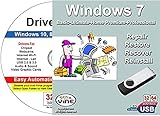
- Windows 7 All Versions 32/64 Bit Install Repair Recover & Restore USB & Drivers pack DVD. Can used to re-install Windows or repair boot manager or black / blue screen or recover or restore Windows. Install feature requires that you have a key. This software does not include a key
Rebuild the Windows Update download cache from an elevated Command Prompt
Use this only after recording the original service states. The commands stop update services, rename their cache folders, and let Windows create new folders. Renaming is reversible, unlike deleting the folders.
- Click Start, type
cmd, right-click cmd.exe, and choose Run as administrator. - Run these commands one at a time:
net stop wuauserv
net stop bits
net stop cryptsvc
ren %windir%SoftwareDistribution SoftwareDistribution.old
ren %windir%System32catroot2 catroot2.old
net start cryptsvc
net start bits
net start wuauserv- Close Command Prompt and restart Windows 7.
- Return to Windows Update and select Check for updates.
If a net stop command says the service is not running, continue with the next command. If a rename reports that the folder is in use, restart Windows and repeat the sequence before opening Windows Update.
Check the result and undo only the change that caused trouble
If Windows Update works, keep the renamed folders temporarily in case you need logs from the previous attempt. If the problem is unchanged, you can remove the .old folders after confirming that no pending update needs them. If another service or application begins failing after your changes, return to services.msc and restore the startup setting you recorded; do not randomly enable or disable services.
If the code is 0x80070042
The Win32 wording for 0x80070042 is “The network resource type is not correct.” This points away from the Network List Service procedure and toward the resource used by the failed operation.
Rank #3

- [Win OS Install or reinstall] — Boot from the USB to install or reinstall Win 11, 10, or 7 Home & Pro editions. Includes OS installations and reinstallations media plus WinPE Utility Suite.
- [WinPE Repair & Recovery Tools] — Boot into the included WinPE utility suite to backup system and important files, troubleshoot startup problems, repair boot issues, recover data, recover Win User accounts password, and diagnose common PC problems.
- [All-in-One PC Rescue USB] — Combines Win 11, 10, and 7 installation media with PC repair, recovery, and diagnostic tools on one bootable 64GB USB drive, helping you troubleshoot and restore a computer without needing multiple discs or downloads.
- [Support] — Full instructions are included in packaging plus a printable copy of the instructions with troubleshooting information on the device. Also, a video “How to boot from a bootable USB drive.mp4” to help guide you through starting a PC from a USB drive. If you need help using the USB please contact us for assistance, we are here to help.
- [Video] - If you are new to booting from a USB drive or need a refresher see our video "How to boot from USB drive" both in description and on USB device.
Identify the resource Windows was trying to use
- For a mapped drive, record the drive letter and the complete path shown in File Explorer.
- For a shared folder, record the server and share in the form
\servershare. - For a removable or network-connected device, record its name in Device Manager and whether it was connected when the error appeared.
- For an installer or backup program, check its settings for an old drive letter, UNC path, or device profile.
A code that appears only for one share or device is more useful than a code copied from a general error dialog. Reproduce the failure once while watching the exact path or device Windows accesses.
Test a mapped drive and remove stale mappings
- Open Command Prompt and run
net use. This lists existing network mappings and their drive letters. - If the failing drive letter points to an old or unavailable location, disconnect that mapping with
net use X: /delete, replacingX:with the actual letter. Confirm the letter before pressing Enter. - Test the share directly in File Explorer by entering its UNC path, such as
\servershare. Use the exact server and share supplied by your administrator. - When the path opens correctly, remap it from Computer > Map network drive, selecting the correct drive letter and enabling Reconnect at logon only if the resource should be available every time you sign in.
If the UNC path itself fails, the issue is likely connectivity, permissions, name resolution, or the share being unavailable rather than a bad drive-letter mapping. Check whether another computer can open the same share and ask the share administrator to verify that it still exists.
Check a removable or local device
- Disconnect the device safely, restart Windows 7, and reconnect it directly to the computer rather than through an unpowered hub.
- Open Control Panel > System and Security > Device Manager and expand the category that matches the device.
- Open the device’s Properties and read the Device status message. A warning icon or a different device name can indicate that Windows is identifying the hardware incorrectly.
- In File Explorer or Disk Management, check whether the device has the expected drive letter and file-system volume. Do not format a volume until you have confirmed that its data is backed up.
When the error follows one device to another Windows 7 computer, focus on that device, its cable, and its driver. When every network resource fails on the same computer, focus on the network connection and Windows configuration instead.
Free tools Windows power users keep installed
One-click scans. No signup required.
Diagnostics when neither nearby code fits
Use the event details, not just the pop-up
In Event Viewer, copy the event source, event ID, error code, and the operation named in the description. An application can display a product-specific number that resembles a Windows code. Search your own logs for the same code at the same time; matching entries often reveal the service or path involved.
Rank #4

- Complete Windows 7 Installation & Recovery – This USB includes a full installation of Windows 7 (64-bit) for reinstalling, repairing, or upgrading your system.
- Easy to Use Bootable USB – Simply plug the USB into your computer and follow the on-screen instructions to install or repair Windows 7.
- Perfect for New Installs or System Recovery – Ideal for clean installations, system recovery, or troubleshooting Windows issues on compatible PCs.
- No Internet Required for Installation – Works offline, so you can install Windows 7 without needing an internet connection.
- Compatible with Most Older PCs – Works on most Windows-compatible desktops and laptops that support Windows 7 (UEFI or Legacy BIOS).
Check system files
Corrupted Windows components can cause unrelated services or update operations to fail. To run the built-in check, open an elevated Command Prompt and execute:
sfc /scannowWait for verification to reach 100 percent and read the final result. Restart Windows before repeating the original operation. The command may report that it found no integrity violations, repaired files, or could not repair everything. Keep that wording with your troubleshooting notes rather than treating the scan as proof that the original code was fixed.
Use System Restore when the failure began after a change
- Click Start, type
rstrui.exe, and press Enter. - Choose a restore point dated before the first occurrence of the error.
- Use Scan for affected programs to see which applications and drivers may be changed.
- Back up current work, start the restore, and allow Windows to restart.
System Restore changes system files, drivers, and settings but is not a substitute for backing up personal files. If no suitable restore point exists, do not create a new one expecting it to repair the past failure.
Recommended Free Tools
Retest with the smallest possible change
- Restart after service, cache, or system-file changes.
- Repeat the exact operation that originally failed, rather than testing an unrelated download or share.
- Change one setting at a time and record the old value.
- If the code changes, capture the new code; a different code can mean that the first blockage was removed and a second issue is now visible.
Manual checks versus an automated repair utility
| Question | Manual service and resource checks | Automated repair utility |
|---|---|---|
| Certainty about the actual code | Highest, because you reread the message and event details yourself. | Depends on what the utility detects; it cannot correct a mistyped code in your notes. |
| Whether the failing component is known | Clear when the error is tied to Windows Update, a mapped path, or a specific device. | May scan broadly when the component is not yet identified. |
| Reversibility | Service changes can be recorded and reversed; renamed cache folders preserve a fallback. | Review proposed changes before applying them and keep a restore point when possible. |
| Administrative access | Required for Services, an elevated Command Prompt, SFC, and many repair actions. | Administrative access may still be required to change protected settings. |
| Documentation basis | The Network List Service step comes from a Microsoft-hosted user report; the 0x80070042 wording comes from a Win32 reference. | Claims are vendor-authored and should not be treated as independent validation of a cure. |
Because the exact 0x800700422 string is unconfirmed, diagnosis is more important than applying a broad repair. Start with the digits, the component, and the event details; then use the service procedure for 0x80070422 or the network-resource procedure for 0x80070042.
Quick Recap
As an optional shortcut after the manual checks, Outbyte PC Repair can scan Windows 7 for more than 100 common issues and show suggested repairs. It also includes settings adjustments, temporary-file cleanup, privacy and vulnerability checks, and an app-crash log. Review its results before applying changes; it complements antivirus software rather than replacing it, results vary, and no utility repairs every crash. It runs on Windows 7 and offers a category-based free trial of at least two days before a subscription.
Product prices and availability are accurate as of the date/time indicated and are subject to change. Any price and availability information displayed on Amazon at the time of purchase will apply.

